Mastering Olive Leaf in the Kitchen: Savory Infusions, Salt Blends, and Flavorful Recipes

In the heart of Mediterranean culinary tradition, the olive tree reigns supreme—not only for its revered fruit and oil but also for its aromatic leaves. Olive leaf has long been prized by chefs and home cooks alike, offering a subtly earthy, bitter, and slightly floral note to a variety of dishes. Incorporating olive leaf into your kitchen repertoire is easier than you might think. Whether you’re seeking to enhance broths, craft your own culinary infusions, or experiment with signature seasonings, olive leaf can transform everyday meals into memorable experiences. This comprehensive guide will show you how to unlock the distinctive essence of olive leaf with practical tips, versatile applications, and creative recipes designed for every home cook.
Exploring the Flavor Profile of Olive Leaf
Olive leaf imparts a unique, complex taste—less pungent than fresh olives, yet more robust than many herbs. Its subtle bitterness and fragrant undertones are reminiscent of green tea with a hint of freshly cut grass and a touch of pepper. When balanced with complementary ingredients, olive leaf uplifts both savory and mildly sweet creations.
Selecting the Best Olive Leaves
For culinary use, dried olive leaves are most commonly used, thanks to their concentrated flavor and ease of storage. However, if you have access to fresh olive leaves from a pesticide-free tree, they can lend an even brighter essence. Dried olive leaves can typically be found at specialty grocers, herb shops, or online.
Crafting Savory Olive Leaf Infusions
Infusions provide a simple and effective way to layer flavor into oils, broths, and even vinegar. With careful technique, olive leaf transforms pantry staples into gourmet ingredients.
Olive Leaf-Infused Oil
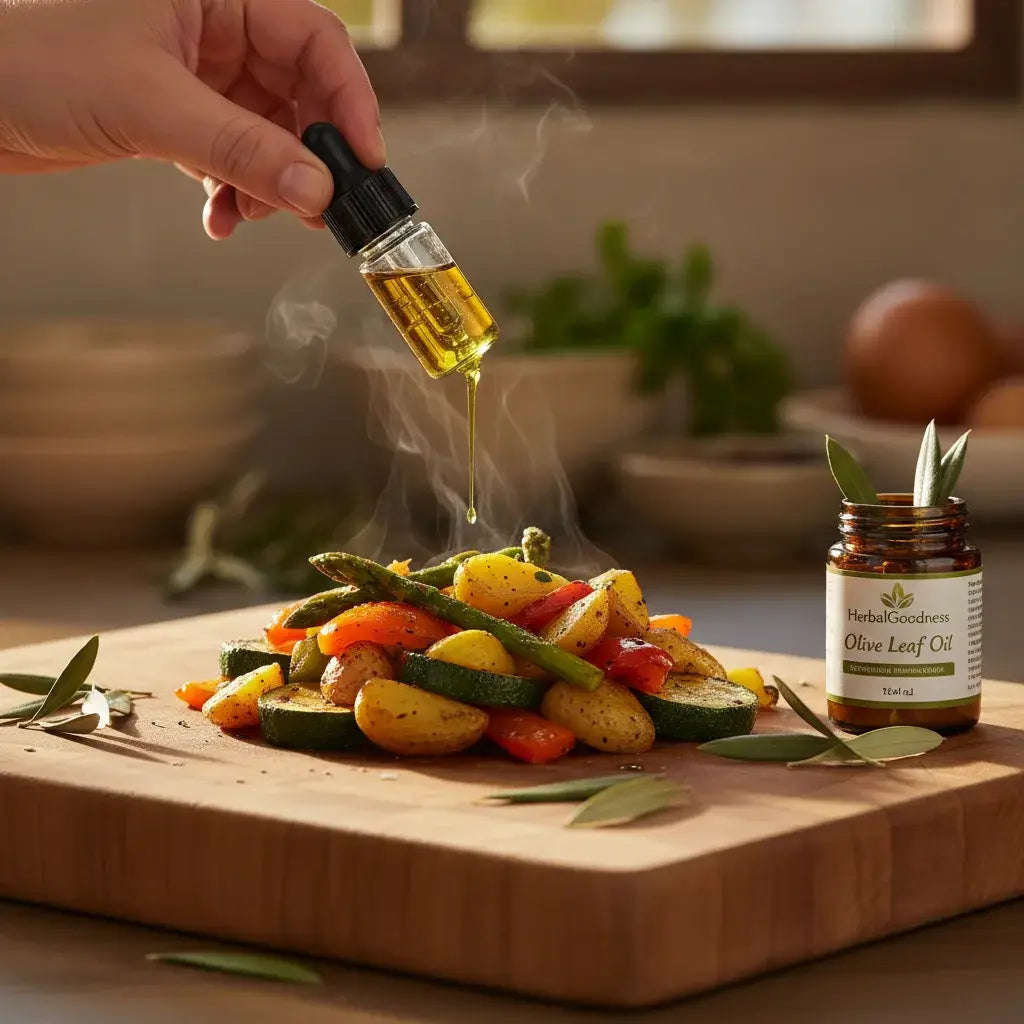
Infused olive oil is one of the easiest introductions to olive leaf cuisine. Use the resulting oil in salad dressings, to finish roasted vegetables, or as a dipping oil for artisan bread.
How to make olive leaf-infused oil:
- Combine 1 cup high-quality extra virgin olive oil with 2 tablespoons dried olive leaves in a small saucepan.
- Warm the mixture gently on the lowest heat setting for 10-15 minutes, ensuring it doesn't simmer or smoke.
- Remove from heat, let cool, and strain out the leaves.
- Store in a clean, airtight bottle away from sunlight. Use within two weeks for best flavor.
Pairing your culinary infusions with products designed for immunity & performance can enhance not just taste but also nutritional benefits.
Olive Leaf-Infused Broth
Transform vegetable or chicken broths with olive leaf subtlety:
- Add a small handful of dried olive leaves to your simmering broth during the last 20 minutes of cooking.
- Strain out the leaves before serving.
The broth takes on an earthy complexity that pairs beautifully with Mediterranean grains or as a cooking liquid for risotto. For a different twist, you can explore using Bamboo Leaf Tea – 24/1.5g Tea Bags - Nature's Collagen & Biotin to create a biotin-rich herbal broth base that supports your overall wellness.
Vinegar and Butter Infusions
Infuse white wine vinegar or whipped butter with crushed olive leaves for an unexpected flavor kick—perfect for drizzling or spreading on grilled vegetables, fish, or warm bread. This concept can be extended by integrating ingredients from our organic herbal teas, opening doors to endless aromatic infusions.
Crafting Olive Leaf Herb Salts and Compound Butters
Seasoned salts and compound butters offer endless opportunities to capture and store the flavor of olive leaf for effortless mealtime inspiration.
Olive Leaf Herb Salt
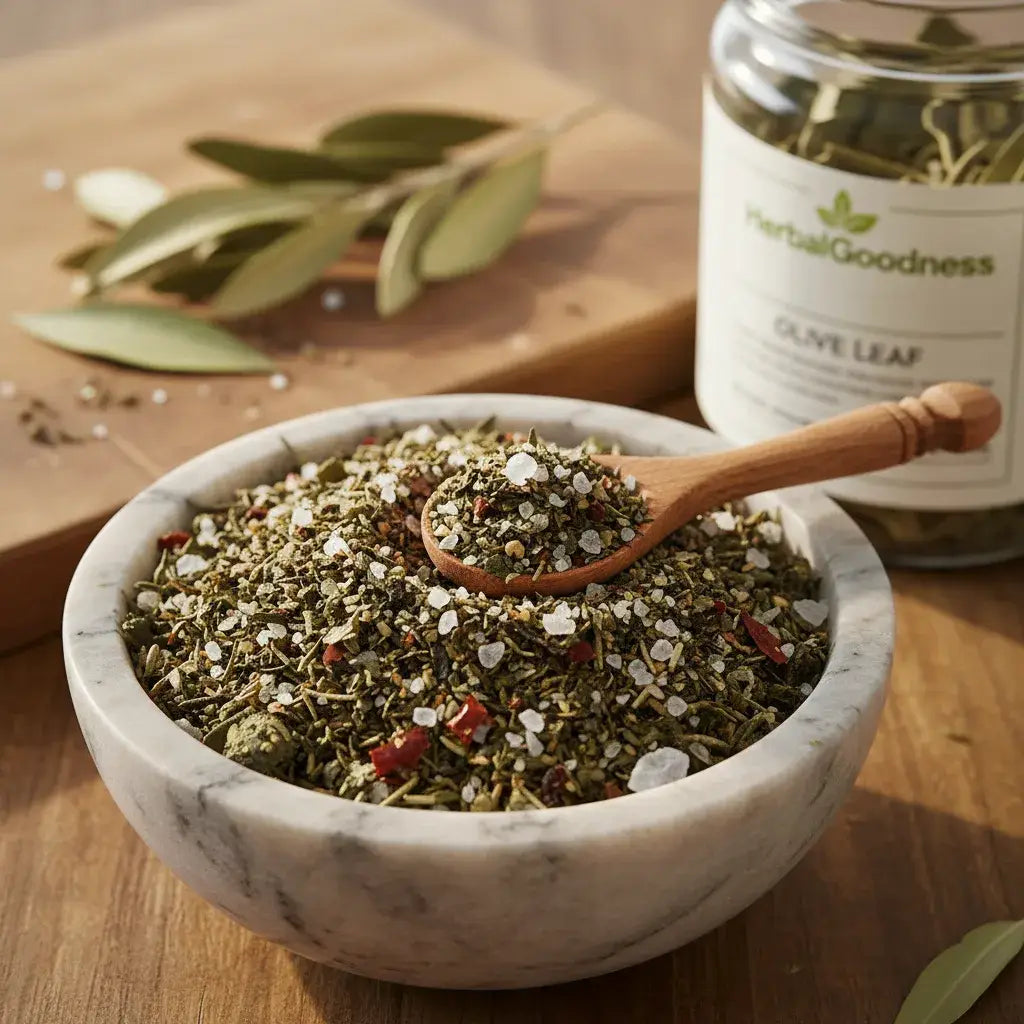
A custom herb salt blend can instantly elevate your everyday cooking. Here’s a guideline for a versatile blend:
- 2 tablespoons dried olive leaves
- 1 tablespoon dried thyme
- 1 tablespoon rosemary
- 1/2 cup flaky sea salt
Pulverize the dried aromatic herbs and salt in a food processor or mortar and pestle until finely mixed. Store in an airtight jar and sprinkle over meats, roasted potatoes, or even avocado toast.
Olive Leaf Compound Butter
Olive leaf butter can be used to finish grilled meats, stir into warm pasta, or melt over steamed vegetables.
To create compound butter:
- Soften one stick (1/2 cup) unsalted butter.
- Stir in 1 tablespoon finely crushed dried olive leaves, 1 teaspoon lemon zest, and a pinch of salt.
- Scoop onto parchment paper, roll into a log, and chill until firm.
Slice off coins to use as needed for flavor-packed finishing touches. For an infused wellness boost, consider pairing olive leaf with Sea Moss - Raw Dried from St Lucia - 8oz Bag - Nature's MultiVitamins in salads or dairy-free butter alternatives.
Perfect Pairings: Ingredients That Shine with Olive Leaf
Knowing which ingredients harmonize with olive leaf can help you craft exceptional dishes.
Classic Mediterranean Pairings
- Citrus: Lemon zest or juice adds brightness, balancing olive leaf bitters.
- Garlic: Enhances savory depth and aromatic complexity.
- Tomato: Brings sweetness and acidity, perfect for soups or sauces.
- Seafood: Olive leaf pairs well with mild fish or shellfish, lending a herby, sophisticated touch.
- Feta or Goat Cheese: Their tangy creaminess offsets olive leaf’s earthiness.
If you're looking to boost the nutritional value of your meals while embracing Mediterranean flavors, you can complement these dishes with Olive Leaf - Organic 1oz 15X Liquid Extract - Immunity & Performance.
Grains, Beans, and Greens
- Stir olive leaf-infused oil into grain salads with quinoa or farro.
- Sprinkle olive leaf herb salt over sautéed greens, such as spinach or kale.
- Toss slow-cooked beans with olive leaf butter and fresh parsley for a rustic side.
Adding a spoonful of Sea Moss Gel 16 oz – Nutrient-Rich Superfood for Everyday Wellness into your greens can provide additional trace minerals and a creamy texture.
Signature Olive Leaf Recipes for Home Cooks
To highlight olive leaf’s culinary charm, try these approachable recipes designed to bring new dimensions to your weekday meals.
Olive Leaf and Lemon Pasta
Ingredients:
- 12 oz dried linguine or fettuccine
- 2 tablespoons olive leaf-infused olive oil
- Zest and juice of 1 lemon
- 2 cloves garlic, minced
- 1/4 cup chopped fresh parsley
- 1/3 cup grated Parmesan cheese
- Sea salt and cracked pepper to taste
Instructions:
- Cook pasta until al dente. Reserve 1/2 cup pasta water.
- In a large skillet, warm olive leaf oil over medium-low heat. Add garlic and sauté until fragrant.
- Toss in the cooked pasta, lemon zest, juice, and parsley. Add pasta water as needed.
- Season with salt, pepper, and finish with Parmesan.
Enhance the protein content of a pasta meal by serving it alongside Papaya Leaf Extract - Capsules 600mg - 10X Strength for daily immune and digestive support.

Olive Leaf Flatbread with Herb Salt
Ingredients:
- Store-bought flatbread or pizza dough
- Olive leaf herb salt
- 2 tablespoons olive oil
- Optional: Sliced tomatoes, feta crumbles, fresh basil
Instructions:
- Preheat oven to 425°F. Roll out dough on a lightly floured surface.
- Brush liberally with olive oil. Sprinkle with olive leaf herb salt.
- Top with tomatoes, feta, and basil as desired.
- Bake until golden, 10-12 minutes. Slice and serve warm.
Home cooks seeking to add a Mediterranean touch might enjoy sipping Bamboo Leaf Tea – 24/1.5g Tea Bags - Nature's Collagen & Biotin alongside savory flatbreads for a refreshing, collagen-supporting beverage.
Whipped Ricotta with Olive Leaf Compound Butter
Ingredients:
- 1 cup ricotta cheese
- 2 tablespoons olive leaf compound butter, softened
- Black pepper to taste
- Whole grain toast or crostini
Instructions:
- Beat ricotta and compound butter in a bowl until fluffy.
- Spread on toast or crostini, finish with a crack of black pepper.
Pair this appetizer platter with a light herbal infusion, such as a tea crafted from your organic herbal teas collection.
Expert Tips for Using Olive Leaf in Everyday Cooking
- Start modestly. Olive leaf has a bold presence; begin with small amounts, tasting as you go.
- Balance with acidity. Lemon, vinegar, or tomatoes offset olive leaf’s natural notes.
- Pair with other robust herbs. Rosemary, sage, or thyme support olive leaf’s unique flavor.
- Store properly. Keep dried olive leaves in a sealed container away from heat and sunlight.
Incorporate olive leaf into your seasoning blends, infuse it in oils or butters, and sprinkle it as a finishing touch to discover an incredibly versatile kitchen companion. To round out nutrient content in your dishes, try pairing other herbal condiments from Sea Moss - Raw Dried from St Lucia - 8oz Bag - Nature's MultiVitamins for trace minerals, or reach for Papaya Leaf Extract - Capsules 600mg - 10X Strength to support healthy digestion.
Creative Ways to Present Olive Leaf Dishes
- Garnish with whole leaves. For visual impact, fry fresh olive leaves briefly in hot oil and use as a crisp topping.
- Incorporate in dips and spreads. Blend finely ground olive leaf into hummus, tapenade, or soft cheeses.
- Gift homemade olive leaf salt or infused oil. Bottled elegantly, these make delightful gifts for food enthusiasts.
Whether you are refining your home culinary skills or looking to impress guests at your next gathering, simply introducing olive leaf into simple techniques and recipes can bring layers of flavor that surprise and delight. Enjoy experimenting, and let the spirit of Mediterranean kitchens inspire your creativity every time you cook.
FAQs:
- How do you use olive leaf in cooking?
Olive leaf can be incorporated into cooking by infusing it into oils or broths, blending it into herb salts, mixing it into compound butters, or steeping in vinegars for unique flavor. Dried olive leaves are particularly popular for their subtle, earthy notes.
- What does olive leaf taste like?
Olive leaf offers a slightly bitter, earthy, and floral note with a hint of pepper—less intense than olives themselves and an excellent complement to Mediterranean-style dishes.
- Can olive leaf be used with other herbs?
Yes, olive leaf pairs beautifully with strong herbs such as rosemary, thyme, sage, and oregano, allowing for rich, balanced flavor profiles in savory dishes.
- Where can I buy dried olive leaf for cooking?
Dried olive leaf can be found at specialty grocers, herb shops, Mediterranean food markets, and through reputable online retailers.
- Are there vegetarian recipes with olive leaf?
Absolutely! Olive leaf shines in vegetarian recipes like olive leaf and lemon pasta, herb-infused flatbreads, grain salads, and whipped ricotta spreads.
- How should olive leaf be stored in the kitchen?
Dried olive leaves should be stored in an airtight container, kept in a dark, cool place away from direct sunlight to maintain their aroma and taste.
Author Name:
Herbal Goodness Editorial Team
Author Bio:
The Herbal Goodness Editorial Team specializes in holistic health and superfoods, blending science and nature to educate and empower our community.
References:
Introducing Graviola to Young Taste Buds: Fun, Family-Friendly Flavor Exploration
Graviola in the Classroom and at Home: Creative Activities to Teach Kids About Tropical Plants