





Papaya Leaf Varieties Explained: Species, Cultivars & Regional Impact on Extracts
Papaya leaves have gained international attention for their unique botanical profile, distinctive flavor, and use in a wide range of products. For those exploring papaya leaf extracts—whether for culinary, supplementary, or general wellness interest—understanding the difference between species, cultivars, and growing environments is essential. Knowing these distinctions can help you read product labels with more confidence, compare sourcing claims, and choose the best extracts for your personal criteria.
Distinguishing Between Papaya Leaf Species
Two primary botanical groups produce leaves commonly referred to as "papaya"—Carica papaya and various species of Vasconcellea. While both belong to the Caricaceae family, each has its own unique leaf characteristics and legacy.
Carica papaya: The Common Papaya
Carica papaya is by far the most recognized and widely cultivated species. Known for its large, lobed leaves and familiar tropical fruit, Carica papaya thrives in warm climates across the globe.
- Leaf Appearance: Large, deeply incised, bright green lobes
- Flavor Profile: Mildly bitter with grassy undertones
- Market Presence: Most commercial papaya leaf extracts are made from Carica papaya due to its global abundance
Vasconcellea: The Mountain Papayas
Vasconcellea is a distinct genus whose species are often nicknamed "mountain papayas." Predominantly grown in the Andean regions of South America, Vasconcellea papayas differ noticeably from their Carica counterparts.
- Leaf Appearance: Smaller, often more serrated or textured, and sometimes darker green
- Flavor Profile: Can be tangier, sometimes more pungent or astringent than Carica papaya
- Market Presence: Less commonly used in mainstream extracts, but prized locally in some countries
Why Species Variation Matters
The species of papaya leaf used can subtly affect the taste, aroma, and leaf composition of the final extract. Product labels or sourcing details might specify whether the extract comes from Carica papaya or a Vasconcellea species. This information can help predict flavor, as well as those unique plant compounds sought by consumers and formulators.
How Cultivars Influence Papaya Leaf Extracts
Within any given species, a "cultivar" refers to a plant variety that has been selectively bred or developed to express certain traits. For papaya, cultivars can be selected based on fruit size, leaf size, climate resilience, or leaf chemistry.
Papaya Cultivar Examples
Some popular papaya cultivars include:
- Red Lady: Known for its high yield and resilience, commonly cultivated in Asia and North America
- Maradol: Favored in Mexico and Central America for large, robust fruit and leaves
- Solo: Often grown in Hawaii, with mild-flavored leaves and moderate leaf size
The Cultivar Effect on Leaf Chemistry
Depending on cultivar:
- Leaf Thickness: Thicker leaves may concentrate certain plant compounds differently
- Color Variation: Variations in green pigment can be linked to environmental factors and nutritional attributes
- Flavor: Some cultivars produce leaves that are less bitter or more palatable
Reading Product Labels for Cultivar Information
While not all brands disclose specific cultivars, those that do may be highlighting unique attributes or regional significance. Comparing cultivar details can help consumers better understand why one extract’s flavor or aroma differs from another.
Soil, Climate, and Region: The Terroir of Papaya Leaves
Just as with fine wine or coffee, the “terroir”—the complete natural environment—shapes the nuanced qualities of papaya leaves.
Key Environmental Factors
Soil Type:
- Volcanic soils, common in Hawaii or Indonesia, often provide mineral-rich conditions
- Sandy soils promote faster drainage, influencing growth rate and leaf moisture content
Climate:
- Equatorial regions with consistent rainfall support lush leaf growth
- Cooler climates in higher elevations, such as the Andes, are where Vasconcellea species thrive, and can affect the flavor intensity
Altitude:
- Higher altitudes can yield a tangier flavor profile and alter the distribution of plant compounds within the leaf
Regional Reputation and Sourcing
Many papaya leaf extracts highlight their country or region of origin:
- Hawaiian Papaya Leaf: Known for gentle, mellow taste and lush growing conditions
- Indonesian Papaya Leaf: Celebrated for robust leaves and traditional harvesting practices
- Andean Papaya (Vasconcellea): Revered for unique flavor, often locally sourced and processed for boutique markets
Consumers may find that regionally-sourced extracts come with distinct marketing claims about flavor, sustainability, or farming tradition.
How These Factors Shape Papaya Leaf Extracts
When papaya leaves move from plant to extract, their origin story continues to matter.
Leaf Selection and Harvest Timing
- Younger Leaves: Tend to be milder in taste and lighter in color
- Mature Leaves: Often more robust, with deeper green hues and a slightly more pronounced flavor
Cultivar and species can influence the ideal harvest time, as different plants mature at different rates under various climate conditions.
Processing Methods and Their Impact
Once harvested, papaya leaves are typically air-dried, sun-dried, or gently heated before being ground or steeped for extract.
- Gentle Drying: Preserves color and aroma in delicate cultivars
- Sun-Drying: Traditional but can lead to variation in flavor intensity, especially in warmer regions
Each processing style interacts with the leaf’s intrinsic characteristics, highlighting or muting certain aromas and tastes.
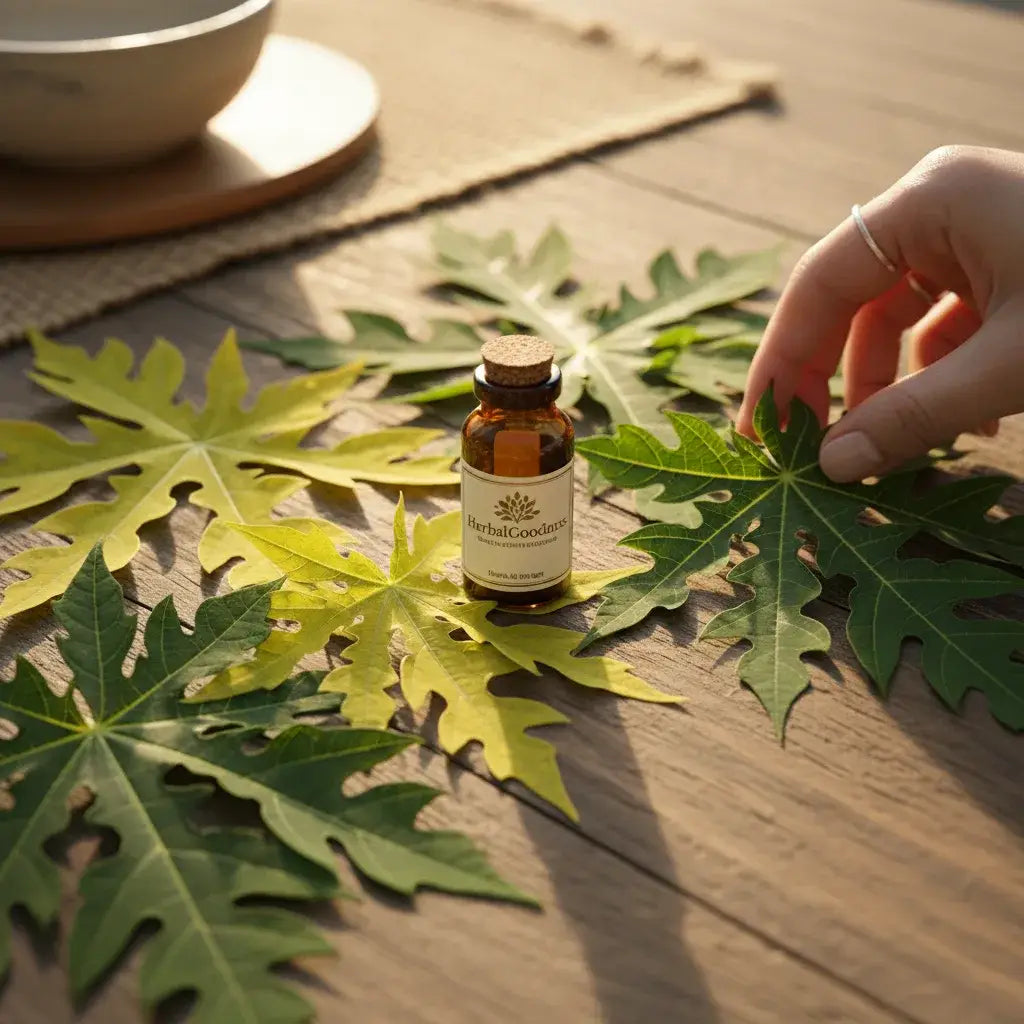
What to Look for in Papaya Leaf Extract Sourcing Claims
Navigating product labels and brand information can be easier with a bit of botanical literacy.
Key Details to Consider
- Species: Does the extract specify Carica papaya or a Vasconcellea species?
- Cultivar: Is a particular variety noted, or does the region hint at which cultivar is prevalent?
- Growing Region: Look for geographic details that signal environmental influences
- Processing: How are the leaves dried, stored, and turned into extract?
- Sustainability & Ethics: Are there claims about pesticide-free, organic, or fair trade practices?
How to Interpret Product Variations
- Lighter, milder extracts often stem from tender, young leaves or cultivars bred for gentle flavor
- Darker, more robust extracts may use mature leaves or originate from mountainous, cooler regions with distinct terroir
- Unique flavor notes can often be traced to traditional cultivars or specific processing techniques
For those seeking targeted benefits or broader support, Papaya Leaf Extract Blood Support - 10X 60/450mg Capsules - Blood Platelet is a product that reflects careful cultivation and precise processing, aligning with many of these sourcing criteria.

If you’re after a convenient and versatile option, the Papaya Leaf Extract - Organic 1oz 15X Liquid - Blood Platelet delivers both the potency and the flexibility for creative supplementation. This liquid format allows for precise serving and easy addition to wellness routines. Those who want even more simplicity might enjoy the flavor and benefits of Papaya Leaf Tea - Organic 24/2g Tea Bags, which allows the papaya leaf’s qualities to be enjoyed as part of a daily ritual.

Understanding Papaya Leaf Varieties Leads to Better Choices
A little know-how about the factors that influence papaya leaf extracts empowers consumers to select products that best align with their flavor preferences, sourcing values, and intended uses. Exploring species, cultivars, and environmental variables can be an enjoyable part of any well-informed natural product journey.
Enjoying the Distinct Diversity of Papaya Leaf
The world of papaya leaf is as rich and varied as the environments where these remarkable plants thrive. Whether exploring Carica or Vasconcellea leaves, tropical or mountain-grown varieties, each extract brings its own unique story, flavor, and depth. Researching these details is a rewarding step towards sourcing the most suitable papaya leaf extracts for your needs.
Ready to discover the finest papaya leaf extracts? Explore the variety of species, cultivars, and ethically sourced products available today. Deepen your knowledge and make confident choices by researching product origins, flavor notes, and sustainable practices before selecting your next extract. Enjoy the natural diversity that papaya leaves offer!
FAQs:
- What is the difference between Carica papaya and Vasconcellea leaves?
Carica papaya is the common papaya widely cultivated for its fruit and large, lobed leaves. Vasconcellea includes several mountain papaya species native to the Andes, featuring smaller, tangier leaves with a distinctive texture and aroma.
- How does the growing region affect papaya leaf extracts?
The growing region impacts soil composition, climate, and altitude, all of which influence the leaf’s flavor, pigment, and aromatic qualities. For example, volcanic soils and tropical climates tend to yield greener, milder leaves, while higher elevations produce more robust flavors.
- Do different papaya cultivars change the flavor of leaf extracts?
Yes, specific cultivars can result in leaves with varying degrees of bitterness, texture, and color. Cultivars like Red Lady, Maradol, and Solo are known for distinct leaf characteristics that affect the flavor and appearance of their extracts.
- Why do some product labels mention the papaya cultivar or region?
Brands highlight cultivar or region to showcase unique attributes, such as flavor profile, traditional farming methods, or sustainable sourcing. This helps consumers make informed choices based on their preferences.
- Is there a way to tell if an extract is made from young or mature papaya leaves?
Product descriptions sometimes specify leaf age, but color and flavor provide clues: lighter, milder extracts typically use younger leaves, while darker, more pronounced flavors suggest mature leaves.
Author Name:
Herbal Goodness Editorial Team
Author Bio:
The Herbal Goodness Editorial Team specializes in holistic health and superfoods, blending science and nature to educate and empower our community.
References:
Introducing Graviola to Young Taste Buds: Fun, Family-Friendly Flavor Exploration
Graviola in the Classroom and at Home: Creative Activities to Teach Kids About Tropical Plants


FAQs
Drinking bamboo leaf tea supports hydration, relaxation, skin wellness, and antioxidant balance.
It’s used for general body wellness, skin elasticity, hair and nail support, and overall vitality.
Yes, bamboo leaf is rich in silica and antioxidants, which promote healthy skin, strong nails, and a youthful glow.
You can find dried bamboo leaf, powder, extract, drops, oil, and bamboo leaf green tea.
Bamboo leaf is generally safe when consumed in moderation. Always consult your healthcare provider before starting any new herbal supplement.