





Organic Moringa Leaf Extract: Menu Planning, Cost, Storage & Sourcing Guide

Introductory Overview: Organic Moringa Leaf Extract for Creative Kitchens
Organic moringa leaf extract has found its place at the intersection of culinary innovation and holistic nourishment. For chefs, foodservice professionals, and passionate home cooks, this botanical ingredient offers a new spectrum of flavor, nutrition, and menu inspiration. As interest grows in superfood-based cuisine, understanding how to source, store, and thoughtfully utilize organic moringa leaf extract can help kitchens maximize both creativity and practicality. This guide explores organic moringa leaf extract from a working chef’s point of view: menu strategies, flavor pairings, cost and dilution calculations, safe storage, labeling, and smart sourcing—all without overselling or straying into medical claims. Whether you’re planning for the next café special or experimenting at home, discover the essentials for confidently adding organic moringa leaf extract to your culinary toolkit.
Understanding Organic Moringa Leaf Extract Formats
Organic moringa leaf extract is offered in several ready-to-use forms. Each format has its own culinary strengths and considerations:
Powder:
- Versatile and shelf-stable
- Blends easily into smoothies, doughs, sauces, and batters
- Preserves much of the green, earthy character—a good fit for savory and baked applications
Liquid Extract (Tincture):
- Typically water- or alcohol-based, offering concentrated flavor and ease of dosing
- Suitable for beverages, vinaigrettes, or when quick dissolution is a priority
- Can be dropped directly into liquids, offering efficient dispersion
Capsules:
- While primarily designed for supplementation, the contents can be opened and incorporated into foods
- Less common in cooking, but can be practical in single-serve menu items
Selecting a format depends on your intended application and operational needs. For instance, busy foodservice kitchens might favor liquid extracts for quick beverage prep, while bakers or batch cooks may prefer powder for dry mixes. Foodservice professionals looking to experiment with herbal flavors may also consider Blood Platelet Plus - 60/600mg 20X Strength Capsule - Platelet Boost as an innovative option for menu development.
Flavor Pairing and Menu Ideas for Moringa
One of the first considerations when working with organic moringa leaf extract is how it aligns with existing menu flavors. Moringa carries a deep green, slightly earthy taste profile reminiscent of mild matcha or spinach, with subtle grassy undertones.
Flavor Pairings That Work:
- Citrus (lemon, lime, orange) brightens the earthiness
- Coconut and tropical fruit complement and soften moringa’s green notes
- Ginger, mint, and basil add lively contrasts
- Nut butters and almond milk provide a creamy balance
- Cacao and vanilla introduce warmth and depth
Simple Menu Ideas:
- Moringa Matcha Latte: Whisk moringa powder into steamed nut or oat milk with a touch of vanilla
- Moringa Citrus Dressing: Mix liquid extract into vinaigrettes with lemon and olive oil
- Power Smoothie: Blend moringa powder with banana, spinach, and pineapple for a breakfast boost
- Herbed Flatbread: Add a sprinkle of powder to flatbread dough for both color and flavor
- Green Energy Muffins: Incorporate moringa into muffin or pancake batters
- Infused Waters: A few drops of liquid extract in sparkling water with fresh mint
Chefs may also explore moringa in pestos, hummus, herbal teas, or as a subtle supplement in soup bases. For kitchens interested in more beverage and herbal infusion options, Soursop Leaf Tea Graviola Leaves - Organic 24/2g Tea Bags - Immunity & Cell Renew provides a complementary base for creative drinks and wellness-focused menus.
Tips for Successful Integration:
- Start with small quantities; moringa is potent and may quickly dominate a dish’s flavor and appearance
- Test recipes in both sweet and savory contexts for balance
- Use color as both an aesthetic and menu marketing point
- Update ingredient lists and menu boards for transparency
Calculating Cost-Per-Serving and Dilution for Foodservice Success
Understanding the cost structure and dilution calculations is vital for cafes, restaurants, or anyone producing food at scale. Organic moringa leaf extract, while premium, can remain economical with proper planning.
Cost-Per-Serving Formula:
To calculate cost-per-serving, follow this basic approach:
- Identify purchase price and unit volume (e.g., $30 for 8 oz liquid extract)
- Determine usage per serving (e.g., 1 mL per drink)
- Divide total unit volume by serving size to yield servings per unit (e.g., 236 mL / 1 mL = 236 servings)
- Divide total cost by number of servings ($30 / 236 ≈ $0.13 per serving)
This basic math lets you integrate moringa into your menu pricing, ensuring cost-effectiveness and clarity for your food cost models. Other superfood concentrates, such as Papaya Leaf Extract 16oz – Organic 15X Liquid Papaya Leaf Herbal Supplement, lend themselves well to similar menu costing practices.
Dilution and Dosage Guidance:
Liquid moringa extracts come in varying concentrations. For kitchen consistency:
- Follow manufacturer-recommended dilution (often 1–3 mL per 8 oz beverage)
- Test a sample before scaling up, as potency varies by brand and format
- Label bulk bottles with recommended ratios for staff reference
Batch preparations—such as in juice bars or meal prepping—may require adapted math. For example, a 20-serving smoothie batch using 40 mL of extract (2 mL per serving) ensures accuracy and even distribution. Incorporating Moringa Leaf Extract - Organic 15X Liquid Extract - Immunity & Wellbeing allows for precise batching and dilution control in beverage programs.

Storage, Shelf-Life, and Quality Maintenance
Proper storage is key to preserving both potency and pleasant flavor. Organic moringa leaf extract, like most botanicals, is sensitive to heat, light, and moisture.
Storage Best Practices:
- Keep products in airtight containers to minimize exposure to air
- Store powder in cool, dry areas, away from direct sunlight
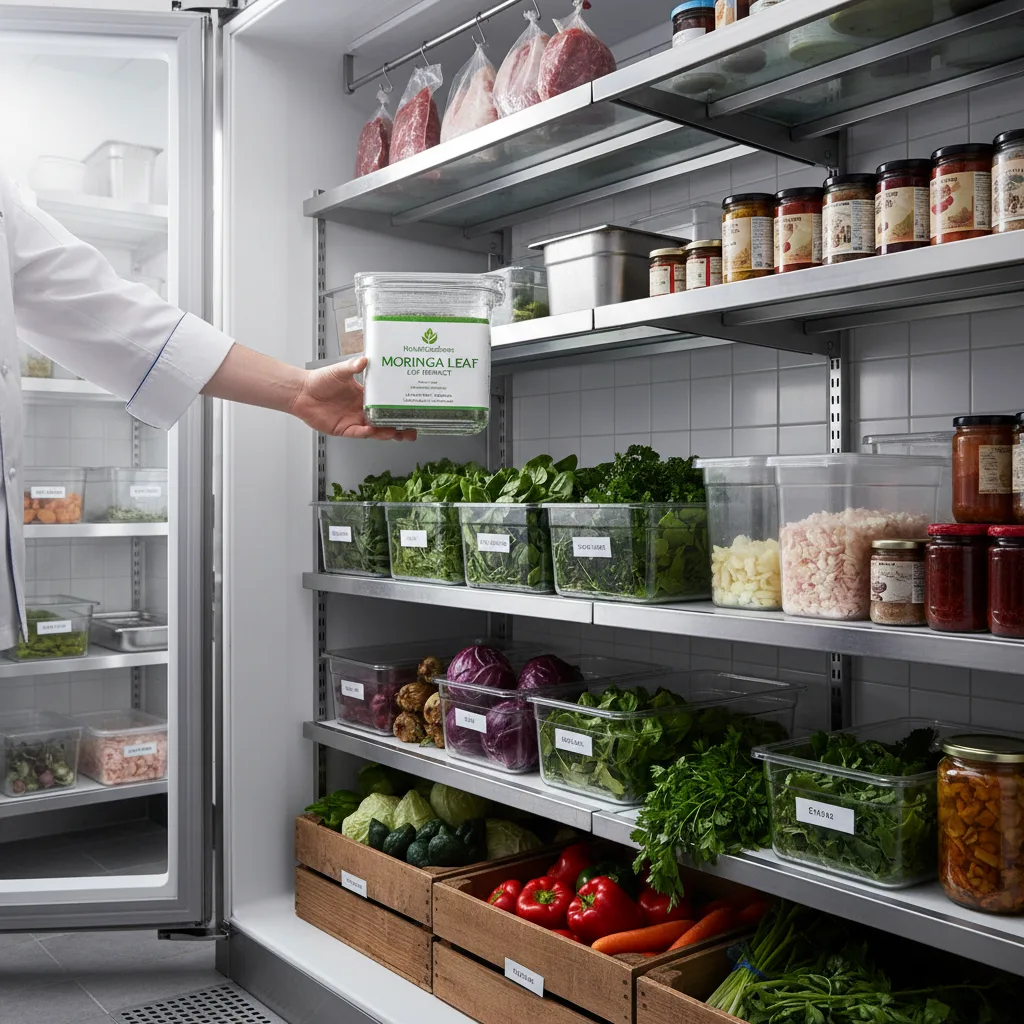
- Place liquid extracts in dark glass bottles if possible, and refrigerate after opening
- Avoid cross-contamination by using clean, dry utensils
Typical Shelf-Life:
- Powders: up to 18–24 months if stored in a sealed, dry container
- Liquids: 12–18 months unopened; use within 3–6 months after opening for optimal freshness
- Always observe “best by” dates on packaging
Regularly inspect product appearance and aroma. Discoloration, off-flavors, or changes in texture may indicate a loss of freshness. In foodservice environments, label and rotate batches to ensure first-in, first-out use. Herbal kitchens focused on plant-based wellness protocols may want to supplement storage solutions with Sea Moss - Raw Dried from St Lucia - 8oz Bag - Nature's MultiVitamins to expand nutrition profiles and create shelf-stable ingredients.
Labeling and Transparency: Menu and Kitchen Notes
For both regulatory compliance and consumer trust, clear labeling is important. When adding organic moringa leaf extract to menu offerings—particularly in commercial kitchens—consider these practical tips:
- Explicitly list moringa and its format (e.g., "organic moringa extract") on ingredient panels
- Specify if an item contains organic or non-GMO ingredients when applicable
- Maintain clear recipe cards for kitchen staff highlighting moringa content
- Train staff on proper handling and potential allergen cross-contact, as some extracts are processed in shared spaces
- Use batch logs for large volume settings, tracking lot numbers and usage dates
This approach supports transparency and helps customers make informed decisions. It also aids in consistent kitchen operations and simplifies training for new staff. Commercial kitchens can also explore Blood Platelet with Papaya Leaf - Organic 15X Liquid Extract - Platelet & Bone Marrow to offer options for customers interested in targeted wellness blends.

Sourcing: Key Questions to Ask Moringa Extract Suppliers
Quality sourcing starts with asking the right questions of prospective suppliers. Whether you’re a café owner or a home chef interested in the backstory of your ingredients, consider the following:
- Is the moringa certified organic, and can you provide documentation?
- Where is the moringa grown, harvested, and processed?
- Are testing results available for purity and contaminants?
- What extraction methods are used, and are any solvents or additives present?
- How is product freshness ensured during transit and storage?
- What packaging options are available (e.g., bulk, single-serving)?
- Can you supply consistent batches to fit my kitchen’s volume?
Herbal Goodness and similar suppliers often provide transparent sourcing information, helping chefs align their kitchens with sustainability and quality standards. Consider asking these same questions when sourcing other botanicals such as Papaya Seed Powder - Organic 4oz Bag - Colon & Gut Cleanse to maintain ingredient integrity across the board.
Practical Tips for Using Organic Moringa Leaf Extract at Home
For passionate home cooks and small-scale artisans, working with organic moringa leaf extract offers flexibility and easy experimentation. Start with these tips:
- Begin with single-serve batches to test both flavor and color impact
- Use a mini whisk or milk frother to fully dissolve powder into liquids
- Mix with honey or nut butter before adding to yogurt or oatmeal—a little fat helps mellow the green taste
- Store opened products in airtight containers for sustained freshness
- Track your favorite pairings and recipes for future inspiration
Exploring different botanicals and preparation approaches, such as using Papaya Leaf Tea - Organic 24/2g Tea Bags, can bring new creativity and flavor layers to daily routines.
Summary: Bringing Moringa Innovation to Your Menu
Incorporating organic moringa leaf extract opens new doors for chefs and creative home cooks alike. By focusing on proper format selection, cost control, smart dilution, and safe storage, you can maintain both culinary excellence and operational efficiency. Asking the right sourcing questions and practicing clear labeling will boost transparency and confidence in every kitchen setting. As chefs and food lovers look for the next botanical star, moringa’s vibrant green hue and distinctive taste promise to inspire memorable menu moments.
FAQs:
- What is the best way to use organic moringa leaf extract in beverages?
For beverages, start with a small amount of liquid extract or dissolved powder. Mix well into smoothies, juices, or lattes. Citrus, mint, or coconut milk often complement moringa’s flavor.
- How do I calculate the correct serving size of moringa extract for recipes?
Begin with the supplier’s recommended serving amount—often 1–3 mL per drink for liquids or 1/2–1 tsp for powder. Adjust based on taste tests, and scale the quantity for batch recipes as needed.
- What are the most important storage tips for preserving moringa’s quality?
Store moringa extract in airtight containers, keep away from heat and light, and refrigerate liquid extracts after opening. Always use clean utensils and follow best-by dates to maintain quality.
- How do I determine if a supplier’s moringa extract is high quality?
Request organic certification, testing documentation for purity, and information on extraction methods. Reliable suppliers provide transparency on origin, batch consistency, and absence of unwanted additives.
- Are there any common allergens or considerations when using moringa leaf extract in foodservice?
While moringa is not a major allergen, always check for potential cross-contact in processing, and inform customers clearly on ingredient lists, especially for commercial menus.
- Can moringa leaf extract be added to baked goods without affecting texture?
In moderate amounts, moringa powder typically integrates well into baked items, adding color and subtle flavor. Excess may alter texture, so small test batches are recommended.
- Is dilution math important when using moringa in a high-volume kitchen?
Yes, consistent dilution ensures uniform flavor and cost control. Mark recommended dilution ratios on prep guides to keep outcomes reliable in every batch.
Author Name:
Herbal Goodness Editorial Team
Author Bio:
The Herbal Goodness Editorial Team specializes in holistic health and superfoods, blending science and nature to educate and empower our community.
References:
Moringa: A Review of Its Food Applications – Journal of Food Science and Technology
Moringa oleifera: A Food Plant with Multiple Medicinal Uses – Phytotherapy Research
Share this
Popular posts


FAQs
1. What are the main benefits of drinking bamboo leaf tea?
Drinking bamboo leaf tea supports hydration, relaxation, skin wellness, and antioxidant balance.
2. What is bamboo leaf extract used for?
It’s used for general body wellness, skin elasticity, hair and nail support, and overall vitality.
3. Can bamboo leaf help with skin care and body wellness?
Yes, bamboo leaf is rich in silica and antioxidants, which promote healthy skin, strong nails, and a youthful glow.
4. What forms of bamboo leaf are available?
You can find dried bamboo leaf, powder, extract, drops, oil, and bamboo leaf green tea.
5. Are there any side effects of bamboo leaf?
Bamboo leaf is generally safe when consumed in moderation. Always consult your healthcare provider before starting any new herbal supplement.