





How to Read Lab Reports (COAs) for Soursop Capsules: A Shopper’s Guide

Shopping for soursop (Annona muricata) capsules online can feel empowering—until you come across a Certificate of Analysis (COA) and feel lost in technical jargon and numbers. As more brands highlight third-party lab reports to prove product quality, shoppers increasingly expect these certifications, but many remain unsure what these documents actually mean. This guide will walk you through the essentials of reading lab reports (COAs) for soursop capsules, breaking down the tests and terms in plain English so you can make confident, well-informed choices.
Why Lab Reports Matter for Soursop Capsules
With the rising popularity of soursop supplements, transparency and quality testing are now at the center of consumer expectations. A third-party lab report, or COA, is crucial because it shows the product has been tested for purity, safety, and authenticity by an independent laboratory—not just the manufacturer. COAs help protect shoppers and clarify that what’s on the label matches what’s inside the capsule.
For soursop capsules, a typical COA will include results from several primary test categories:
- Identity confirmation: Does the capsule contain true soursop (Annona muricata)?
- Heavy metals: Are potentially harmful elements like lead or mercury present in safe amounts?
- Pesticides: Were agricultural chemicals used in unsafe quantities?
- Microbial limits: Is the product free of unwanted microorganisms?
Understanding these categories can equip you to interpret lab results with clarity and confidence.
Breaking Down the Main Tests on a Soursop Capsule COA
Each section of a soursop capsule COA serves a specific purpose in confirming quality. Here’s what to look for—and what the common results mean:
Identity Testing: Confirming You’re Getting Genuine Soursop
Purpose: To ensure the capsule contains Annona muricata as advertised.
What you’ll see:
- Botanical identity: Techniques like macroscopic, microscopic, or DNA analysis are used to verify the plant species.
- Result terms: “Pass,” “Conforms,” or “Matches Reference Standard” indicate the sample matched the official soursop profile. Sometimes you’ll see "Annona muricata confirmed."
When researching third-party tested soursop supplements, look for listings that showcase a clear certificate of analysis guide and detailed identity confirmation sections.
Plain-English takeaway: If the COA says “Conforms” or has a clear match to soursop, you can be confident the product isn’t a substitute or filler. Some soursop teas also offer identity-confirmed sourcing, such as Soursop Leaf Tea Graviola Leaves - Organic 24/2g Tea Bags - Immunity & Cell Renew.
Heavy Metals: Ensuring Elemental Safety
Purpose: To check for the presence of heavy metals like lead, arsenic, cadmium, and mercury, which can accumulate in plants through soil or processing.
What you’ll see:
- Metals measured in parts per million (ppm) or milligrams per kilogram (mg/kg).
- A comparison to an “Acceptable Limit” or “Specification.”
- Results often listed as “ND” (Not Detected) if the levels are below the testing threshold, or as specific values (e.g., “Lead: 0.2 ppm”).
Supplements that undergo reputable testing, including Graviola Soursop Leaf Extract – 10X 60/600mg Capsules - Cell Renew & Immunity, frequently display clear heavy metal limits on their lab reports.
Plain-English takeaway: As long as heavy metal levels fall below the acceptable limits shown on the report, the product aligns with general quality standards. “ND” means the metal wasn’t found at levels testable by the lab. This is similar to testing done for other botanical supplements, such as Soursop Leaf Graviola Extract - - Organic 15X Liquid Extract - Cell Renew & Immunity.
Pesticide Testing: Checking for Unwanted Chemicals
Purpose: To identify traces of agricultural pesticides or herbicides.
What you’ll see:
- A list of tested chemicals with results in ppm or mg/kg.
- A phrase like “Meets USP <561>” or “Complies with EPA/TGA” may appear, referencing regulatory standards.
- “ND” or a value below the listed “Limit” is what you want (e.g., “Chlorpyrifos: ND”).
If you are seeking products with extra transparency, consider herbal supplements where pesticide testing results and organic status are highlighted alongside the COA. Many soursop products, including immune-support blends, will make this a selling point.
Plain-English takeaway: The absence of detectable pesticides, or results well below safety limits, is a sign of reputable sourcing or organic practices. An example can be found with Soursop Bitters Graviola Extract - 120/1000mg Capsules - Immunity & Wellbeing, which often provides comprehensive test documentation.
Microbial Limits: Assessing Cleanliness and Shelf Safety
Purpose: To test for microbes like mold, yeast, or bacteria that could affect quality.
What you’ll see:
- Categories include “Total Plate Count,” “Yeast and Mold,” and sometimes named species like “E. coli.”
- Results are measured in colony-forming units per gram (cfu/g).
- “Pass,” “Complies,” or numbers below the “Limit” mean the product met cleanliness standards.
Visuals can help further clarify clean processing practices.
Plain-English takeaway: Products with microbial counts well below limit values, or marked “Pass,” are considered appropriately clean and shelf-stable.
How to Read and Interpret a COA for Soursop Capsules
Understanding what a COA covers is half the battle; interpreting it is the next step. Here’s a simple method to guide your review:
1. Identify Test Types and Date
- Confirm that identity, heavy metals, pesticides, and microbial limits are included.
- Check the date: Reports older than 12–18 months may not represent the latest batch quality.
2. Locate and Understand Results
- Scan for Pass/Fail, “Conforms,” or actual measured values.
- Compare heavy metal, pesticide, and microbial numbers to the stated acceptable limits.
- “ND” means “Not Detected”—generally a positive sign.

3. Evaluate Lab Information
- A reputable COA will show the name and address of the third-party lab, sometimes with credentials or certification logos.
- The presence of an independent lab adds credibility and minimizes bias.
Choosing identity-tested, COA-screened Soursop capsules helps reinforce product trust, particularly when lab details are shown on the certificate. It’s always a smart move to buy from sources that voluntarily display detailed third-party testing information.
4. Review Any Notes or Disclaimers
- Labs may provide context, such as detection limits or notes about methodology (e.g., “test performed by HPLC” or “USP method used”).
- Read for any unusual findings or clarified uncertainties.
For further insight, look for tea or liquid extract formats with transparent batch-to-batch lab reporting, like Soursop Leaf Graviola Extract - - Organic 15X Liquid Extract - Cell Renew & Immunity.
Common COA Terms and What They Mean
Here’s a quick glossary to decode technical words you might encounter on a soursop capsule COA:
- ND: Not Detected (amount too low to register)
- LOQ: Limit of Quantification (smallest quantity reliably measured)
- LOD: Limit of Detection (lowest concentration lab can detect)
- Conforms/Complies: The sample met the stated specification
- USP/EP/ISO: Refers to standardized testing protocols (U.S. Pharmacopeia/European Pharmacopoeia/International Organization for Standardization)
- cfu/g: Colony-forming units per gram, a microbial measurement
Familiarizing yourself with these terms can help you spot the most important details—and avoid confusion from technical language. For ongoing immune and cell-boosting wellness, many consumers turn to options like Soursop Leaf Tea Graviola Leaves - Organic 24/2g Tea Bags - Immunity & Cell Renew.
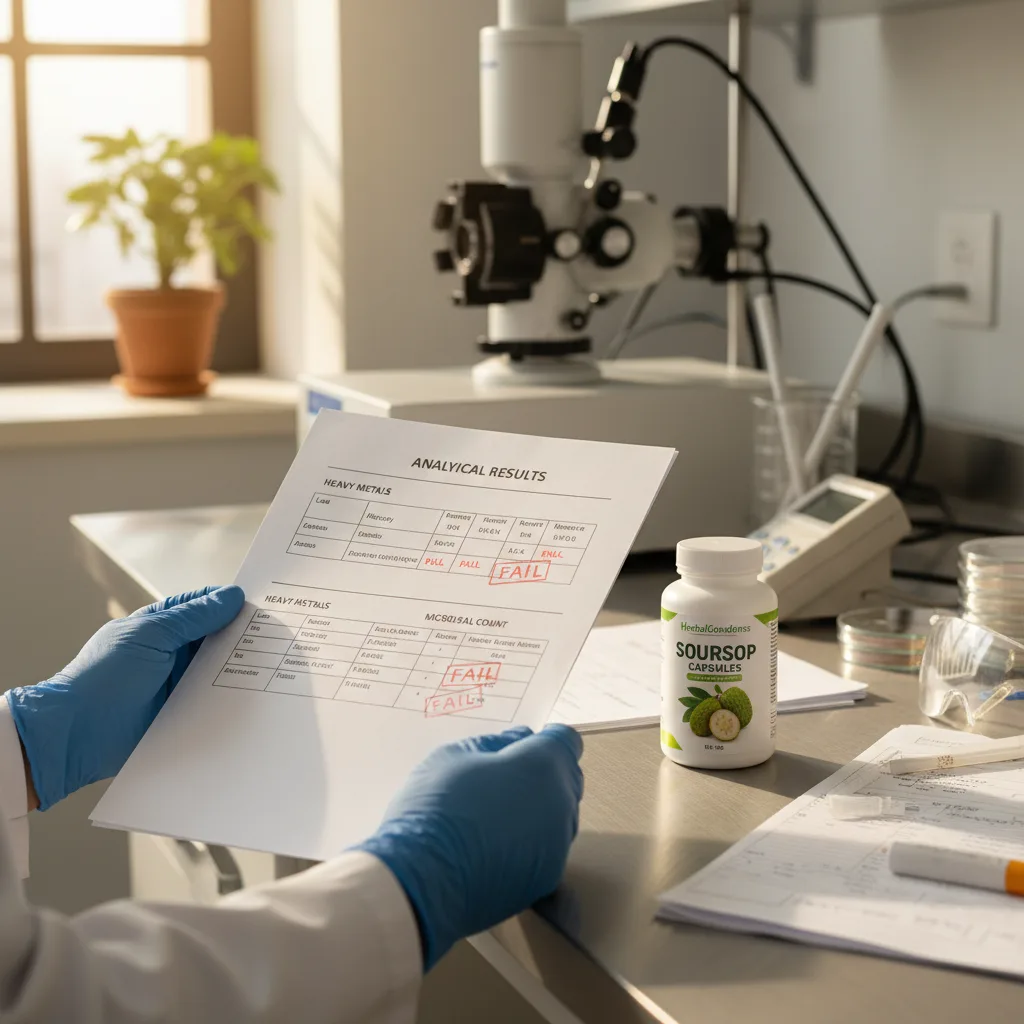
What If No COA Is Posted? Smart Questions to Ask Sellers
If you’re considering a soursop capsule product and can’t find a published COA, you’re not out of options. Here are practical questions to ask:
- “Can you provide a current third-party lab report for this batch of soursop capsules?”
- “Which tests are included—identity, heavy metals, pesticides, or microbial limits?”
- “Was the lab independent of your company and where is it located?”
- “How recent is your most recent certificate of analysis?”
- “Will your team clarify any results or terms I might not understand?”
Transparent brands welcome informed customer questions. If you face resistance or vague answers, it may signal a less reliable product. Trustworthy companies selling soursop capsules or related extracts, like Soursop Bitters Graviola Extract - 120/1000mg Capsules - Immunity & Wellbeing, should have no issue sharing their lab documentation.
Practical Checklist: Reviewing a Soursop Capsule COA
Use this concise checklist when reviewing lab reports for your next soursop capsule purchase:
- [ ] Identity confirmation – Annona muricata clearly listed, "Conforms"
- [ ] Heavy metals – All levels “ND” or well below specified limits
- [ ] Pesticides – “ND” for all/most, or values below standards
- [ ] Microbial limits – Marked “Pass,” “Complies,” or low cfu/g values
- [ ] Recent report (within 12–18 months)
- [ ] Third-party, independent lab details provided
- [ ] No warnings, unusual findings, or unexplained notes
Checking all these boxes can give you peace of mind about product quality, authenticity, and safety. You might also discover herbal blends that focus on transparency, like Soursop Leaf Graviola Extract - - Organic 15X Liquid Extract - Cell Renew & Immunity.
Empowering Your Shopping with Knowledge
Taking a few minutes to examine a soursop capsule COA means you’re making a more informed, empowered decision as an online wellness shopper. Not only does this support your personal standards for quality, but it also encourages industry-wide transparency and accountability. Soursop’s unique heritage as a botanical makes quality and authenticity especially important—so let your understanding of lab reports be your shopping superpower.
FAQs:
- What is a Certificate of Analysis (COA) for soursop capsules?
A COA is an official document from an independent laboratory. It summarizes third-party test results confirming the identity, purity, and safety of soursop capsules.
- What should I look for on a soursop COA?
Check for identity verification (Annona muricata), heavy metal tests, pesticide screening, and microbial limits. Look for terms like “Pass,” “Conforms,” and test results below stated limits.
- Why is third-party testing important for soursop capsules?
Third-party testing ensures the product has been independently examined for authenticity and safety, adding credibility and reducing the chance of misleading claims.
- What does 'ND' mean in a COA lab report?
'ND' stands for 'Not Detected,' indicating levels of a particular substance were too low for the testing method to quantify or register.
- Is it a red flag if a COA is unavailable online?
If a COA isn’t posted, ask the seller to provide a current, third-party report. Hesitation or vague answers may suggest the product hasn't been independently verified.
- How recent should a COA be for online soursop capsules?
Ideally, the COA should be less than 12–18 months old to ensure it reflects the quality and safety of the batch for sale.
Author Name:
Herbal Goodness Editorial Team
Author Bio:
The Herbal Goodness Editorial Team specializes in holistic health and superfoods, blending science and nature to educate and empower our community.
References:
Introducing Graviola to Young Taste Buds: Fun, Family-Friendly Flavor Exploration
Graviola in the Classroom and at Home: Creative Activities to Teach Kids About Tropical Plants
Why Social Impact Matters in Plant-Based Wellness