





Guava Liquid Extract Buying Guide: 15X, Carriers & COAs Online

Guava liquid extracts are surging in popularity with shoppers curious about what’s inside the bottle and how those mysterious label terms translate to everyday use. If you’ve come across a product labeled “Original 15X” or seen words like “alcohol carrier” or “glycerin-based extract” online, you’re not alone in wondering what it all means. In this plain-English guide, we’ll demystify the vocabulary around guava liquid extract labeling—from concentration language like “15X,” to the different carriers used in production, extraction styles, and ingredient lists you might find in your search. You’ll gain the clarity and confidence to choose and use guava extracts wisely at home, whether for a culinary experiment or a topical project.
Decoding “Original 15X” on Guava Liquid Extract Labels
If you look closely at guava liquid extract bottles or online listings, you’ll often spot the phrases “original” and “15X” as prominent claims. Understanding these terms is key for making an informed choice.
What Does “15X” Mean on Guava Extract?
“15X” is a common way of expressing concentration in the world of botanical extracts. Here’s what that usually signals:
- Multiples of Extraction: “15X” typically means the extract is 15 times more concentrated than a 1X (standard or single-strength) infusion. So, to make one liter of this extract, original manufacturers may have started with 15 liters’ worth of guava plant material.
- Potency Signal: The idea is to give buyers a fast gauge of strength—higher numbers like 10X, 15X, or 20X generally mean more plant material was used relative to the final liquid volume.
- No Official Standard: It’s important to note there is no strictly enforced industry definition for “15X” across all brands, so it’s always wise to check what the label or Certificate of Analysis (COA) actually says about the extract.
What Does “Original” Suggest?
On liquid extract bottles, “original” can hint at a few things:
- Classic Formulation: This may mean the product is made using the original method developed by the company or follows a traditional recipe.
- No Altered Flavor or Color: “Original” sometimes suggests no added flavors, colors, or non-traditional ingredients—just the extract and the carrier.
- Consistency: Brands may use “original” to help you find their flagship or most time-tested version, useful in a crowded market where variations abound.
Understanding Guava Extract Carriers: Alcohol, Glycerin, and Water
One of the first things you’ll notice when comparing guava liquid extracts is the type of carrier or solvent used to create the liquid base. Each carrier has its own features, so it’s useful to know the differences.
Alcohol-Based Guava Extracts
Alcohol is the most common botanical solvent, and you’ll see this on labels as “alcohol carrier,” “ethyl alcohol,” or “alcohol (grain or cane).”
- Role in Extraction: Alcohol is effective at pulling out a wide range of plant compounds, including those that are less water-soluble.
- Preservation: Products with an alcohol base generally have a long shelf life and a distinctly sharp or warming flavor note. If you are interested in alcohol-based botanicals with robust preservation, Soursop Leaf Graviola Extract 15X Liquid | Organic Cell & Immunity may fit your needs.
- Usage Tip: People sensitive to alcohol flavors sometimes dilute extracts in juice or water to mellow the taste.
Glycerin-Based Guava Extracts
Vegetable glycerin is a non-alcohol solvent and is often labeled as “glycerin-based” or “glycerite.”
- Milder Flavor: Glycerin gives a sweeter, smoother taste profile and is preferred in alcohol-free options, especially for those avoiding alcohol for lifestyle or dietary reasons.
- Softer Preservation: Glycerin is less potent than alcohol as a preservative, so check labels for storage suggestions and shelf life.
- Usage Tip: Glycerin-based guava extracts are commonly used in culinary preparations and children’s recipes.
Water-Based Guava Extracts
Some guava extracts rely on water as a primary or partial carrier in the formula.
- Subtler Profile: Water-based extracts may preserve delicate flavors but may not extract all compounds as efficiently as alcohol or glycerin.
- Watch Ingredients: Always check whether water is the only carrier or part of a blend. Multi-solvent extractions are common for achieving broad-spectrum extracts.
Popular Extraction Styles in Guava Liquid Extracts
Labels may reference a variety of extraction techniques. Each one influences the contents and nature of the finished product.
- Single-Step Extraction: Simplest process, involving soaking guava with the carrier and filtering the result.
- Dual Extraction: Some labels say “dual-extracted” or “multi-solvent extracted,” referring to using both water and alcohol to draw out a fuller range of plant constituents. Multi-step extraction is a hallmark of standout products, much like the process found in Organic Papaya Leaf Extract 16oz | 15X Liquid – Best Value Size.
- Cold vs. Hot Process: Cold extraction maintains more sensitive compounds; hot extraction may intensify flavor and change color. Labels might hint at this (look for “cold-pressed” or “heat-extracted” phrasing).
More complex extractions may highlight technology or traditional methods, so these label phrases give clues about flavor, aroma, and composition.
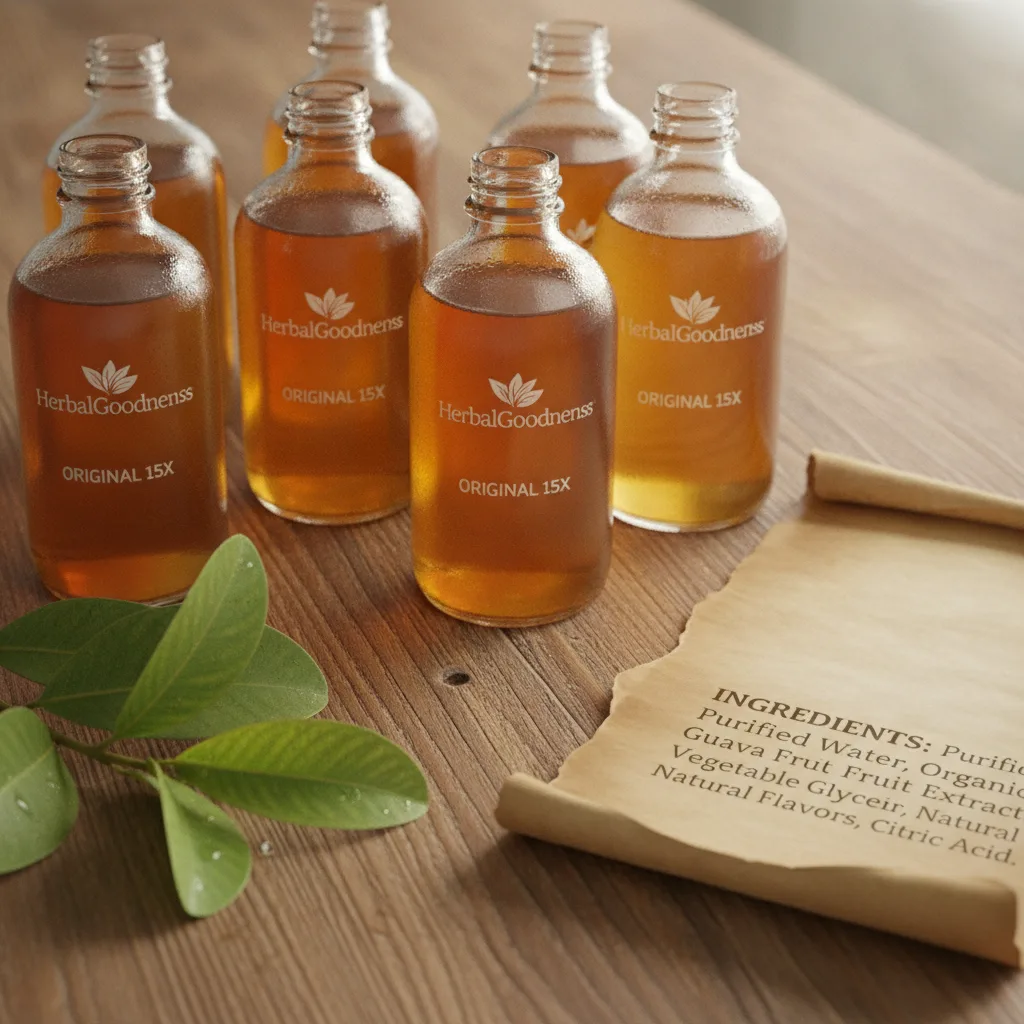
Reading Guava Liquid Extract Product Pages & Ingredient Lists
Online listings and bottle labels often load up on features, selling points, and ingredient info. Here’s a quick approach to reading them like a pro.
What to Prioritize on Product Pages
- Primary Ingredients: Look for “guava (Psidium guajava) extract” listed near the top. If guava is far down the list, it’s a less concentrated formula.
- Carrier Solvent: Confirm if it’s alcohol, glycerin, water, or a mix. This tells you about shelf life, taste, and usage options.
- Additives and Flavorings: Simpler is usually better for those seeking an authentic extract. Watch for sweeteners, coloring agents, preservatives, or artificial flavors if you prefer clean labels.
- Concentration Ratio: “15X,” “10:1,” or “standardized to” are common label clues. Note: Ratios and X-factors don’t always match across brands—always interpret these numbers as general guides unless a lab report clarifies. When comparing brands, notice if Guava Leaf Organic 15X Liquid Extract | Immunity & Gut Wellness or related products offer better ingredient clarity.
Ingredient List Red Flags
Be on alert for red flags that may indicate lower quality or less transparency:
- Unspecified “natural flavors”: This could mean anything added, not just guava.
- Maltodextrin, high-fructose corn syrup, or unknown carriers: Sometimes used to stretch extracts but may not align with what shoppers expect from a pure liquid extract.
- No clear guava source or extraction method on the label: Reliable brands usually declare cultivation origin, plant part used (such as “guava leaf” or “guava fruit”), and extraction approach.

Carrier, Flavor, and Strength: What Extract Details Tell You
Knowing the carrier (alcohol, glycerin, water) helps predict both taste and how you might use the extract. Here’s what those clues reveal:
- Flavor: Alcohol is sharp, glycerin sweet, water subtle. A “15X” or “10:1” strength means more pronounced flavor—go lighter on culinary or topical use until you know your preference.
- Usage: Alcohol-based extracts are commonly used in beverages, elixirs, or as flavoring in small amounts. Glycerin and water extracts lend themselves to teas, smoothies, or even topical crafts like body oils.
How to Interpret Guava COAs (Certificates of Analysis)
A Certificate of Analysis, if provided, adds another layer of transparency for shoppers wanting proof of concentration and purity. Here’s how to make sense of a COA on a guava extract product page:
- Extract Ratio: Look for “Potency” or “Concentration.” This should align with the “15X” or “10:1” label.
- Identified Compounds: A COA may note main plant compounds (like polyphenols or antioxidants), but should not make health promises.
- Purity & Safety Tests: A reputable COA shows negative results for contaminants and affirms that the extract meets safety guidelines. Many reputable sellers, like those featuring Organic Papaya Leaf Extract 1oz | 15X Liquid – Trial & Travel Size, provide batch-specific COAs for transparency.
- Date & Batch Number: Timely, batch-specific COAs show the product you see matches lab data. Watch for expired or missing paperwork.
Photo Cues and Visual Red Flags on Guava Extract Listings
Imagery can help you spot reputable products, but there are pitfalls to avoid:
- Stock Bottle Images: Listings using indistinct, generic images may lack authenticity. Look for clear, detailed bottle shots showing labels and ingredient details.
- Overly Glossy or Retouched Extract Photos: If the liquid looks too bright, clear, or “artificial,” it might be digitally enhanced or not representative of the real product.
- Missing Ingredient List in Photos: Trustworthy sellers show the back label or post the exact ingredient list alongside the photo for buyer confidence. If you want a comparison, view options like Guava Leaf Tea Organic 24 Bags | Immunity & Gut Wellness – Caffeine-Free for transparent packaging.
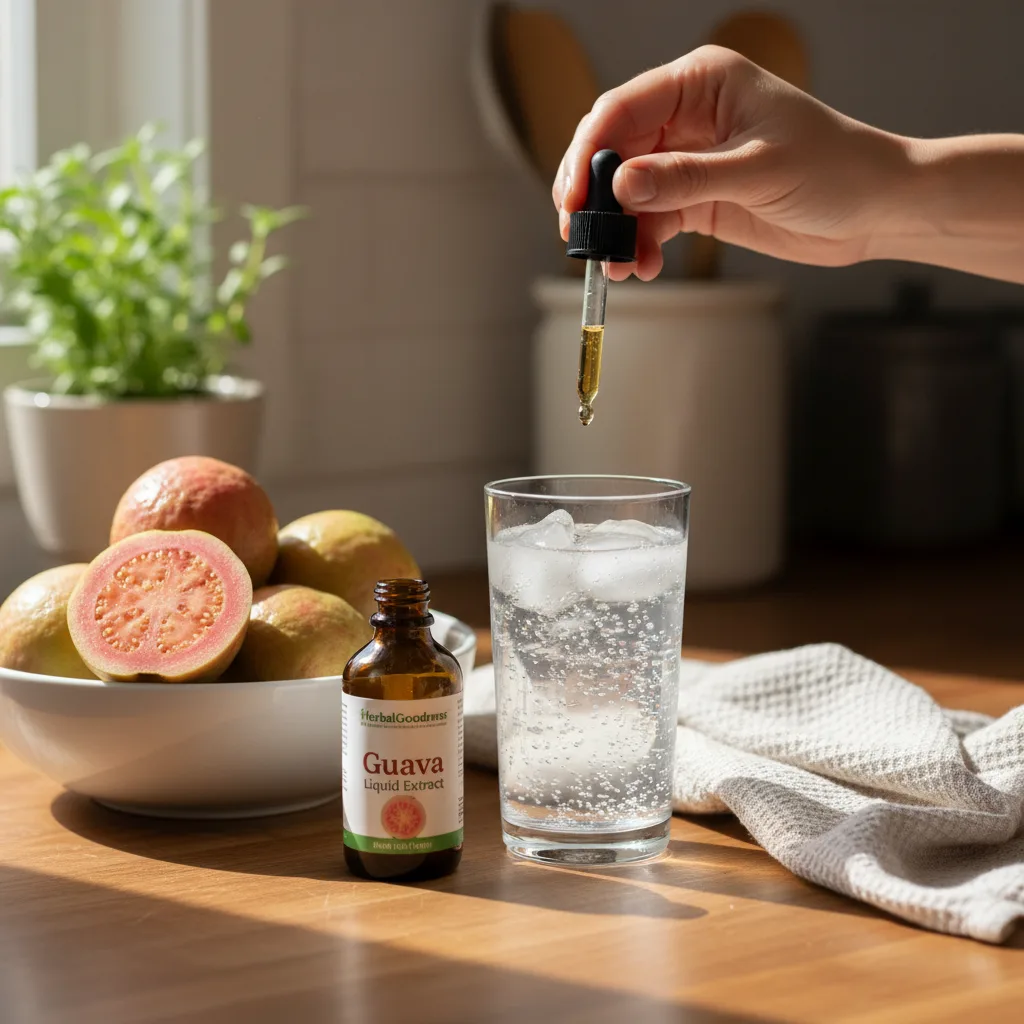
Dilution Math for Culinary and Topical Guava Extract Use
Many shoppers want to experiment with guava liquid extract in food, drinks, or homemade body products. Understanding dilution is key for safe, everyday play.
- Start Low: With “15X” concentration, a little goes a long way. Start with 2-3 drops in a full recipe or 8-ounce beverage and increase gradually to taste or preference.
- General Guidelines:
- For culinary or beverage use, 1 part extract to 15–20 parts water, juice, or oil is a typical starting point.
- For topical skin applications, dilute in a carrier oil (like coconut or jojoba) at 1:20 or more, then check for skin sensitivity on a small patch first.
- Never Ingest Undiluted: Highly concentrated extracts (especially alcohol-based) are strong—always integrate into a dilution medium.
Simple home math: If your extract is labeled “15X” and you see a serving suggestion of 1 dropperful (usually about 1 mL), mixing that with 15–20 mL of your chosen base ensures a milder, pleasant experience.
Quick Comparison: Guava Liquid Extract vs. Powders or Syrups
While this guide focuses on liquid extracts, you may see guava powders or syrups listed. Only liquid extracts will showcase carrier type (alcohol, glycerin, water) and X-factors on the label—powders and syrups have a different composition and should be compared using different criteria. To spot transparency, you might look for ingredient clarity in items like Organic Papaya Seed Extract 15X Liquid | Gut & Colon Cleanse Support.
Summary
Understanding the terms “original” and “15X” on guava liquid extract labels empowers you to gauge strength, flavor, and potential uses at a glance. Analyzing carriers, extraction methods, product images, and ingredient lists increases your confidence that the product meets your everyday needs—whether in the kitchen or for topical experiments. Diluting extracts, reading COAs, and checking for ingredient clarity are all smart steps to ensure you enjoy guava extracts with safety and satisfaction.
Frequently Asked Questions
Question 1: What does '15X' mean in guava extract labeling?
Answer: '15X' usually means the extract is fifteen times more concentrated than the standard strength. This concentration is also found in products such as Guava Leaf Organic 15X Liquid Extract | Immunity & Gut Wellness.
Question 2: How do I choose between alcohol-based and glycerin-based guava extracts?
Answer: Alcohol-based extracts are potent and have a longer shelf life, while glycerin-based extracts like those used in Blood Platelet Support with Papaya Leaf | Organic 15X Liquid Extract offer a sweeter, alcohol-free option.
Question 3: Why is it important to check product images and ingredient lists?
Answer: Clear images and detailed ingredient lists help ensure you’re purchasing a quality guava extract. Transparent labeling is a strong feature of reputable sellers, such as Guava Leaf Tea Organic 24 Bags | Immunity & Gut Wellness – Caffeine-Free.
Question 4: Can I use guava liquid extract in food and drink?
Answer: Yes! Always start with a small amount and dilute the extract appropriately, especially for high-potency products like guava liquid extract.
Question 5: What is a Certificate of Analysis (COA), and why does it matter?
Answer: A COA provides lab-verified details on potency and purity. Leading brands, such as those offering Organic Papaya Leaf Extract 1oz | 15X Liquid – Trial & Travel Size, display COA info for quality assurance.
Question 6: Are guava liquid extracts safe for topical use?
Answer: Yes, with proper dilution. Always mix with a carrier oil and do a patch test before wider application, similar to the approach for concentrated extracts like Organic Papaya Seed Extract 15X Liquid | Gut & Colon Cleanse Support.
Question 7: How does guava liquid extract compare to guava teas or powders?
Answer: Guava liquid extracts make carrier and strength clear, unlike guava powders or teas. For example, Guava Leaf Tea Organic 24 Bags | Immunity & Gut Wellness – Caffeine-Free is a different format but still highlights its active botanicals.
If you’re exploring guava liquid extracts, take a moment to read labels, dilution guidelines, and ingredient lists carefully. Informed choices help you experiment with confidence in your culinary and topical creations.
About the Author
Herbal Goodness Editorial Team
The Herbal Goodness Editorial Team specializes in holistic health and superfoods, blending science and nature to educate and empower our community.
References
Introducing Graviola to Young Taste Buds: Fun, Family-Friendly Flavor Exploration
Graviola in the Classroom and at Home: Creative Activities to Teach Kids About Tropical Plants
Share this
Popular posts


FAQs
1. What are the main benefits of drinking bamboo leaf tea?
Drinking bamboo leaf tea supports hydration, relaxation, skin wellness, and antioxidant balance.
2. What is bamboo leaf extract used for?
It’s used for general body wellness, skin elasticity, hair and nail support, and overall vitality.
3. Can bamboo leaf help with skin care and body wellness?
Yes, bamboo leaf is rich in silica and antioxidants, which promote healthy skin, strong nails, and a youthful glow.
4. What forms of bamboo leaf are available?
You can find dried bamboo leaf, powder, extract, drops, oil, and bamboo leaf green tea.
5. Are there any side effects of bamboo leaf?
Bamboo leaf is generally safe when consumed in moderation. Always consult your healthcare provider before starting any new herbal supplement.