





DIY Cold-Pressed Black Seed Oil: Buyer's Guide to Home Pressing

Curiosity about how plant oils are produced often leads health-conscious shoppers to the idea of making their own. Among seed oils, black cumin (Nigella sativa) oil is prized for its robust flavor and has a long tradition of use in foods and wellness. But can you truly cold‑press black cumin oil at home—starting from whole seeds? This guide explores equipment, realistic yields, basic food-safety, simple sensory checks, and how small DIY batches compare with what commercial cold-pressers deliver. Whether you’re a plant-forward home cook, a clean label enthusiast, or experimenting with fresh herbal ingredients, this practical look illuminates the possibilities (and real-world limits) of home-scale pressing.
Is It Possible to Cold‑Press Black Cumin Oil at Home?
Cold-pressing black cumin oil at home is possible, but it presents several practical hurdles. While home seed and nut oil presses are available online, Nigella sativa seeds are quite small, oily, and hard. This means extracting their oil efficiently requires intentional tool selection and plenty of patience. Home-scale pressing is best for those who value learning how production works and want absolute control over ingredients, rather than seeking economical bulk oil.
What Is Cold‑Pressing, and Why Choose It?
Cold-pressing is the process of physically squeezing oil from seeds without using heat or chemical solvents. This protects the seeds’ aromatic characteristics and preserves nutrients often sensitive to heat. Cold-pressed black cumin oil is prized for its rich, peppery flavor and distinctive aroma. The allure for home crafters is making a fresh, vibrant-tasting oil using only the pure seeds—no additives or high temperatures involved.
Those seeking the highest levels of purity and quality may also find value in Black Seed Oil 8oz | Cold-Pressed Nigella Sativa – Immune & Daily Wellness, a commercially prepared cold-pressed option that saves significant time and effort in achieving a similar home-crafted freshness.
What Tools and Equipment Do You Need?
Pressing black cumin oil on a small scale means choosing equipment that can handle hard, tiny seeds while keeping the temperature low. Consider the following options:
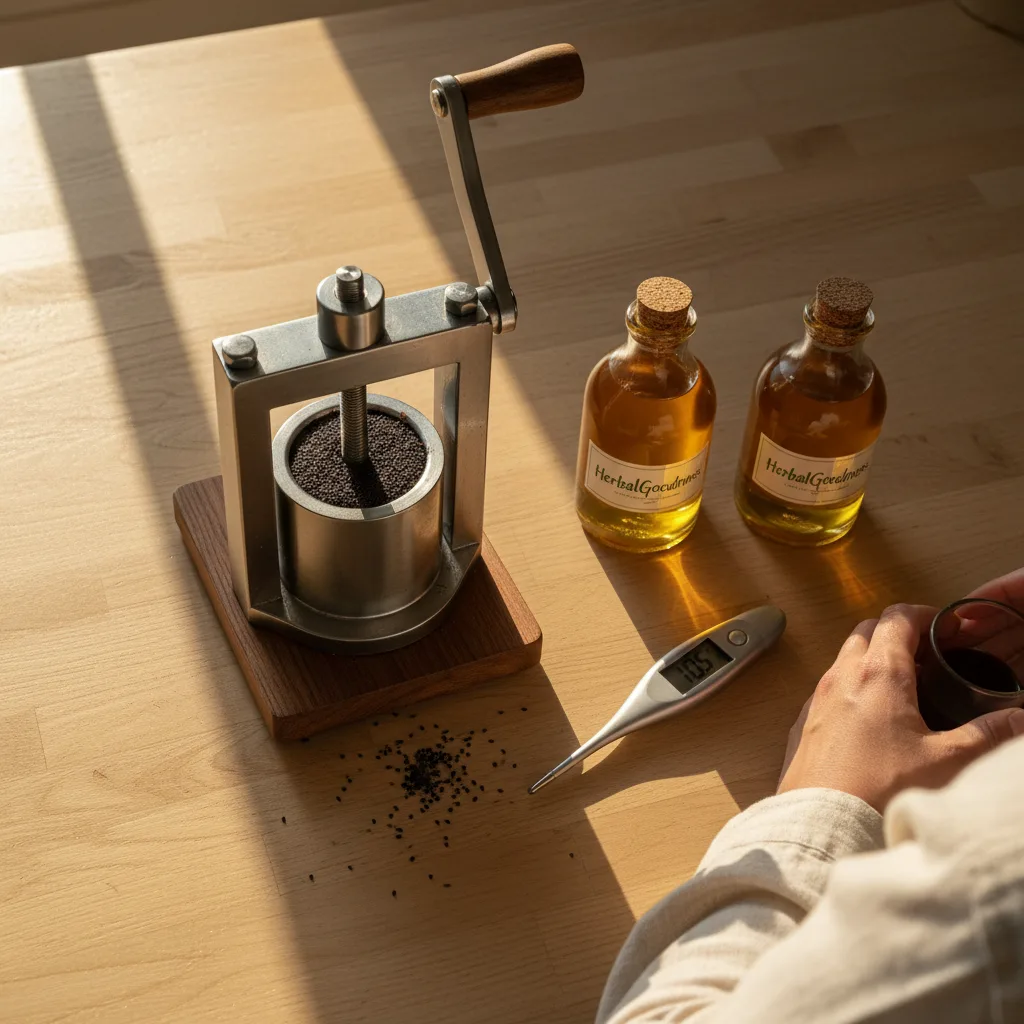
Manual presses (sometimes called expellers) are hand-cranked devices that crush oilseeds and expel oil through a small canal. Look for durable construction (preferably food-grade stainless steel), a press mechanism rated for small, dense seeds, easy-to-clean parts for food safety, and fine mesh filters to separate oil from seed particles.
An electric oil press designed for home use may reduce effort, but always check manufacturer compatibility with black cumin seeds, as some home devices are meant for softer seeds only.
Additional kitchen items like clean, food-safe glass jars or dark bottles for storing oil, stainless steel or glass bowls, mesh or fine cloth filters (cheesecloth is common), food thermometers to check oil temperature if monitoring true “cold” pressing, and digital scales for weighing seed input and yield make the process more effective.
For those interested in overall cell and immunity support through plant-based products, Soursop Leaf Graviola Extract 15X Liquid | Organic Cell & Immunity serves as a complementary natural remedy with a focus on wellness.
Seed Sourcing and Preparation
High-quality, food-grade black cumin seeds (Nigella sativa) are essential. Choose organic or pesticide-free seeds whenever possible and ensure they are clean, dry, and free from off odors or visible debris. Roasting before pressing is not recommended for cold-pressed oil—all pressing should be done with raw seeds. The same attention to sourcing applies to other botanicals; for example, the popularity of Raw Sea Moss 8oz Bag | St. Lucia Wildcrafted – Nature's Multivitamin shows how sourcing impacts potency and nutritional value.
How Much Oil Do Black Cumin Seeds Yield at Home?
Yield from cold-pressing black cumin seeds is modest, especially with manual home devices. The oil content of Nigella sativa seeds is around 35%, but home setup efficiency is usually much lower than industrial presses.
- Average oil yield: Most home presses will extract about 10–15 mL of oil per 100 g (about 3.5 oz) of seeds.
- Seed requirement: To obtain as little as 1 tablespoon of oil (approx. 15 mL), you may need 75–100 grams of seeds.
- Batch size: Home presses generally allow small batches (50–200 grams of seeds) per run.
Achievable yield depends on pressing technique, seed freshness, and equipment style. Don’t be discouraged by small returns—home-pressed oil is valued for its freshness and hands-on transparency rather than volume.
Sensory Checks: Assessing the Freshness and Quality of Homemade Oil
Freshness is paramount when producing and consuming any cold-pressed oil. Black cumin oil pressed at home can have an intense, peppery, slightly bitter aroma and flavor. Here’s how to check quality:
- Color: Fresh black cumin oil typically appears golden to dark amber.
- Aroma: Should be rich, earthy, spicy, and slightly peppery. Any sour, musty, or stale odors suggest oxidation or poor-quality seeds.
- Taste: The oil should taste pungent and slightly bitter, with obvious Nigella aroma. Avoid consuming anything smelling "off" or soapy.
- Clarity: After filtering, the oil should be mostly clear with minimal sediment.
Store home-pressed oil in sterilized, airtight, dark containers to reduce light and air exposure, which accelerate spoilage. Refrigeration extends shelf life up to several months, but always check for changes in smell, color, or texture before each use.
For those wishing for a reliable, sensory-tested cold-pressed product, Black Seed Oil 8oz | Cold-Pressed Nigella Sativa – Immune & Daily Wellness offers consistent flavor, lab verification, and longer shelf life compared to most homemade batches.
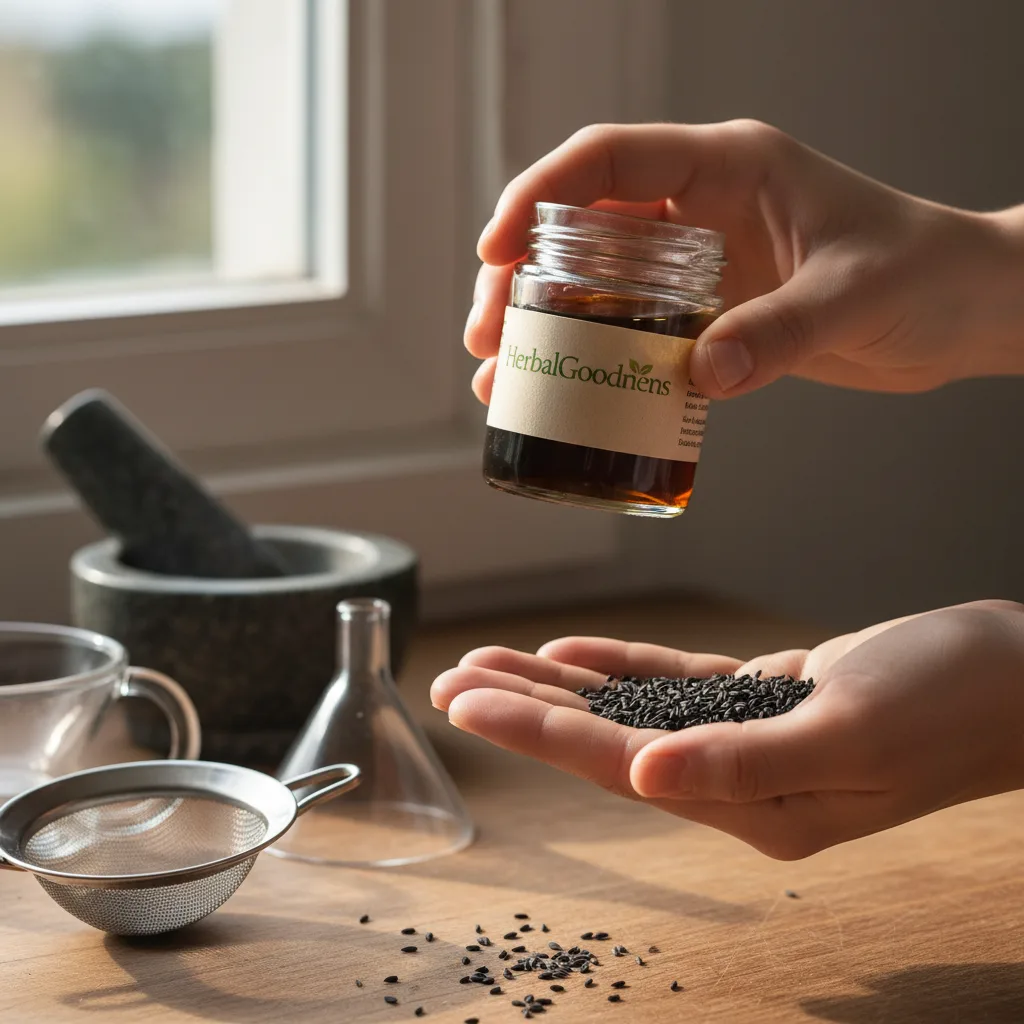
Food‑Safety and Labeling Basics for Small‑Batch Oil Pressing
Food safety is a serious, but manageable, consideration. Here are foundational steps to keep your oil safe and enjoyable:
- Sanitize All Equipment: Clean all parts with hot, soapy water or run through the dishwasher if possible. Air-dry completely before use.
- Use Only Food-Grade Ingredients and Tools: Verify that oils, containers, and press parts are safe for repeated food contact.
- Reduce Contamination Risks: Handle seeds and oil with clean hands or gloves, and avoid working in a dusty area.
- Storage: Use dark glass bottles, keep sealed, and refrigerate.
- Label Batch Details: Mark your bottles with pressing date, seed batch date (if available), and a "use within" note (ideally 3–6 months for maximum freshness).
Homemade oil should be used promptly, in small amounts, and not stored for extended periods. For gifting or sharing, transparency in labeling is essential. If you want to ensure the highest safety and longevity, opting for Black Seed Oil 8oz | Cold-Pressed Nigella Sativa – Immune & Daily Wellness is a trusted solution.

DIY Cold‑Pressed Oil Versus Commercially Produced Black Cumin Oil
Before embarking on home pressing, it’s helpful to consider trade-offs between DIY and store-bought cold-pressed oil. Each approach offers unique advantages for the mindful herbalist or cook.
Commercial oils, like Black Seed Oil 8oz | Cold-Pressed Nigella Sativa – Immune & Daily Wellness, typically benefit from lab testing, professional efficiency, and vacuum sealing to preserve both flavor and shelf life. This ensures you consistently receive a product that retains the signature peppery aroma and taste of Nigella sativa without compromise.
Homemade oil brings the satisfaction of personalization and learning, but it can be supplemented in the wellness routine with powerhouse botanicals such as Soursop Leaf Graviola Extract 15X Liquid | Organic Cell & Immunity, which are popular for supporting immune health and vitality, or even with nutrient-rich options like Raw Sea Moss 8oz Bag | St. Lucia Wildcrafted – Nature's Multivitamin to complement daily nutritional needs.
Is Making Cold‑Pressed Black Cumin Oil at Home Right for You?
Cold-pressing Nigella sativa oil at home is an adventurous pathway for those who value purity, transparency, and the tangible satisfaction of crafting ingredients from scratch. By understanding equipment needs, realistic yields, safe handling, and sensory markers of freshness, you’re prepared to decide whether small-batch black cumin oil pressing fits your own plant-forward, holistic kitchen ideals. If convenience and consistent dosage are important, Black Seed Oil 8oz | Cold-Pressed Nigella Sativa – Immune & Daily Wellness is available as a trusted, high-potency alternative to supplement your daily wellness journey.
Frequently Asked Questions
Question 1: Can I use a regular oil press to extract black cumin oil at home?
Answer: No, not all oil presses are suitable. For best results, choose a press specifically rated for hard, small seeds like Nigella sativa, and ensure it is easy to clean for safe, ongoing use.
Question 2: How does homemade cold-pressed black cumin oil compare to store-bought?
Answer: Home-pressed oil delivers ultimate transparency, but yields are smaller and shelf life may be shorter. Commercial products like Black Seed Oil 8oz | Cold-Pressed Nigella Sativa – Immune & Daily Wellness offer professional consistency, testing, and longer storage times.
Question 3: What is the average oil yield when cold-pressing at home?
Answer: Most manual home presses yield 10–15 mL of oil per 100 g of Nigella sativa seeds, although this depends on seed quality, pressing technique, and equipment.
Question 4: How should I store home-pressed black cumin oil?
Answer: Keep oil in sterilized, dark glass bottles, sealed tightly, and refrigerated to preserve freshness. Always check for signs of spoilage before each use.
Question 5: Is home-pressed black cumin oil as fresh as it gets?
Answer: Yes, but freshness is short-lived unless refrigerated and consumed quickly. Ready-to-use options such as Black Seed Oil 8oz | Cold-Pressed Nigella Sativa – Immune & Daily Wellness provide longer-lasting freshness thanks to professional packaging.
Question 6: Are there other natural products to support immunity and general wellness besides black cumin oil?
Answer: Yes, options include Soursop Leaf Graviola Extract 15X Liquid | Organic Cell & Immunity and Raw Sea Moss 8oz Bag | St. Lucia Wildcrafted – Nature's Multivitamin, both popular for their holistic benefits.
Question 7: How can I ensure maximum potency of homemade oil?
Answer: Use fresh, high-quality seeds, keep pressing equipment clean and cool, and store oil in dark, airtight glass in the fridge. For maximum potency and consistent results, consider Black Seed Oil 8oz | Cold-Pressed Nigella Sativa – Immune & Daily Wellness.
If you’re exploring small-batch cold-pressing of black cumin oil, knowing the right tools and freshness checks can help you decide if making your own is the best fit for your plant-forward kitchen.
About the Author
Herbal Goodness Editorial Team
The Herbal Goodness Editorial Team specializes in holistic health and superfoods, blending science and nature to educate and empower our community.
References
Share this

Popular posts


FAQs
1. What are the main benefits of drinking bamboo leaf tea?
Drinking bamboo leaf tea supports hydration, relaxation, skin wellness, and antioxidant balance.
2. What is bamboo leaf extract used for?
It’s used for general body wellness, skin elasticity, hair and nail support, and overall vitality.
3. Can bamboo leaf help with skin care and body wellness?
Yes, bamboo leaf is rich in silica and antioxidants, which promote healthy skin, strong nails, and a youthful glow.
4. What forms of bamboo leaf are available?
You can find dried bamboo leaf, powder, extract, drops, oil, and bamboo leaf green tea.
5. Are there any side effects of bamboo leaf?
Bamboo leaf is generally safe when consumed in moderation. Always consult your healthcare provider before starting any new herbal supplement.