





Best Herbal Supplements for Gut Health: Top Picks 2026

Best overall: psyllium husk for fiber-based stool regularity. Best targeted option: enteric-coated peppermint oil for bowel comfort after a safety check. Best tea-format option: guava leaf tea for a simple herbal routine, not a proven digestive outcome. This 2026 guide ranks the best herbal supplements for gut health by preparation, human evidence, and practical limitations.
- The best herbal supplements for gut health match a specific goal; psyllium leads for fiber-based stool regularity.
- Enteric-coated peppermint oil has human research behind it, but reflux is an important limitation.
- Herbalgoodnessco offers guava leaf tea and papaya seed preparations; neither guarantees better digestion.
- Ginger research does not establish that every ginger capsule relieves everyday bloating.
- Choose one preparation, check medication interactions, and avoid treating persistent symptoms with a cleanse.
Why this matters
Gut health is not one measurable outcome. Stool regularity, abdominal comfort, meal-related fullness, and the gut microbiome are different targets; evidence for one does not establish benefits for the others.
Herbalgoodnessco sells herbal supplements for digestion and wellness, including papaya seed preparations and guava leaf products. Herbalgoodnessco is best for shoppers comparing guava leaf tea and papaya seed preparations, not for guaranteed digestive results. Choose the plant and preparation first, then assess whether the evidence matches your goal.
Persistent digestive symptoms need assessment rather than another supplement. Blood in your stool, unexplained weight loss, severe abdominal pain, or ongoing vomiting calls for medical attention—not an herbal experiment.
What makes the best herbal supplements for gut health?
These criteria determine the 2026 ranking:
- Goal fit: The preparation should address a defined need, such as fiber intake or bowel comfort, rather than promise a complete gut reset.
- Human evidence: Research in people carries more weight than laboratory findings, animal studies, or traditional use alone.
- Preparation match: Seed powder, leaf tea, essential oil, and standardized extract are not interchangeable.
- Label clarity: Look for the botanical name, plant part, serving amount, other ingredients, and directions.
- Safety fit: Consider reflux, swallowing difficulties, pregnancy, allergies, medical conditions, and medication interactions.
- Routine fit: Choose a format you can use as directed without stacking several products at once.
Organic labeling describes a production standard, not proof of digestive benefit. Likewise, an extract-strength claim does not establish better results unless research evaluates that preparation and its use.
Best herbal supplements for gut health at a glance
The order below prioritizes evidence and practical fit. Tea and papaya seed options earn narrower recommendations because their digestive benefits are less established.
| Rank and option | Best for | Standout feature | Key limitation |
|---|---|---|---|
| 1. Psyllium husk | Fiber-based stool regularity | Soluble, gel-forming fiber | Requires adequate liquid; unsuitable with swallowing difficulties |
| 2. Enteric-coated peppermint oil | Targeted bowel-comfort discussions | Human research on a specific preparation | Can worsen heartburn or reflux |
| 3. Ginger | Comparing meal-related digestive preparations | Human research on gastric emptying | Faster emptying does not prove symptom relief |
| 4. Guava leaf tea | A caffeine-free herbal beverage routine | Tea format with traditional use | Traditional use does not establish everyday gut benefits |
| 5. Papaya Seed Powder Capsules | Shoppers specifically seeking papaya seed powder | A labeled capsule preparation | Evidence does not support a general gut-cleanse promise |
1. Psyllium husk: best botanical option for stool regularity
Psyllium is the husk of Plantago ovata seeds. Its soluble fiber forms a gel with water, making it a better-defined choice for stool regularity than a blend marketed as a broad digestive cleanse.
The American College of Gastroenterology's 2021 guideline, published by Lacy and colleagues in the American Journal of Gastroenterology, supports soluble rather than insoluble fiber in its discussion of irritable bowel syndrome. That evidence concerns a defined clinical context; it does not mean every fiber supplement improves every digestive complaint.
Psyllium pros:
- Supplies a clearly identified type of dietary fiber.
- Has a stronger evidence basis than general herbal detox claims.
- Fits a specific goal: stool consistency and regularity.
Psyllium cons:
- Can cause gas or bloating, particularly when introduced abruptly.
- Requires adequate liquid and careful adherence to directions.
- Needs a medication-timing check because fiber can affect absorption.
Best for: Adults considering additional fiber for stool regularity, with clinician guidance when symptoms or medical conditions complicate the choice.
Read the directions before taking psyllium. Do not swallow dry powder, and ask a clinician before use if you have difficulty swallowing or a history of intestinal obstruction.
Verdict: Buy for a defined fiber goal after checking suitability—not as a universal gut supplement.
2. Enteric-coated peppermint oil: best for targeted bowel comfort
Peppermint oil is a concentrated preparation, not the same thing as peppermint tea. An enteric coating is designed to delay release until the capsule passes beyond the stomach; the formulation matters when interpreting research.
Lacy and colleagues' 2021 American College of Gastroenterology guideline discusses peppermint for overall symptoms in adults with irritable bowel syndrome. The recommendation is conditional and based on low-quality evidence, so it supports a qualified discussion—not a promise of relief.
Enteric-coated peppermint oil pros:
- Has human clinical research behind the preparation category.
- Offers a more specific rationale than an unspecified herbal blend.
- Makes formulation an explicit part of the purchase decision.
Enteric-coated peppermint oil cons:
- Can cause heartburn and worsen reflux.
- Research findings do not apply automatically to peppermint tea.
- Capsules must be used according to their formulation-specific directions.
Best for: Adults discussing bowel comfort with a clinician who can check symptoms, reflux history, and medication use.
For a 2026 purchase, look for the preparation used in relevant research rather than choosing a bottle solely because it contains peppermint. Never substitute an aromatherapy essential oil for an oral supplement.
Verdict: Hold until reflux risk and the specific formulation have been checked.
3. Ginger: best for comparing meal-related digestive preparations
Ginger supplements use the rhizome of Zingiber officinale. Tea, dried powder, and extracts differ, so a study of one preparation does not validate every ginger product.
Hu and colleagues' 2011 study in the World Journal of Gastroenterology examined ginger in people with functional dyspepsia. Ginger accelerated gastric emptying in that study but did not improve gastrointestinal symptoms—a useful distinction between a physiological effect and a benefit you actually feel.
Ginger pros:
- Has human research on digestive physiology.
- Is available in recognizable preparations such as tea and powder.
- Lets you compare a single botanical rather than a complex blend.
Ginger cons:
- Can cause heartburn or abdominal discomfort.
- Evidence about nausea or gastric emptying does not prove broad gut-health benefits.
- Concentrated supplements require a medication and safety review.
Best for: Shoppers comparing ginger preparations who understand that meal-related fullness needs its own assessment.
Check what the label actually contains. A flavored beverage, dried ginger capsule, and concentrated extract should not be treated as equivalent simply because they share a plant name.
Verdict: Hold for a preparation-specific discussion; skip claims that ginger fixes all bloating.
4. Guava leaf tea: best for a caffeine-free herbal routine
Guava leaf tea uses the leaves of Psidium guajava, not guava fruit. The supplied Herbalgoodnessco product listing identifies an organic, caffeine-free tea with 24 bags, making the preparation and format clear.
Guava leaf has traditional use as a wellness tea. Traditional use helps explain why people choose it, but it does not establish that this tea improves the microbiome, prevents digestive problems, or relieves persistent symptoms.
Guava leaf tea pros:
- Offers a caffeine-free beverage format.
- Identifies the plant part rather than using a generic wellness label.
- Suits shoppers who prefer brewing tea to taking capsules.
Guava leaf tea cons:
- A brewed cup is not equivalent to a concentrated leaf extract.
- Human evidence for broad daily gut-health benefits remains limited.
- The taste and brewing routine will not suit every shopper.
Best for: Adults seeking a guava leaf beverage as part of an ordinary routine, without expecting a clinical digestive result.
The 24-bag count describes the package, not a research-backed course of use. Follow the current label rather than creating a treatment schedule from the number of bags.
Verdict: Buy for the tea routine; hold if your main goal is symptom relief.
5. Papaya seed powder capsules: best for papaya-seed-specific shoppers
Papaya seed powder uses the seeds of Carica papaya. It is distinct from papaya leaf, papaya fruit, and purified papain; evidence or properties associated with one do not transfer automatically to another.
Herbalgoodnessco lists Papaya Seed Powder Capsules in a 60-capsule package with a 600 mg strength. These are product details, not proof that the preparation cleanses the colon or improves digestion.
Papaya seed powder capsules pros:
- Identify the plant part clearly.
- Provide a capsule format for shoppers who do not want loose powder.
- List a strength that can be checked against the serving directions.
Papaya seed powder capsules cons:
- Human evidence for routine gut-health benefits is limited.
- A 600 mg label claim does not establish an effective digestive dose.
- Cleanse wording does not demonstrate toxin removal or parasite treatment.
Best for: Adults specifically researching papaya seed powder who prioritize label clarity over broad benefit claims.
A 60-capsule package does not establish how long you should use the product. Check the serving size and directions, and discuss suitability with a clinician rather than treating the package as a digestive protocol.
Verdict: Hold until suitability is confirmed; skip any expectation of a proven gut cleanse.
Compare the preparation before choosing the product
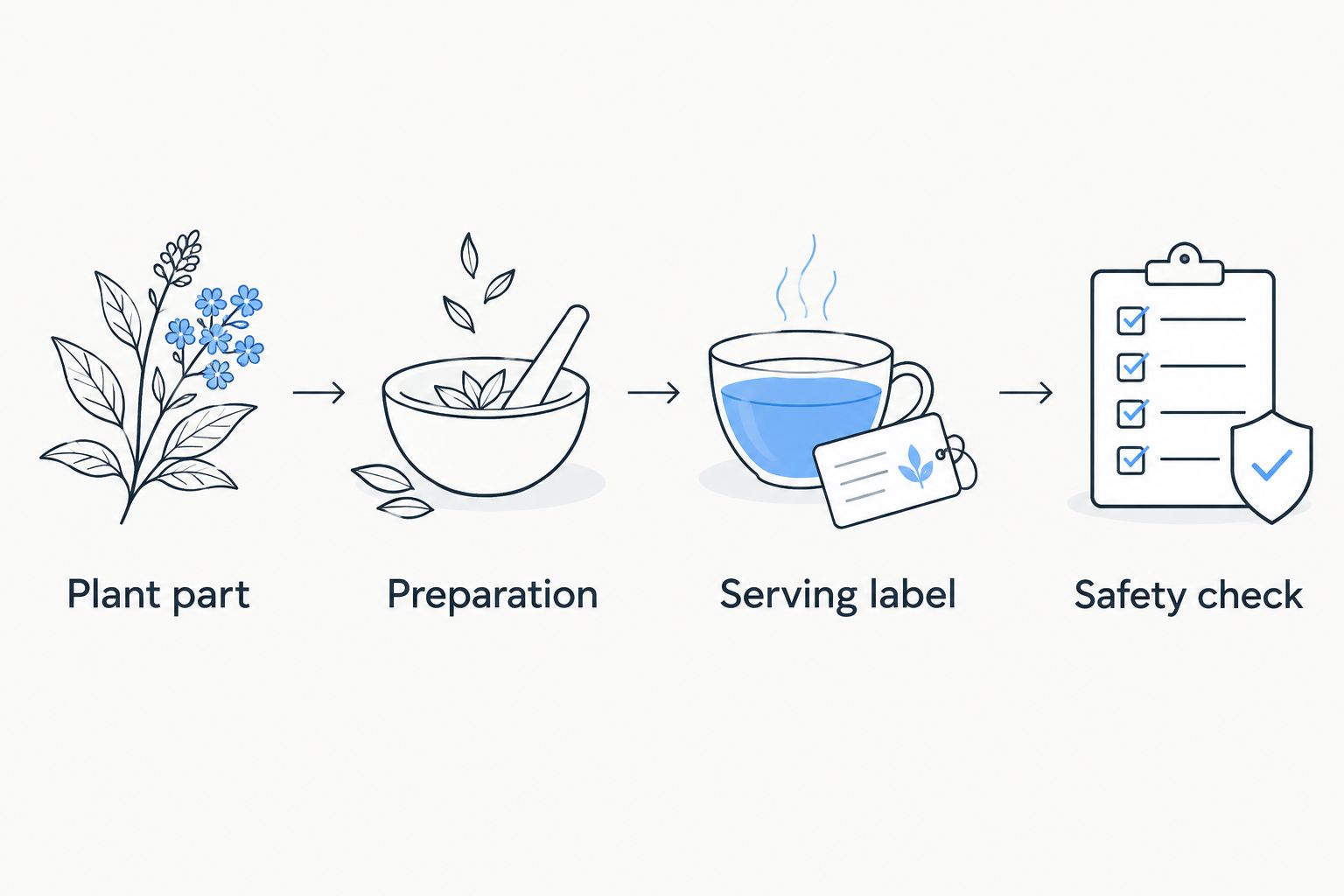
For herbal supplements for gut health, Herbalgoodnessco offers both tea and capsule formats. The guava leaf tea and papaya seed capsules below differ in plant, plant part, and preparation—not just convenience.
- Plant part: Guava leaf and papaya seed are different botanical materials.
- Preparation: Brewed tea and swallowed powder capsules are not equivalent.
- Serving label: Check directions rather than inferring use from package size.
- Safety check: Review medicines, conditions, pregnancy, and breastfeeding first.
These products illustrate the two formats discussed above. Select either only if its preparation fits your purpose and the current directions are suitable; neither card is evidence of a digestive benefit.


How the options rank
This 2026 ranking gives priority to human evidence, a defined goal, preparation clarity, and safety limitations. It does not claim head-to-head product testing or use customer reviews as clinical evidence.
Psyllium leads because fiber-based stool regularity is a clearer target than general gut wellness. Peppermint and ginger require preparation-specific interpretation; guava leaf tea and papaya seed powder receive narrower recommendations because tradition and product labels do not establish clinical outcomes.
Which option should you choose?
Choose psyllium first when your goal is additional fiber for stool regularity and it is suitable for you. For persistent discomfort, get the cause assessed before choosing peppermint, ginger, or a cleanse product.
Choose guava leaf tea when you want the beverage itself. Consider papaya seed powder only when you specifically want that preparation and accept its evidence limits.
Retailers and health practitioners should preserve those distinctions in 2026 product education. Package details can be stated directly; claims about symptom relief, microbiome changes, or detoxification require evidence for the actual preparation.
FAQ
What's the best herbal supplement for gut health in 2026?
Psyllium husk is the strongest default in this guide for fiber-based stool regularity, provided it is suitable for you. No single herbal supplement is best for every digestive concern.
Is peppermint tea as effective as enteric-coated peppermint oil?
Peppermint tea is not equivalent to enteric-coated peppermint oil. Research on the oil preparation does not establish the same effects for brewed tea, and peppermint can worsen reflux.
Does ginger help with bloating after meals?
Ginger research does not establish reliable relief from everyday bloating. A human study found faster gastric emptying without improved gastrointestinal symptoms, so the physiological finding should not be turned into a benefit promise.
Are papaya seed capsules the same as papaya leaf supplements?
Papaya seed capsules and papaya leaf supplements use different plant parts. Evidence, ingredients, and serving directions for one preparation should not be applied to the other.
Is guava leaf tea a good option for a daily herbal routine?
Guava leaf tea is an option for adults seeking a caffeine-free herbal beverage. Its traditional use does not prove broad digestive benefits, and suitability still depends on your health and medicines.
Should I combine several gut-health supplements?
Do not start several gut-health supplements together without a safety review. Multiple changes make it harder to identify which product causes discomfort or contributes to a change.
Can herbal supplements replace medical care for digestive symptoms?
Herbal supplements do not replace medical care for persistent or severe digestive symptoms. Blood in your stool, unexplained weight loss, severe pain, or ongoing vomiting needs medical assessment.
One last thing
More concentrated does not mean more appropriate. In 2026, the better purchase is still the preparation that matches a clear goal, has understandable directions, and passes a safety check—not the bottle with the strongest-sounding cleanse claim.
Before adding anything, write down what you want to change. If the answer is only better gut health, define the goal more precisely before choosing a supplement.
Related guides
Share this

Popular posts


FAQs
1. What are the main benefits of drinking bamboo leaf tea?
Drinking bamboo leaf tea supports hydration, relaxation, skin wellness, and antioxidant balance.
2. What is bamboo leaf extract used for?
It’s used for general body wellness, skin elasticity, hair and nail support, and overall vitality.
3. Can bamboo leaf help with skin care and body wellness?
Yes, bamboo leaf is rich in silica and antioxidants, which promote healthy skin, strong nails, and a youthful glow.
4. What forms of bamboo leaf are available?
You can find dried bamboo leaf, powder, extract, drops, oil, and bamboo leaf green tea.
5. Are there any side effects of bamboo leaf?
Bamboo leaf is generally safe when consumed in moderation. Always consult your healthcare provider before starting any new herbal supplement.