





Best Ginseng Supplement 2026: Panax Extract Wins

Best overall in 2026: a standardized Panax ginseng root extract that identifies its ginsenoside content. Best for shoppers who want American ginseng: a clearly labeled Panax quinquefolius root extract. Best for those seeking the traditional steamed preparation: Korean red ginseng. The best ginseng supplement is the one that identifies its species, plant part and preparation—not the one with the boldest energy claim.
- Best ginseng supplement overall in 2026: a standardized Panax ginseng root extract with clear species and ginsenoside labeling.
- Choose Panax quinquefolius if you specifically want American ginseng; it is not interchangeable with Asian ginseng.
- Korean red ginseng is steamed Panax ginseng, not a separate species.
- Check medication interactions before taking ginseng, especially if you use diabetes medication or warfarin.
Why this matters
A bottle labeled ginseng can contain Asian ginseng, American ginseng or an herb that is not in the Panax genus at all. Those distinctions change what you are buying. In 2026, start with the Latin name on the label, then check whether the ingredient is root, extract or a blend.
If your interest is broader botanical wellness rather than ginseng specifically, Herbal Goodness offers an ashwagandha root liquid extract. Ashwagandha is a different plant; its 15x extract designation does not make it equivalent to a ginseng supplement. Choose between them by ingredient and preparation, not by a shared wellness claim.
The National Center for Complementary and Integrative Health (NCCIH) describes research on Asian ginseng for several health outcomes but notes that findings do not establish it as a treatment. Traditional use is useful context, not proof that a particular bottle will produce a particular result. This guide ranks supplement types, not unverified retail brands: there are no ginseng product labels, test reports or prices here that support naming a winning manufacturer.
What makes the best ginseng supplement
Use these checks before comparing bottles. A 2026 label should answer each question without making you infer what is inside.
- Botanical identity: Look for Panax ginseng for Asian ginseng or Panax quinquefolius for American ginseng. A common name alone is less precise.
- Plant part: Check for root. A product that names only ginseng without identifying the plant part leaves out a basic comparison point.
- Preparation: Distinguish root powder from an extract. Korean red ginseng is a processing description for steamed Panax ginseng root.
- Extract detail: If the label calls an extract standardized, it should state the marker used, such as ginsenosides. A large extract ratio alone does not tell you the amount of those compounds.
- Full ingredient list: Check for caffeine, additional herbs and other active ingredients. A blend is harder to assess than a clearly identified single-herb preparation.
- Safety fit: Check medication interactions and pregnancy considerations before choosing a format. A well-labeled supplement can still be inappropriate for you.
These criteria rank transparency and fit, not clinical effectiveness. No label feature proves that a ginseng supplement will improve your energy, immunity or blood sugar. For a health goal involving symptoms or medication, speak with a clinician before using the ranking to make a purchase.
Best ginseng supplements at a glance
The ranking below compares preparations you can identify on a label. It does not claim that every product sold in a category has the listed quality controls.
| Rank and preparation | Best for | Standout feature to check | Key limitation |
|---|---|---|---|
| 1. Standardized Panax ginseng root extract | Shoppers seeking the clearest Asian ginseng specification | Named species, root and ginsenoside standardization | Standardization does not guarantee a health outcome |
| 2. Panax quinquefolius root extract | Shoppers specifically seeking American ginseng | Explicit American ginseng species identification | Not interchangeable with Asian ginseng research |
| 3. Korean red ginseng root | Shoppers seeking steamed Asian ginseng | Preparation identified as steamed Panax ginseng | Red describes processing, not product quality |
| 4. Panax ginseng whole-root powder | Shoppers who prefer a less processed root format | Root powder identified by species | Compound content is harder to compare across products |
A bottle can fail the label checks even if its preparation appears first in this table. In 2026, do not treat the rank as a reason to overlook an unidentified species or an incomplete ingredient list.
The key distinction is botanical identity versus preparation: American ginseng is a different species, while Korean red ginseng is a preparation of Asian ginseng. Root powder and standardized extract describe different ways to package the plant. Those labels answer different questions, so read all of them before deciding.
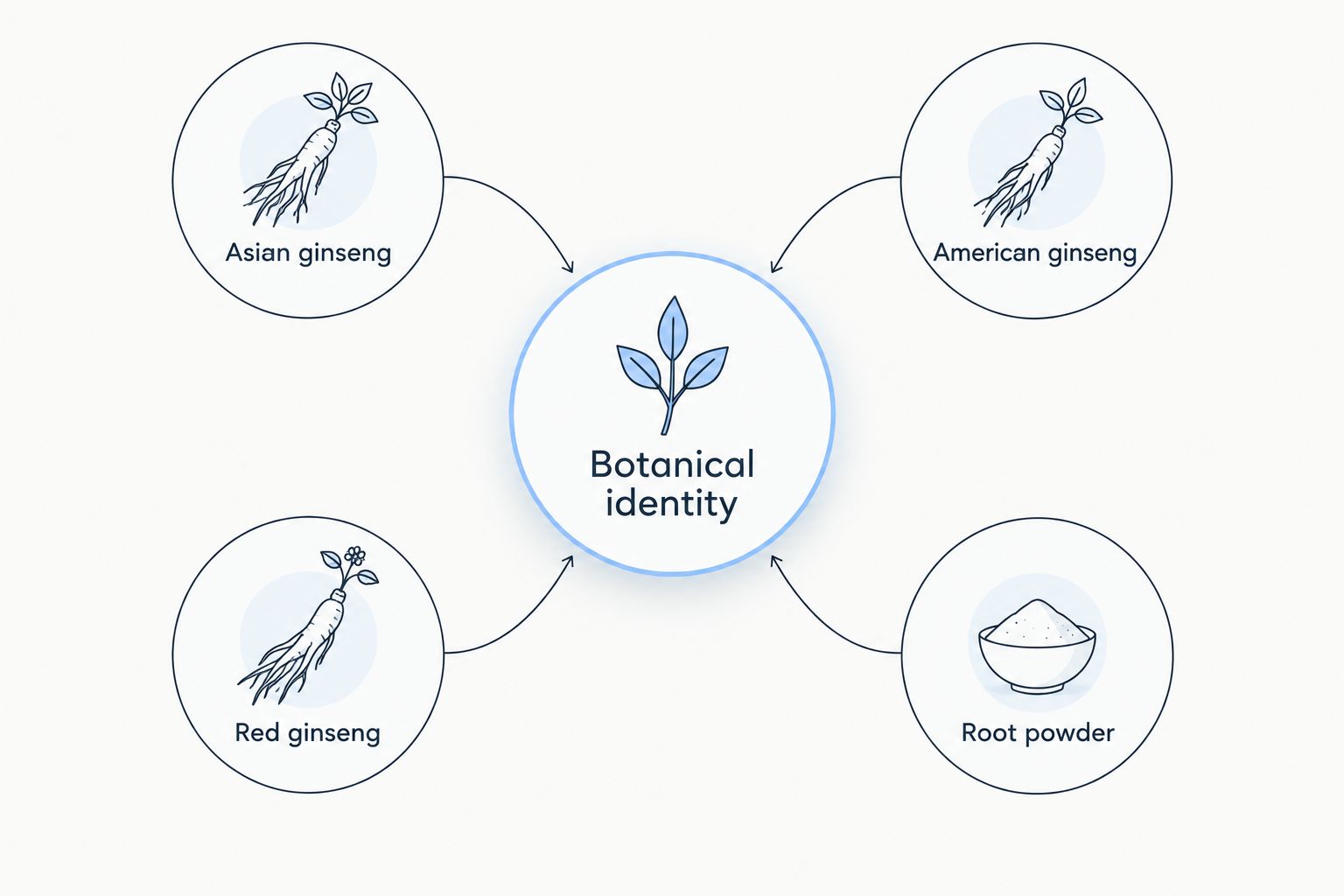
1. Standardized Panax ginseng extract: best for a clear specification
A standardized Panax ginseng root extract is the best overall ginseng supplement type for a shopper who wants to compare labels. The Latin name identifies Asian ginseng, while a stated ginsenoside specification gives you more information than the word extract alone. Read the complete label: standardized is meaningful only when the marker and its amount are disclosed.
This choice does not mean a higher ginsenoside figure is automatically better. Extraction methods and ingredient lists differ, and a labeled marker is not a promise of a clinical result. NCCIH discusses potential effects and safety questions for Asian ginseng; its research overview does not establish that every commercial extract performs alike.
Standardized Panax ginseng extract pros:
- States the species when the label uses the full Latin name.
- Makes the root preparation clear when root is specified.
- Gives you a stated marker to compare when ginsenosides are disclosed.
Standardized Panax ginseng extract cons:
- A marker does not verify independent testing or clinical benefit.
- Labels can still omit useful details about the source material or added ingredients.
- Ginseng can interact with medication, regardless of how clearly it is labeled.
Best for: Adults comparing Asian ginseng extracts who will check the full label and their medication list. Verdict: Buy only if the species, root, marker and complete ingredients are clear and a clinician has addressed relevant interactions. Otherwise, hold.
2. American ginseng extract: best for a species-specific choice
American ginseng is Panax quinquefolius. It is a genuine ginseng species, but it is not simply another label for Panax ginseng. Choose an extract that states the Latin name and identifies the root if American ginseng is the ingredient you intend to buy.
A product described only as ginseng extract does not pass that test. Nor should you transfer findings about Asian ginseng directly to American ginseng: studies of one species do not verify claims about the other. For a 2026 purchase, check whether the label specifies any standardization marker and lists every other active ingredient.
American ginseng extract pros:
- Matches a shopper's explicit preference for Panax quinquefolius.
- The Latin name helps distinguish it from Asian ginseng.
- An identified extract and plant part make product comparisons easier.
American ginseng extract cons:
- Packaging that says only American ginseng can leave the preparation unclear.
- Evidence or marketing claims about Asian ginseng do not establish effects for this species.
- A blend can obscure how much of the named root preparation you are getting.
Best for: Shoppers who specifically want American ginseng rather than a generic ginseng label. Verdict: Buy when Panax quinquefolius, the root preparation and all other ingredients are stated. Hold if the label does not identify the species.
3. Korean red ginseng: best for the steamed root tradition
Korean red ginseng refers to Panax ginseng root processed by steaming and drying. Red does not mean a third ginseng species. If you want this traditional preparation, look for both the botanical name and a clear description of the processing; the front-of-pack phrase alone cannot establish what is inside.
Processing matters because it distinguishes Korean red ginseng from an unsteamed Asian ginseng preparation. It does not, by itself, establish strength, purity or a specific health benefit. Compare the ingredient list and any extract details just as you would for the top-ranked option.
Korean red ginseng pros:
- Identifies a distinct, traditionally used root preparation.
- Can still identify the species clearly as Panax ginseng.
- Gives preparation-focused shoppers a more precise search term than ginseng alone.
Korean red ginseng cons:
- Red is not a quality grade or proof of effectiveness.
- Products can differ in format and added ingredients.
- The name alone does not tell you whether a product is standardized.
Best for: Shoppers deliberately seeking steamed Asian ginseng root. Verdict: Buy when the label confirms Panax ginseng, root and the intended preparation. Hold if red is the only meaningful detail supplied.
4. Whole-root Panax ginseng powder: best for a simple format
Whole-root powder contains powdered Panax ginseng root rather than an identified standardized extract. It suits someone who prefers a straightforward plant preparation and accepts that the label gives less information about ginsenoside content. Confirm that root is the stated plant part and check the complete ingredient list.
Simple does not mean more effective or safer. Powder and extract labels describe different preparations, so you cannot compare them by package wording alone. In 2026, choose this format for its ingredient simplicity, not because it promises an outcome the evidence cannot support.
Panax ginseng root powder pros:
- Offers a clear format when the label states whole-root powder.
- Avoids confusing an extract ratio with a measure of effectiveness.
- Lets shoppers prioritize a plainly identified single herb.
Panax ginseng root powder cons:
- Does not provide a standardized ginsenoside specification.
- Plant material can vary between products.
- Powdered root is still subject to ginseng's safety and interaction considerations.
Best for: Shoppers who prefer identified root powder over an extract. Verdict: Hold if comparing compound content is your priority; buy only when the simpler preparation is your stated preference and the label is complete.
How we ranked the preparations
The 2026 ranking puts botanical identity first, followed by plant part, preparation detail, ingredient transparency and safety. A standardized Asian ginseng extract takes the default spot because those details can be stated together on a label. That is a ranking of information available to a shopper, not a finding that extracts work better than powders or that Asian ginseng suits everyone.
American ginseng ranks separately because it is another species. Korean red ginseng ranks by processing method, while whole-root powder serves a distinct preference for a less processed format. Each has a reason to choose it and a reason to reject a poorly labeled version. No named manufacturer receives a product-level endorsement without its actual label and supporting quality information.
Check safety before buying ginseng
NCCIH's Asian ginseng guidance flags possible interactions with medicines, including medication used to lower blood sugar, and notes uncertainty around use during pregnancy. If you take prescription medication, have a medical condition, are pregnant or are considering a supplement for a child, ask a qualified clinician before taking ginseng. In particular, discuss warfarin rather than assuming a botanical supplement is harmless alongside it.
Stop using marketing language as a substitute for that conversation. A supplement should not replace prescribed care or be used to diagnose or treat a condition. If a product promises a disease outcome, that promise is not a reason to move it up this list.
Also check whether a so-called ginseng blend contains caffeine or another stimulating ingredient. Feeling an effect from a blend would not tell you which ingredient caused it. For a first purchase, a single identified plant and an explicit preparation give you a cleaner basis for deciding whether the product matches your intent.
If ginseng is not the plant you want
Herbal Goodness offers other botanicals, but they should be chosen on their own terms. Its guayusa leaf organic 15x liquid extract is guayusa, not a ginseng supplement; check its ingredient information rather than treating the word energy as evidence of comparable effects. A 15x designation alone does not establish clinical strength.
Herbal Goodness also lists moringa leaf tea with 24 bags. It is a tea from a different plant, not another rank in a best ginseng supplement guide. Likewise, Herbal Goodness's black seed oil is listed in an 8 oz format, but its plant identity and preparation differ from ginseng. These are distinct shopping decisions, not substitutes proven to deliver the same benefit.
Which ginseng supplement should you choose?
Choose a standardized Panax ginseng root extract as the 2026 default if its label identifies the species, root, ginsenoside marker and full ingredient list. Choose Panax quinquefolius when American ginseng is specifically what you want. Choose Korean red ginseng for the steamed-root preparation, or whole-root powder when a simple, nonstandardized format matters more to you than a disclosed marker.
If the species is missing, skip the product regardless of the claim on the front. If medication or pregnancy makes safety uncertain, pause the purchase and ask a clinician. The best ginseng supplement is a clearly identified plant preparation that fits your circumstances—not a universal answer for every wellness goal.
FAQ
What is the best ginseng supplement in 2026?
A standardized Panax ginseng root extract is the best default type when its label identifies the species, plant part, ginsenoside marker and full ingredients. That recommendation ranks label clarity, not a guaranteed health effect.
Is American ginseng better than Asian ginseng?
Neither species is universally better. Choose Panax quinquefolius if you want American ginseng and Panax ginseng if you want Asian ginseng; research on one does not automatically apply to the other.
Is Korean red ginseng a different species?
No. Korean red ginseng is a steamed preparation of Panax ginseng root, so red describes processing rather than a separate botanical species.
Is ginseng root powder the same as ginseng extract?
No. Root powder is powdered plant material, while an extract is a processed preparation; a standardized extract can also state a marker such as ginsenosides. Read the label before comparing them.
Are ginsenosides proof that a ginseng supplement works?
No. A ginsenoside specification describes a marker in the ingredient, not a guaranteed result for the person taking it. It is useful for comparing labels, not predicting an individual's response.
Can I take ginseng with prescription medication?
Ask your clinician before combining ginseng with prescription medication. NCCIH flags potential interactions, including concerns involving blood sugar medication; warfarin also warrants a specific discussion.
Is ashwagandha a type of ginseng?
No. Ashwagandha and Panax ginseng are different plants, even when both are marketed for wellness. Check the botanical name rather than choosing by a shared benefit claim.
One last thing
Read the Latin name before the benefit claim. In 2026, that single check separates Panax ginseng from Panax quinquefolius and prevents a product described only as ginseng from winning on packaging language. The preparation and full ingredient list come next.
Related guides
Share this

Popular posts


FAQs
1. What are the main benefits of drinking bamboo leaf tea?
Drinking bamboo leaf tea supports hydration, relaxation, skin wellness, and antioxidant balance.
2. What is bamboo leaf extract used for?
It’s used for general body wellness, skin elasticity, hair and nail support, and overall vitality.
3. Can bamboo leaf help with skin care and body wellness?
Yes, bamboo leaf is rich in silica and antioxidants, which promote healthy skin, strong nails, and a youthful glow.
4. What forms of bamboo leaf are available?
You can find dried bamboo leaf, powder, extract, drops, oil, and bamboo leaf green tea.
5. Are there any side effects of bamboo leaf?
Bamboo leaf is generally safe when consumed in moderation. Always consult your healthcare provider before starting any new herbal supplement.