





Best Burdock Root Supplement 2026: Tea Wins

Best overall in 2026: single-ingredient burdock root tea. Best for a measured serving: burdock root capsules. Best for people who prefer drops: a clearly labeled burdock root tincture. The best burdock root supplement is the preparation you can identify, check for quality information, and use consistently; no specific burdock product is verified in the supplied catalog.
- Best burdock root supplement in 2026: choose single-ingredient burdock root tea if you want to see the plant material.
- Choose burdock root capsules for a measured serving, but check the botanical name and amount per serving.
- A burdock root tincture suits people who prefer drops; check its extraction ingredients and serving directions.
- Herbal Goodness offers other root-based herbal supplements, but a dandelion product is not a burdock substitute.
Why this matters
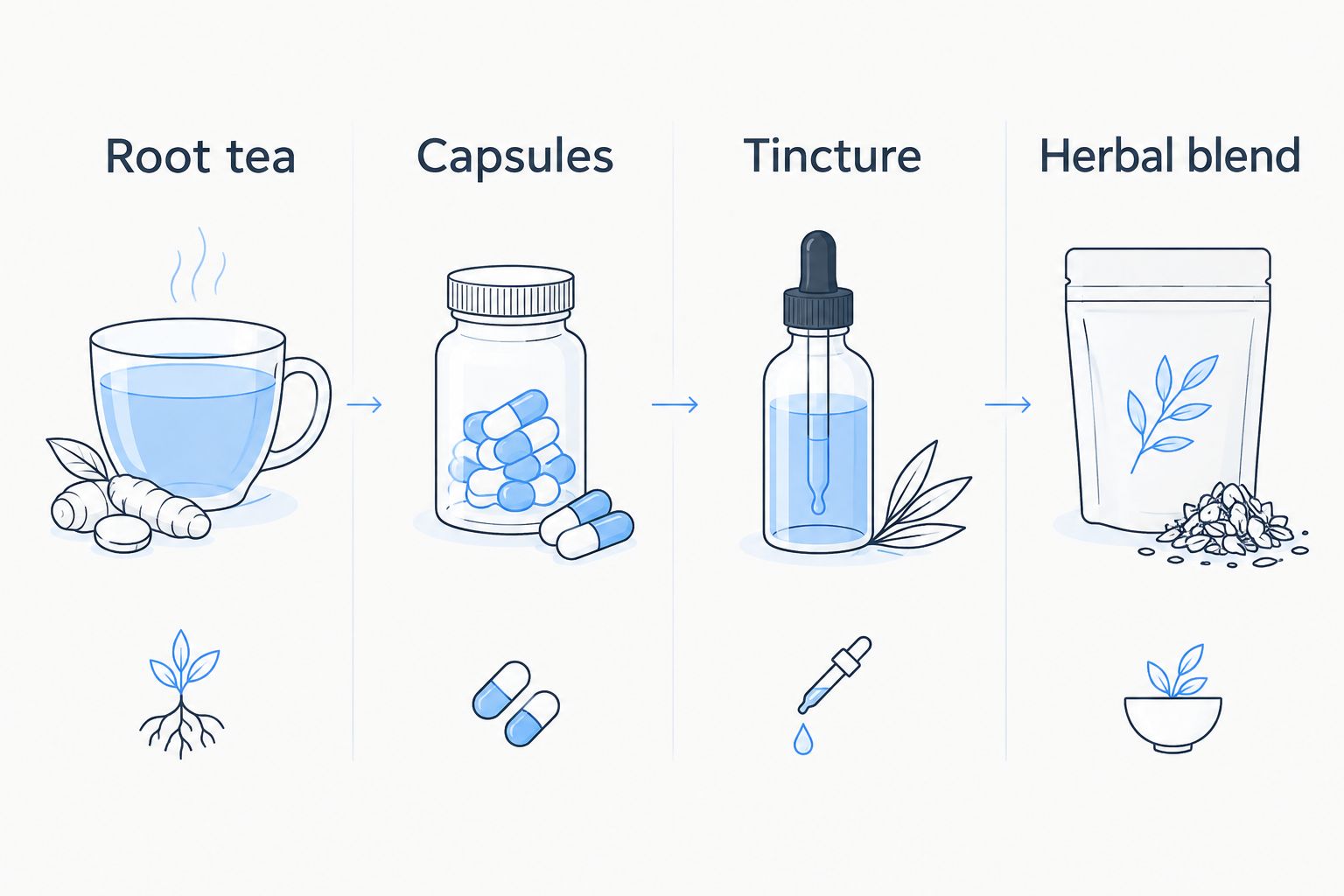
Burdock root appears in teas, capsules, liquid extracts, and multi-herb blends. Those labels describe different preparations, not interchangeable versions of one product. If you buy a blend without checking its ingredient panel, you might not know how much burdock root it contains.
For 2026 shoppers, the first question is whether a product actually identifies Arctium lappa root and states the amount or preparation clearly. Herbal Goodness lists bulk herbs and roots for tea and tinctures, but that listing alone does not establish that burdock root is an available option. Check the current product selection before treating any general herb listing as a burdock recommendation.
Burdock has a history of traditional herbal use. That history does not establish that a burdock supplement treats a disease, removes toxins, or delivers a specific health outcome. Use this guide to choose a preparation and assess its label, not as a reason to replace medical care.
What makes the best burdock root supplement?
Use these criteria before comparing formats. A recognizable plant name matters more than a striking claim on the front of a bottle.
- Plant identity: Look for burdock root and the botanical name Arctium lappa. Check that the listed plant part is root rather than leaf or seed.
- Ingredient clarity: A single-ingredient product makes burdock easier to identify. For a blend, read every listed botanical and check whether the amount of burdock is disclosed.
- Preparation: Tea requires steeping; capsules are swallowed; tinctures are liquid extracts. Pick the form you will use as directed.
- Serving information: Check the label for an amount per serving and directions. Do not treat the weight of an extract as equivalent to the weight of dried root without an explanation from the maker.
- Quality information: Look for traceable sourcing and relevant testing information, including contaminant testing. An organic claim answers a different question from a contaminant test.
- Practical fit: Check added ingredients, including capsule materials and tincture solvents, against your preferences and any advice from your clinician.
The 2026 ranking below compares types of burdock root supplements, not unverified brands. It does not imply that a named product passed a test or that one preparation produces a stronger health effect.
Burdock root supplements at a glance
| Preparation | Best for | Standout feature | Key limitation |
|---|---|---|---|
| Single-ingredient burdock root tea | People who want to inspect the herb | Visible cut root before brewing | Requires preparation; amount extracted varies |
| Burdock root capsules | People who want a measured serving | Labeled serving without brewing | You cannot inspect the root inside |
| Burdock root tincture | People who prefer drops | Liquid format | Solvent and extract details need scrutiny |
| Burdock-containing herbal blend | People seeking several listed botanicals | Combines ingredients in one preparation | Burdock amount can be unclear |
These are distinct buying choices. Tea wins as the default because you can see the cut root and check whether the ingredient list names anything else. That visibility does not prove purity or potency; sourcing and testing information still matter.
1. Single-ingredient burdock root tea: best for inspecting the herb
Cut burdock root is prepared as an herbal tea. You can look at the dried material before brewing and check whether the package identifies Arctium lappa root. A plain root product also avoids the ingredient ambiguity of a multi-herb blend.
Single-ingredient burdock root tea pros:
- The plant material is visible before you prepare it.
- A short ingredient list makes added herbs easy to spot.
- You can choose a preparation method that fits your routine, following the package directions.
Single-ingredient burdock root tea cons:
- You must prepare each serving.
- The amount extracted into a cup varies with preparation, so a cup is not a standardized dose.
- Appearance alone cannot confirm identity or screen for contaminants.
Best for: Someone who wants to inspect the root and does not mind making tea. Verdict: Buy a clearly identified, single-ingredient root tea with useful sourcing information; skip an unlabeled loose herb whose plant part or origin is unclear.
Do not use color or flavor as proof of a supplement's effect. If the package makes disease-treatment claims instead of explaining the ingredient, look for a clearer label. In 2026, the strongest buying signal here is traceable product information, not a dramatic detox promise.
2. Burdock root capsules: best for a measured serving
Capsules package burdock root powder or an extract into labeled servings. That makes them easier to fit into a routine than tea, provided the label says which preparation is inside and how much each serving contains. Check the plant part and the other ingredients before comparing bottles.
Burdock root capsules pros:
- The label can state a defined amount per serving.
- No brewing or measuring loose root is required.
- The ingredient panel lets you check capsule materials and added substances.
Burdock root capsules cons:
- You cannot visually assess the contents without opening a capsule.
- Root powder and root extract are not automatically equivalent.
- A capsule marketed as burdock can also contain other botanicals.
Best for: Someone who prefers a labeled serving and a preparation that requires no brewing. Verdict: Buy when the bottle identifies Arctium lappa root, states the preparation, and gives clear serving directions; hold when an extract label leaves its meaning unexplained.
A bigger number on a label does not settle the ranking. Check whether that number refers to dried root, extract, the full serving, or a blend. In 2026, an understandable label beats an impressive-looking figure without context.
3. Burdock root tincture: best for people who prefer drops
A tincture is a liquid herbal extract. It is an option if you prefer drops to tea or capsules, but the label has more to explain: the root used, the extracting liquid, the amount per serving, and directions for use. Check those details before choosing it over a simpler preparation.
Burdock root tincture pros:
- Liquid format works for people who do not want to brew tea.
- Directions can identify a serving without handling loose herbs.
- A full ingredient list reveals the extracting liquid and additions.
Burdock root tincture cons:
- Solvents differ, and a formulation might not match your preferences.
- Extract labels can be difficult to compare with dried-root labels.
- A concentrated-sounding description is not evidence of a better outcome.
Best for: Someone who prefers a liquid and can review its extraction and serving information. Verdict: Buy a clearly labeled tincture that fits your ingredient preferences; hold one that names burdock but does not make its formulation understandable.
Herbal Goodness sells root-based liquid extracts, but its listed dandelion root organic liquid extract is dandelion, not burdock. It belongs in a discussion of other herbal roots, not in a ranking of burdock supplements.
4. Burdock-containing herbal blend: best for a multi-herb preference
A blend combines burdock with other ingredients. It makes sense only when you want those other ingredients too and can identify what the product contains. If your aim is to assess burdock on its own, a blend adds questions rather than answering them.
Burdock-containing herbal blend pros:
- It can bring several explicitly listed botanicals into one preparation.
- The ingredient panel gives you a way to screen for herbs you do not want.
- It suits a shopper who deliberately prefers a combined formula.
Burdock-containing herbal blend cons:
- The amount of burdock might not be stated separately.
- More ingredients mean more items to check against medicines, sensitivities, and personal restrictions.
- You cannot attribute any perceived effect to burdock alone.
Best for: Someone who wants every herb named on the label, not simply a product advertised around burdock. Verdict: Hold until you have checked the full formula; skip a blend if your goal is a straightforward burdock root supplement.
The same rule applies to products marketed around digestion, liver wellness, or detox. Those category terms are not evidence that burdock is present or that a combination has a proven clinical benefit. Read the ingredient panel first.
Choose the preparation before you choose the label
Tea, capsules, tinctures, and blends solve different practical problems. Pick the format you will actually use, then compare products within that format by plant identity, ingredient disclosure, and quality information. A tincture's extract description and a tea's dried-root weight do not form a simple potency contest.
Use this short 2026 label check when you have a package in front of you:
- Find Arctium lappa and confirm the plant part is root.
- Identify whether the contents are dried root, powder, extract, or a blend.
- Read the serving directions rather than transferring directions from another product.
- Check the full ingredient list for additional herbs and extraction ingredients.
- Look for sourcing and contaminant-testing information you can evaluate.
If a seller does not provide enough detail to complete those checks, choose a product with a clearer label. That is a purchasing decision, not a judgment that the unclear product has failed a laboratory test.
What burdock research does not establish
Traditional use explains why people seek out burdock root; it does not establish a treatment claim. Do not select a burdock supplement to treat a diagnosed condition or to change prescribed care. Ask a healthcare professional before using it if you take medicines, are pregnant or nursing, or have a condition that affects what you can take.
Under FDA dietary supplement rules, manufacturers are responsible for the safety and labeling of their supplements before marketing; the FDA does not approve dietary supplements for safety and effectiveness before sale. That makes the ingredient panel and the seller's quality information essential parts of your 2026 comparison. Neither an organic label nor a traditional-use story substitutes for clinical evidence of a claimed health outcome.
Herbal Goodness presents herbal supplements for wellness shoppers, but its current supplied product list does not verify a burdock root item. Retailers and health practitioners should apply the same ingredient and claim checks before recommending a product to customers or clients. Trade-interest readers can use the wholesale application to ask about the current range; the link is for trade inquiries, not proof that burdock is stocked.
How the 2026 ranking was set
This ranking puts clear plant identity and ingredient disclosure ahead of convenience. Tea leads because the cut root is visible; capsules follow because a labeled serving is practical; tinctures require careful reading of extraction details; blends rank last for a buyer specifically seeking burdock because other ingredients complicate the choice.
Those are format-based buying criteria, not clinical rankings or results from product testing. No named burdock brand earns a recommendation here without a verified product listing and enough label information to assess it. If you already have a particular product in mind, compare its actual label against the criteria above rather than assuming its format guarantees quality.
Which burdock root supplement should you choose?
Choose single-ingredient burdock root tea by default in 2026 if you want to inspect the root and are willing to prepare it. Choose capsules when a labeled serving and no brewing matter more to you. Choose a tincture only after checking its extraction ingredients, and choose a blend only if you want the other listed botanicals as well.
If you cannot confirm Arctium lappa root, the preparation, and usable directions, wait rather than guess. Herbal Goodness's broader herbal supplement range is not a substitute for that burdock-specific label check. Another root product can be a separate shopping decision, but it is not the best burdock root supplement simply because it is sold in the same format.
FAQ
What is the best burdock root supplement in 2026?
Single-ingredient burdock root tea is the best default if you want to inspect the dried root. Check that the package identifies Arctium lappa root and provides sourcing and preparation information.
Is burdock root tea better than capsules?
Burdock root tea is better for inspecting the herb; capsules are better for a labeled serving without brewing. Neither format establishes a stronger health effect on its own.
How do I identify burdock root on a supplement label?
Look for burdock root and the botanical name Arctium lappa. Confirm that the listed plant part is root and read the full ingredient panel for additions.
Is a burdock tincture the same as burdock root tea?
No. A tincture is a liquid extract, while tea is made by preparing the root in water. Read each product's own ingredients and serving directions rather than treating them as interchangeable.
Do burdock root supplements remove toxins?
A detox claim does not establish that a burdock supplement removes toxins. Traditional use is not proof of a specific clinical benefit, and supplements do not replace medical care.
Can I use a dandelion root supplement instead of burdock root?
No. Dandelion and burdock are different plants. Choose dandelion only if you want a dandelion product, not as a burdock substitute.
Should I choose a burdock blend or a single-ingredient product?
Choose a single-ingredient product if your goal is specifically burdock root. Choose a blend only when you want its other listed herbs and have checked the entire formula.
One last thing
The clearest label can beat the boldest front-of-package claim. Before buying burdock in 2026, turn the package over: if you cannot identify the root, the preparation, and the other ingredients, you do not yet have enough information to make a useful comparison.
Related guides
Share this

Popular posts


FAQs
1. What are the main benefits of drinking bamboo leaf tea?
Drinking bamboo leaf tea supports hydration, relaxation, skin wellness, and antioxidant balance.
2. What is bamboo leaf extract used for?
It’s used for general body wellness, skin elasticity, hair and nail support, and overall vitality.
3. Can bamboo leaf help with skin care and body wellness?
Yes, bamboo leaf is rich in silica and antioxidants, which promote healthy skin, strong nails, and a youthful glow.
4. What forms of bamboo leaf are available?
You can find dried bamboo leaf, powder, extract, drops, oil, and bamboo leaf green tea.
5. Are there any side effects of bamboo leaf?
Bamboo leaf is generally safe when consumed in moderation. Always consult your healthcare provider before starting any new herbal supplement.