Understanding Lion's Mane Mushroom Extracts: Types, Extraction Methods, and How to Read Labels

Lion’s mane mushroom, celebrated for its unique appearance and cherished in herbal traditions for centuries, has found newfound popularity in modern wellness circles. As online and health store shelves brim with various lion’s mane products—ranging from powders to capsules and tinctures—a wave of new terms and label jargon can feel intimidating to the uninitiated. What exactly differentiates a hot-water extract from a dual extract? How do you know what “extract ratio” means, or what you’re actually getting in the bottle? This article offers a clear, approachable introduction to lion’s mane extracts, demystifies extraction processes, and empowers you to make informed choices—whether you’re a newcomer or curious explorer seeking a new addition to your everyday wellness routine.
Getting to Know Lion’s Mane Mushroom
Lion’s mane mushroom (Hericium erinaceus) is easily recognized by its cascading, white tendrils reminiscent of a lion’s mane. Traditionally valued in East Asian cultures, it has now become a popular ingredient globally, featured in everything from gourmet cuisine to functional food supplements. The appeal of lion’s mane lies not only in its culinary versatility but also in the fascinating collection of compounds found within its fruiting bodies and mycelium.
While the whole mushroom provides a rich spectrum of naturally occurring elements, modern extract forms focus on concentrating specific constituents. Understanding the differences between these types is the first step in determining which lion’s mane product might suit your needs.
Types of Lion’s Mane Mushroom Supplements
When browsing lion’s mane products, you’ll typically encounter these main categories:
Whole Mushroom Powders
Whole mushroom powders are produced by drying and finely grinding the fruiting body or the mycelium. The result is a powder that contains the complete profile of substances naturally present in the original mushroom part used.
- Pros: Closest to consuming the actual mushroom, retaining fiber and the full range of nutrients.
- Cons: Lower concentration of certain target compounds compared to extracts; often contains the indigestible compound chitin, limiting bioavailability of some elements.
Hot-Water Extracts
Hot-water extraction uses heat and water to draw out water-soluble substances from the dried mushroom. This method has ancient roots, echoing traditional teas and decoctions.
- What It Delivers: Primarily isolates polysaccharides (such as beta-glucans) that dissolve in water.
- Why It Matters: Many consumers look for beta-glucans specifically, as they are a defining compound in various mushrooms.
Alcohol (Ethanol) Extracts
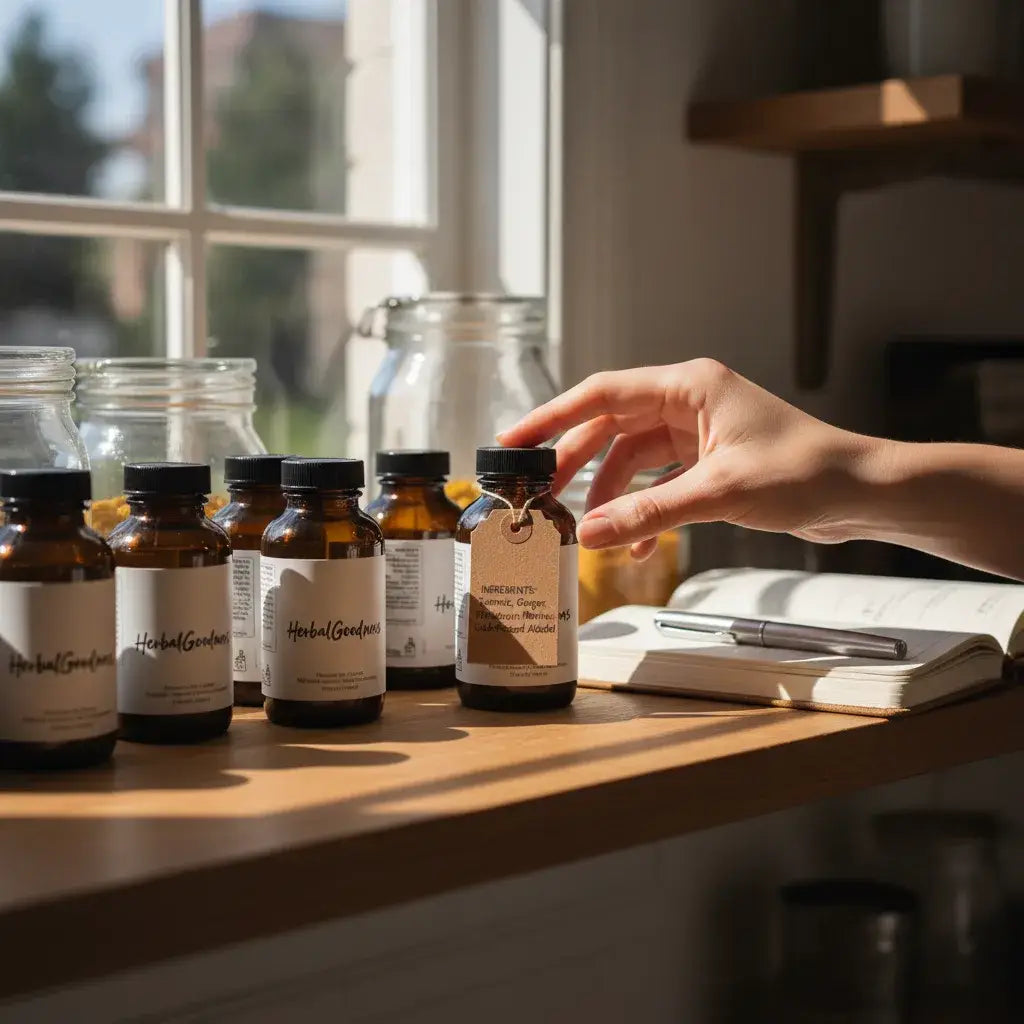
Alcohol extraction, or tincturing, immerses dried lion’s mane in alcohol. This process excels at extracting alcohol-soluble substances.
- What It Delivers: Primarily draws out terpenoids and other alcohol-soluble elements.
- Benefits: Useful for those seeking a broader profile beyond water-soluble components.
Dual Extracts
Dual extraction involves sequential or simultaneous use of both water and alcohol, aiming to capture the complete spectrum of water- and alcohol-soluble substances.
- Why Choose Dual Extracts? They represent the most comprehensive extraction and are popular among those who prefer a “broad-spectrum” approach, maximizing the variety of naturally occurring compounds present in both water and alcohol extracts.
Extraction Methods Explained
Understanding extraction methods is foundational to deciphering product claims and matching them with your preferences.
Hot-Water Extraction Process
This method involves simmering dried mushroom material in water at certain temperatures for extended periods. Once the compounds are dissolved, the water is evaporated, leaving a concentrated extract that is sometimes combined with the remaining solid material.
- Typical Outcome: Powder or spray-dried powder rich in water-soluble elements.
- Common in: Capsules, stick packs, and drink mixes labeled as “hot-water extracts.”
Alcohol (Ethanol) Extraction Process
Alcohol extraction usually soaks the mushroom in ethanol for days or weeks, depending on the desired concentration. The alcohol is then partially or completely removed as needed, yielding a liquid tincture or concentrated powder.
- Typical Outcome: Tinctures or highly concentrated powders.
- Common in: Droppers, spray bottles, or powder blends stating “ethanol extract.”
Dual Extraction Process
Dual extraction typically starts with hot-water extraction, followed by an alcohol soak—or both steps performed together. The resulting solution combines both water- and alcohol-soluble substances.
- Typical Outcome: Broad-spectrum extract in both liquid or powder formats.
- Common in: Capsules or liquid extracts emphasizing “full spectrum” or “broad spectrum.”

In fact, the Lion's Mane Mushroom Liquid Extract - Organic 1oz - Brain & Mood is a great example of a dual extract, offering both water-soluble polysaccharides and alcohol-soluble terpenoids for a synergistic approach to brain and mood support.
What Extraction Ratios Mean
Labels often highlight extraction ratios, such as 8:1 or 10:1. Here’s what these figures tell you:
- Definition: The ratio compares the amount of raw mushroom used to create a single part of extract. For instance, an 8:1 extract means eight grams of dried mushroom were concentrated down to produce one gram of extract.
- Higher Ratios: Indicate greater concentration but don’t guarantee a higher amount of any one specific compound, so ratio alone doesn’t define extract quality.
Understanding that extract ratios reflect concentration—rather than absolute potency or specificity—will help you interpret product claims accurately. The Mushroom Blend - Organic 1oz 15X Liquid Extract - Adaptogens & Brain Power boasts a clear 15X concentration, which gives assurance about the concentration but should always be reviewed alongside standardized percentages for active compounds.
Decoding Mushroom Extract Labels
Learning how to read supplement labels is crucial for selecting a lion’s mane product that aligns with your personal goals and preferences. Here are key label components and what they mean:
Extract Ratios
- How to Spot: Phrases like “10:1 extract” or “20:1 extract.”
- What to Know: Ratios indicate concentration of starting material, not necessarily the content of target compounds.
Solvent Types
- How to Spot: Look for wording such as “hot-water extraction,” “ethanol extracted,” “dual extraction.”
- What to Know: The solvent used determines which compounds are present in the final extract. Water extracts are rich in polysaccharides; alcohol extracts provide terpenoids.
Standardized vs. Full-Spectrum
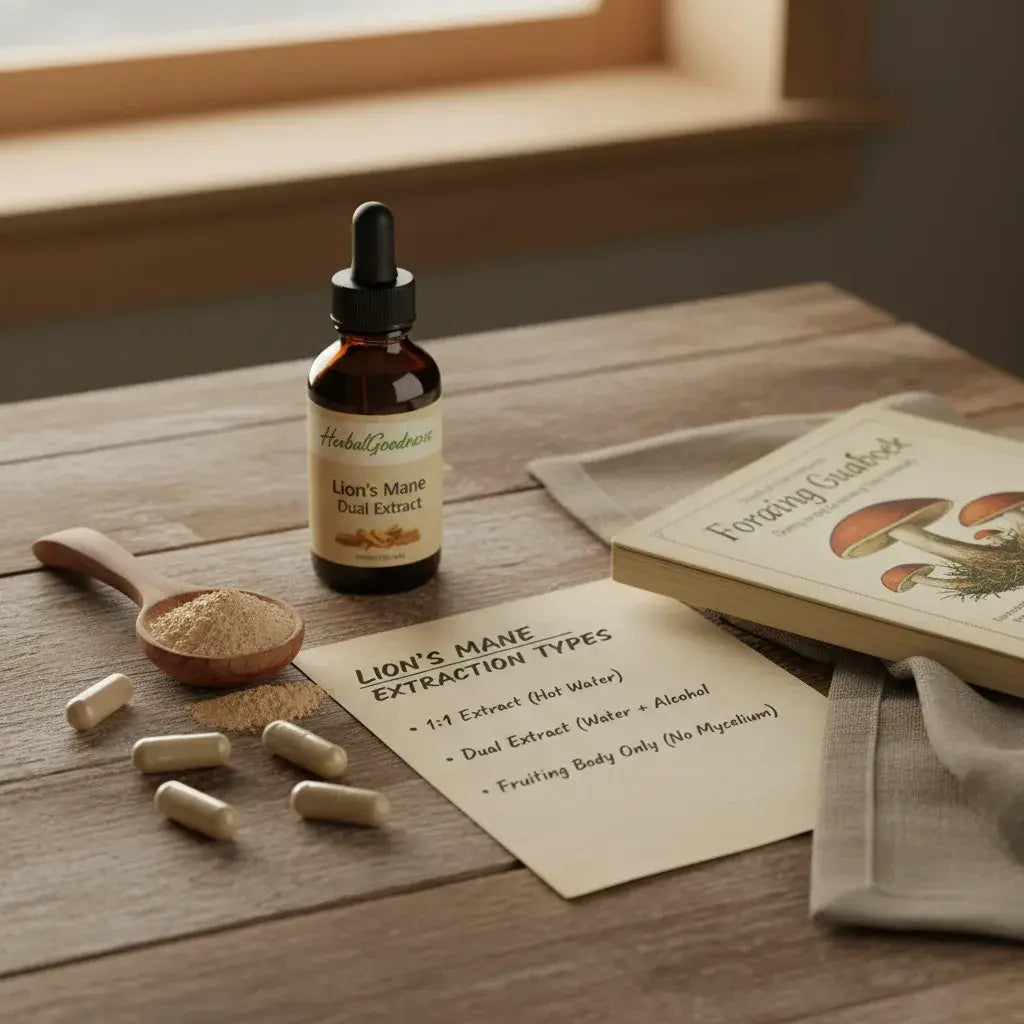
- Standardized Extracts: These are processed to yield a specific amount of a particular compound, with labels often stating standardized percentages.
- Full-Spectrum Extracts: Contain a broad range of mushroom compounds, aiming for a profile closer to the original mushroom.
- Which to Choose: Those interested in a holistic experience often seek full-spectrum. If looking for a certain substance, such as polysaccharides, standardized extracts provide clarity on content. If you want a product rich in diverse compounds but reliably standardized, products like Memory and Cognition - 1oz 15X Liquid Extract - Brain & Memory are worth investigating for their full-spectrum benefits and clear extraction ratio disclosures.
Additional Ingredients
- How to Spot: Review “other ingredients” like maltodextrin, fillers, or flow agents.
- What to Know: Some products add carriers or bulking agents. Transparent labeling helps you make an informed decision. Choosing standardized liquid extracts, like Lion's Mane Mushroom Liquid Extract - Organic 1oz - Brain & Mood, allows you to see precisely what’s included—and what’s left out, further simplifying your wellness routine.
Practical Tips for Choosing the Right Lion’s Mane Format
Personal preferences in taste, preparation, and daily routine should play a major role in which lion’s mane format you select. Let’s explore these dimensions:
Taste and Consumption Preferences
- Powders: Versatile for blending into smoothies, coffee, or recipes. Some may have an earthy flavor, while others are tasteless or masked by flavors in the finished product.
- Capsules/Tablets: Convenient and tasteless—ideal for fast-paced lifestyles or those who prefer not to taste mushroom powders. If convenience is the priority, the Blood Platelet Plus - 60/600mg 20X Strength Capsule - Platelet Boost format can be compared with capsule-based lion’s mane supplements for similar ease.
- Liquid Extracts/Tinctures: Easy to mix into drinks or take directly. Typically more concentrated, but often carry a distinct flavor profile.
Preparation and Routine Fit
- Loose Powders: Suitable for those who enjoy crafting beverages or mixing supplements into foods. Mushroom blend powder can also be compared to Organic Papaya Seed Powder 4oz | Gut Cleanse & Digestive Support for similar uses.
- Pre-dosed Options (Capsules/Tablets): Convenient for on-the-go use or travel.
- Tinctures: Great for precise drop-by-drop usage and swift absorption. If liquid accuracy is important, check the dropper-based Lion's Mane Mushroom Liquid Extract - Organic 1oz - Brain & Mood for comparison.
Lifestyle and Budget Considerations
- Bulk Powders: Often more economical, allowing for larger servings per package.
- Specialized Extracts: May cost more due to complex manufacturing steps or higher concentration of particular compounds. For those prioritizing economy and function, Sea Moss - Raw Dried from St Lucia - 8oz Bag - Nature's MultiVitamins is a non-mushroom, nutrient-rich alternative that fits similar needs.
Common Terminology Breakdown
A quick reference to common label terms:
- Fruiting Body: Refers to the actual mushroom cap or body; sought after for its natural compound profile.
- Mycelium: The underground root-like structure; sometimes used in supplements but may present a different compound spectrum.
- Beta-Glucans: Water-soluble polysaccharides; a prominent group in many mushroom extracts.
- Hericenones and Erinacines: Noted for being present in various parts of Hericium erinaceus, with their availability depending on extraction technique.
When reviewing terminology and supplement facts, cross-referencing potential brain-boosting Mushroom Blend - Organic 1oz 15X Liquid Extract - Adaptogens & Brain Power labels can help identify high-value products for cognitive support.
Comparing Extraction Methods: Key Takeaways
- Whole Mushroom Powders: Closest to the raw material; provides fiber and variety.
- Hot-Water Extracts: Focus on water-soluble components like beta-glucans.
- Alcohol Extracts: Emphasize alcohol-soluble substances.
- Dual Extracts: Deliver a broader spectrum by capturing both sets of compounds.
Choosing between these types depends on your desired spectrum of naturally occurring substances, taste, preferred format, and lifestyle needs. Always review the product label, paying attention to extraction method, ratio, solvent used, and clarity on what part of the mushroom is included. For those seeking ease and transparency, Lion's Mane Mushroom Liquid Extract - Organic 1oz - Brain & Mood delivers a dual-extraction profile with label clarity, while advanced users may compare to Memory and Cognition - 1oz 15X Liquid Extract - Brain & Memory for layering mushroom and plant-derived cognitive support.
Making an Informed Choice
Armed with these basics, you can confidently navigate lion’s mane mushroom extracts. There’s no universal 'best' type—the choice comes down to what fits comfortably into your life and aligns with your personal wellness preferences. Whether you’re drawn to the ritual of blending a morning smoothie or the convenience of a once-daily capsule, lion’s mane can offer a variety of options for everyday use.
FAQs:
- What is the difference between whole mushroom powder and an extract?
Whole mushroom powder is made by drying and grinding the entire mushroom, providing the full range of natural compounds. Extracts are processed to concentrate certain compounds, using water, alcohol, or both, to make some elements more accessible and concentrated.
- How do extraction ratios like 8:1 or 10:1 affect lion's mane products?
An extraction ratio compares the weight of raw mushroom to final extract. Higher ratios indicate more raw material was used for the same amount of extract, generally concentrating desired compounds, but they don’t guarantee the amount of any particular substance.
- What should I look for on a lion’s mane extract label?
Check for details like extract ratio, solvent type (water, alcohol, or both), whether the product is standardized or full-spectrum, and which part of the mushroom—fruiting body or mycelium—is used.
- Are dual extracts better than single solvent extracts?
Dual extracts combine both water- and alcohol-soluble substances for a broader spectrum. Whether they're preferable depends on your preference for the full array of elements found in lion’s mane.
- Is there a taste difference between lion’s mane powders, capsules, and tinctures?
Yes. Powders often have an earthy flavor, tinctures present a strong taste from both the mushroom and solvent, while capsules are generally tasteless and convenient for those who prefer not to notice flavor.
- Do all extracts come from the fruiting body of lion’s mane?
Not always. Some products use the fruiting body, others include mycelium, or a combination. Labels should indicate the mushroom part used, which can influence the natural compound content.
Author Name:
Herbal Goodness Editorial Team
Author Bio:
The Herbal Goodness Editorial Team specializes in holistic health and superfoods, blending science and nature to educate and empower our community.
References:
Introducing Graviola to Young Taste Buds: Fun, Family-Friendly Flavor Exploration
Graviola in the Classroom and at Home: Creative Activities to Teach Kids About Tropical Plants