Papaya Seeds: How to Interpret Research and Health Headlines

Papaya Seeds: How to Interpret Research and Health Headlines
Curious about the real benefits of papaya seeds? You’re not alone. Many headlines, blogs, and social media posts promise exciting results, but understanding what’s truly supported by research can feel overwhelming. In this guide, you’ll learn how to make sense of different types of papaya seed studies, discover the plant compounds inside, and pick up practical skills for interpreting headlines and choosing trustworthy information. You’ll also find simple, non-medical ideas for experiencing papaya seeds in your kitchen, all while letting the science continue to develop.
Unpacking the Science: Understanding Types of Research
When you see claims about papaya seeds, the story behind the science matters. Not all studies offer the same level of evidence, and learning the differences helps you set realistic expectations.
The Three Main Types of Studies
1. Laboratory Studies (In Vitro):
- Conducted in test tubes or petri dishes using cells or plant extracts.
- Great for identifying plant compounds and understanding basic biological activity.
- Limitations: Results often don’t reflect what happens inside the human body.
2. Animal Studies (In Vivo/Preclinical):
- Performed on animals (like mice or rats) to observe how whole systems respond to compounds found in papaya seeds.
- Help bridge the gap between theory and possible effects in living beings.
- Limitations: Animal biology is not identical to human biology, so findings may not directly translate.
3. Human Studies (Clinical/Observational):
- Analyze effects in real people, either through controlled trials or by observing existing diets.
- Provide the strongest evidence about what happens in daily life with real human complexity.
- Limitations: Good human studies can be expensive, take time, and may have small sample sizes.
Which Level of Evidence Matters Most?
- Lab studies: Spark ideas for further research but don't provide answers about real-world effects.
- Animal studies: Suggest possible impacts worth studying in people.
- Human studies: Offer the most useful insights for daily habits, but still require thoughtful interpretation.
- Systematic reviews: Combine many studies and usually carry the most weight.
In plain English: The closer research is to real people, the more relevant it is to everyday choices.
Common Plant Compounds Found in Papaya Seeds
Papaya seeds are small but mighty, containing a mix of unique plant compounds that may give rise to many ancient and modern uses. While science continues to investigate, these are the most commonly studied:
1. Polyphenols
- Plant antioxidants long valued for their potential role in helping the body handle everyday stressors.
2. Flavonoids
- Naturally occurring compounds cherished for their protective qualities in many fruits and seeds.
3. Healthy Fats (Fatty Acids)
- Papaya seeds offer a source of healthy oils, particularly oleic and palmitic acids.
4. Fiber
- Seeds are a natural way to add a small boost of fiber to meals.
5. Alkaloids and Glucosinolates
- Unique to many plant seeds and often cited for their roles in traditional approaches to health.
It’s important to remember: while these compounds are studied for their roles in body support, research is ongoing and individual responses may vary.
If you are interested in harnessing some of these plant compounds, Organic Papaya Seed Powder 4oz | Gut Cleanse & Digestive Support can be a convenient way to explore their benefits as part of your culinary experiments.

Reading Between the Lines: How to Evaluate Health Headlines
It seems every week brings a new headline about "miracle" seeds or "breakthrough superfoods." But how can you distinguish hype from helpful news?
Five Smart Steps for Headline Reading
- Look Past the Excitement
- Words like "magic," "miracle," or definitive promises rarely appear in reputable scientific summaries.
- Check for Study Type
- Does the article mention lab, animal, or human studies? The closer to real people, the more cautiously optimistic you can be.
- See if Sources Are Cited
- Reliable content references research articles, journals, or university studies. Vague sources signal a red flag.
- Ask About Study Size and Duration
- Small studies or short timeframes mean the results are preliminary and need more confirmation.
- Beware of Over-Generalizations
- If a headline claims everyone will get the same results, be skeptical! People are wonderfully unique.
If you prefer your papaya benefits in a more versatile form, Papaya Leaf Extract Blood Support - 10X 60/450mg Capsules - Blood Platelet offers a high-quality option designed for wellness support.
What Makes a Nutrition Source Trustworthy?
Some sources put curiosity and learning over sensational claims. Here’s what to look for when reading about papaya seeds or any herbal food:
- Respected Institutions: Look for research from universities, hospitals, or public health organizations.
- Peer-Reviewed Publications: Scientific journals require studies to be evaluated by other experts before publishing.
- Disclosure of Sponsorships: If a product or brand sponsors content, transparency is key.
- Consistency Across Studies: Strong evidence grows when many studies point to similar findings.
Signs a Source May Not Be Reliable
- It sells a product and promises guaranteed results.
- It refuses to discuss potential limitations or gaps in knowledge.
- It lacks any mention of study types or scientific process.
For anyone looking to safely add papaya-derived products beyond seeds, Papaya Leaf Extract - Capsules 600mg - 10X Strength can be a simple way to incorporate papaya benefits with traceable quality.
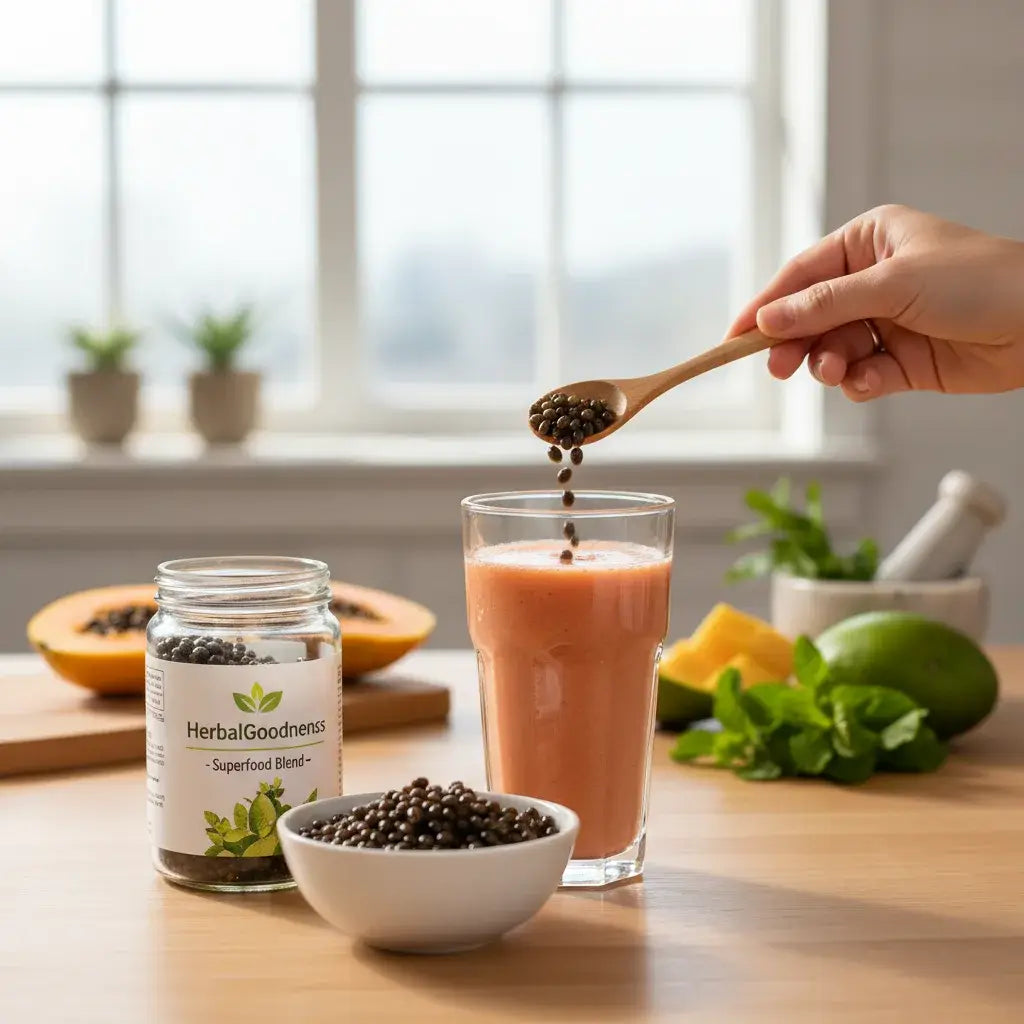
Kitchen Curiosity: Exploring Papaya Seeds at Home
You don’t need to wait for every study to be complete before gently enjoying papaya seeds in familiar ways. Here are a few simple, everyday approaches:
Tips for Safe and Simple Use
- Start Small: Their flavor is peppery and strong, so sprinkle lightly rather than pouring.
- Try as a Garnish: Some cooks use crushed papaya seeds as a garnish for salads, dressings, or smoothies.
- Blend with Spices: Adding tiny amounts to homemade spice blends provides a unique twist.
- Combine With Citrus: Papaya seeds pair well with citrus in salsas for a fresh, tangy note.
If the taste or texture of whole seeds isn't your preference, Papaya Seed Powder - 60/600mg Capsules - Gut & Colon Cleanse makes portioning and experimenting easy for the kitchen explorer.
Note: Always consider individual preferences and introduce new foods thoughtfully. For those who are pregnant, nursing, or considering dietary changes, consulting with a nutrition professional is a safe practice.
What About Drying or Toasting?
- Drying papaya seeds intensifies flavor, while toasting can mellow their bite.
- Some adventurous home cooks grind dried seeds for use as a substitute for black pepper.
A few prefer liquid forms, so Papaya Seed - Organic 1oz 15X Liquid Extract - Colon & Gut Cleanse might fit your needs for more concentrated use.
Enjoying Exploration Without Pressure
It’s okay to be enthusiastic about new discoveries, but focusing on variety and moderation brings the best of both worlds – flavor and fun without overreliance on any one food.
If you want to combine benefits from several papaya parts, Body Detox with Papaya Seed - Organic 1oz 15X Liquid Extract - Intestine & Gut Cleanse blends both seed and traditional extract elements.
How Does Evidence Evolve?
Science rarely stands still. What’s true today may grow clearer tomorrow as more studies add nuance to old findings.
- Early Studies: Serve as stepping stones, not final answers.
- Ongoing Research: Each new study adds context, sometimes supporting, refining, or even contradicting earlier claims.
- Public Dialog: News stories spark curiosity, but it’s the thoughtful evaluation of evidence that leads to lasting understanding.
Let the journey into healthy exploration include trusted research and quality-backed options for natural ingredients such as Papaya Leaf Tea - Organic 24/2g Tea Bags for a soothing drinkable alternative.
Bringing It All Together: Confidence for the Curious Reader
Learning to navigate health headlines helps you make better, more enjoyable choices for yourself and your household. Here’s a quick checklist:
- Ask what kind of study is being described.
- Look for reliable sources and research citations.
- Appreciate the difference between tradition and science.
- Enjoy culinary adventures at your own pace.
Even as research grows, simple approaches to papaya seeds offer a flavorful way to support curiosity, creativity, and a love of good food.
Exploring Further: Resources for Lifelong Learning
If you’re passionate about learning more, seek out well-recognized organizations, academic journals, and nutrition experts for ongoing updates as the research around papaya seeds evolves.
FAQ: Papaya Seeds & Understanding the Evidence
What are the main plant compounds in papaya seeds?
Papaya seeds are known for containing polyphenols, flavonoids, healthy fats, and fiber, along with unique compounds such as alkaloids. These compounds are studied for their various traditional roles, but research is ongoing. For those exploring supplements, Organic Papaya Seed Powder 4oz | Gut Cleanse & Digestive Support offers a focused way to add these plant properties to your day.
How can I tell if a headline about papaya seeds is reliable?
Look for headlines that mention the type of study (lab, animal, or human), provide research sources, and avoid sensational language. Reliable articles usually discuss limitations and don’t promise universal results. For guidance, consult quality resources and consider products like Papaya Leaf Extract - Capsules 600mg - 10X Strength which emphasize transparency in sourcing.
Is it safe to try papaya seeds at home?
Many home cooks use small amounts of papaya seeds as a garnish or seasoning. As with any new food, it’s best to start with a small quantity and listen to your own body’s response. Consulting with a nutrition professional can be a helpful next step if you have specific questions, or consider starting with Papaya Seed Powder - 60/600mg Capsules - Gut & Colon Cleanse for easy dosing.
What’s the difference between lab, animal, and human studies?
Lab studies explore ideas in a controlled environment, often using cells. Animal studies give more context by examining live organisms. Human studies provide the closest insight to real-life experiences but require careful interpretation and replication. When researching, referencing trusted human-focused studies and choosing reputable options such as Body Detox with Papaya Seed - Organic 1oz 15X Liquid Extract - Intestine & Gut Cleanse helps ensure quality.
Why are some headlines about papaya seeds so bold?
Some headlines exaggerate for attention. Trusted sources focus on research findings and clearly state what’s known and what isn’t, helping readers make informed decisions.
Can I use papaya seeds instead of pepper?
Some people enjoy dried, ground papaya seeds as a pepper substitute. Try a small sprinkle first, as the taste can be intense and different from regular black pepper. Convenient forms like Papaya Seed - Organic 1oz 15X Liquid Extract - Colon & Gut Cleanse open new ways to flavor dishes beyond traditional whole seeds.
How will I know if new research on papaya seeds is trustworthy?
Look for studies published in peer-reviewed journals, backed by respected institutions, and cited by credible health organizations. These signs indicate thorough evaluation by multiple experts. When in doubt, referencing products with clear sourcing such as Papaya Leaf Tea - Organic 24/2g Tea Bags can offer peace of mind.
FAQs:
- What are the main plant compounds in papaya seeds?
Papaya seeds are known for containing polyphenols, flavonoids, healthy fats, and fiber, along with unique compounds such as alkaloids. These compounds are studied for their various traditional roles, but research is ongoing.
- How can I tell if a headline about papaya seeds is reliable?
Look for headlines that mention the type of study (lab, animal, or human), provide research sources, and avoid sensational language. Reliable articles usually discuss limitations and don’t promise universal results.
- Is it safe to try papaya seeds at home?
Many home cooks use small amounts of papaya seeds as a garnish or seasoning. As with any new food, it’s best to start with a small quantity and listen to your own body’s response. Consulting with a nutrition professional can be a helpful next step if you have specific questions.
- What’s the difference between lab, animal, and human studies?
Lab studies explore ideas in a controlled environment, often using cells. Animal studies give more context by examining live organisms. Human studies provide the closest insight to real-life experiences but require careful interpretation and replication.
- Why are some headlines about papaya seeds so bold?
Some headlines exaggerate for attention. Trusted sources focus on research findings and clearly state what’s known and what isn’t, helping readers make informed decisions.
- Can I use papaya seeds instead of pepper?
Some people enjoy dried, ground papaya seeds as a pepper substitute. Try a small sprinkle first, as the taste can be intense and different from regular black pepper.
- How will I know if new research on papaya seeds is trustworthy?
Look for studies published in peer-reviewed journals, backed by respected institutions, and cited by credible health organizations. These signs indicate thorough evaluation by multiple experts.
Author Name:
Herbal Goodness Editorial Team
Author Bio:
The Herbal Goodness Editorial Team specializes in holistic health and superfoods, blending science and nature to educate and empower our community.
References:
Introducing Graviola to Young Taste Buds: Fun, Family-Friendly Flavor Exploration
Graviola in the Classroom and at Home: Creative Activities to Teach Kids About Tropical Plants
Why Social Impact Matters in Plant-Based Wellness