Herbal Tea Contract Manufacturing: Timeline and Cost Guide for Beginners
Stepping from home kitchen experiments to professional herbal tea manufacturing is both exciting and a bit daunting. Whether you’re an enthusiastic maker, run a bustling café, or want to launch your own herbal tea brand, understanding the stages and costs of herbal tea contract manufacturing is essential for confident planning. This article offers a clear, approachable overview of moving your herbal tea blend from home-grown recipe to a polished, shelf-ready product through contract manufacturing. Throughout, you’ll find practical explanations of the key phases—sample development, pilot production, labeling, packaging, testing, realistic lead times, and the cost categories that shape your journey—without overwhelming technical details.
Looking to source high-quality herbal products for your business? Click here to fill our wholesale form.
Understanding Herbal Tea Contract Manufacturing
Transitioning from preparing small batches at home to producing herbal tea at scale often means partnering with a contract manufacturer. Contract manufacturers specialize in guiding individuals and small brands through the complexities of food-grade production, packaging, and regulations. Their expertise helps transform a kitchen-crafted blend into a compliant, beautifully packaged product ready for cafes or retail shelves.
When Is Contract Manufacturing Right for You?
- You’ve perfected recipes at home and are ready for consistent, larger-scale production
- You want to sell your teas in stores, online, at markets, or wholesale
- You seek guidance on regulatory requirements, food safety, and commercial packaging
- You lack the equipment, certifications, or facility to make and pack at scale
Let’s walk through the step-by-step process and how costs and timelines fit into each stage.
Stage 1: Sample Development & Blend Refinement
The journey begins with formalizing your recipe. With a contract manufacturer, this means providing your home-blended formula (ratios, botanicals, desired aroma/flavor profile) for initial review.
Typical Steps:
- Sharing your recipe and product vision with the manufacturer’s development team
- Professional tea formulators review and suggest tweaks for large-batch consistency
- Initial small-batch samples are produced for tasting and feedback
- Multiple iterations may occur, depending on feedback and complexity
Timeline: 2–6 weeks (including back-and-forth for revisions)
Cost Considerations:
- Sample development fees range from $200–$500 per recipe, covering ingredients, time, and expertise
- Further blending or adjustments may incur additional charges
Internal collaboration with an experienced development team helps move beyond a single-kitchen approach into scalable, reliable batches. Different herbal teas, especially those aiming for organic certification, may require additional sample iterations and higher-quality botanical ingredients than standard blends.
Stage 2: Sourcing Botanicals and Ingredients
With your sample agreed upon, sourcing follows. Contract manufacturers prioritize quality, sourcing botanicals from certified suppliers to ensure safety and traceability. Ingredient lead times depend on seasonality and availability.
Key Details:
- Organic, fair trade, and specialty herbs may have longer lead times or minimum order requirements
- Verification of ingredient quality and documentation for food safety
Timeline: 2–8 weeks, depending on ingredient complexity
Cost Considerations:
- Ingredient costs: varies depending on botanical rarity, organic certification, and order size
- Minimum order quantities (MOQs) are common; higher MOQs can lower per-unit cost
Selecting high-quality ingredients is critical for flavor, safety, and compliance. For those interested in unique profiles, contract manufacturers are well-equipped to source botanicals, often accessing rare or specialty herbs that may be hard for individuals to procure.
Stage 3: Pilot Run – Testing the Process
Before a large production run, a ‘pilot batch’ tests the blend’s consistency, flavor, and physical properties at a semi-commercial scale. This step validates the recipe and helps catch any issues with workflow or equipment.
Actions Involved:
- Producing a small batch (typically 20–50 lbs) using commercial equipment
- Evaluating consistency, taste, aroma, and appearance
- Assessing shelf stability and packaging fit
Timeline: 2–4 weeks, including evaluation and any necessary tweaks
Cost Considerations:
- Pilot batch set-up costs range from $500–$1,500, depending on product and manufacturer
- Includes labor and partial use of production equipment
Successfully conducted pilot runs often reveal small-scale issues that would be costly during full production. Ensuring your blend’s consistency and optimizing flavor at this stage gives confidence for future large orders and customer satisfaction.
Stage 4: Testing & Quality Assurance
Herbal teas produced for commercial sale must meet food safety standards. Testing ensures the finished product is safe, properly labeled, and stable.
Typical Laboratory Tests:
- Microbiological screening (to meet food safety regulations)
- Moisture content analysis (for shelf life)
- Sensory and visual checks (appearance, aroma, flavor)
- Additional testing for organic, caffeine-free, or allergen claims
Timeline: 1–3 weeks, depending on required tests
Cost Considerations:
- Routine lab testing: $150–$500 per SKU (finished product)
- More specialized certifications (organic, non-GMO) can increase costs
Careful testing during herbal tea contract manufacturing avoids costly recalls and builds consumer trust. When aiming for natural or allergen-specific claims, advanced lab tests and documentation are particularly valuable.

Stage 5: Label Design, Compliance & Approval
Your product’s label must comply with state and federal guidelines—think ingredients, net weight, manufacturer info, lot/batch code, and any claims. Many contract manufacturers provide or outsource label review and artwork services.
Key Requirements:
- FDA-compliant nutrition facts and ingredient panels
- Required allergen statements
- Clear branding and design approval
Timeline: 2–6 weeks (depends on design rounds and regulatory review)
Cost Considerations:
- Label design: $300–$1,000 per SKU (for professional design)
- Printing costs vary by label size, finish, and order quantity
- Regulatory review (sometimes included; $75–$300 as a standalone service)
Following honest labeling and build-in time for multiple review rounds. Designing for compliance protects your brand, reduces risk, and helps customers trust and identify your teas in the marketplace.
Stage 6: Packaging Selection and Printing
Packaging both preserves product integrity and attracts buyers. You’ll select packaging formats (loose leaf pouches, sachets, tins) and finalize all printed elements.
Package Options:
- Stand-up pouches (resealable, most popular for herbal tea)
- Pre-filled tea bags or sachets (with or without string/tags)
- Bulk tubs or recyclable tins
- Cartons for retail shelves
Timeline: 4–8 weeks (allow for printing, production, and delivery)
Cost Considerations:
- Packaging materials: $0.25–$2 per unit, depending on format and decoration
- MOQs on bags, tags, boxes may apply
- Custom tooling or dies for unique packaging shapes incur additional charges
Smart packaging decisions affect shelf life and appeal. Stand-up pouches and pre-filled sachet options are especially popular in private label tea, balancing freshness with attractive shelf presence.
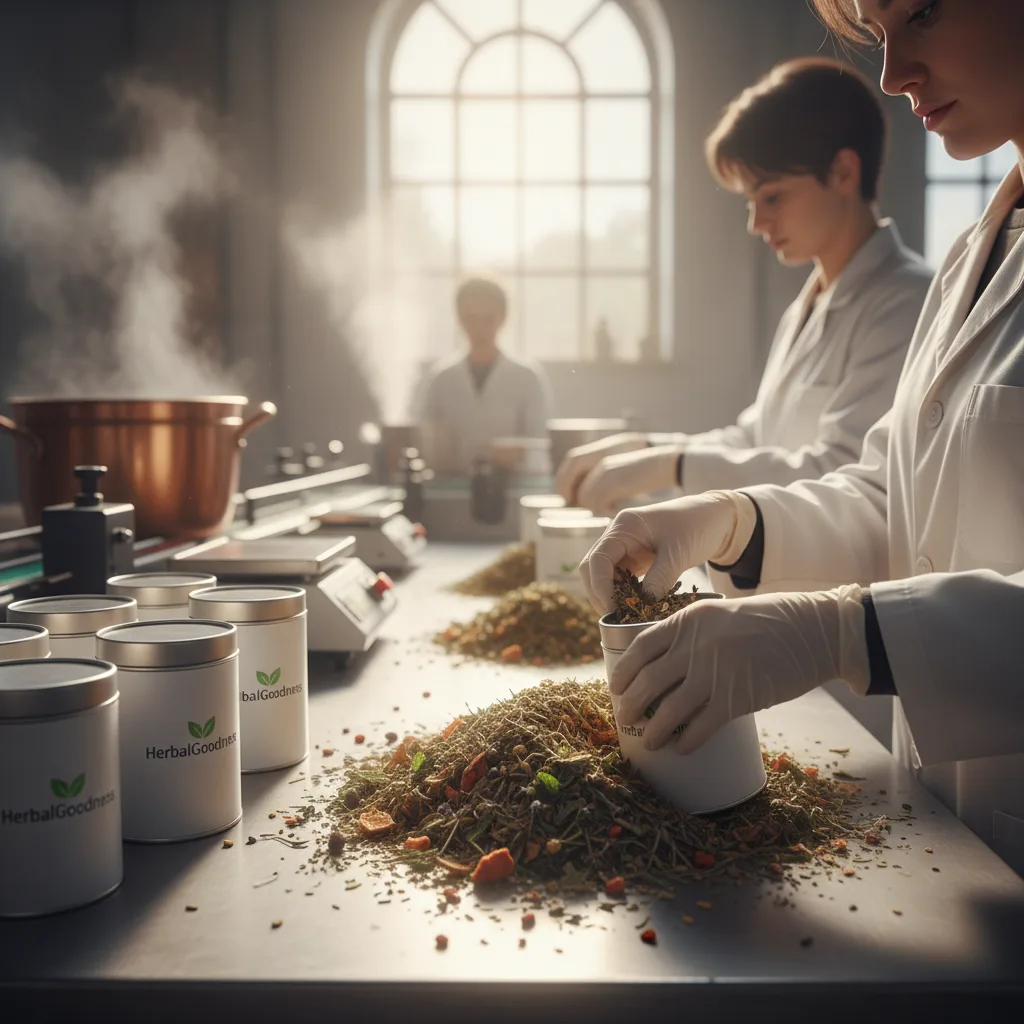
Stage 7: Full Production Run
With all ingredients, labels, and packaging in place, you’ll move to a commercial production run. This is where your herbal tea blend scales from small sample to shelf-ready volume.
What Happens:
- Full batching, blending, filling into final packaging
- Quality inspections throughout the process
- Batch coding for traceability and recalls
Timeline: 2–6 weeks (may be longer during peak season or with complex packaging)
Cost Considerations:
- Per-unit manufacturing costs: $1–$4 per retail package, determined by blend complexity, packaging, and labor
- Setup fees are often included or based on order volume
- Financing or deposits may be required upfront
Establishing a relationship with reliable commercial tea manufacturing partners not only ensures batch consistency, but can also provide flexibility when scaling up new blends for market demand.

Stage 8: Packing, Warehousing & Shipping
Once completed, your product is packed for shipping to your facility, warehouse, fulfillment center, or retailer. Good planning here prevents surprises and keeps your first product launch on track.
Key Steps:
- Final packing into cases/cartons
- Storage at manufacturer’s facility (fees may apply if products aren’t picked up quickly)
- Coordination of shipping logistics (pallets, freight, or small parcel options)
Timeline: 1–2 weeks for logistics and fulfillment
Cost Considerations:
- Packing and boxing fees: $0.10–$0.50 per unit
- Palletizing or special freight preparation may cost extra
- Warehouse storage fees if product remains onsite for extended periods
Efficient logistics management—coordinating between your contract manufacturer, carriers, and retailers—helps maintain product freshness and minimizes unexpected expenses.
Common Timeline & Cost Summary
A typical first-time herbal tea contract manufacturing project takes anywhere from 12–24 weeks (3–6 months) from recipe hand-off to finished, shelf-ready product. Costs can range widely but basic first runs (minimum order volumes) usually total $5,000–$20,000+, encompassing:
- Sample development and pilot runs
- Ingredient sourcing
- Testing and certifications
- Label design and printing
- Packaging and materials
- Full-scale production
- Warehousing and shipping
Costs decrease per unit as volumes rise. Close communication and clear planning often speed up timelines and prevent unexpected expenses.
Tips for a Smooth Manufacturing Experience
- Start with a clear recipe and vision. The more detail you provide up front, the faster and smoother each step.
- Build in time for iterations. Sample and label rounds often take longer than expected.
- Ask for a detailed quote. Request line-item costs and lead time estimates from your contract manufacturer.
- Understand your minimums. Manufacturers require certain order quantities for ingredients, packaging, and production to remain efficient.
- Plan for compliance. Regulations for herbal teas can be strict, especially for organic or specialty claims.
- Keep your target market in mind. Packaging, label design, and batch sizes should fit your selling channels and customer expectations.
What Makes Herbal Goodness Unique?
If you’re looking for a partner who values transparency, flexibility, and botanically-rich blends, Herbal Goodness has become a reference point for trusted herbal sourcing and manufacturing in the U.S. Their attention to detail and collaboration model are appreciated by both start-ups and established brands new to contract manufacturing.
Ask about their expertise with unique blends such as Organic Moringa Tea Bags and superfood infusions for inspiration on next-level products. You can also consult their assortment of ultra-premium herbal teas when evaluating packaging, quality, and label design options. Transparent processes and ingredient traceability have made Herbal Goodness a preferred partner for private label tea brands seeking peace of mind during each manufacturing phase.
Ready to partner with a trusted herbal supplier for your retail or formulation needs? Click here to fill our wholesale form.
Moving Forward with Herbal Tea Contract Manufacturing
Taking the step from your own kitchen into the world of commercial herbal tea manufacturing might seem complex, but the process becomes manageable when broken down into clear steps. By understanding how each stage—from sample development and ingredient sourcing, through compliance, packaging, and final production—fits into your overall timeline and cost structure, you’re empowered to move forward confidently. Careful planning removes uncertainty and helps bring your herbal tea vision to life, one step at a time.
FAQs:
- How do I know if my herbal tea blend is ready for contract manufacturing?
Your blend is generally ready when you have a finalized recipe, consistent sourcing for your botanicals, and a clear vision for your packaging and branding. A contract manufacturer can help refine your recipe to ensure batch consistency at scale.
- What are the most common cost drivers in herbal tea contract manufacturing?
Cost categories that influence overall spending include sample development, pilot batching, ingredient sourcing, lab testing, label design, packaging format, order volume (minimums), and logistics such as warehousing and shipping.
- How long does the full manufacturing process usually take?
The typical process—from recipe submission to shelf-ready tea—takes around 12–24 weeks. Timelines vary based on ingredient complexity, packaging choices, and the speed of approvals for samples and labels.
- Are there minimum order requirements for herbal tea production?
Yes, most manufacturers require minimum orders for both ingredients and finished products, which helps keep costs reasonable. Minimums vary, typically starting at a few hundred to several thousand units.
- What packaging options are available for herbal tea?
Common formats include loose leaf pouches, individual tea bags in pouches or cartons, recyclable tins, or bulk packs. Your target customer and retail setting usually influence packaging choices.
- Can I supply my own packaging or ingredients?
Some manufacturers allow clients to supply ingredients or packaging, but these must meet strict quality and compatibility standards. Coordinating with your manufacturer in advance is essential.
Author Name:
Herbal Goodness Editorial Team
Author Bio:
The Herbal Goodness Editorial Team specializes in holistic health and superfoods, blending science and nature to educate and empower our community.
References:
Introducing Graviola to Young Taste Buds: Fun, Family-Friendly Flavor Exploration
Graviola in the Classroom and at Home: Creative Activities to Teach Kids About Tropical Plants
Why Social Impact Matters in Plant-Based Wellness