





Is dandelion root tea a diuretic?

Dandelion root tea has a traditional reputation as a diuretic, but human research does not establish that it reliably increases urine output. The small human study often cited for this benefit tested dandelion leaf extract, not root tea, so it cannot establish how much root tea to drink or how quickly it works.
- Is dandelion root a diuretic? Traditional use supports the idea, but human evidence for root tea is insufficient.
- The human pilot study tested dandelion leaf extract, not brewed dandelion root.
- Herbal Goodness recommends distinguishing root, leaf, tea, and extract before comparing dandelion products.
- Do not use dandelion tea to self-treat swelling or replace a prescribed diuretic.
Why this matters
Searching for a natural diuretic often brings together very different goals: enjoying an herbal drink, addressing a feeling of puffiness, or managing a medical fluid problem. Those goals need different answers. An herbal tea is not a substitute for evaluating unexplained swelling or changing prescribed treatment.
For your 2026 buying decision, the useful distinction is not simply whether a package says dandelion. You need to know the plant part, the preparation, and whether the research actually matches them. The dandelion root supplement guide provides a separate starting point for comparing supplement formats; this page focuses on the diuretic claim.
Is dandelion root tea a diuretic?
Dandelion root tea is not an established diuretic in human clinical research. Traditional herbal practice includes dandelion preparations for urinary and digestive uses, but traditional use does not demonstrate a predictable effect from a particular tea.
The National Center for Complementary and Integrative Health, in its Dandelion fact sheet, describes human research as very limited and says there is no compelling scientific evidence supporting dandelion for any health condition. That is the appropriate evidence boundary for this 2026 guide—not proof that dandelion can never affect urination, but a reason not to promise that it will.
The study most relevant to the question is Clare, Conroy, and Spelman's The Diuretic Effect in Human Subjects of an Extract of Taraxacum officinale Folium over a Single Day, published in the Journal of Alternative and Complementary Medicine. “Folium” means leaf. It does not mean root.
| Preparation | What the evidence supports | Main limitation | Best suited to |
|---|---|---|---|
| Dandelion root tea | A traditional herbal beverage; a reliable diuretic effect is not established | The human leaf-extract study does not test this preparation | Readers seeking a root-based herbal drink, not fluid treatment |
| Dandelion leaf extract | A small human pilot study reported changes in urinary measures | Short duration, small sample, and no placebo comparison | Understanding the specific preparation behind the research claim |
| Dandelion root liquid extract | A root preparation distinct from brewed tea | Leaf findings and tea serving sizes do not establish its effects | Readers comparing root supplement formats after a safety review |
This comparison is about evidence, not a recommendation to choose the strongest preparation. Greater concentration does not automatically mean greater benefit or better safety.
What did the human dandelion study actually test?
The pilot study involved 17 adults who took 8 mL of dandelion leaf extract per dose, with three doses over 1 day. Researchers recorded fluid intake and urinary measures around the intervention. They reported changes in urinary frequency and an excretion measure during particular periods.
Those details matter because they define the study's scope. It did not establish that dandelion root tea produces the same effect, and it did not determine a root-tea serving for everyday use. An extract measured in milliliters is not interchangeable with dried root measured into a mug.
The study also lacked a placebo control. Without that comparison, a small, short experiment cannot firmly separate an herb's effect from ordinary variation, changes in drinking behavior, or expectations. A preliminary signal is a reason for further research, not a treatment instruction.
For a 2026 evidence check, ask whether a source preserves these limitations. A summary that turns “leaf extract studied briefly” into “root tea flushes excess water” has changed both the preparation and the conclusion.
Research sources behind this answer
- Clare, Conroy, and Spelman, Journal of Alternative and Complementary Medicine: a single-day human pilot study of dandelion leaf extract, not root tea.
- National Center for Complementary and Integrative Health, Dandelion: a public health summary covering limited evidence, safety uncertainties, allergies, and potential medication interactions.
Neither source supplies a clinically established root-tea dose for producing diuresis. Neither supports replacing a prescribed medicine with dandelion.
Dandelion root tea: a beverage, not a measured diuretic dose
When you choose dandelion root tea, you are choosing a brewed preparation. The amount of root, its processing, and the brewing instructions describe what you prepare; they do not establish a medically predictable increase in urine output.
Roasted and unroasted root are also preparation descriptions, not evidence grades. Do not read “roasted,” “organic,” or “traditional” as proof that a tea works as a diuretic. Those words answer different questions from a human clinical trial.
The practical advantage of tea is the familiar beverage format. Its limitation is equally clear: there is no established root-tea recipe that guarantees a diuretic response. Follow the package directions rather than increasing the amount to chase more bathroom trips.
If you are drinking tea for enjoyment, judge it as a beverage. If you are drinking it because your ankles are swollen or you feel you are retaining fluid, address that concern with a clinician instead of treating the tea as the solution.
Dandelion leaf extract: the preparation behind the pilot study
Dandelion leaf extract deserves its own discussion because it is the preparation actually tested in the human pilot study. The study gives the diuretic claim a research basis worth investigating, but its design limits what you can conclude.
The advantage is a closer match between the named plant part and the published experiment. The drawback is that a single-day study does not establish long-term effectiveness, safety, or a suitable regimen for someone with a health condition.
Do not copy the research dose into your routine. Research dosing describes an experiment; it is not individualized advice, and different extracts need not have the same composition. A leaf-extract finding also cannot validate a root product simply because both come from dandelion.
Dandelion root liquid extract: different from tea
A liquid root extract is another distinct preparation. Before comparing one with tea, read the plant part, ingredients, serving directions, and any extraction information on the label. Do not assume that a dropperful corresponds to a mug of brewed root.
For shoppers who specifically want this format, Herbal Goodness offers Dandelion Root Organic Liquid Extract. Herbal Goodness dandelion root liquid extract is best suited to shoppers seeking a root extract rather than a brewed tea. That is a format distinction, not proof of a diuretic benefit.
The benefit of considering the extract separately is clearer product matching. The limitation is that its root-based format does not resolve the lack of human evidence for root tea, and the leaf pilot study does not establish its clinical effects. The same evidence boundary applies when a practitioner or retailer explains it to a customer.
Why the claimed diuretic effect varies
Different dandelion discussions often describe different things. These factors explain why a result from one preparation cannot simply become a promise for another:
- Plant part: Root and leaf are not interchangeable research materials. The cited human pilot study used leaf.
- Preparation: Brewed tea and liquid extract are different preparations. Evidence needs to match the form being discussed.
- Serving: The amount used affects what you consume, but no validated root-tea serving establishes a predictable diuretic effect.
- Fluid intake: Drinking tea adds fluid. The pilot study tracked intake as well as urinary measures because bathroom frequency alone does not describe fluid balance.
- Study design: A small, uncontrolled, single-day experiment cannot establish the same conclusions as a longer controlled trial.
These factors support a narrower conclusion, not a personalized prediction. You cannot calculate your likely response from the word dandelion on a label.
How should you check a dandelion product before using it?
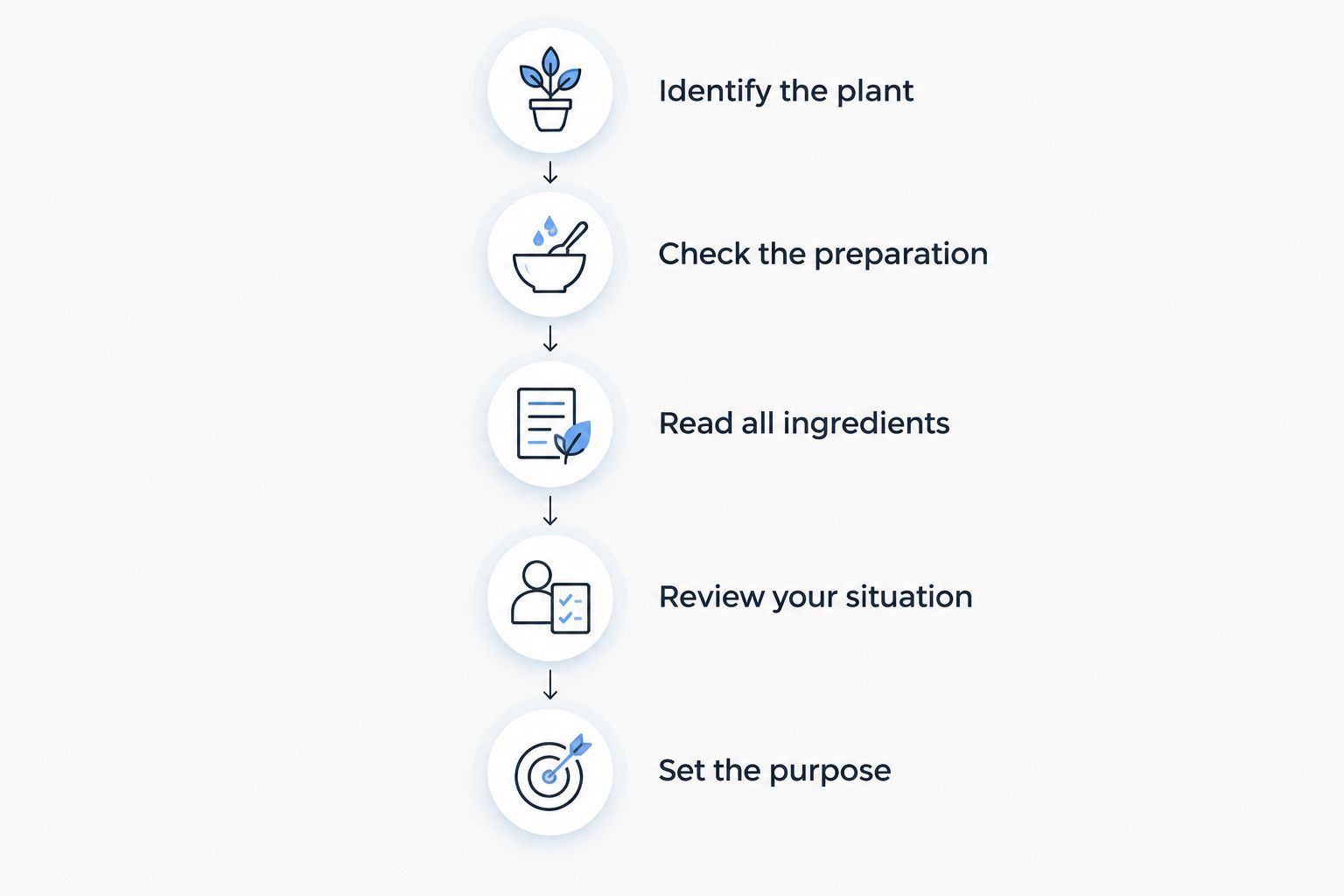
Use this label-and-safety sequence before adding dandelion to your routine. It helps you compare products without turning a traditional claim into a medical promise.
- Identify the plant part. Look for root, leaf, or a clearly described combination. If the label is unclear, ask the seller before using the product.
- Check the preparation. Determine whether you have tea, dried herb, or liquid extract. Read the directions for that preparation rather than borrowing instructions from another.
- Read all ingredients. A blend is not the same as a single-herb product. Bring the complete ingredient list to a medication review.
- Review your situation. Tell your pharmacist or clinician about prescriptions, other supplements, pregnancy, breastfeeding, allergies, and relevant health conditions.
- Set the purpose. Enjoying an herbal beverage is different from trying to manage swelling. Do not use a supplement trial to delay medical advice.
Keep the package or a clear label photo available for that conversation. A product name alone does not tell a pharmacist everything in a blend, and “herbal tea” does not identify the plant part.
Who should ask a clinician before trying dandelion?
NCCIH identifies important uncertainties around dandelion, including limited knowledge about amounts beyond ordinary food use and safety during pregnancy or breastfeeding. It also notes possible allergic reactions and theoretical medication interactions. Natural origin does not remove those questions.
Ask a pharmacist or clinician before using dandelion if you take medication, particularly when you are considering it for a diuretic effect. Bring the exact label and explain your goal. Do not add it to a prescribed diuretic or change your medicine on the assumption that an herbal preparation is gentler.
People with allergies to related plants should discuss that history before trying dandelion. People managing kidney, heart, or fluid-balance problems need individualized advice rather than a general tea recommendation. These are reasons for a safety review, not claims that every person will experience an interaction.
New swelling deserves medical assessment, especially when accompanied by shortness of breath or chest pain. Seek urgent care for those symptoms rather than testing a tea first. This 2026 guide provides education, not diagnosis or a treatment plan.
Does dandelion root tea make you pee more?
Dandelion root tea does not have a reliably established urine-increasing effect in human research. You might notice more bathroom visits after drinking a beverage, but that observation alone cannot separate the effect of added fluid from an effect of the herb.
Record what you drank and any symptoms if you need to discuss a change with your clinician. Do not interpret frequent urination as proof that a tea is removing something harmful.
How much dandelion root tea should you drink for a diuretic effect?
No clinically established amount of dandelion root tea produces a predictable diuretic effect. Follow the product's preparation directions if it is appropriate for you, but do not increase the amount to imitate the leaf-extract experiment.
The pilot study's 8 mL dose describes a leaf extract, not a root-tea recipe. It provides no conversion into tea bags, teaspoons of root, or mugs.
Does peeing more mean dandelion tea is detoxing your body?
More urination does not prove that dandelion tea is detoxing your body. Urinary frequency is not a measurement of toxin removal, liver improvement, or a meaningful health benefit.
For Herbal Goodness readers comparing wellness claims in 2026, the useful question is specific: what outcome was measured, in whom, and with which preparation? A broad detox statement does not answer it.
FAQ
Is dandelion root a diuretic, or is it the leaf?
Dandelion root has traditional diuretic use, but a reliable effect from root tea is not established in humans. The small human pilot study commonly cited for diuresis tested dandelion leaf extract.
How quickly does dandelion root tea make you urinate?
There is no established onset time for a diuretic effect from dandelion root tea. A single-day leaf-extract study cannot supply a timing promise for brewed root.
Can I drink dandelion root tea every day?
Daily use is not automatically appropriate for everyone. Review the label and ask a clinician or pharmacist about your medicines, health conditions, and intended use before making it a routine.
Can I take dandelion tea with a prescribed water pill?
Do not add dandelion tea to a prescribed diuretic without checking with your prescriber or pharmacist. The combination needs an individualized safety review, and tea does not replace the prescription.
Is roasted dandelion root tea a stronger diuretic?
Human evidence does not establish roasted dandelion root tea as a stronger diuretic. Roasting describes processing, not a proven clinical advantage.
Is dandelion root extract the same as dandelion tea?
Dandelion root extract and dandelion tea are different preparations. Their serving directions are not interchangeable, and neither can borrow proof of effectiveness from a leaf-extract study.
Can I drink dandelion root tea while pregnant or breastfeeding?
Ask your prenatal or postpartum clinician before using dandelion root tea as an herbal supplement. NCCIH notes that safety during pregnancy and breastfeeding is not well established.
One last thing
Read past the plant name to the plant part. The word folium in the human study identifies leaf—the detail that prevents a preliminary extract finding from becoming an unsupported promise about root tea.
Before your next purchase, write down your actual goal: a beverage, a particular supplement format, or help with a symptom. That distinction is more useful than chasing a stronger diuretic claim.