





Can you take black seed oil on an empty stomach?

You can take black seed oil on an empty stomach if the product’s directions allow it and you tolerate it, but taking it with food is a more cautious starting point if you are prone to stomach upset. Fasting is not an established requirement for better results, and taking the oil without food does not remove its medication-interaction or safety concerns.
- Taking black seed oil on an empty stomach is optional, not an established way to improve its benefits.
- Nigella sativa can cause gastrointestinal discomfort; use product directions and your tolerance to guide meal timing.
- Ask a pharmacist about black seed oil before combining it with prescription medicines.
- Stop taking black seed oil if it causes persistent discomfort; do not treat irritation as evidence it is working.
Why this matters
An empty-stomach routine adds a restriction without establishing a better outcome. Your first priorities are the actual preparation, the label directions, and whether black seed oil fits safely alongside your medicines and health needs.
For example, Herbalgoodnessco’s cold-pressed Nigella sativa oil is a liquid preparation. Advice about a different extract or a capsule should not automatically become instructions for that oil.
Can you take black seed oil on an empty stomach?
Yes, but an empty stomach is not necessary. For your 2026 routine, follow the directions on your particular product rather than assuming that taking it before breakfast makes it more effective.
Memorial Sloan Kettering Cancer Center’s Black Seed monograph identifies gastrointestinal adverse effects among the concerns associated with use. It also discusses potential interactions, which means meal timing is only one part of the decision.
| Timing option | Best for | Practical advantage | Limitation |
|---|---|---|---|
| With a meal | Adults choosing a cautious starting routine, after a safety review | Fits the supplement into an existing meal | Food does not guarantee tolerance or prevent interactions |
| On an empty stomach | Adults whose product directions permit it and who already tolerate it | Does not require coordinating with a meal | Can be uncomfortable; better results are not established |
| Pause before starting | Anyone with unresolved medication, pregnancy, or health questions | Allows a clinician or pharmacist to review the product first | Delays the routine until those questions are answered |
The distinction is straightforward: being able to swallow black seed oil before eating does not establish that you should. If you feel well taking it with breakfast and the label permits that approach, there is no established reason to switch to fasting.
What does the evidence actually support?
Research on Nigella sativa includes different preparations, amounts, and study populations. Those differences limit what you can conclude about a particular bottle or an empty-stomach schedule.
A study reporting an outcome from black seed supplementation is not automatically a comparison of taking oil with food versus without food. To support a fasting advantage, research would need to compare those conditions directly using a relevant preparation.
Do not turn general black seed research into a specific fasting instruction. Traditional use also does not establish the best meal timing, an appropriate serving, or suitability for someone taking medication.
Taking black seed oil with food
Taking black seed oil with a meal is a practical option when the label allows it, particularly if you dislike taking oils alone. Think of food as a way to organize your routine—not as protection against every adverse effect.
Choose a meal you already eat rather than building a complicated schedule around the supplement. Follow the stated serving directions, and avoid increasing the amount because you have added food.
If discomfort persists despite taking the oil with a meal, stop using it and seek advice. Repeatedly changing meals or adding another supplement can obscure what is causing the problem.
Does the meal need to contain extra fat?
There is no established consumer instruction to add extra dietary fat specifically to make black seed oil work better. Black seed oil is already an oil, but that fact alone does not establish how a particular constituent is absorbed or whether a different meal changes a meaningful health outcome.
Use the manufacturer’s directions. Do not add a separate oil, a large meal, or another supplement solely because an online routine claims that doing so activates black seed oil.
Taking black seed oil before breakfast
Taking black seed oil before breakfast is an option only when it matches the product instructions and your individual safety review. It is not a required wellness ritual.
An empty-stomach routine also makes it especially important to distinguish tolerance from expectation. If taking the oil produces nausea, burning, or abdominal discomfort, do not interpret that reaction as cleansing or proof of effectiveness.
For 2026, use the same standard for social-media advice as for any supplement claim: ask whether the recommendation concerns the same plant, preparation, and outcome. A confident instruction without those details is not enough to change your routine.
Is there a required wait before eating?
There is no universally established waiting interval between taking black seed oil and eating. Follow a specific interval only when it appears in your product directions or comes from a clinician familiar with your situation.
Do not delay breakfast just to satisfy an unsupported rule. If you take medicines that have their own food or timing requirements, those instructions need a pharmacist’s review before you add a supplement.
Why black seed oil tolerance varies
Your response to black seed oil does not establish how someone else will respond. Review these factors before copying another person’s schedule:
- Preparation: Liquid oil, seed powder, and concentrated extracts are different preparations. Instructions and research findings are not interchangeable.
- Serving amount: The amount you take matters. Use the product’s directions rather than an unmeasured pour or another brand’s serving instructions.
- Other ingredients: Check the full ingredient list, including anything added to a capsule or blend. Do not assume every black seed product contains only oil.
- Digestive history: If you already experience recurring reflux, nausea, or abdominal pain, discuss adding an oral supplement with your clinician.
- Medicines and supplements: Review everything you take with a pharmacist. Taking black seed oil with food does not settle interaction questions.
Avoid changing several factors at once. If you change the preparation, amount, meal timing, and other supplements together, you lose a clear picture of what you tolerate.
How should you start a black seed oil routine?
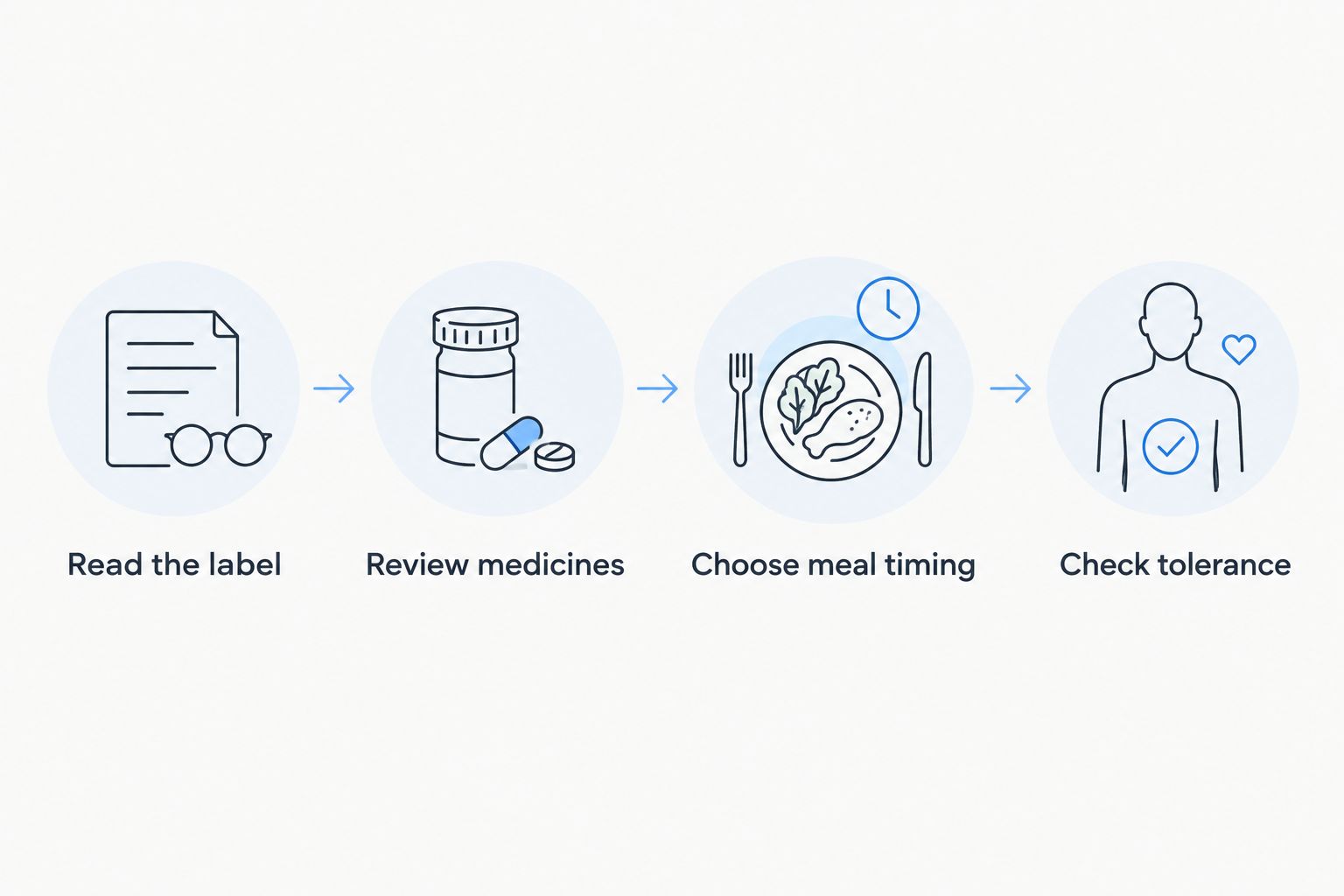
Start with a label check and a safety review, not a fasting challenge. This sequence keeps the decision focused on information you can actually verify.
- Read the label. Confirm that the product is intended for oral use, identify the plant, and read the serving and warning statements.
- Review medicines. Show the product label to your pharmacist or clinician, including the complete ingredient list.
- Choose meal timing. Follow any label instruction about food. When the label leaves timing open, a meal is a reasonable starting point.
- Check tolerance. Notice whether discomfort follows use. Stop for persistent symptoms instead of increasing the amount or adding another herb.
If you keep a supplement record in 2026, include the product name, serving used, meal timing, and any symptoms. Bring that record to a medical appointment rather than relying on memory or changing the routine repeatedly.
Which product details matter?
Herbalgoodnessco black seed oil is best for shoppers who prefer a cold-pressed Nigella sativa liquid rather than capsules. Its listed 8 oz size describes the bottle, not the serving you should take.
That format has a practical trade-off: you measure a liquid and encounter its flavor rather than swallowing a capsule. Neither cold pressing nor bottle size establishes a fasting advantage, guarantees digestive comfort, or makes the product suitable for everyone.
For Herbalgoodnessco shoppers, the useful next step is to read the current label before choosing a schedule. Retailers and health practitioners should use the same distinction when answering customer questions: preparation details describe the product, while suitability requires an individual review.
Who should ask a clinician before taking black seed oil?
Ask before starting if you take prescription medicines, are pregnant or breastfeeding, are preparing for surgery, or have a medical condition requiring ongoing care. Do not use an adult supplement routine as instructions for a child.
Memorial Sloan Kettering’s Black Seed monograph discusses potential effects involving blood glucose, blood pressure, and drug-metabolizing pathways. These concerns do not establish that everyone will experience an interaction, but they are reasons to have your actual medication list reviewed.
Do not assume that separating black seed oil from a medicine by a few hours solves the problem. Some interactions concern how substances act in the body, not simply whether you swallow them together.
The National Center for Complementary and Integrative Health’s Using Dietary Supplements Wisely guidance emphasizes discussing supplements with health professionals. The FDA also explains that dietary supplements are not approved for safety and effectiveness before marketing in the same way as drugs.
For a 2026 safety review, bring the current label rather than an old screenshot. Ask the pharmacist to assess the exact preparation, ingredients, serving directions, and medicines you use.
Is morning or evening better for black seed oil?
Neither morning nor evening is established as universally better for black seed oil. Choose a time that follows the label and does not conflict with medication instructions or worsen symptoms.
Consistency is useful for remembering what you took and noticing your response. It does not mean you must continue a routine that causes discomfort.
Can you take black seed oil with other herbal oils?
Do not assume that combining herbal oils is safer or more effective than using one product. Each additional ingredient creates another label, tolerance question, and possible interaction to review.
If you already use oregano oil or another supplement, show every label to your pharmacist. A bundle or shared wellness category does not establish that the products should be swallowed together, particularly on an empty stomach.
FAQ
Can I take black seed oil on an empty stomach every morning?
You can take black seed oil on an empty stomach if your product directions allow it and you tolerate it, but fasting is not required. Review regular use with a pharmacist if you take medicines or have ongoing health concerns.
Is black seed oil better before or after food?
Black seed oil is not established as more effective before food. Taking it with a meal is a practical starting option when the label permits, especially if taking oils alone feels uncomfortable.
How long should I wait to eat after taking black seed oil?
There is no universally established waiting interval after taking black seed oil. Follow your product directions and any individualized advice from your clinician.
Why does black seed oil upset my stomach?
Black seed oil can cause gastrointestinal discomfort, and the preparation, serving amount, and individual tolerance all matter. Stop if symptoms persist rather than treating discomfort as evidence that the supplement is working.
Can I take black seed oil while using prescription medicines?
Ask a pharmacist to review black seed oil before combining it with prescription medicines. Taking it with food or separating the timing does not automatically prevent an interaction.
Does black seed oil break an intermittent fast?
Black seed oil supplies dietary fat and calories, so it does not fit a zero-calorie fast. For fasting required before a medical test or procedure, follow the care team's instructions rather than general supplement advice.
Are black seed oil capsules gentler than liquid oil?
Capsules are not guaranteed to be gentler than liquid black seed oil. They change how you take the preparation, but ingredients, serving amounts, and individual tolerance still require review.
One last thing
Bottle size is not serving size, and discomfort is not proof of benefit. Those distinctions matter more than finding the perfect minute before breakfast.
When reviewing a Herbalgoodnessco black seed oil routine in 2026, start with the current label and your medication list. If the product does not agree with you, stop rather than trying to force an empty-stomach habit. This article is educational and does not replace individualized medical advice.