





Lab Reports Demystified: How to Read Certificates of Analysis for Mullein Leaf Extracts

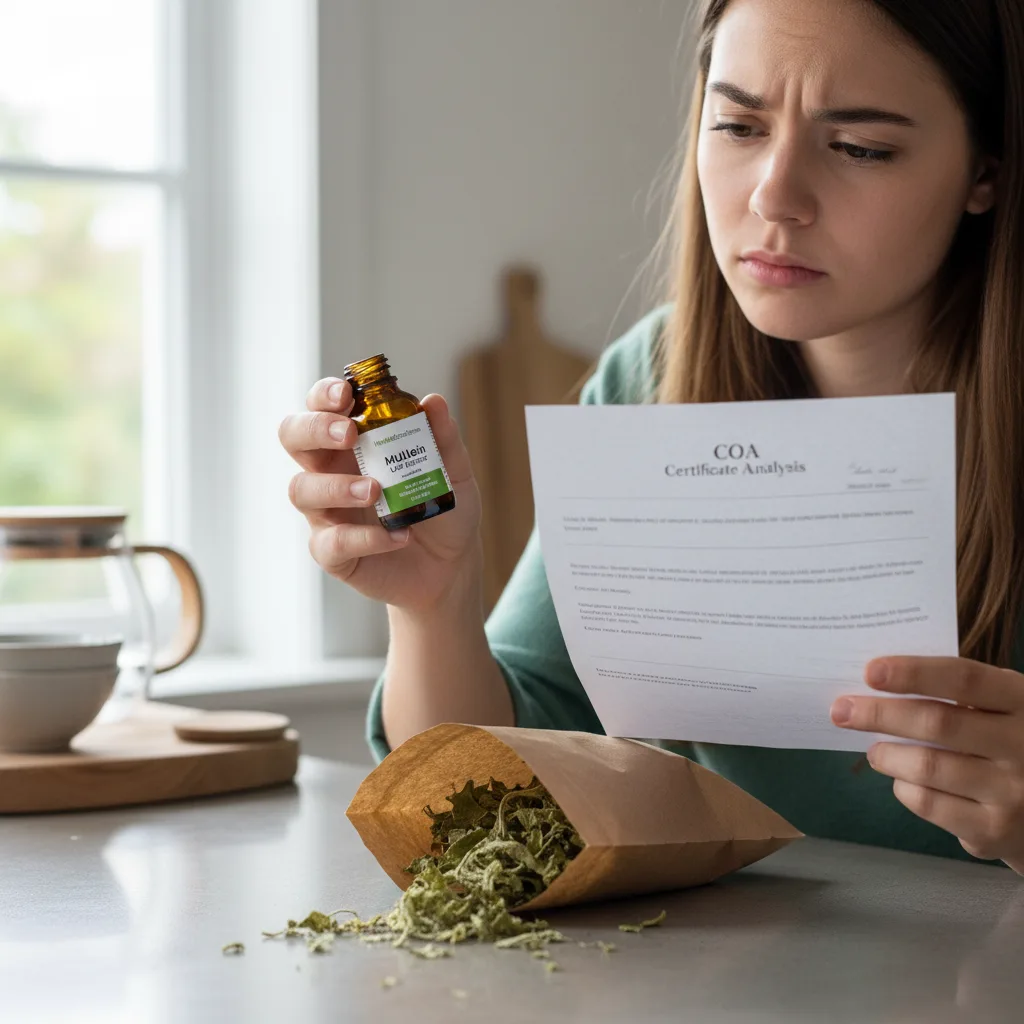
For anyone exploring herbal supplements, lab reports might seem technical or overwhelming. When it comes to evaluating mullein leaf extracts, understanding Certificates of Analysis (COAs) is a vital step in choosing quality products from transparent suppliers. This guide breaks down the typical entries on a mullein extract COA—like identity, potency, solvent residues, heavy metals, and microbial counts—using straightforward language, so you feel informed and confident when examining lab paperwork or shopping online.
Why Certificates of Analysis (COAs) Matter for Mullein Leaf Extracts
A Certificate of Analysis, or COA, is a detailed laboratory report showing a supplement has been tested for specific quality and safety criteria. For mullein leaf extracts, COAs are a mark of transparency: they offer a glimpse into purity, key compound concentrations, and testing for common contaminants. When you know how to read a COA, you can make more informed decisions and ask the right questions before committing to a brand.
Breaking Down the Main Sections of a Mullein Leaf Extract COA
Although formats may vary, most COAs for mullein leaf extracts will include several core sections:
1. Identity Test
The identity section verifies that the product truly contains what the label claims—specifically, mullein (Verbascum thapsus) leaf extract. Labs typically use tests like HPTLC (High-Performance Thin-Layer Chromatography) or botanical microscopy to confirm this. A passing identity result ensures the substance being tested is genuine mullein, not an unlabeled substitute or filler.
What to look for:
- The scientific name “Verbascum thapsus” listed in the test result.
- A clear statement that the tested material "Meets Specification" for identity.
- Testing method may be identified, e.g., "HPTLC Match" or "Microscopic Confirmation."
Many premium products, such as the Mullein Leaf - Organic 15X Liquid Extract - Respiratory & Lung Health, provide detailed COA documentation confirming species authenticity.
2. Potency and Active Compound Analysis
Potency refers to the concentration of specific plant compounds present in the extract. Mullein leaf is valued for its specific triterpenoid saponins and flavonoids. A COA will often show the percentage of these marker compounds, measured by HPLC (High-Performance Liquid Chromatography) or UV-spectrophotometry.
What to watch for:
- Look for a statement like “Total Flavonoids: 0.5%” or "Saponins: Not less than 0.3%."
- Compare potency claims with what is advertised on the product label.
- “Meets Specification” indicates the product aligns with established standards or supplier promises.
If you’re comparing mullein with other botanicals for active compound content, consider reviewing products like Papaya Leaf Extract 16oz – Organic 15X Liquid Papaya Leaf Herbal Supplement, which also provides robust potency and identification reports.
3. Solvent Residues
Mullein leaf extracts are produced using solvents such as ethanol, water, or less commonly, methanol. COAs report residual levels of these solvents to ensure they are within safe, food-grade limits. Testing is usually performed with Gas Chromatography (GC).
What you’ll see:
- “Ethanol: < 5000 ppm” or “Methanol: Not detected.”
- Standards reference recognized limits (such as those from USP or European Pharmacopeia).
- “Pass” or “Meets Spec” entries mean levels fall below safety thresholds.
When checking for solvent safety in herbal supplement COAs, look for similar assurance in other quality-focused products, such as Sea Moss - Raw Dried from St Lucia - 8oz Bag - Nature's MultiVitamins, which undergo careful contaminant monitoring.
4. Heavy Metals Analysis
Herbal supplements are routinely screened for the presence of heavy metals naturally present in soil or potentially introduced during processing. Lead, cadmium, mercury, and arsenic are the most commonly reported.
Entry examples:
- “Lead: <0.1 ppm”
- “Cadmium: Not detected”
- “Meets USP limits”
- A “fail” or elevated level should prompt further questions to the supplier.
Additional detailed reporting is a positive indicator; for example, Mullein Leaf Tea - Organic 24 Tea Bags - Respiratory & Lung includes batch testing for heavy metals to ensure safety in every cup.
5. Microbial Counts
Safety testing includes microbial analyses, ensuring that mullein leaf extracts are free from unsafe levels of yeast, mold, or typical bacteria. Common entry terms here include “Total Plate Count,” “Total Yeast & Mold,” and “E. coli.”
Sample entries:
- “Total Plate Count: <1,000 cfu/g”
- “Total Yeast & Mold: <100 cfu/g”
- “E. coli: Not detected”
- “Meets specification” where tested levels are well below limits specified by recognized organizations such as USP.

Key Numbers and Terms: Making Sense of Test Results
Understanding what these numbers mean is essential for making comparisons and informed choices. Here’s a practical overview of important terms often found on mullein leaf extract COAs:
- “Meets Specification” / “Conforms”: Indicates the lot passes the set quality standard.
- “Not Detected” (ND): The analyte (e.g., heavy metal or solvent) was not found above the test’s detection limit.
- “<” (Less Than): The value is below the lab’s quantifiable limit, signaling very low or undetectable levels.
- “ppm” (Parts per Million) and “ppb” (Parts per Billion): Units for measuring tiny amounts—most often used for heavy metals or solvents.
- Testing Methods: Acronyms like HPTLC, HPLC, GC, ICP-MS tell you what technology or method was used for assessment. These methods are widely recognized for botanical analysis.
Practical Tips: How to Evaluate a COA When Shopping for Mullein Leaf Extracts
When you request a COA from a supplier or find one listed online, here are some practical steps you can take to feel more confident about product quality:
1. Check for Recent Dates and Lot Numbers
- Verify that the COA corresponds to the specific batch or lot you are purchasing.
- Recent test dates (within 1–2 years) indicate current quality.
2. Review All Core Test Areas
- A thorough COA includes identity, potency, solvent residues, heavy metals, and microbial testing.
- Missing sections or “not tested” reports warrant questions.
3. Look for Established Testing Standards
- Results should reference USP, ANSI, or similar benchmarks for safety.
- “Meets specification” or “Pass” language means levels meet these standards.
4. Ask Clarifying Questions
- If you’re unsure what a result means or notice missing information, ask the supplier for explanation or clarification.
- Example questions:
- “Which compounds were used for potency testing in your mullein extract?”
- “Are your heavy metals results compliant with USP standards?”
- “Does this COA cover the specific lot I’m buying?”
5. Compare COAs Across Suppliers if Shopping Around
- Reliable suppliers are transparent and willing to share their COAs.
- If a seller hesitates or cannot provide a COA, it may be a signal to look elsewhere.

Alongside mullein tinctures, it's helpful to compare standards across various herbal supplements. For example, Blood Platelet Plus - 60/600mg 20X Strength Capsule - Platelet Boost includes comprehensive lab tests for heavy metals and microbial safety, reflecting trends in transparency industry-wide.
COAs and Herbal Goodness: A Note on Transparency
While this guide is focused on the basics of COA interpretation for mullein leaf extracts, it’s worth noting that a growing number of brands—including Herbal Goodness—strongly value third-party testing and transparency. Suppliers who freely provide batch-specific COAs and answer quality-related questions help empower consumers and raise overall industry standards.
Supplements such as Papaya Leaf Extract - Capsules 600mg - 10X Strength and Mullein Leaf - Organic 15X Liquid Extract - Respiratory & Lung Health are leading examples of this openness. Their COAs are available for review so you can shop confidently.
Sample COA Entry Glossary: Demystifying Technical Jargon
- Botanical Identification: Confirms the product is authentic mullein using techniques like HPTLC.
- Assay/Potency: Quantifies marker compounds; look for results as percentages or mg/g.
- Moisture Content: Should be listed (e.g., “6%”)—excessive moisture can affect product stability.
- Foreign Matter: Ensures there’s no extraneous material; should be “None detected” or below limits.
- Microbial Count: Expressed as cfu/g (colony-forming units per gram); must be very low.
- Heavy Metals: Reported as ppm or ppb; numbers should be well below established safe limits.
Red Flags: What Should Raise Questions?
- Test results are vague or do not match what’s on the product label.
- Heavy metal, solvent, or microbial levels approach upper safety limits.
- Outdated COAs or tests performed more than two years ago.
- Lack of full testing across the five primary categories outlined earlier.
Building Confidence as a Consumer
Knowing how to read a mullein leaf extract COA turns a potentially opaque document into a valuable tool. When you can spot what matters—identity, potency, safety—the purchasing process becomes more transparent and empowering. As herbal supplement interest grows, consumer knowledge plays a crucial role in shaping industry standards and accountability.
If you're seeking assurance of test-backed safety and efficacy in other herbal options, the Blood Platelet Plus - 60/600mg 20X Strength Capsule - Platelet Boost offers a model for clear labeling and reporting.
Final Thoughts: Becoming an Informed Supplement Shopper
Requesting and understanding a Certificate of Analysis puts the power back in your hands. With clarity on testing basics and key terms, you’re better positioned to seek out mullein leaf extracts backed by data, not just marketing promises. Transparency, thorough testing, and open communication with suppliers are important pillars for anyone wanting to shop smart and confidently for herbal supplements.
FAQs:
- What is a Certificate of Analysis (COA) for mullein leaf extracts?
A COA is a laboratory report verifying the identity, potency, and safety of mullein leaf extract batches, listing tests such as botanical identification, compound analysis, solvent residues, and contaminant screening.
- Which COA entries are most important when reviewing mullein supplements?
Key sections include identity verification, potency or active compound levels, solvent residue results, heavy metal content, and microbial counts. All help gauge product quality and safety.
- How do I know if heavy metals or solvents are at safe levels on a COA?
COA entries should note levels well below established safety limits (USP or similar). Safe entries are often marked by “Meets specification,” “Pass,” or results far below permissible thresholds.
- Why might a COA show 'Not Detected' next to a contaminant?
'Not Detected' means the lab’s equipment did not find any measurable amount of that contaminant in the tested batch, indicating it’s below the method’s detection threshold.
- How recent should a COA be for it to be reliable?
Look for COAs dated within the past 1–2 years and ensure they cover the exact batch or lot you are considering. Outdated or generic COAs may not reflect current quality.
- What should I do if a supplier cannot provide a COA?
Suppliers should be transparent and willing to provide COAs upon request. If one is not available, consider it a signal to shop elsewhere for mullein leaf extracts with clear quality data.
- Can I use a COA to compare mullein extracts from different brands?
Yes, COAs help compare identity, ingredient purity, and safety factors across products—empowering you to select the most transparent and rigorously tested options.
Author Name:
Herbal Goodness Editorial Team
Author Bio:
The Herbal Goodness Editorial Team specializes in holistic health and superfoods, blending science and nature to educate and empower our community.
References:
Introducing Graviola to Young Taste Buds: Fun, Family-Friendly Flavor Exploration
Share this
Popular posts


FAQs
1. What are the main benefits of drinking bamboo leaf tea?
Drinking bamboo leaf tea supports hydration, relaxation, skin wellness, and antioxidant balance.
2. What is bamboo leaf extract used for?
It’s used for general body wellness, skin elasticity, hair and nail support, and overall vitality.
3. Can bamboo leaf help with skin care and body wellness?
Yes, bamboo leaf is rich in silica and antioxidants, which promote healthy skin, strong nails, and a youthful glow.
4. What forms of bamboo leaf are available?
You can find dried bamboo leaf, powder, extract, drops, oil, and bamboo leaf green tea.
5. Are there any side effects of bamboo leaf?
Bamboo leaf is generally safe when consumed in moderation. Always consult your healthcare provider before starting any new herbal supplement.