





Cat’s Claw Extract Labels: Ratios, Solvents, and Key Terms Explained

Shopping online for plant-based wellness products can be daunting—especially when the product label looks more like science class than friendly advice. Cat’s claw extract is a great example. Its labels are filled with references to extract ratios, tincture solvents like alcohol or glycerin, “standardized” compositions, batch numbers, carrier ingredients, and more. If you’re new to herbal extracts, these terms can be confusing. But with a little plain-English guidance, you can understand exactly what you’re buying, make informed comparisons, and confidently choose a cat’s claw extract that aligns with your personal wellness goals and preferences.
This article walks you through the essential language found on cat’s claw extract labels, focusing on extract ratios, tincture solvents, standardized terminology, carrier ingredients, and batch numbers—so you can decode those details before making a choice.
What Is Cat’s Claw Extract? A Primer on Herbal Labeling
Cat’s claw, traditionally valued in Amazonian cultures, is an herbal supplement derived from the inner bark and roots of the Uncaria tomentosa vine. Most cat’s claw extracts are liquid tinctures, capsules, or powders. Each comes with a detailed label—serving as your first tool to gauge the extract’s qualities and suitability for your needs.
Understanding the terminology is essential, especially with so many products available online. Label transparency helps clarify what’s inside the bottle, how the extract was produced, and what you can expect in terms of plant content and purity.
The Language of Extract Ratios: What Do Numbers Like 4:1 or 10:1 Mean?
One of the first things you’ll notice on a cat’s claw extract label is an extract ratio—such as 4:1, 10:1, or even 20:1. But what do these numbers actually mean?
Extract ratios reflect the concentration process.
- First Number (e.g., 4 or 10): Indicates how much raw plant material was used.
- Second Number (always 1): Represents the amount of extract produced.
For example, a 4:1 extract ratio means 4 parts of dried cat’s claw were used to produce 1 part of extract. Higher numbers typically mean the extract is more concentrated. However, this doesn’t automatically mean it is “better.” The quality of the starting material, extraction method, and finished purity all matter.
Why ratios matter:
- Ratios let you compare concentration across brands or formats.
- A higher ratio means less volume may achieve the same plant constituent intake.
- Not all ratios directly reflect “strength.” Source quality and extraction efficiency also influence results.
Look for extract ratio info:
- Usually listed as “Extract Ratio: 4:1” or “10:1 Extract.”
- Sometimes stated in the supplement facts instead of on the label front.
When comparing extract strengths, you may encounter products like the Cat's Claw - Organic 1oz 15X Liquid Extract - Joint Health, which displays a clear extract ratio in its labeling for ease of understanding.
Tincture Solvents: Alcohol vs. Glycerin—What’s the Difference?
Cat’s claw extracts often appear as tinctures. A tincture is simply a liquid extract preserved in a solvent. The two most common solvents are alcohol and glycerin.
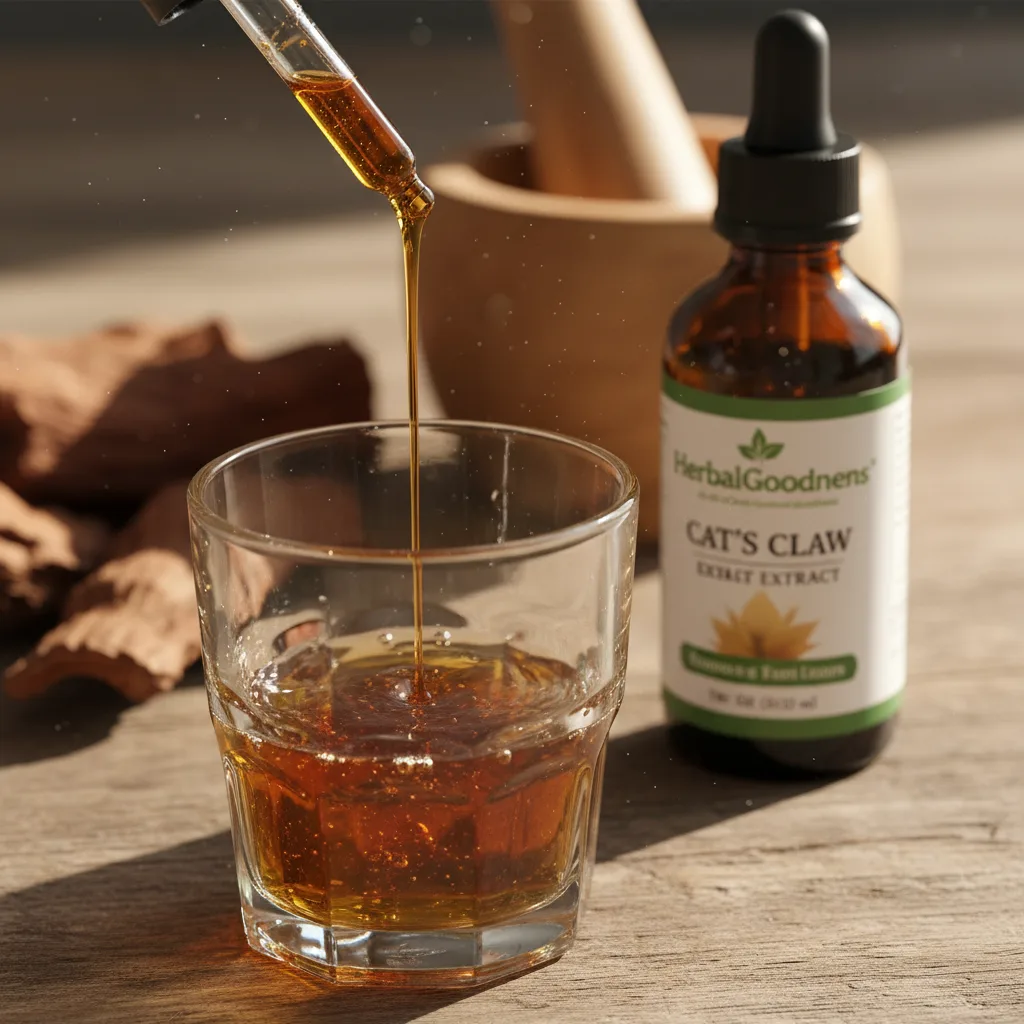
Alcohol-Based Tinctures:
- Alcohol is a traditional solvent, used for its ability to draw out a broad spectrum of plant compounds.
- These tinctures tend to have a stronger herbal taste and a long shelf life.
- May be labeled as “hydroalcoholic extract” or “alcoholic tincture.”
Glycerin-Based Tinctures (Glycerites):
- Vegetable glycerin, a sweet, gentle-tasting liquid, is used as a non-alcoholic alternative.
- Glycerites are often chosen by those sensitive to alcohol or seeking a milder flavor profile.
- Look for wording like “glycerin extract” or “glycerite.”
For those with sensitivities, exploring similar herbal options like Papaya Leaf Extract - Organic 1oz 15X Liquid - Blood Platelet can help clarify preferences around extract carriers and solvents, enriching your herbal supplement journey.
Choosing solvent types:
- Alcohol-based tinctures may offer broader extraction of certain plant compounds.
- Glycerin-based tinctures prioritize taste, alcohol avoidance, and a gentle format.
- Both forms have their place—your choice depends on personal preferences and sensitivities.
Decoding “Standardized” and “Full Spectrum” on Cat’s Claw Labels
You may come across terms like “standardized extract” or “full spectrum” when examining cat’s claw labels. What do these mean, and how do they affect your decision?
Standardized Extracts:
- These extracts are processed to ensure each batch contains a minimum, consistent amount of an identified plant compound or group of compounds (commonly oxindole alkaloids in cat’s claw).
- Amounts are usually listed as a percentage (e.g., “Standardized to 3% oxindole alkaloids”).
- Standardization assures buyers of consistency from bottle to bottle.
Full Spectrum Extracts:
- “Full spectrum” typically refers to extracts that aim to capture the complete profile of compounds from cat’s claw, rather than isolating specific components.
- These are less modified and may better reflect the plant’s natural complexity.
Which should you choose?
- Select standardized extracts if you want consistency in each dose.
- Choose full spectrum for a product closer to the whole-herb tradition.
- Some brands, including Herbal Goodness, may offer both options depending on your desired experience.
Shoppers who prioritize quality or desire even broader support can also consider related botanicals. For example, Soursop Leaf Graviola Extract - - Organic 15X Liquid Extract - Cell Renew & Immunity showcases both transparency and potency details, making label comparisons easier.
Understanding Carrier Ingredients and Additives in Cat’s Claw Extracts
Ingredients beyond the cat’s claw itself are crucial for stability, taste, and absorption. On a label, you will often spot other listed substances. Let’s break these down:
Common carrier ingredients:
- Water: Used to dilute the concentrate and act as a solvent alongside alcohol or glycerin.
- Plant-derived Glycerin: Used in alcohol-free extracts.
- Natural Flavors: Sometimes added to enhance palatability.
- Preservatives: Like potassium sorbate or citric acid to guard against spoilage.
- Other Herbal Blends: Some formulas mix in additional botanicals—double-check if you want pure cat’s claw.
Why are carriers included?
- They help with extraction, preservation, solubility, and taste.
- Carriers must be disclosed for transparency and safe selection.
- Quality-focused brands (such as Herbal Goodness) usually highlight non-GMO, organic, or allergen-free status of carriers when relevant.
Those with specific dietary needs or ingredient sensitivities should carefully examine carrier and additive sections when choosing any plant-based supplement, whether it’s cat’s claw or a similar product like Papaya Leaf Extract Blood Support - Organic 1oz 15X Liquid Extract - Platelet Health.
Identifying Batch Numbers, Lot Codes, and Expiry Dates
Batch numbers, lot codes, and expiry dates provide important context to help buyers ensure they’re getting a fresh, traceable supplement.

Batch or lot number:
- Usually a string of numbers and letters stamped on the label or bottle bottom.
- Allows the brand to trace the exact production run for quality audits.
Expiry or best-by date:
- Indicates when the product should ideally be used for optimal freshness and compositional integrity.
Why these matter:
- Reputable brands always provide this traceability—giving you added assurance about your extract’s source and timeline.
- Avoid products with faded, missing, or unclear date and batch info, as these ensure accountability through the entire supply chain.
By learning to spot lot codes and expiration dates on both Cat's Claw - Organic 1oz 15X Liquid Extract - Joint Health and other high-quality herbal supplements, consumers can ensure their wellness routines remain safe and effective.
Comparing Cat’s Claw Extracts Online: A Checklist for Label Readers
When you’re shopping for cat’s claw extract, the label is your roadmap to understanding potency, purity, and composition. Here are some tips:

- Check the extract ratio: Ensure it’s stated clearly. Use the ratio to compare concentration across brands, but remember, quality matters more than just numbers.
- Read the solvent information: Decide if you’re seeking an alcohol-based tincture or prefer glycerin or water as a solvent.
- Look for standardized or full spectrum details: This tells you what active plant profiles or combinations are present and how consistent each serving will be.
- Scan the full ingredients list: Watch for added flavors or herbs, and check carrier types if you have sensitivities or dietary requirements.
- Find the batch/lot number and expiration date: Reputable companies display this for every extract and supplement.
For those seeking well-labeled options, Papaya Leaf Extract 16oz – Organic 15X Liquid Papaya Leaf Herbal Supplement clearly indicates extract strengths, carriers, and production batch data, making online shopping simpler and safer for wellness.
How Herbal Goodness Approaches Cat’s Claw Label Transparency
At Herbal Goodness, label clarity is considered essential for trust and empowerment. Labels for cat’s claw extracts detail the precise extract ratio (e.g., 10:1), specify the tincture solvent, outline whether the extract is standardized or full spectrum, and list all carrier and supporting ingredients. Batch numbers and best-by dates are always included for traceability.
The brand’s approach lets buyers compare extracts based on transparent, consistent information—without hype or ambiguity. This fosters empowerment and supports mindful selection among Herbal Goodness customers and anyone committed to a thoughtful herbal journey.
Setting Expectations: What Cat’s Claw Extract Labels Cannot Tell You
While labels are rich with important data, there are limits to the information available:
- Labels do not indicate sensory experience (taste or mouthfeel), which can only be discovered through personal trial.
- Laboratory analysis, not label claims, ultimately demonstrates the precise plant composition.
- Labels avoid making unsupported wellness statements—so expect language around tradition, quality, and standards, but not direct promises.
Learning to critically read cat’s claw extract labels allows you to shop online with clarity, confidently compare products, and align choices with your wellness perspective.
FAQs:
- What does a 10:1 extract ratio mean on cat’s claw labels?
A 10:1 ratio means 10 parts of dried cat’s claw were concentrated down to yield 1 part of extract, suggesting a more concentrated formula than lower ratios. However, always consider source quality and production methods alongside ratios.
- Does it matter if a cat’s claw extract is alcohol- or glycerin-based?
The solvent affects the profile, taste, and experience of the tincture. Alcohol-based options are traditional and broad-spectrum, while glycerin-based tinctures offer a non-alcoholic, milder flavor suitable for those avoiding alcohol.
- What does 'standardized extract' mean on a herb label?
This indicates each batch is formulated to deliver a consistent amount of a specific compound or group of plant compounds, providing confidence that you’re getting the same concentration with each use.
- Why are batch numbers and expiry dates important on cat’s claw products?
Batch numbers ensure traceability and quality control, while expiry dates help you purchase and use the supplement while it’s fresh and potent.
- Are carrier ingredients safe and necessary in cat’s claw tinctures?
Carrier ingredients like water, alcohol, or glycerin are used for extraction and preservation. They are generally safe and essential for making a stable, consumable liquid extract.
- How do I know if a cat’s claw extract contains other herbs?
Always check the full ingredients list on the label. Reputable brands clearly state if other herbs are present, aiding transparency for those seeking pure single-herb extracts.
- Can understanding extract ratios help me compare different brands?
Yes. Extract ratios allow you to compare concentration, but remember that quality sourcing and processing are equally important as the numbers.
Author Name:
Herbal Goodness Editorial Team
Author Bio:
The Herbal Goodness Editorial Team specializes in holistic health and superfoods, blending science and nature to educate and empower our community.
References:
Introducing Graviola to Young Taste Buds: Fun, Family-Friendly Flavor Exploration
Graviola in the Classroom and at Home: Creative Activities to Teach Kids About Tropical Plants
Why Social Impact Matters in Plant-Based Wellness
Share this
Popular posts


FAQs
1. What are the main benefits of drinking bamboo leaf tea?
Drinking bamboo leaf tea supports hydration, relaxation, skin wellness, and antioxidant balance.
2. What is bamboo leaf extract used for?
It’s used for general body wellness, skin elasticity, hair and nail support, and overall vitality.
3. Can bamboo leaf help with skin care and body wellness?
Yes, bamboo leaf is rich in silica and antioxidants, which promote healthy skin, strong nails, and a youthful glow.
4. What forms of bamboo leaf are available?
You can find dried bamboo leaf, powder, extract, drops, oil, and bamboo leaf green tea.
5. Are there any side effects of bamboo leaf?
Bamboo leaf is generally safe when consumed in moderation. Always consult your healthcare provider before starting any new herbal supplement.