Wholesale Organic Herbal Tea: Lab Tests and COA Buying Guide

Sourcing organic herbal tea at a wholesale level opens up exciting possibilities for small businesses, retailers, and passionate enthusiasts seeking premium-quality, natural infusions. However, understanding what actually goes into certifying a "clean," trustworthy batch can feel overwhelming—especially when faced with technical lab reports, unfamiliar certificates, and suppliers who use confusing terminology. For newcomers to wholesale organic herbal tea, knowing what lab tests and certificates to ask for is the foundation of transparent, responsible sourcing.
This guide breaks down the essentials: which tests matter, how to request and interpret key documentation, and what common terms really mean—no technical background required. By the end, you’ll have the confidence to start conversations with suppliers and request lab results that back up your quality standards.
Why Lab Testing and Certificates Matter in Wholesale Organic Herbal Tea Sourcing
For organic herbal tea buyers, lab testing and documentation are more than just paperwork—they form the backbone of quality assurance and transparency throughout the supply chain. Organic certification ensures that a product has met specific agricultural and handling standards, but it’s the third-party testing that provides deeper, batch-level insight into what’s in your herbal tea and what isn’t (e.g., unwanted residues or contaminants).
Transparent sourcing isn’t just a buzzword. Modern customers prioritize safety, sustainability, and purity, and reputable brands or retailers know that providing clear third-party evidence reassures buyers at every step. Certificates and lab results help you:
- Verify that your herbal tea meets organic claims
- Confirm teas are free from harmful levels of unwanted chemicals
- Build trust with your own customers by making data-driven decisions
- Navigate rising regulatory standards in the global tea trade
Selecting products from trusted suppliers that offer proven lab results, such as the Organic Herbal Tea Trio – Build-Your-Own Bundle, supports efforts to maintain high transparency standards and allows your business to confidently meet the demands of today’s discerning tea drinkers.
Essential Lab Tests for Wholesale Organic Herbal Tea: What to Ask For
When buying wholesale organic herbal tea, the following tests and certificates are most commonly requested, regardless of whether you’re sourcing from large estates or artisan growers:
Pesticide Residue Analysis: Protecting Purity and Organic Integrity
Pesticide residue analysis screens for traces of agricultural chemicals that may have come in contact with the tea leaves from environmental exposure or neighboring crops. Even if a tea is certified organic, accidental contamination is possible. Reports should show non-detectable levels or levels far below regulatory thresholds for organic tea.
What to look for:
- Multi-residue screenings covering hundreds of pesticides
- Results for each active compound (often a long list)
- “ND” or “Not Detected” next to most, if not all, tested pesticides
Choosing teas such as Soursop Leaf Tea | Organic Graviola 24 Bags | Soursop Tea Benefits for Immunity & Wellness that clearly display their third-party test results can provide exceptional peace of mind during the wholesale process.
Heavy Metal Testing: Safety From Soil to Cup
Soil and water in certain regions may naturally contain higher concentrations of heavy metals like lead, arsenic, cadmium, or mercury. These can be absorbed by the plant, making heavy metal screening vital for imported herbal teas.
What to check:
- Results for substances like lead, cadmium, and arsenic
- Comparison to internationally-accepted safety limits
- Consistent batch-by-batch testing
Certificates for products such as our organic herbal teas should show that heavy metals are absent or well within acceptable safety standards to guarantee your offerings are not only flavorful but pure.
Microbial Checks: Ensuring Clean Processing and Storage
Because herbal teas are raw agricultural products, proper handling and storage are essential. Microbial checks ensure that the tea is free of excessive yeast, mold, or bacteria that commonly develop in high-moisture or unsanitary environments.
What’s commonly tested?
- Yeast and mold counts (CFU/g)
- Total aerobic count
- E. coli and Salmonella (should be absent)
Partnering with reputable suppliers ensures that your herbal teas, like Organic Papaya Leaf Tea | 24 Premium Bags – Caffeine-Free, are supported by microbial results for every batch—an essential step in maintaining a safe, quality-driven supply chain.
Certificates of Analysis (COA): The Quality Passport
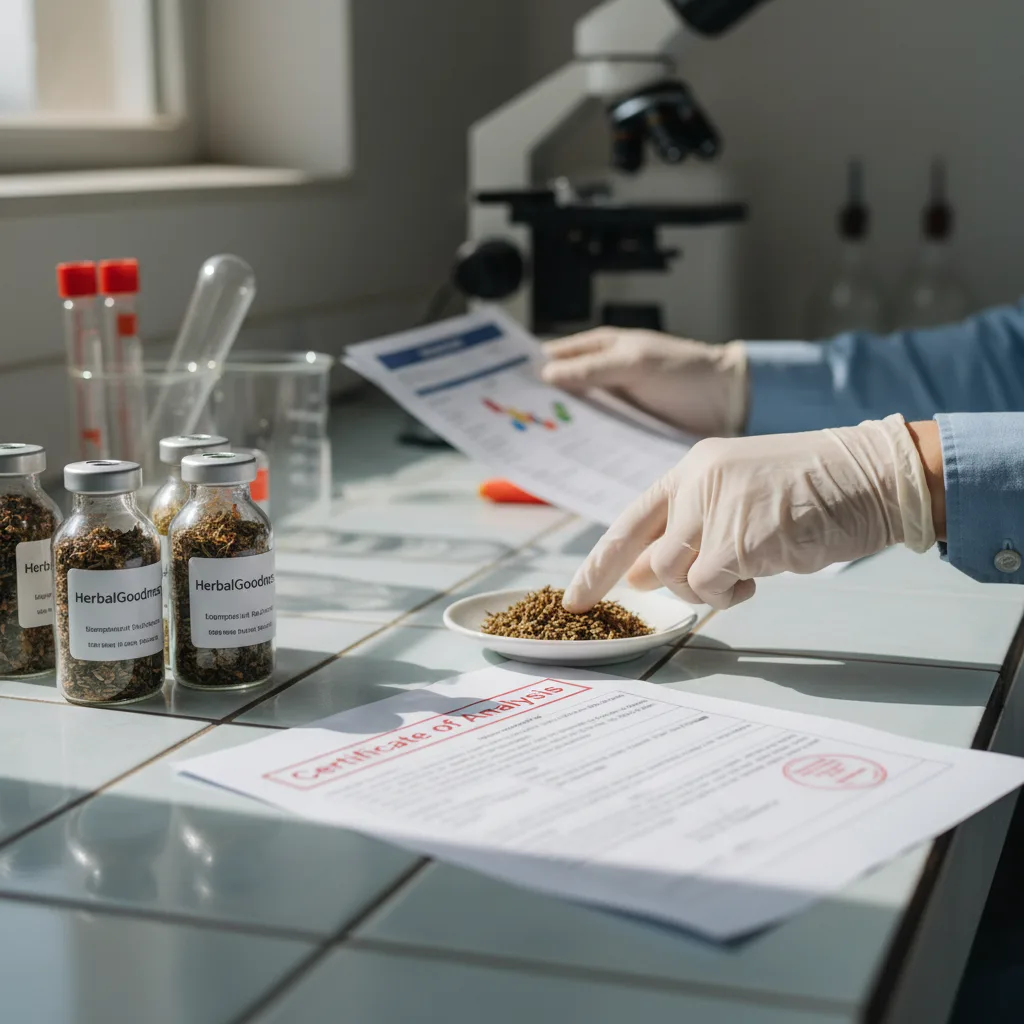
A Certificate of Analysis, or COA, is the summary document that lists the key quality parameters tested for the given batch. COAs come from either the supplier’s in-house lab or a third-party facility—third-party is preferred for additional objectivity.
What’s included?
- Batch or lot number (traceability)
- Results for microbial, pesticide, heavy metal, and possibly moisture and purity tests
- Clear references to test methods and detection limits
- Laboratory name or accreditation
A well-prepared COA can be requested for blends such as Wellness Tea Blends – 4oz Organic Premium Herbal Infusions, providing essential details for traceable sourcing.
How to Confidently Request Lab Tests and Certificates: A Step-by-Step Approach
For newcomers, requesting lab results might feel intimidating, but reputable suppliers see this as routine. Here are practical steps:
-
State Your Request Clearly: Ask for third-party lab test reports (pesticide, heavy metal, microbial) and a current COA for the specific batch or lot.
-
Request Documentation Samples: Experienced buyers often request a sample certificate before committing to larger purchases; this helps ensure documentation style and scope meet your needs.
-
Clarify Lot Traceability: Confirm that the COA corresponds with your order’s lot number or batch code. Traceability is crucial in the event of any future queries.
-
Ask Reputable Questions:
- Who performed the lab testing? (Third-party is best.)
- When were the tests conducted?
- Are results from accredited or ISO-certified labs?
- Discuss Frequency: Find out if the supplier tests every new batch or only annually.
Brands like Herbal Goodness use third-party testing to ensure transparency at every step, echoing a broader industry move toward accessible, actionable lab documentation.
Looking for wholesale organic herbal teas backed by third-party testing and transparent documentation? Explore Herbal Goodness' collection of USDA Organic herbal teas, where every batch is supported by quality standards to help retailers, wellness businesses, and distributors source with confidence.

Reading Common Terms on COAs and Lab Reports Without the Technical Jargon
Lab reports can quickly become dense with scientific terms. You don’t need a chemistry degree to find the answers you care about:
- ND (“Not Detected”): None of the substance was found at the test’s detection limit.
- LOQ (Limit of Quantification): The smallest amount that could be measured reliably by the lab.
- CFU/g (Colony Forming Units per Gram): Measures yeast, mold, and bacteria levels. Lower numbers suggest cleaner processing.
- Batch/Lot Number: The code tying the report to specific product shipments.
- Accreditation (ISO/IEC 17025): Indicates the lab meets recognized standards for competence.
If you are reviewing results for diverse tea blends or bulk botanicals, like our Bulk Herbs collection, look for this language to quickly assess overall cleanliness and safety.

Third-Party Labs vs. In-House Testing: What’s the Difference?
Suppliers may conduct lab testing internally or use accredited third-party laboratories:
- In-house testing is typically fast and convenient for suppliers, but may lack impartial oversight.
- Third-party lab testing provides added credibility, as the laboratory is unaffiliated and often subject to strict international standards.
For large wholesale orders or particularly sensitive herbs, many buyers require third-party certificates before finalizing a purchase. Choosing brands and products that prioritize third-party batch safety (such as those in the Organic Herbal Tea Gift Set | 24 Teabags Wellness Collection) demonstrates a stronger commitment to transparency.
Practical Red Flags and Green Lights When Assessing Quality and Transparency
Red Flags:
- Supplier is reluctant to share test reports or claims “proprietary information”
- COAs lack batch numbers or recent test dates
- Reports only available upon large volume purchase commitments
- Lab reports show above-limit results without transparent explanation
Green Lights:
- Routine provision of batch-specific COAs
- Openness to share historical test results and answer questions
- Clear, readable reporting format (with substances listed, not just generic statements)
- Certificates or reports issued by known third-party or accredited labs
Seeking out third-party certified Organic Hibiscus Tea 24 Bags | Heart Health & Antioxidant Wellness or bulk tea sellers offering complete documentation is a smart way to boost the credibility of your own wholesale program while protecting customer well-being.
Building Trust and Value with Clean, Traceable Herbal Tea Sourcing
Not all suppliers are equal when it comes to documentation. Small buyers, independent shops, or boutique brands add unique value by simply being proactive and making smart, clear requests. Choosing teas backed by recent lab results and credible certificates supports:
- Safer and higher-quality offerings for your end customers
- A more sustainable and ethical supply chain
- Your brand’s growth built on transparency and trust
Ready to source organic herbal teas with confidence? Discover Herbal Goodness' wholesale herbal tea collection, featuring USDA Organic teas supported by Certificates of Analysis (COAs) and third-party testing to help you build a transparent, trusted product lineup.
By bridging the gap between supplier labs and your shelf—or teapot—clean, professionally-tested organic herbal tea becomes more than just a beverage; it becomes an assurance of quality from farm to cup. If you want to build a wholesale business featuring clean, reliable herbal tea, always ensure every product is matched with current lab results and a valid COA for each batch. It’s a straightforward way to create value, build loyalty, and help your customers sip with confidence.
Frequently Asked Questions
Question 1: What are the key certificates to request from a wholesale organic herbal tea supplier?
Answer: Request a Certificate of Analysis (COA) for each batch, third-party pesticide residue reports, heavy metal screening, and microbial test results. Products such as the organic herbal teas should come with these certificates.
Question 2: Why is third-party lab testing important for herbal teas?
Answer: Third-party lab testing provides unbiased, accredited results confirming your teas, like Soursop Leaf Tea | Organic Graviola 24 Bags | Soursop Tea Benefits for Immunity & Wellness, are free from contaminants and meet organic standards.
Question 3: How do I understand terms like ND or LOQ on a COA?
Answer: "ND" means Not Detected at the testing limit, while "LOQ" is Limit of Quantification, or the lowest amount the lab can consistently measure. When reviewing COAs for herbal teas and extracts, these terms help you confirm purity.
Question 4: What should I do if a supplier refuses to show lab results?
Answer: A refusal to provide detailed lab reports or current COAs is a red flag. Opt for brands and bulk teas, such as those found in the Organic Herbal Tea Gift Set | 24 Teabags Wellness Collection, that readily share their batch test documents.
Question 5: How often should organic herbal teas be tested for safety?
Answer: Ideally, a reputable wholesaler tests every batch for microbial, pesticide, and heavy metal contaminants. Regular testing for products like Organic Papaya Leaf Tea | 24 Premium Bags – Caffeine-Free ensures ongoing quality, not just annual assessments.
Question 6: What documentation is required for blended herbal teas at wholesale?
Answer: For blends, request a COA and supporting lab tests covering each botanical component. Reliable suppliers of Wellness Tea Blends – 4oz Organic Premium Herbal Infusions often provide documentation for traceability and safety.
Ready to take the next step towards sourcing clean, transparent wholesale organic herbal tea? Use this guide as a checklist when speaking with suppliers to ensure quality and peace of mind at every stage of your buying journey.
About the Author
Herbal Goodness Editorial Team
The Herbal Goodness Editorial Team specializes in holistic health and superfoods, blending science and nature to educate and empower our community.
References
Why Social Impact Matters in Plant-Based Wellness