Papaya Seed Supplement 600 mg: Understanding Dosage, Concentration, and Labels

Curious about what the "600 mg" on your papaya seed supplement label truly means? If you’re just beginning your journey in herbal wellness or supplement shopping, seemingly straightforward numbers like this can be surprisingly confusing. Dosage, sourcing, and concentration often differ from brand to brand, and the language used on labels doesn’t always tell the full story at first glance. By breaking down what those measurements mean, this guide aims to empower you with clarity and confidence the next time you pick up a papaya seed product.
What Does "600 mg" Mean in Papaya Seed Supplements?
When you see “600 mg” printed on a papaya seed supplement, it’s natural to assume this is a set, universal amount. However, that number can represent different forms, strengths, and processing methods. Understanding what’s inside the capsule or scoop is essential to making a choice that aligns with your preferences and wellness goals.
The Basics: Milligrams (mg) as a Measurement
“mg” stands for milligrams, a unit of mass commonly used on supplement labels. A value like “600 mg” tells you the total weight of the ingredient in each serving—often in one capsule or scoop. But what’s weighing in at 600 mg? Is it pure papaya seed powder? A concentrated extract? Something else entirely? That’s where context matters.
Whole-Seed Powder vs. Papaya Seed Extract: Why This Distinction Matters
When comparing papaya seed supplements, you’ll most likely encounter two main forms:
- Whole-seed powder: Simply the ground seeds of papaya, dried and milled into a fine powder.
- Papaya seed extract: A concentrated form, where active compounds are pulled from the seed and sometimes standardized to meet a specific level.
Whole-Seed Powder: What “600 mg” Reflects
In most cases, if a product contains papaya seed powder, the “600 mg” simply means each serving—usually a capsule—offers 600 milligrams of dried, ground papaya seed. There’s little or no concentration involved. You’re getting the whole seed, just in a more manageable form than eating them outright. If you’re interested in this straightforward, whole-food form, consider the Organic Papaya Seed Powder 4oz | Gut Cleanse & Digestive Support.
Papaya Seed Extracts: How Concentration Changes the Math
Extracts work differently. Instead of whole, powdered seeds, these products use special processes to draw out specific compounds. The result is a more concentrated substance. For example, a label reading “600 mg extract (10:1)” could mean the product contains an amount of extract derived from 6,000 mg (6 grams) of raw seed—concentrated 10 times.
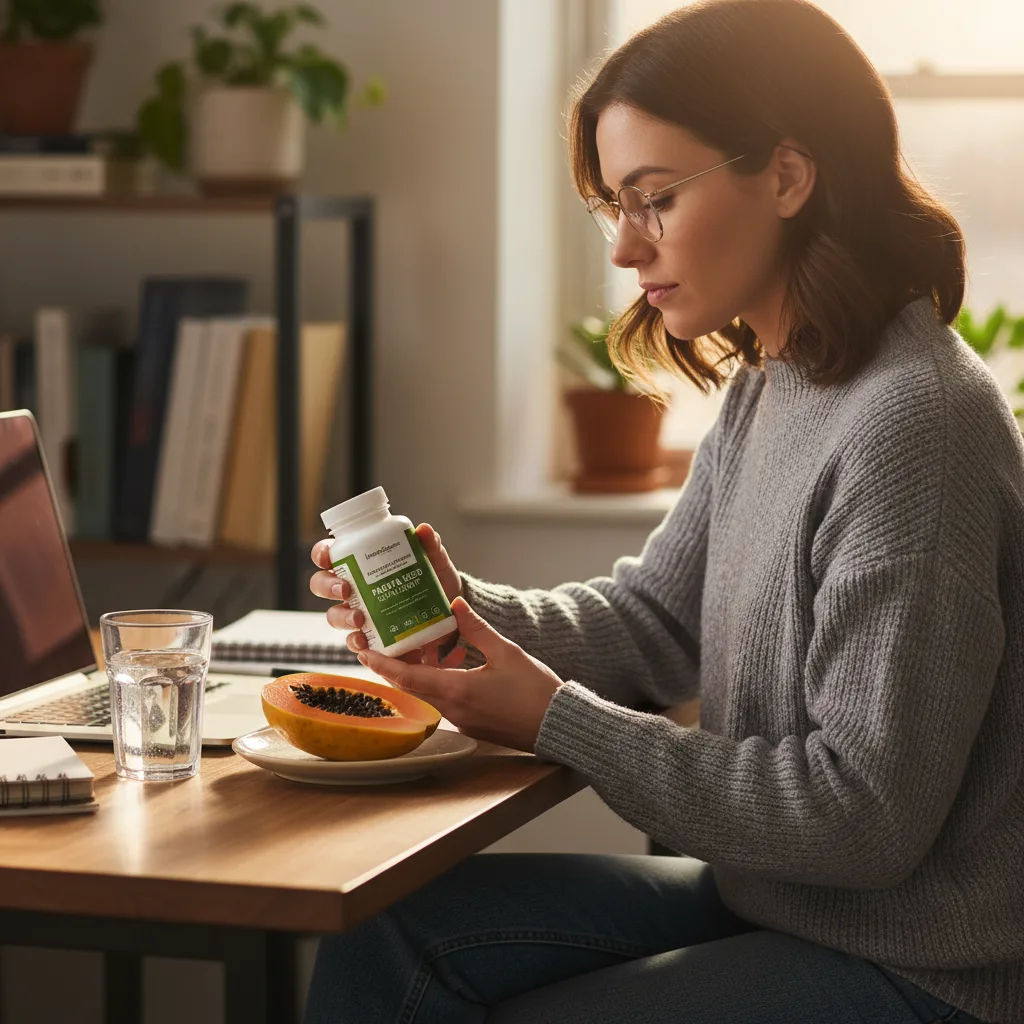
Extract Ratios: Decoding Common Label Terms
- 10:1 extract: Ten grams of raw seeds are concentrated down to 1 gram of extract.
- 20:1 extract: Twenty grams of raw material become 1 gram of extract.
So, a 600 mg capsule of 10:1 extract has a different origin and likely a different profile than a 600 mg capsule of whole-seed powder. This is why comparing dosages across products takes more than just looking at the number. For a supplement in this concentrated style, Papaya Leaf Extract - Capsules 600mg - 10X Strength is a prominent example to compare.
Label Language: Other Terms You’ll See and What They Mean
Supplements often include other terminology to describe what’s inside. Here’s how to make sense of these:
“Standardized Extract”
A standardized extract means the manufacturer has ensured that each batch contains a specific minimum of a certain natural compound. For example, a papaya seed extract might be standardized for fatty acids or antioxidant markers. If it reads, “Standardized to 5%,” this tells you that 5% of the total extract is that compound, helping you compare across brands regardless of extract ratio. If you want a formula standardized for higher absorption, searching for options like Papaya Seed Powder - 60/600mg Capsules - Gut & Colon Cleanse can help.
“Capsule Fill Weight”
Capsules have a maximum fill—usually measured in milligrams. If a product says it’s a “600 mg capsule,” this means the total weight of all capsule content (sometimes including binders or excipients). Ideally, the label will specify “600 mg papaya seed powder” or “600 mg papaya seed extract,” but if it simply lists “600 mg per capsule,” check for more details in the ingredients list. If purity matters, double-check for clear listings of papaya and minimal fillers.
Watch for Excipients or Blends
If papaya seed is part of a proprietary blend, the amount per serving may refer to the entire blend, not just papaya seed. Review supplement facts for clarity and transparency. For those who value clean ingredient profiles, compared to products like Body Detox with Papaya Seed - Organic 15X Liquid Extract - Intestine & Gut Cleanse, the label usually spells out each component.

Doing the Math: Comparing Papaya Seed Supplements Like an Expert
With all this context, how can you confidently compare two or more papaya seed supplements?
Step 1: Identify the Form
- Is it whole-seed powder, extract, or a blend? Check the main label and "Supplement Facts."
Step 2: Understand the Listed Dosage
- Is the “600 mg” referring to just the papaya seed or a total mixture? Look for clarifying language.
Step 3: Check for Extract Ratios or Standardization
- An extract with a ratio (e.g., 10:1) means higher potency from less starting material. If standardized, note the targeted compound.
Step 4: Consider Capsule Count and Serving Size
- How many capsules equal one serving? Some products list “600 mg per capsule,” but the suggested serving might be two or more capsules.
Step 5: Compare Apples to Apples (or Seeds to Seeds)
- If comparing a 600 mg whole-seed supplement with a 600 mg 10:1 extract supplement, know that the extract originates from much more starting material and may be more concentrated in certain natural constituents.
- For whole-seed powder, the number you see is the total ground seed weight.
- For extract ratios, multiply serving size by the ratio to see the “seed equivalent.” For example, a serving of 600 mg at 10:1 = 6,000 mg (6 grams) raw seed.
Example Comparison
- Product A: 600 mg papaya seed powder per capsule (1:1)
- Product B: 600 mg 10:1 papaya seed extract per capsule (equivalent to 6,000 mg seed)
Although both say “600 mg,” Product B’s extract would deliver a higher concentration of certain natural compounds, provided the extraction process is effective and consistent. To experience this, products such as Papaya Leaf Extract Blood Support - 10X 60/450mg Capsules - Blood Platelet illustrate strong extract ratios and clearly labeled concentration.
Why Supplement Format Can Impact Your Choice
For someone new to herbal supplements, capsule content and sourcing quality—such as the standards used by transparent brands—are important. Some people prefer whole-food powders for a closer-to-nature approach. Others opt for concentrated extracts, often for smaller capsules containing more potent compounds. Understanding these differences will help you pick products that align with your preferences—whether that means simplicity, concentration, or a targeted nutrient profile. For those exploring gut and colon support, Papaya Seed - Organic 15X Liquid Extract - Colon & Gut Cleanse can deliver a strong, fast-absorbing formula.

Tips for Beginners: Reading Papaya Seed Supplement Labels Confidently
- Look for specifics: Is the main ingredient whole-seed powder or an extract? Is an extract ratio or standardization percentage provided?
- Check serving size: Sometimes “600 mg” refers to one capsule; sometimes to two or more.
- Scan the ingredient list: Ensure papaya seed is the primary or only ingredient and note any additional fillers.
- Review certifications: If sourcing standards matter to you, look for organic, non-GMO, or third-party testing certifications (for example, certifications demonstrated by brands like Papaya Leaf Extract 10X - 600mg Capsule - Platelet & Digestive Aid).
- Ask questions: Customer support for reputable brands should be able to clarify what’s in each serving if not fully clear on the label. When in doubt, selecting straightforward supplements with transparent labeling offers greater confidence in your choice.
Recap: What Does “600 mg” Really Mean?
In short, “600 mg” on a papaya seed supplement means 600 milligrams of something—often whole-seed powder, sometimes a concentrated extract. Knowing the difference can shape your expectations and comparison process:
- For whole-seed powder, 600 mg is just that—600 mg of dried, ground papaya seed.
- For extracts, a 600 mg dose often represents a much larger volume of raw material, concentrated down and possibly standardized for active compounds. Options like Blood Platelet Plus - 60/600mg 20X Strength Capsule - Platelet Boost show high-concentration capsules with clear potency.
Comparing supplements goes beyond the headline number. By checking form, extract ratio, and additional label claims, you’ll be better equipped to find the papaya seed product that fits your needs and preferences. Enhanced awareness not only supports smarter purchasing but can deepen trust in your wellness journey.
Next Steps: Making Confident, Informed Choices
Becoming fluent in supplement label language takes time, but even a basic understanding of dosage, concentration, and terminology can set you on a more empowered path. And as you explore the benefits and uses of papaya seed—either as a wellness addition or out of curiosity for new plant-based options—the details on the label become tools for your own decision making.
FAQs:
- What does '600 mg' actually mean on a papaya seed supplement label?
The '600 mg' typically indicates the amount of papaya seed material per capsule or serving. This could be the weight of whole-seed powder or a more concentrated extract. To know exactly what the 600 mg represents, check if the product specifies 'whole-seed powder,' 'extract,' or an extract ratio like 10:1 on the label.
- What's the difference between papaya seed powder and papaya seed extract?
Papaya seed powder is simply ground, dried seed, while papaya seed extract is a more concentrated form where targeted compounds are drawn from the seed, sometimes reflected in extract ratios or standardization levels.
- How do extract ratios like '10:1' influence supplement strength?
An extract ratio such as '10:1' means 10 parts of raw papaya seed are concentrated into 1 part of extract. This usually results in a higher concentration of certain natural compounds compared to whole-seed powder of the same milligram amount.
- Why is standardization important in papaya seed extracts?
Standardization helps ensure each batch of an extract contains a consistent level of a specific compound. This provides more predictability when comparing supplements, as you know what active compounds are present and in what amount.
- Should I choose a whole-seed powder or a concentrated extract?
This depends on your preferences. Whole-seed powder gives you the entire seed in a powdered form, while extracts are more concentrated and may require smaller servings. Understand what's most important to you—whether that's a closer-to-nature option or a formula with concentrated compounds.
- How can I compare different papaya seed supplement labels accurately?
Identify whether the supplement is whole-seed powder or extract, note any extract ratios or standardization levels, and compare serving sizes. Multiply extract dosage by its ratio to see the starting material equivalent for a fair comparison.
Author Name:
Herbal Goodness Editorial Team
Author Bio:
The Herbal Goodness Editorial Team specializes in holistic health and superfoods, blending science and nature to educate and empower our community.
References:
Introducing Graviola to Young Taste Buds: Fun, Family-Friendly Flavor Exploration
Graviola in the Classroom and at Home: Creative Activities to Teach Kids About Tropical Plants
Why Social Impact Matters in Plant-Based Wellness