





Best Vitamin B12 Supplement 2026: Cyanocobalamin

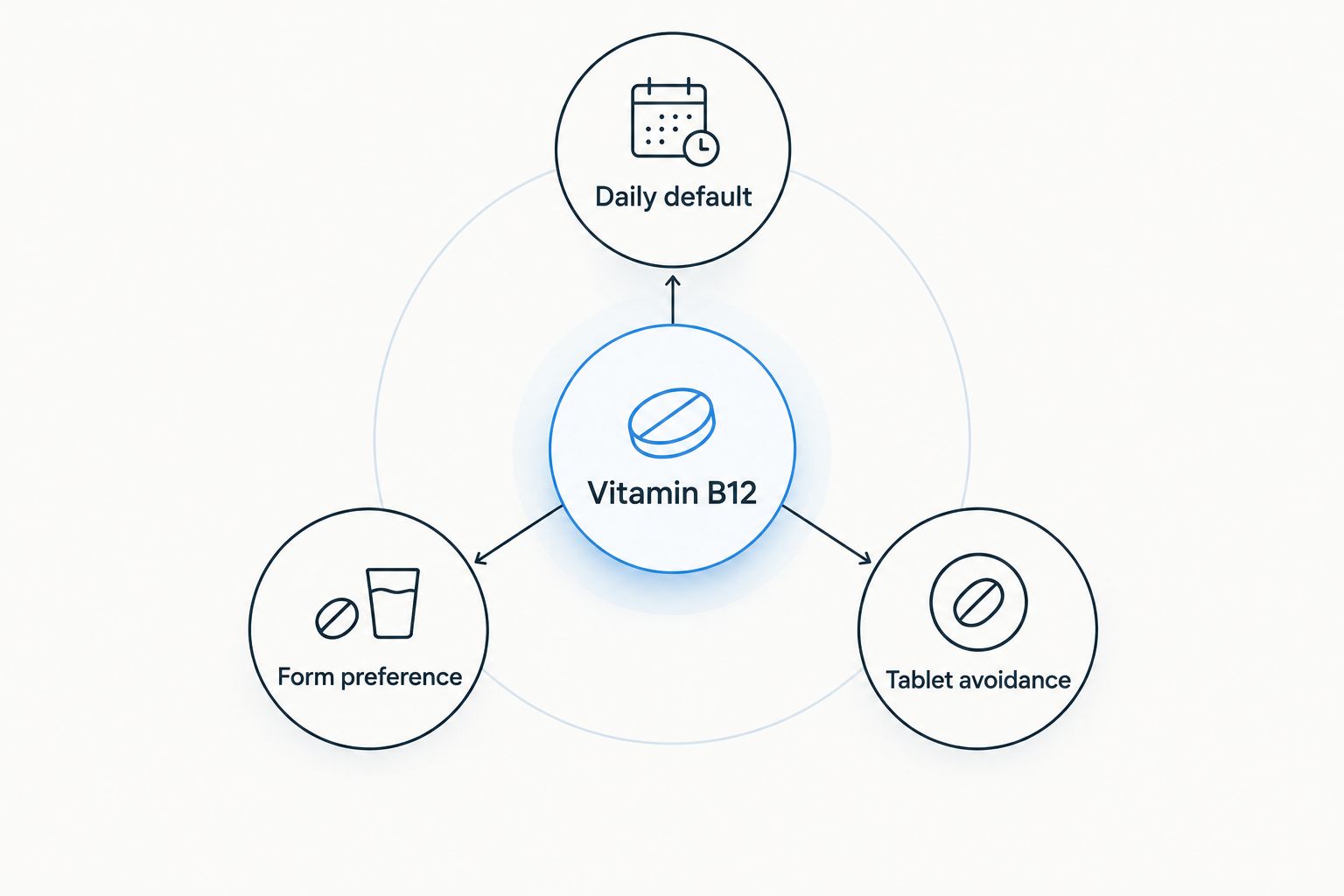
Best overall: oral cyanocobalamin. Best for a preference for a different B12 form: oral methylcobalamin. Best for avoiding tablets: sublingual vitamin B12. Best budget option: oral cyanocobalamin. The best vitamin B12 supplement in 2026 is the one with a clearly labeled dose you can take consistently; none of these forms replaces medical assessment when deficiency is suspected.
- Oral cyanocobalamin is the best vitamin B12 supplement default for most adults comparing B12 forms in 2026.
- Choose oral methylcobalamin for form preference, not a proven advantage over cyanocobalamin.
- Choose sublingual B12 if you dislike swallowing tablets; it has no established absorption advantage.
- Herbal Goodness has no vitamin B12 supplement among the supplied product pages; herbal products are not B12 substitutes.
Why this matters
Vitamin B12 supports red blood cell formation and nerve function. People who eat little or no animal food need a dependable source, while some older adults and people taking certain medicines can have difficulty getting enough B12 from food. The National Institutes of Health Office of Dietary Supplements (NIH ODS) identifies vegans, older adults and people with certain digestive conditions as groups at greater risk of inadequate B12.
The supplied product pages for Herbal Goodness cover herbal preparations, not a vitamin B12 supplement. Herbal Goodness suits shoppers looking for herbal preparations, not readers seeking a verified vitamin B12 product in this catalog. If B12 is your goal, check a prospective supplement's ingredient and Supplement Facts panel rather than treating a tea, tincture or plant oil as a B12 source.
What makes the best vitamin B12 supplement
The 2026 ranking compares forms and delivery methods, not specific brands. A product can fit the right category and still fail a basic label check.
- Identified B12 form: Look for cyanocobalamin or methylcobalamin in the ingredients. A front-label claim about energy does not identify the form.
- Clearly stated amount: Find the vitamin B12 quantity in micrograms (mcg) per serving and check how many tablets, drops or lozenges make that serving.
- Usable delivery method: A swallowed tablet works only if you will take it. A dissolving tablet can be easier to use without being more effective.
- Ingredient fit: Check for animal-derived ingredients if you follow a vegan diet. A supplement containing B12 is not automatically vegan.
- Independent quality verification: If a label claims third-party verification, check what organization verified it and whether the exact product appears in that organization's records.
- Appropriate medical context: Suspected deficiency, neurological symptoms or a known absorption disorder calls for clinical advice rather than a format change.
The NIH ODS lists the recommended dietary allowance for adults as 2.4 mcg per day, rising to 2.6 mcg during pregnancy and 2.8 mcg during lactation. Those are total daily intake targets, not instructions to choose a supplement containing exactly that amount. Supplement labels can show larger quantities; your circumstances determine whether a particular dose makes sense.
Vitamin B12 supplements at a glance
| Rank and form | Best for | Standout feature | Key limitation |
|---|---|---|---|
| 1. Oral cyanocobalamin | Daily default | Established supplemental form | Swallowed tablets do not suit everyone |
| 2. Oral methylcobalamin | Form preference | Alternative identified B12 form | No established overall advantage over cyanocobalamin |
| 3. Sublingual vitamin B12 | Tablet avoidance | Dissolves in the mouth | No established absorption advantage over swallowed B12 |
The delivery method matters most when it determines whether you take the supplement consistently. For suspected malabsorption, choosing a dissolving product on your own does not settle whether oral supplementation is appropriate.
1. Oral cyanocobalamin: best vitamin B12 supplement for a daily default
Cyanocobalamin is a common form of vitamin B12 used in oral supplements and fortified foods. For an adult choosing a routine supplement in 2026, it is the clearest default: identify the form, read the micrograms per serving and confirm the rest of the ingredient list fits your diet. There is no established need to pay attention to claims that another B12 form is inherently better for everyone.
The distinction between intake and treatment matters. If you want a reliable source because you eat no animal foods, an appropriately labeled oral B12 product addresses a different question from treating a diagnosed deficiency. A clinician can advise on testing and a treatment plan when symptoms, digestive conditions or medicines make absorption a concern.
Oral cyanocobalamin pros:
- The ingredient name makes the B12 form easy to identify.
- It suits a straightforward daily routine if swallowing tablets is comfortable.
- It is also used in fortified foods, so readers can recognize the same form on food labels.
Oral cyanocobalamin cons:
- A swallowed tablet is a poor fit if you struggle with tablets.
- The form alone does not confirm vegan suitability or independent quality verification.
- A routine supplement choice does not answer how to manage a diagnosed deficiency.
Best for: Adults who want an identifiable oral B12 form for a consistent routine.
Verdict: Buy an oral cyanocobalamin supplement when its full label fits your needs; seek medical advice instead of self-managing suspected deficiency.
2. Oral methylcobalamin: best vitamin B12 supplement for form preference
Methylcobalamin is another vitamin B12 form found in oral supplements. It makes sense if you prefer that named form and find a product with a clear serving amount and suitable other ingredients. Do not read the word methyl as proof of better results. The NIH ODS does not identify a supplemental B12 form as superior for general use.
This is where label reading beats ingredient marketing. Compare the B12 amount per serving, the number of units needed for that serving, dietary ingredients and any verifiable quality mark. A methylcobalamin product with unclear directions is not a better choice than a cyanocobalamin product whose label you can understand and follow.
For someone who eats a plant-based diet, the form name still does not settle whether the finished product is vegan. Check the complete ingredient list, including capsule material and added ingredients, before choosing. For someone concerned about low B12, neither form name replaces a discussion about the cause of that concern.
Oral methylcobalamin pros:
- It provides a clearly named alternative to cyanocobalamin.
- It suits someone who has a specific, informed preference for that form.
- A labeled oral format can fit an established supplement routine.
Oral methylcobalamin cons:
- Its form name does not establish superior absorption or outcomes for everyone.
- Product quality, dietary fit and serving directions still require separate checks.
Best for: Adults who specifically prefer methylcobalamin and can verify the full product label.
Verdict: Hold if the only reason for switching is a claim that methylcobalamin is universally better; buy if you prefer the form and the complete label fits.
3. Sublingual vitamin B12: best for avoiding swallowed tablets
Sublingual B12 is designed to dissolve in the mouth rather than be swallowed as a standard tablet. It can be a practical choice if the physical act of swallowing a tablet gets in the way of a routine. Check whether the product contains cyanocobalamin or methylcobalamin; sublingual describes how you take it, not which B12 form it contains.
The NIH ODS reports that available evidence has not shown sublingual B12 to be more effective than oral B12. That makes convenience the defensible reason to choose it. If you believe your body cannot absorb B12 normally, changing where a tablet dissolves is not a substitute for finding out why.
Read the serving directions carefully. A dissolving product might be a tablet, lozenge or another format, and the front of the pack may not state the amount per serving clearly. Check added sweeteners or flavor ingredients if those affect your choice. If you have symptoms such as numbness or persistent fatigue, ask a clinician about assessment rather than relying on a different delivery method.
Sublingual vitamin B12 pros:
- It avoids swallowing a conventional tablet.
- You can choose the underlying B12 form from the ingredient label.
- It gives tablet-averse readers another way to maintain a routine.
Sublingual vitamin B12 cons:
- It has no established general absorption advantage over swallowed B12.
- Added ingredients and serving directions vary by product.
- It does not resolve the cause of suspected B12 deficiency.
Best for: Adults who want B12 supplementation but dislike swallowing tablets.
Verdict: Buy for tablet avoidance, not for a claimed absorption advantage.
How this 2026 ranking was decided
The default position goes to oral cyanocobalamin because it meets the central task without requiring a special claim: it is an identifiable B12 form that can be taken as part of a routine. Oral methylcobalamin earns a separate slot for people who prefer that form, not because it has a demonstrated overall advantage. Sublingual B12 earns its slot for a different practical obstacle: swallowing tablets.
The ranking follows the NIH ODS Vitamin B12 fact sheets' U.S. dietary guidance on intake, risk groups, supplemental forms and oral versus sublingual use. It does not rank manufacturers, verify individual products or establish that any item is available from Herbal Goodness. The supplied Herbal Goodness pages do not provide a B12 product label to assess.
Quality checks remain yours to make on any product under consideration. Read the current Supplement Facts panel and ingredient list. A named B12 form, a legible amount per serving and an appropriate delivery method matter more here than an unsupported promise about energy or absorption.
Which vitamin B12 supplement should you choose?
Choose oral cyanocobalamin as the 2026 default if you want a routine B12 supplement and are comfortable with tablets. Choose oral methylcobalamin if you have a specific preference for that form after checking the full label. Choose sublingual B12 when avoiding swallowed tablets is the deciding factor. Those are different use cases, not a ranking of verified products for sale.
If you follow a vegan diet, first establish a dependable B12 source through suitable fortified foods or a clearly labeled supplement. If you are pregnant, lactating, older, taking metformin or medicines that reduce stomach acid, or managing a condition that affects absorption, discuss your B12 needs with a qualified clinician. The NIH ODS identifies several of these circumstances as relevant to B12 intake or status; a generic buying guide cannot set an individual treatment dose.
Do not use an herbal product as a stand-in for a vitamin B12 source. Herbal Goodness lists plant-based preparations in the supplied catalog, but a plant name on a label does not establish meaningful B12 content. Retailers and practitioners comparing herbal preparations can request the Herbal Goodness wholesale application; that trade route should not be read as confirmation of a B12 item.
FAQ
What's the best vitamin B12 supplement for most adults in 2026?
Oral cyanocobalamin is the best default form for most adults comparing routine B12 supplements. Check the actual product's serving amount, other ingredients and directions before choosing.
Is methylcobalamin better than cyanocobalamin?
Methylcobalamin has no established overall advantage over cyanocobalamin for general supplementation. Choose between them based on an informed form preference and the complete product label.
Does sublingual vitamin B12 absorb better than a tablet?
Sublingual vitamin B12 has no established general effectiveness advantage over swallowed oral B12, according to the NIH Office of Dietary Supplements. Its practical benefit is avoiding a conventional tablet.
How much vitamin B12 do adults need each day?
The recommended dietary allowance is 2.4 mcg per day for adults, 2.6 mcg during pregnancy and 2.8 mcg during lactation, according to the NIH Office of Dietary Supplements. These are total intake recommendations, not personalized supplement doses.
Can vegans get vitamin B12 from herbal supplements?
Do not assume an herbal supplement supplies vitamin B12. Vegans should check for a stated B12 amount in a suitable supplement or use appropriately fortified foods as a dependable source.
Does Herbal Goodness sell a vitamin B12 supplement?
No vitamin B12 supplement appears among the Herbal Goodness product pages supplied for this guide. Check a current product label before treating any item as a source of B12.
Should I take B12 without testing if I feel tired?
Do not treat fatigue alone as proof of B12 deficiency. A clinician can assess symptoms and decide whether testing is appropriate, especially if you have other risk factors or neurological symptoms.
One last thing
A label can tell you that a product contains vitamin B12; it cannot tell you why your B12 level might be low. If you suspect deficiency, resolve that question before comparing delivery methods. In 2026, that distinction is more useful than choosing between a swallowed tablet and a dissolving one on the strength of an absorption claim.
Related guides
Share this

Popular posts


FAQs
1. What are the main benefits of drinking bamboo leaf tea?
Drinking bamboo leaf tea supports hydration, relaxation, skin wellness, and antioxidant balance.
2. What is bamboo leaf extract used for?
It’s used for general body wellness, skin elasticity, hair and nail support, and overall vitality.
3. Can bamboo leaf help with skin care and body wellness?
Yes, bamboo leaf is rich in silica and antioxidants, which promote healthy skin, strong nails, and a youthful glow.
4. What forms of bamboo leaf are available?
You can find dried bamboo leaf, powder, extract, drops, oil, and bamboo leaf green tea.
5. Are there any side effects of bamboo leaf?
Bamboo leaf is generally safe when consumed in moderation. Always consult your healthcare provider before starting any new herbal supplement.