





Best Avocado Leaf Tea: Choose by Label in 2026

Best overall format: clearly labeled, single-ingredient avocado leaf tea bags. Best for hands-on brewing: food-intended loose avocado leaves. Best for flavor variety: a fully disclosed avocado leaf blend. This 2026 guide explains how to choose the best avocado leaf tea by plant identity, preparation instructions, and label clarity—not unsupported health promises.
- The best avocado leaf tea identifies the plant, intended food use, ingredients, and brewing instructions.
- Choose single-ingredient tea bags for convenience; choose loose avocado leaves for control over preparation.
- Avocado leaf blends suit flavor-focused shoppers only when every ingredient is disclosed.
- Herbalgoodnessco offers herbal tea alternatives; hibiscus and papaya leaf are not avocado leaf substitutes.
Why this matters
Avocado leaf tea is a leaf infusion, not avocado fruit, avocado oil, or an extract. A familiar plant name does not make those preparations interchangeable. You need information about the actual ingredient you will brew.
Herbalgoodnessco sells organic herbal supplements, superfoods, and wellness teas. Its hibiscus and papaya leaf teas belong to the broader herbal tea category, but neither should be presented as avocado leaf tea.
For your 2026 purchase, separate two questions: does the product match the plant and preparation you want, and does its labeling give you enough information to use it as directed? A benefit-heavy description does not answer either question. Start with identity and instructions before considering wellness language.
What makes the best avocado leaf tea
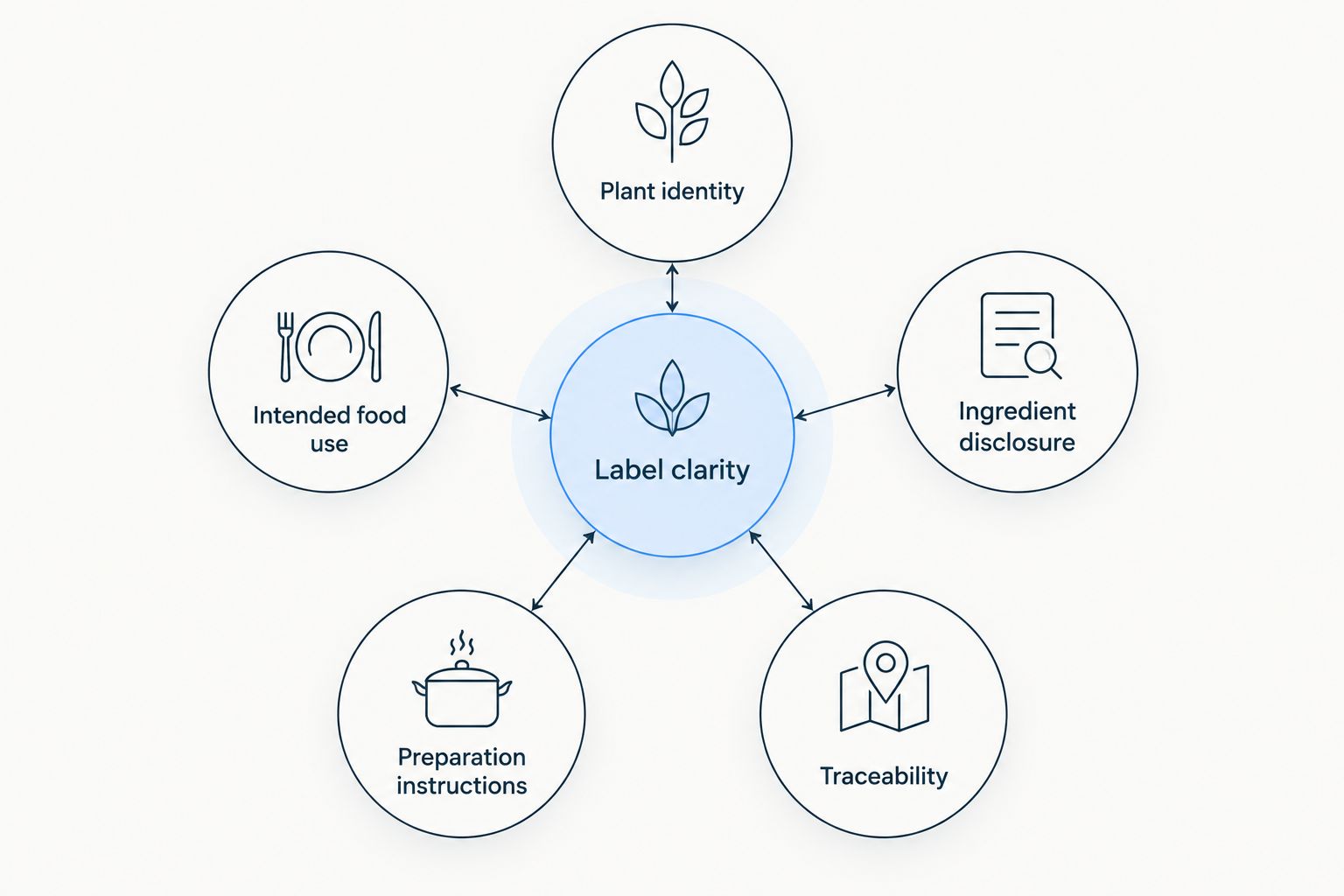
These criteria determine the ranking. Use them on the package and product page before choosing a format.
- Plant identity: Look for avocado leaf identification, including the botanical name, Persea americana, rather than an unexplained herbal ingredient.
- Intended food use: Choose leaves explicitly sold for tea or food preparation. Do not treat ornamental, craft, or garden material as a beverage ingredient.
- Ingredient disclosure: A single-ingredient product should identify avocado leaf; a blend should list every component. Front-label emphasis is not a complete ingredient list.
- Preparation instructions: Look for a stated serving amount and brewing method. Leaf appearance alone does not tell you how to prepare a product.
- Traceability: Check for supplier information, lot identification, and a way to ask questions about sourcing or testing.
- Claim discipline: Prefer descriptions that distinguish flavor, preparation, and traditional use from demonstrated health outcomes.
An organic claim answers a different question from a brewing instruction or an ingredient list. Read each separately. Neither organic labeling nor a natural-sounding name proves that a tea delivers a particular health benefit.
Best avocado leaf tea options at a glance
The avocado entries below are purchasing formats, not named products or verified brand winners. Their ranking is conditional on the label meeting the criteria above. The hibiscus entry is a separate herbal tea alternative, included for readers whose real goal is a straightforward brewed drink rather than avocado leaf specifically.
| Rank and option | Best for | Standout feature | Key limitation |
|---|---|---|---|
| Single-ingredient avocado leaf tea bags | Convenient preparation | No separate loose-leaf measuring step | Bag format does not establish sourcing or suitability |
| Food-intended loose avocado leaves | Hands-on brewing | You measure the leaf amount specified by the supplier | Requires measuring and straining |
| Fully disclosed avocado leaf blend | Flavor variety | Combines named ingredients in one preparation | Other ingredients complicate an avocado-only choice |
| Organic Hibiscus Tea | A tangy herbal tea alternative | Product description identifies a crimson infusion and 24 bags | Contains a different botanical; not avocado leaf tea |
1. Single-ingredient tea bags: best avocado leaf tea for convenience
Single-ingredient avocado leaf tea bags keep preparation straightforward. The leaf is enclosed for brewing, so you do not need a separate strainer. That convenience is useful only when the product also supplies clear ingredient and preparation information.
Choose this format when you want avocado leaf specifically and prefer not to measure loose material. Check the full ingredient panel, not just the large words on the front. A product called avocado tea can still require a closer look at its composition.
Single-ingredient tea bag pros:
- No separate loose-leaf measuring step.
- No additional strainer needed for ordinary bag preparation.
- Easier to keep an avocado-only choice distinct from a blend.
Single-ingredient tea bag cons:
- The bag can obscure the leaf material inside.
- The format alone says nothing about supplier testing.
- Missing brewing instructions remain a problem, even in a convenient package.
Best for: Shoppers who want a clearly identified avocado leaf infusion with minimal preparation equipment.
Verdict: Buy only when food use, ingredients, and brewing directions are explicit; otherwise, hold. Convenience wins this slot in the 2026 guide, not an unverified claim that one bagged product is more effective than another.
2. Loose avocado leaves: best avocado leaf tea for hands-on brewing
Loose avocado leaves let you measure the amount specified on the package and strain the infusion yourself. This format suits readers who already use an infuser or fine strainer. It also gives you a direct view of the material before brewing.
Visibility is not authentication. You cannot confirm botanical identity, contamination testing, or suitability for drinking simply by inspecting a dried leaf. Ask the supplier for those details when the listing leaves them unclear.
Loose avocado leaf pros:
- Lets you follow a supplier's measured preparation instructions.
- Makes the unbrewed leaf material visible.
- Works with a separate infuser or strainer.
Loose avocado leaf cons:
- Requires measuring and cleanup.
- Appearance cannot verify plant identity or testing.
- Unclear serving directions leave you guessing.
Best for: Experienced loose-leaf tea drinkers who want control over preparation, not permission to improvise a supplement dose.
Verdict: Buy food-intended loose leaves with clear directions; skip unidentified garden or decorative leaves. Do not assume that leaves picked from a familiar avocado tree are equivalent to a labeled tea product.
3. Avocado leaf blends: best avocado leaf tea for flavor variety
An avocado leaf blend combines avocado leaf with other disclosed ingredients. This option belongs in a flavor-led decision, not an avocado-only comparison. The complete ingredient list matters more than whichever plant receives the most prominent placement on the label.
Choose a blend because you want its named components. Do not assume it contains the same amount of avocado leaf as a single-ingredient tea, or that every ingredient contributes a proven benefit. Without disclosed proportions, that comparison has no factual basis.
Avocado leaf blend pros:
- Offers a combined preparation rather than separate ingredients.
- Lets you choose among disclosed flavor components.
- Can suit readers who do not want an avocado-only infusion.
Avocado leaf blend cons:
- Is not equivalent to single-ingredient avocado leaf tea.
- Adds ingredients that you must check individually.
- Does not establish the avocado leaf proportion unless the supplier states it.
Best for: Flavor-focused shoppers who are comfortable reading a complete ingredient panel.
Verdict: Buy for the disclosed blend, not for stronger wellness promises; hold when ingredients are incomplete. In 2026, a clear blend label is a better purchasing criterion than a long list of claimed outcomes.
4. Organic Hibiscus Tea: best alternative for a tangy herbal drink
Herbalgoodnessco's Organic Hibiscus Tea is an alternative for readers who want a tangy herbal infusion rather than avocado leaf specifically. The supplied product description identifies a crimson drink, and the product contains 24 bags. Those are concrete preparation and flavor details—not evidence about avocado leaf.
Herbalgoodnessco herbal tea is best for shoppers seeking a named herbal alternative, not an avocado leaf substitute. Choose hibiscus when its stated flavor matches your preference. Keep the botanical distinction intact.
Organic Hibiscus Tea pros:
- Identifies hibiscus rather than an unspecified herbal mixture.
- Uses a bagged preparation format.
- Describes its flavor plainly as tangy.
Organic Hibiscus Tea cons:
- Does not meet an avocado leaf-specific shopping requirement.
- Its tangy flavor is not the right choice for every reader.
- Wellness wording in the product name is not a demonstrated personal outcome.
Best for: Readers whose priority is a clearly named herbal tea with a stated flavor profile.
Verdict: Buy for hibiscus flavor; skip if avocado leaf is your essential ingredient. A different plant is an alternative beverage, not a replacement with matching properties.
Match the preparation to the way you drink tea
For hot tea, begin with the product's own instructions. Check the amount, water preparation, steeping method, and any product-specific cautions. Do not borrow a recipe from a different leaf simply because both products are herbal teas.
For a chilled drink, leaf selection and preparation still matter: choosing loose leaf tea for iced tea involves matching the ingredient to its brewing directions before deciding how to serve it cold. Ice does not establish ingredient identity, food suitability, or evidence for a health claim.
Keep brewing choices separate from supplement choices. Capsules and concentrated liquid extracts are different preparations; do not open or dilute them to recreate a leaf tea unless their own directions explicitly support that use.
Herbalgoodnessco also lists Bulk Herbs & Roots in 4 oz bags for home preparation. That format does not establish that avocado leaf is included. Check the actual botanical selection before treating any bulk-herb listing as a match for your intended tea.
Read wellness claims without turning them into promises
Traditional use and clinical evidence answer different questions. A history of use describes a practice; it does not establish that a particular packaged tea produces a particular outcome in people.
Likewise, research on an isolated compound or concentrated extract does not automatically describe a brewed leaf infusion. A meaningful research comparison needs the same plant part, preparation, and relevant outcome. Avoid transferring a claim from avocado fruit, avocado oil, or an extract to avocado leaf tea.
For your 2026 shortlist, reject disease-treatment promises as a reason to buy. A tea should not be positioned as replacing prescribed care or a clinical assessment. If your goal concerns a symptom, medication interaction, pregnancy, breastfeeding, or use by a child, discuss the exact ingredient and preparation with an appropriate healthcare professional before use.
This is also the standard retailers and health practitioners should use when evaluating tea labels. Keep supplier documents tied to the actual product, and do not add treatment language that the evidence does not support.
How the ranking works
This ranking prioritizes ingredient identity and usable instructions, then separates options by preparation preference. Tea bags take the default slot for convenience; loose leaves take the hands-on slot; blends take the flavor-variety slot. Hibiscus remains explicitly outside the avocado category.
The ranking does not assign clinical effectiveness, laboratory purity, or sensory-test scores. Choose the format that fits your routine only after the label passes the identity and preparation checks. A convenient format with an incomplete label does not qualify as the best choice.
Which avocado leaf tea should you choose?
Choose single-ingredient avocado leaf tea bags as your default when the supplier clearly identifies the ingredient, intended food use, and brewing method. Choose loose leaves when you want to measure and strain the tea yourself. Choose a blend only when you want its other disclosed ingredients too.
If you are simply exploring herbal tea, an explicitly different botanical is a cleaner choice than a product with unclear avocado leaf labeling. Herbalgoodnessco's Organic Papaya Leaf Tea identifies another leaf preparation in a 24-bag format. It is not equivalent to avocado leaf tea and should not inherit avocado-related claims.
The best 2026 purchase is the tea you can identify and prepare correctly—not the one making the broadest promise.
FAQ
What's the best avocado leaf tea for a beginner?
Clearly labeled, single-ingredient avocado leaf tea bags are the simplest format for a beginner. Choose a product explicitly intended for tea preparation with complete ingredients and brewing instructions.
Are loose avocado leaves better than avocado leaf tea bags?
Loose avocado leaves are better for hands-on preparation, while tea bags are better for convenience. Neither format establishes botanical identity, testing, or suitability on its own.
Can I make avocado leaf tea from leaves in my yard?
Do not treat yard leaves as equivalent to a labeled tea ingredient. Plant identification alone does not establish that the material is suitable for drinking or provide preparation instructions.
Is an avocado leaf blend the same as pure avocado leaf tea?
No, an avocado leaf blend includes other ingredients and is not the same as a single-ingredient infusion. Read the complete ingredient list and do not assume the avocado leaf proportion is disclosed.
Does organic avocado leaf tea guarantee a health benefit?
No, organic labeling does not guarantee a health benefit. Evaluate ingredient identity, preparation details, and evidence for any substantive claim separately.
Is hibiscus tea a substitute for avocado leaf tea?
Hibiscus tea is an alternative beverage, not an equivalent avocado leaf preparation. Choose it for its own ingredient and flavor rather than expecting matching properties.
How much avocado leaf tea should I drink?
Follow the specific product's directions rather than adopting a universal amount from another tea. Ask a qualified healthcare professional about suitability when medications, pregnancy, breastfeeding, children, or a health concern are involved.
One last thing
Before buying, ask the supplier one direct question: What identifies this as avocado leaf intended for tea preparation? The answer should point to ingredient identification and preparation information, not repeat a wellness slogan. If those basics remain unclear, leave that product off your shortlist.
Related guides
Share this

Popular posts


FAQs
1. What are the main benefits of drinking bamboo leaf tea?
Drinking bamboo leaf tea supports hydration, relaxation, skin wellness, and antioxidant balance.
2. What is bamboo leaf extract used for?
It’s used for general body wellness, skin elasticity, hair and nail support, and overall vitality.
3. Can bamboo leaf help with skin care and body wellness?
Yes, bamboo leaf is rich in silica and antioxidants, which promote healthy skin, strong nails, and a youthful glow.
4. What forms of bamboo leaf are available?
You can find dried bamboo leaf, powder, extract, drops, oil, and bamboo leaf green tea.
5. Are there any side effects of bamboo leaf?
Bamboo leaf is generally safe when consumed in moderation. Always consult your healthcare provider before starting any new herbal supplement.