Tea-to-Tincture Math: Easily Convert Gymnema Tea to Powder, Tinctures & Bags
Curious about how to convert gymnema tea from one form to another at home? Tea lovers often wonder how a loose leaf cup compares to a tea bag, or how to use powdered gymnema or tincture drops with simple, measurable results. Navigating these differences can seem tricky at first, but once you master a few basic Tea-to-Tincture Math tricks, you can experiment confidently and make the most of every gymnema format. Whether you bought a bag of organic loose leaves, premium powder, or a quality extract, let’s break down everything you need to know—without getting technical.
Understanding Gymnema Tea Forms: Loose Leaf, Tea Bags, Powder & Tincture
When you shop for gymnema leaf products, you’ll see four main options:
- Loose Leaf Gymnema: Whole or cut dried leaves, ideal for traditional brewing or infusions.
- Gymnema Tea Bags: Pre-portioned servings, convenient and travel-friendly.
- Gymnema Leaf Powder: Ground leaves for easy mixing into drinks, recipes, or DIY tea blends.
- Gymnema Tincture: Liquid extract, usually in alcohol or glycerin, with a specific extract ratio noted on the bottle.
Each of these offers a slightly different experience, serving style, and concentration. Knowing how to make simple conversions helps you adjust drinks to suit taste, strength, or ingredient availability. If you’re interested in exploring a variety of teas, you might consider the Organic Herbal Tea Trio – Build-Your-Own Bundle, which allows you to try different herbs and blends.
The Basics of Tea Math: Weights, Volumes, and Extract Ratios
Before you buy gymnema products for home use, it’s helpful to understand a few basics:
- Standard loose leaf tea serving: 1 teaspoon (approx. 1.5–2g) per 8-ounce cup.
- Tea bag serving: Most gymnema tea bags contain 1.5–2g of leaf—check your packaging for details.
- Powdered leaf: Dosage by weight; 1 gram of powder is equal to 1 gram of dried leaf (just ground up).
- Tincture ratios: Common extract strengths are 1:2 or 1:4, meaning 1 part herb to 2 or 4 parts solvent. Label will show how much extract equals how much raw leaf.
These numbers let you compare and swap formats with confidence. For those interested in other potent tisanes, Bulk Loose Leaf Teas & Tisanes offer a convenient option for stocking up on your favorite blends.
Loose Leaf to Tea Bag Conversion: How Much Leaf per Bag?
Tea bags are convenient, but what if you want a fresh cup using loose leaf?
- Typical tea bag = 1.5–2g gymnema leaf
- Scoop 1 heaping teaspoon for each cupto match tea bag strength.
If you’re using loose leaf and find the flavor too mild, try 2 teaspoons per cup for a richer brew, or adjust water volume for your taste. The same approach can be applied to teas like the Organic Papaya Leaf Tea | 24 Premium Bags – Caffeine-Free for a caffeine-free alternative with similar converting logic.
Bulk Brewing Comparison
If a recipe calls for 4 tea bags:
- 4 tea bags ≈ 6–8g loose leaf → use 4 teaspoons loose leaf for 4 cups.
Converting to Powder: How Does Gymnema Powder Compare to Cups of Tea?
Gymnema powder simplifies things—there’s no leaf to strain, and you have full control over measure.
- 1 gram powder ≈ 1 gram dried leaf
- 1 serving cup (1.5–2g loose leaf) = 1.5–2g powder
Simply measure powder by weight for equivalent strength. If you don’t have a scale, know that a flat ½ teaspoon of powder is close to 1 gram (varies by grind).
Using Powder in Drinks
- Classic tea: Stir 1.5–2g powder into 8 ounces hot water. Steep (or sip as is).
- Blends: Try mixing with other herbal powders to customize flavor. For increased convenience and flexibility, consider using Organic Rooibos Tea 8oz | Antioxidant & Immune Wellness Support as a base for blends or to experiment with custom mixes.
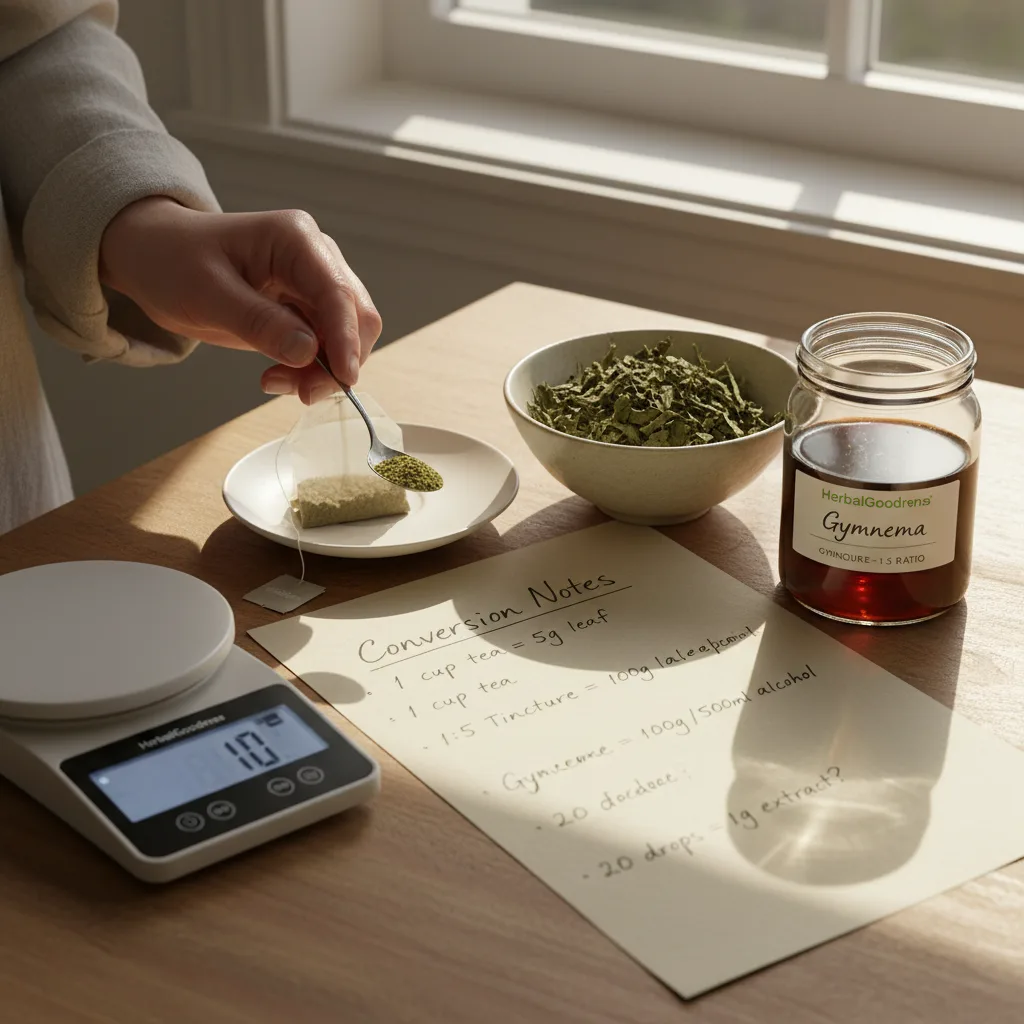
Tincture Swaps: Translating Leaf and Powder into Liquid Extracts
Tinctures can seem more mysterious due to labeling like “1:2” or “1:4.” Here’s how to make sense of it.
- 1:2 tincture = 1g leaf per 2mL of liquid
- 1:4 tincture = 1g leaf per 4mL of liquid
This means:
- 2mL of 1:2 tincture ≈ 1g dried leaf
- 4mL of 1:4 tincture ≈ 1g dried leaf
For a standard 8-ounce cup (1.5–2g dried leaf), use:
- 1:2 tincture: 3–4mL (just over half a teaspoon)
- 1:4 tincture: 6–8mL (a little over 1.25 teaspoons)
If you want a potent and convenient tincture option, Metabolism & Catabolism 15X Liquid Extract – Natural Metabolic Support can be integrated into your routine for easy, measured dosing.
Making a Trial Batch with Tincture
Add the appropriate number of milliliters to water or tea. Stir, taste, and adjust. If you’re blending powder and tincture, count total grams so you don’t overdo the intensity.
Matching Concentrations: Practical Brewing & Serving Conversions at Home
Table: Everyday Conversion Quick Guide
- 1 tea bag ≈ 1.5–2g loose leaf ≈ 1.5–2g powder ≈ 3–4mL (1:2) or 6–8mL (1:4) tincture
- 4 tea bags (1 quart) ≈ 6–8g leaf/powder ≈ 12–16mL (1:2) or 24–32mL (1:4) tincture
These easy swaps let you adapt any recipe, try a sampler batch, or match serving strength. If you’re shopping for premium options, check product details for exact serving size—Herbal Goodness, for example, lists gram and mL equivalents for each format. To broaden your collection, the Wellness Tea Blends – 4oz Organic Premium Herbal Infusions are perfect for experimenting with proportions at home.
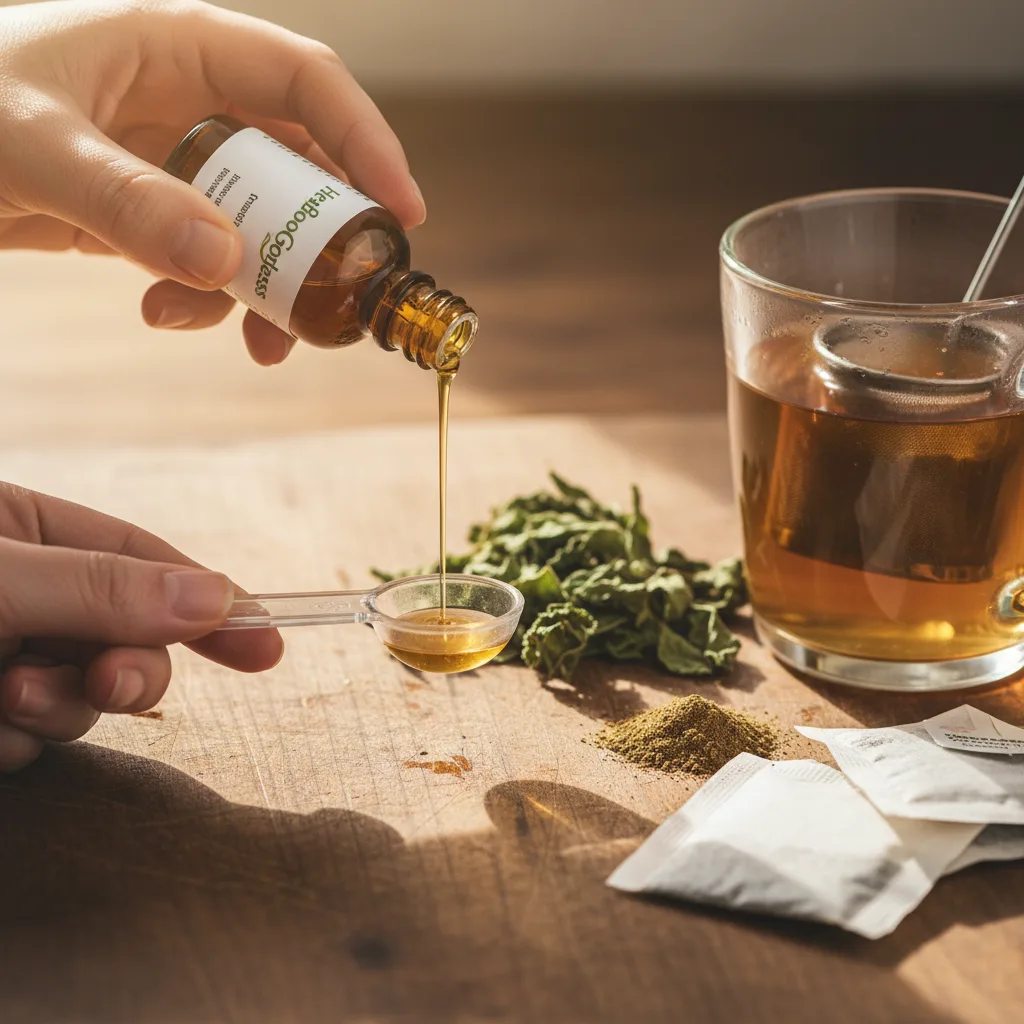
How To Scale Small Batches For Everyday Use
Want to make just one or two servings? Here’s how to adjust, no matter what you’ve bought:
- Loose leaf: 1–2g per 8 oz cup
- Powder: Match same grams, or about ½–1 teaspoon per cup
- Tincture: Use extract ratio to match grams (see above)
- Tea bag: 1 bag per cup, or double up for quarts or iced batches
When making large batches or experimenting with blends for family or guests, using Bulk Herbs & Roots Online for Tea, Tinctures & DIY Wellness can simplify preparations by providing ample supply.
For iced tea or large brews, simply multiply each amount by number of cups you’re making. You can also blend forms; for example, one tea bag plus 1g powder if that’s what you have!
Why Concentration Ratios Matter: Tasting and Customizing Strength
Tea drinkers know that every form has unique flavor and strength. Powder often tastes more robust than steeped leaf. Tinctures concentrate flavor even more, so consider starting with a small amount and adjusting by taste.
- Mild cup: Use less leaf, powder, or extract
- Stronger cup: Use more, or steep longer
Remember, no math needs to be perfect. The beauty of gymnema is in exploring what works for your palate and routine.
Packaging & Storage: How Format Affects Freshness & Use
- Tea bags & loose leaf: Store in airtight container away from light
- Powder: Keep sealed, as powders can absorb moisture
- Tinctures: Shelf stable, but always check label for storage guidance
Each format has its strengths. Loose leaf and tea bags provide the richest aroma, powder is versatile for recipes, and tinctures work for those seeking both convenience and control over servings. When shopping for gymnema, look for premium, organic options with clear labeling so you can apply your conversion math with confidence. Caffeine-free products such as Organic Papaya Leaf Tea | 24 Premium Bags – Caffeine-Free are good choices for sensitive drinkers who also want format flexibility.
Experimenting at Home: Small Batch Tips for the Curious Tea Lover
If you’re new to gymnema, start small! Use a kitchen scale or measuring spoons for accuracy at first, then adjust by personal preference. You can make your own blends—try combining powder with leaf, or adding tincture into a finished brew for an extra flavor layer. This math-based approach empowers you to make each cup exactly as you like, no matter which format you order. If you’re looking for more variety, a bundle such as the Herbal Tea Trio Bundle | Guava, Hibiscus & Avocado – 3 Organic Packs allows you to explore different herbal infusions alongside your gymnema experiments.
Summary: Tea-to-Tincture Math for Confident, Tasty Home Blends
Mastering simple conversions makes it easy to try new forms of gymnema, whether you buy loose leaf, shop powdered extracts, or order tinctures for daily use. With basic serving math, you’ll bring consistency and creativity into your cup—brew by brew.
FAQs:
- How much gymnema powder should I use to equal one tea bag?
Most gymnema tea bags contain 1.5 to 2 grams of dried leaf. To match this strength, use 1.5 to 2 grams of gymnema powder per cup. If you do not have a scale, a rounded half teaspoon of powder is typically close to 1 gram; use a full slightly heaping teaspoon for 2 grams.
- How do I convert loose leaf gymnema tea to tincture servings?
A typical 8-ounce cup uses 1.5–2 grams of loose leaf. For a 1:2 tincture, use 3–4mL (just over half a teaspoon); for 1:4 tincture, use 6–8mL (a little more than 1¼ teaspoons) to match the same gymnema concentration.
- Can I mix gymnema powder with my usual tea or only use it on its own?
Gymnema powder can be mixed with any tea, smoothie, or beverage. Use 1.5–2 grams per cup for a standard serving, or adjust the amount based on your taste preference and recipe requirements.
- What’s the best way to measure gymnema tincture for home use?
Use a dropper or small measuring spoon to measure tincture. Check the extract ratio (such as 1:2 or 1:4) and calculate according to recommended conversions: 3–4mL 1:2 tincture or 6–8mL 1:4 tincture per standard serving.
- Are serving conversions for gymnema the same across all brands?
Serving conversions are broadly similar—1.5–2g for a cup—but always check your product’s label. High-quality brands like Herbal Goodness provide clear servings and extract ratios to help with accurate conversions.
- How can I scale up gymnema servings for iced tea or a large batch?
Simply multiply the serving size by the number of cups needed. For example, for a quart (4 cups), use 4 tea bags, 6–8g loose leaf or powder, or 12–16mL (1:2) tincture.
- What format is best for experimenting with homemade gymnema blends?
Powder offers the most flexibility for DIY blends, while tinctures provide easy, precise measuring. Loose leaf and tea bags are ideal for traditional tea preparations and larger brews.
Author Name:
Herbal Goodness Editorial Team
Author Bio:
The Herbal Goodness Editorial Team specializes in holistic health and superfoods, blending science and nature to educate and empower our community.
References:
Introducing Graviola to Young Taste Buds: Fun, Family-Friendly Flavor Exploration
Graviola in the Classroom and at Home: Creative Activities to Teach Kids About Tropical Plants
Why Social Impact Matters in Plant-Based Wellness


FAQs
Drinking bamboo leaf tea supports hydration, relaxation, skin wellness, and antioxidant balance.
It’s used for general body wellness, skin elasticity, hair and nail support, and overall vitality.
Yes, bamboo leaf is rich in silica and antioxidants, which promote healthy skin, strong nails, and a youthful glow.
You can find dried bamboo leaf, powder, extract, drops, oil, and bamboo leaf green tea.
Bamboo leaf is generally safe when consumed in moderation. Always consult your healthcare provider before starting any new herbal supplement.