





How to Read Lab Reports & Certificates for Organic Cat’s Claw Tinctures: A Complete Guide

Shopping for an organic cat’s claw tincture means you care about purity and quality. However, navigating the certified lab reports and Certificates of Analysis (COAs) that accompany these products can feel overwhelming—especially if you’re new to reading them. Today’s smart shoppers want evidence that what they’re buying meets strict safety and identity standards. For anyone seeking to buy premium organic cat’s claw tincture drops online, understanding how to interpret lab results is an essential skill.
This guide is designed to empower you. We’ll walk through each part of a typical COA or lab report for organic cat’s claw tinctures, clarify the main tests, and show you exactly what to look for if you want confidence in your purchase. We’ll also share practical questions you can ask sellers, plus red flags to watch out for when shopping for high-quality herbal extracts.
Why Read Lab Reports and COAs Before You Buy Organic Cat’s Claw Tincture Drops?
When you buy organic cat’s claw tincture, it’s not just about what’s on the label—it’s also about what’s inside the bottle. Reputable brands, like Herbal Goodness, provide third-party lab reports and COAs to prove purity, authenticity, and compliance with safety standards. Here’s why reading these documents matters:
- Transparency: Trusted testing builds trust between shoppers and sellers.
- Quality assurance: Lab results confirm the identity and strength of organic cat’s claw extract.
- Safety: COAs help ensure the tincture is free from harmful levels of heavy metals, pesticides, or residual solvents.
- Informed decision: Shoppers can compare products and select the best quality cat’s claw tincture drops for sale.
Breaking Down a Cat’s Claw Tincture COA: Main Sections to Know
Third-party COAs or lab reports may look complex, but they’re typically structured around a few consistent areas:
1. Product Identity and Authenticity
- What it means: Verifies that the product is actually organic cat’s claw (Uncaria tomentosa) and not an adulterated substitute.
- Tests used: Methods like HPLC (High Performance Liquid Chromatography) or botanical microscopy.
- What to look for: The botanical name should match the product, and the lab’s test method should be clearly stated.
2. Heavy Metals Testing
- Purpose: Ensures levels of heavy metals (such as lead, arsenic, mercury, and cadmium) are within safe, accepted limits.
- Common format: Results are usually listed in parts per million (ppm) or parts per billion (ppb), with a “Pass/Fail” status noted.
- What’s important: Results should read well below the established maximums. If a number approaches the regulatory limit, it may signal potential quality issues. For general cellular and immune support outside of cat’s claw products, you might consider potent herbal options such as Soursop Leaf Graviola Extract 15X Liquid.
3. Pesticide Screening
- Why it matters: Even certified organic herbs are tested to exclude prohibited chemicals.
- Typical info: A list of common pesticides screened for, and whether any residues were detected.
- What to read: Look for “ND” (not detected) beside each compound, confirming the tincture’s clean status.
4. Residual Solvent Testing
- Context: Some herbal extract processes use solvents (like ethanol or water). Residual solvent tests ensure that no harmful traces remain.
- Reporting: Only food-grade solvents (such as organic alcohol) should be present, ideally with “none detected” for toxic residues.
- What’s best: Preference for tinctures with “organic ethanol” and “ND” for all hazardous solvents.
5. Microorganism and Purity Analysis
- Purpose: Checks for mold, yeast, and microbiome levels.
- What’s included: Total plate count, yeast and mold, coliforms.
- What’s acceptable: Low or “not detected” (ND) readings are ideal, showing the product’s microbiome safety. Customers interested in overall immune and gut health might also appreciate Papaya Leaf Blood Support | Organic 15X Liquid Extract.
Interpreting Lab Report Language: Key Terms Shoppers Should Know
Understanding lab report terminology allows you to shop with clarity and confidence:
- ND: Not Detected. The compound was not present at a detectable level.
- LOQ: Limit of Quantitation. The lowest amount that can be quantitatively detected.
- Pass/Fail: Indicates if the product meets the established quality benchmarks.
- Parameters: The specific items tested (heavy metals, pesticides, etc.).
If you see specialized language you’re unsure about, it’s reasonable to ask for an explanation before you order organic cat’s claw tincture. For a broader wellness boost, including those focused on blood platelet health, Blood Platelet Plus Capsules 20X is another highly reputable supplement.
Common Third-Party Tests: What They Mean for Your Cat’s Claw Tincture
Identity (Botanical Verification)
- Confirms: The product is truly Uncaria tomentosa, not a misidentified or adulterated plant.
- How this helps you shop: Authenticity is key for purchasing the best quality cat’s claw drops. If you want assurance of joint and immune support, Cat's Claw Organic 15X Liquid Extract provides trusted transparency and third-party lab documentation.
Purity: Heavy Metals, Pesticides, Microbials
- Assures: The tincture is free from unacceptable levels of toxic substances and contaminants.
- Why this matters: These results directly impact product safety and support your decision to shop premium cat’s claw tincture online. If you’re searching for a digestive and platelet-support companion, Papaya Leaf Extract Capsules 600mg could complement your herbal routine.
Residual Solvents
- Purpose: Ensures only pure, permitted extraction solvents (if any) are present.
- Shopping tip: Look for tinctures developed with organic ethanol and “ND” for harsh solvents, a sign of premium quality. Maintaining this standard is a focus for formulas like Papaya Leaf Blood Support | Organic 15X Liquid Extract.
Label Language on Organic Cat’s Claw Tincture: What to Expect
High-quality brands keep their labeling transparent and clear, matching the information in the COA. Here’s what you’ll often see:
- Botanical name: Uncaria tomentosa
- Part used: Bark, root, or other specified part (make sure the COA matches this)
- Extraction method: Typically “alcohol extract,” “water extract,” or both; organic alcohol is a premium marker
- Lot number: Matches the COA so you can cross-reference lab data directly with your product
- Certification: Look for “organic certified by…” and related quality seals
What to Watch Out For: Red Flags in Lab Reports and COAs
Even as a beginner, you can spot warning signs that a tincture may not be the best quality cat’s claw extract for sale.
- Missing or altered lot numbers: If the lot number on the COA doesn’t match the bottle, transparency may be lacking.
- Test results right at legal limits: Consistent results very close to regulatory maximums can indicate sourcing or production issues.
- Unavailable or incomplete testing: Absence of any of the major test categories (identity, heavy metals, pesticides, solvents) should be a concern.
- Opaque language or unexplained abbreviations: Brands supporting premium cat’s claw tinctures clearly explain test outcomes and terminology.

Smart Questions to Ask When Shopping for Premium Cat’s Claw Tincture Drops
Before you buy, consider reaching out to the seller or manufacturer to clarify details. Here are some valuable questions to guide your premium tincture shopping:
- Can you provide the latest COA from a third-party lab for this batch?
- Do the COA and bottle lot numbers match exactly?
- Is the product certified organic, and which organization provides the certification?
- What extraction method is used, and which part of the cat’s claw plant does the tincture come from?
- How recent are the lab results, and are results available for each new batch?
- Are heavy metal and pesticide results far below allowable limits?
- Is the ethanol used organic and food grade?
A reputable company—like Herbal Goodness—will have answers readily available and encourage shopper questions about transparency and quality. If you value science-backed products for wellness, look for those with robust documentation, such as Cat's Claw Organic 15X Liquid Extract.
How Access to COAs Supports Informed Shopping Decisions
Having access to a clear, independent COA is empowering. It enables you to make side-by-side comparisons, ensuring you buy the best value, safety, and quality. You’ll feel confident you’re selecting the right cat’s claw tincture based not just on marketing, but on verifiable lab-backed information. There are also wellness formulas, like Blood Platelet Plus Capsules 20X, which proudly provide testing transparency for consumer trust.

Final Tips: Making Sense of Lab Reports and COAs as a Beginner Shopper
- Start simple: Focus on the main test categories: identity, purity, solvents, and microbials.
- Ask for help: Don’t hesitate to contact the seller if you have questions—proactive brands want you to make informed purchases.
- Use the COA as a checklist: High-quality tincture COAs cover all critical tests and show results well below legal limits.
- Look for organic certification and lot numbers: These indicate transparency and traceability—hallmarks of premium organic cat’s claw tinctures.
Reading lab reports and COAs may seem intimidating, but with a little practice, you’ll become a savvy, informed herbal buyer. The extra attention you pay to these details ensures your purchase supports your values of safety, authenticity, and exceptional quality.
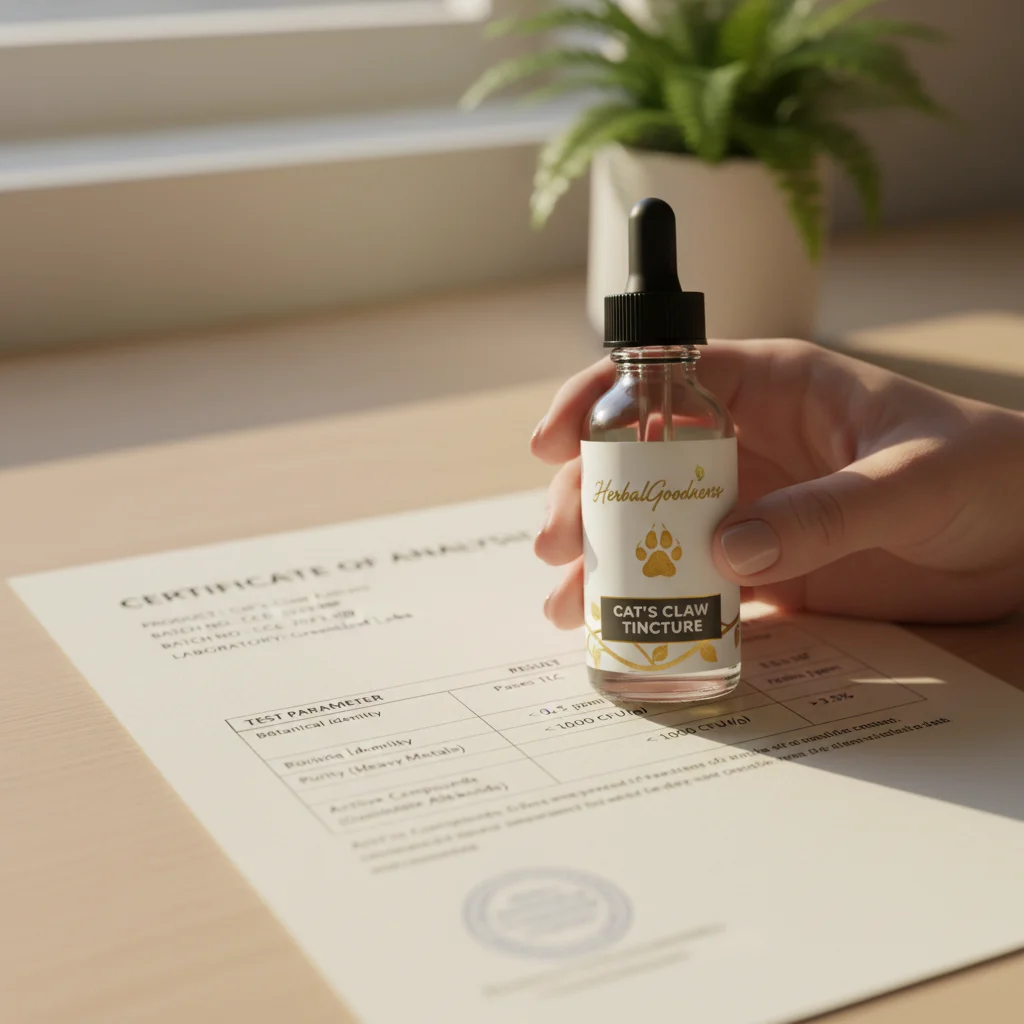
Ready to choose your organic cat’s claw tincture drops? Use this guide as a reference every time you review lab reports or COAs—because informed shopping leads to the best quality, safety, and satisfaction.
FAQs:
- What should I look for in a COA when buying organic cat’s claw tincture drops?
Look for third-party verification of identity, clear results for heavy metals, pesticides, residual solvents, microorganism testing, and matching lot numbers. Prefer COAs where all safety results are well below maximum limits for the best quality tincture.
- Why is lab testing important when shopping for premium cat’s claw tincture online?
Third-party lab testing provides transparency, verifies the authenticity and purity of the tincture, and ensures it meets safety standards for organic herbal supplements. This helps you confidently select and order premium cat’s claw drops.
- How can I confirm the organic certification of a cat’s claw tincture for sale?
Check the label and the COA for organic certification statements and the certifying organization. If you’re shopping online, request this information from the seller to ensure the product is truly organic before you buy.
- What red flags indicate poor quality in a cat’s claw tincture COA?
Red flags include missing batch or lot numbers, incomplete test results, values near safety limits, confusing terminology, or reluctance from the seller to provide the COA. Quality tinctures have transparent, up-to-date lab reports.
- Can I ask the seller for lab reports before I order organic cat’s claw extract?
Yes, reputable brands will provide third-party lab reports on request. This helps you make an informed decision and ensures the cat’s claw extract meets your standards for safety and authenticity.
- Are all cat’s claw tincture lab reports the same?
While most cover similar safety benchmarks, some COAs provide more in-depth testing or details. Always compare across identity, purity, residual solvents, and lot number traceability to shop for the highest quality.
Author Name:
Herbal Goodness Editorial Team
Author Bio:
The Herbal Goodness Editorial Team specializes in holistic health and superfoods, blending science and nature to educate and empower our community.
References:
Introducing Graviola to Young Taste Buds: Fun, Family-Friendly Flavor Exploration
Share this
Popular posts


FAQs
1. What are the main benefits of drinking bamboo leaf tea?
Drinking bamboo leaf tea supports hydration, relaxation, skin wellness, and antioxidant balance.
2. What is bamboo leaf extract used for?
It’s used for general body wellness, skin elasticity, hair and nail support, and overall vitality.
3. Can bamboo leaf help with skin care and body wellness?
Yes, bamboo leaf is rich in silica and antioxidants, which promote healthy skin, strong nails, and a youthful glow.
4. What forms of bamboo leaf are available?
You can find dried bamboo leaf, powder, extract, drops, oil, and bamboo leaf green tea.
5. Are there any side effects of bamboo leaf?
Bamboo leaf is generally safe when consumed in moderation. Always consult your healthcare provider before starting any new herbal supplement.