





How to Read Certificates of Analysis and Lab Tests for Avocado Leaf Tea Online

Shopping for avocado leaf tea online is an exciting way to enjoy this unique botanical, but it’s natural to wonder about quality and safety when you can’t inspect the product in person. More herbal tea brands, including Herbal Goodness, are now providing detailed Certificates of Analysis (COAs) and lab test reports to promote transparency and trust. Yet for most shoppers, these documents can seem intimidating or full of technical jargon. This guide explains, in plain English, what the main sections of avocado leaf tea COAs and lab tests mean, and how you can use them to make smart, confident buying decisions.
Why Lab Testing and COAs Matter When Shopping for Avocado Leaf Tea
When you shop avocado leaf tea online, you likely want more than just great flavor—you care about quality, safety, and authenticity. Lab tests and Certificates of Analysis (COAs) are the primary documents sellers use to demonstrate these qualities. Rather than a marketing tool, a COA is a scientific report produced by a third-party laboratory. It lets you confirm that what you’re buying is honestly labeled, free from unwanted contaminants, and handled with care.
With increasing demand for botanical teas, transparency is more important than ever. Sellers who provide these documents show a commitment to openness about their sourcing, processing, and testing standards.
Decoding the Main Sections of Avocado Leaf Tea Lab Tests and Certificates of Analysis
Understanding an avocado leaf tea COA is easier when you break it down into core areas. Look for these key test results when evaluating any lab report: identity testing, pesticide residues, heavy metals, microorganism results, and moisture content.
Identity Testing: Confirming True Avocado Leaf Tea
What It Is: This test ensures that the product is genuinely made from Persea americana (avocado) leaves, not substituted or mixed with other botanicals.
How It’s Done: Advanced techniques like microscopy, chromatography, and DNA barcoding may be used. The lab compares the product to authenticated reference samples.
Why It Matters: Identity testing protects your confidence in what you’re buying. Products labeled as avocado leaf tea should match the expected profile for aroma, appearance, and botanical markers. If the identity test line is incomplete or missing on the COA, that’s a sign to ask the seller for more information.
Pesticide Residue Analysis: Assuring Clean, Organic Quality
What It Is: This section lists any detectable residues of agricultural chemicals, like pesticides or herbicides, present in the avocado leaves.
How It’s Done: The laboratory screens for dozens (sometimes hundreds) of common pesticides using sensitive tests such as GC-MS or LC-MS/MS.
What to Look For: Results should show “ND” (not detected), “below limit of quantification,” or actual values that are well below regulatory thresholds. For those shopping for organic avocado leaf tea, this section is especially important—organic teas should have no pesticide residues, or results should confirm compliance with organic standards.

Why It Matters: Even the best quality avocado leaf tea may be exposed to pesticides during farming. Transparent labs detect and report even trace amounts so you can make informed choices.
Heavy Metals Testing: Checking for Naturally Occurring Minerals
What It Is: Heavy metals like lead, arsenic, cadmium, and mercury are sometimes present in soil and can be absorbed by plants. This section of a COA reports their levels in the avocado leaf tea.
How It’s Done: Inductively Coupled Plasma Mass Spectrometry (ICP-MS) and similar methods are used for precise measurement, often down to parts per million or billion.
What to Look For: Labs report the concentration (e.g., mg/kg or ppm) in the tea and whether these levels are within safe consumption limits, usually based on WHO or FDA guidelines. Premium avocado leaf tea suppliers should always include this section for your peace of mind.
Microorganism Testing: Ensuring a Safely Processed Tea
What It Is: This evaluation screens the tea for common microbiome, such as yeasts, molds, and aerobic, which naturally occur in some foods but shouldn’t be present in excessive quantities.
How It’s Done: Lab culture and/or molecular techniques measure the total microorganism count. This may include specific checks for unwanted organisms like Salmonella or E. coli, even though most herbal teas are very low-risk.
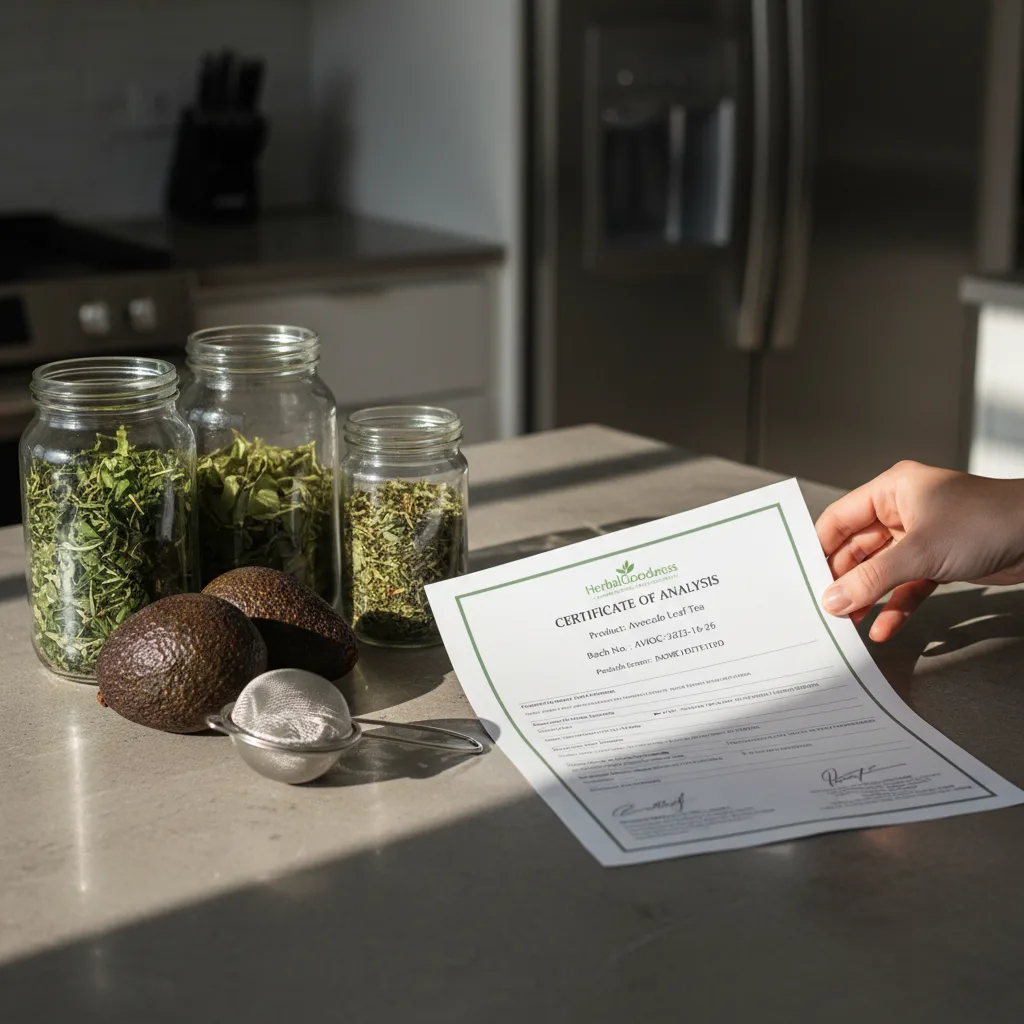
What to Look For: Results are usually given as ‘CFU/g’ (colony forming units per gram). You want results within safe regulatory thresholds, and ideally labeled “ND” (none detected) for certain microbiome. If the COA lists microbiological results with all values in an expected range, that tea is appropriately processed and stored.
Moisture Content Testing: Verifying Freshness and Shelf Life
What It Is: Moisture analysis measures the water content of the dried avocado leaves.
Why It Matters: Too much moisture can lead to loss of quality, flavor dulling, or even spoilage during storage. Reputable sellers provide this test to signal that the leaves were adequately dried post-harvest. Many teas in the Herbal Tea Trio Bundle—including avocado leaf, guava leaf, and hibiscus—meet stringent freshness standards for shelf stability.
What to Look For: Most dried herbal teas should have a moisture content under 12%. Lower values are considered better for shelf life, while still preserving the delicate tea aroma.
Evaluating Seller Transparency and Sourcing Standards
How do you know if a brand like Herbal Goodness is offering best quality avocado leaf tea? Sellers who publish full, third-party COAs—ideally scanned, signed, and dated—give you a direct look at their commitment to safety and authenticity. Here are the hallmarks of a transparent seller:
- Public, easy-to-read Certificates of Analysis available for every batch.
- Complete lab test results, not summaries or excerpts.
- Clear explanations of test methods and regulatory thresholds.
- Information about sourcing, such as whether the tea is organic or sustainably harvested. For liquid formats, Avocado Leaf Organic 15X Liquid Extract offers batch-tested quality and clear sourcing policies.
- Quick, knowledgeable answers to customer questions about testing or quality.
When analysis reports are jargon-free and include all major test areas, you gain new confidence that your purchase truly matches the seller’s promises.
Step-by-Step: How to Use a COA to Buy the Best Avocado Leaf Tea Online
Ready to purchase the best quality avocado leaf tea? Here’s a consideration-focused approach to putting COA information to work:
- Locate the COA or Lab Report: On the seller’s website, product page, or by request from customer support.
- Check the Identity Test: Confirm the product is 100% avocado leaf (Persea americana), with supporting data—for instance, Avocado Leaf Tea Organic 24 Bags always includes test-backed authentication.
- Review Pesticide & Heavy Metals Sections: Ensure all values are non-detected or far below safety thresholds. Look for organic certifications if that’s important to you.
- Assess Microorganism and Moisture Results: Make sure counts are within safe ranges and the moisture is under 12%.
- Look for Batch and Date Details: Each COA should be tied to a specific production batch and have a recent test date, supporting product freshness. When you order from Herbal Goodness, this information accompanies all premium avocado leaf tea and related herbal blends.
- Contact the Seller If Needed: Ask follow-up questions before placing your order. Transparent brands are happy to discuss their lab reports.
By consistently following this checklist, shoppers can shop avocado leaf tea online with confidence, knowing they have the facts at their fingertips.
Additional Quality Signals When Ordering Avocado Leaf Tea
Besides evaluating COAs, a few other shopping habits help ensure premium quality:
- Opt for sellers providing full batch traceability.
- Choose avocado leaf tea in formats that suit your steeping preferences: loose leaf, tea bags, or liquid extracts.
- Look for premium packaging with storage tips, demonstrating care beyond testing. The Herbal Tea Trio Bundle is a great option if you want to enjoy blends curated for freshness and variety.
- Read customer reviews for notes on taste, appearance, and aroma.
- Prioritize sellers—like Herbal Goodness—that lead with transparency and clear sourcing policies. For a liquid option, Avocado Leaf Organic 15X Liquid Extract is crafted for those who want both potency and purity.
Common Questions Shoppers Have About Avocado Leaf Tea COAs and Lab Tests
Many buyers new to reading lab reports have similar concerns. The next section answers frequently asked questions with direct, easy-to-understand guidance, further empowering you to shop wisely.

When you’re ready to experience premium avocado leaf tea, use COAs and lab tests to guide your selection. This approach ensures you order only the highest quality tea and enjoy every cup with peace of mind.
FAQs:
- What is a Certificate of Analysis (COA) for avocado leaf tea?
A Certificate of Analysis (COA) is a detailed lab report provided by reputable sellers to confirm the identity, quality, and safety of avocado leaf tea. It lists test results for identity, purity, pesticide residues, heavy metals, microbiomes, and moisture, helping you buy with confidence.
- Why should I look at lab tests before I order avocado leaf tea online?
Lab tests offer critical information about the freshness, purity, and safety of avocado leaf tea. Reviewing these tests lets shoppers verify claims, ensure there are no unwanted residues, and evaluate if the tea meets premium standards before making a purchase.
- How can I tell if an avocado leaf tea has passed pesticide testing?
Check the pesticide section of the COA for “ND” (not detected) or numbers well below regulatory thresholds. For organic avocado leaf tea, the lab test should confirm the absence of prohibited pesticides, aligning with organic standards.
- What does moisture content tell me about avocado leaf tea?
Moisture content shows how well the leaves were dried and preserved. A reading under 12% indicates good freshness and longer shelf life, which are important qualities for a premium herbal tea experience.
- Where can I find the best quality avocado leaf tea COA before buying?
Top brands, including Herbal Goodness, will provide COAs directly on their websites or upon request. Always look for public, third-party reports with comprehensive data for each batch to support your purchase decision.
- Are all avocado leaf tea lab reports the same?
COAs will differ based on test methods, batch, and regional standards. Compare reports for thoroughness, and always prioritize sellers who provide complete, third-party testing for each product batch on sale.
- Can I shop certified organic avocado leaf tea with confidence using a COA?
Yes, COAs help confirm organic tea quality by showing the absence of prohibited pesticides and meeting strict purity and authenticity criteria. Check for organic certifications alongside the COA to boost shopping confidence.
Author Name:
Herbal Goodness Editorial Team
Author Bio:
The Herbal Goodness Editorial Team specializes in holistic health and superfoods, blending science and nature to educate and empower our community.
References:
Introducing Graviola to Young Taste Buds: Fun, Family-Friendly Flavor Exploration
Graviola in the Classroom and at Home: Creative Activities to Teach Kids About Tropical Plants
Share this
Popular posts


FAQs
1. What are the main benefits of drinking bamboo leaf tea?
Drinking bamboo leaf tea supports hydration, relaxation, skin wellness, and antioxidant balance.
2. What is bamboo leaf extract used for?
It’s used for general body wellness, skin elasticity, hair and nail support, and overall vitality.
3. Can bamboo leaf help with skin care and body wellness?
Yes, bamboo leaf is rich in silica and antioxidants, which promote healthy skin, strong nails, and a youthful glow.
4. What forms of bamboo leaf are available?
You can find dried bamboo leaf, powder, extract, drops, oil, and bamboo leaf green tea.
5. Are there any side effects of bamboo leaf?
Bamboo leaf is generally safe when consumed in moderation. Always consult your healthcare provider before starting any new herbal supplement.