





High-Carvacrol Oregano Oil: How to Choose the Best Blend

Oregano oil is prized for its bold, herbaceous aroma and centuries-old place in both kitchens and wellness routines. But if you’ve begun exploring oregano oils online or at your local store, you’ve likely noticed confusing options: sometimes bottles display just a single oregano species, sometimes they’re called “blends,” and often labels highlight “high carvacrol.” What do these distinctions mean, especially for scent, taste, and real-life use? This guide breaks down oregano oil blends, what high carvacrol really refers to, and how to decode retail labels and sensory cues so you can confidently select oregano oil that fits your culinary, aromatic, or household goals.
What Is “High Carvacrol” Oregano Oil?
Carvacrol is a naturally occurring compound found in oregano essential oil, especially in varieties such as Origanum vulgare and Origanum onites. It’s commonly appreciated for its strong, slightly spicy aroma and is often cited as the main reason oregano oil smells and tastes so distinctly “oregano.” When you see “high carvacrol” on a label, it means the formula contains a notable amount of this compound—something many shoppers view as a sign of potency or flavor intensity.
- High Carvacrol: Usually means carvacrol content of 60% or higher.
- Why It Matters: A higher percentage can indicate bolder scent, flavor, and aromatic punch, but there’s no universal “best” number—personal taste and use play a large role.
For those looking to maximize the potency and distinct herbal taste of oregano, Oil of Oregano 75% Carvacrol | 2oz – Potent Immune & Antifungal Support offers a clear specification, showcasing a robust carvacrol concentration directly on its label.
Single-Species Oils vs. Oregano Oil Blends
Single-Species Oregano Oil
This is usually distilled from just one variety of oregano, often specified as Origanum vulgare, Origanum onites, or another botanical name. The carvacrol percentage here reflects only what naturally occurs in that species.
- Consistent Aroma and Flavor: You’ll typically find a strong, distinctive herbal smell and taste unique to that oregano type.
- Label Clues: The label will often state the species, e.g., “100% Origanum vulgare oil” or “Wild Oregano Oil.”
- Carvacrol Display: If carvacrol is labeled, it refers to what’s present in that one species’ oil, usually highlighted as a selling point for those wanting more concentrated scent and culinary impact.
Oregano Oil Blends
Blends combine either multiple oregano species, oregano oil with carrier or base oils, or oregano alongside select essential oils.
- Why Blend?
- To adjust scent: Some want a softer, less pungent aroma for home diffusion.
- To tailor flavor: Blends can moderate intensity for culinary or topical uses.
- For practical reasons: Carrier oils (like olive or coconut) make oregano oil easier to measure, apply, or dilute for general household tasks.
For instance, using a Black Seed Oil 8oz | Cold-Pressed Nigella Sativa – Immune & Daily Wellness as a carrier can mellow oregano’s bite while adding its own unique benefits.
Types of Oregano Blends:
- Multi-Species Blends: Mixing Origanum vulgare with other oregano species can subtly round out aroma or tweak the taste.
- Oregano + Carrier Oil: Adding oils like olive or grapeseed dilutes the concentrate, changing how strong it smells and tastes.
- Oregano + Other Essential Oils: Sometimes blended with thyme, rosemary, or similar oils for custom aromatic profiles.
How Blending Affects Carvacrol Percentage on Labels
One key result of blending—whether with different oreganos or with carrier/base oils—is that the carvacrol percentage you see on the label can shift, sometimes dramatically. Here’s how:
- Single-Species, Undiluted: The carvacrol percentage is as it occurs in the original oil.
- Species Blends: The percentage reflects the combined average from all the oregano species used. This might be lower or higher depending on which types are blended, but usually evens out somewhere in the middle.
- Blended With Carrier Oil: The carvacrol percentage is calculated based on the total volume of the finished blend. For example, if a bottle contains 20% pure oregano oil (at 70% carvacrol) in 80% carrier oil, the carvacrol percentage for the whole mixture is much less.
Important Takeaway: Always check if the carvacrol amount listed refers to the pure oregano portion or the finished diluted blend. Not every label clarifies this, so consider reaching out to brands or reading their full packaging details.
How Blends Change Oregano Oil Aroma and Flavor
Oregano oil is famous for its potent, warm, herbaceous smell and briskly savory flavor, which can be pleasing or overwhelming depending on your personal style.
Undiluted, High-Carvacrol Oils
- Deep, sharp, spicy scent.
- Heavy herbal note that can be dominant in recipes or in the air.
- Usually reserved for those who want the full force experience.
Blended Oregano Oils
- With Carrier Oils:
- Milder aroma, sometimes softly grassy depending on the base oil.
- Less assertive in both culinary dishes and aroma diffusers.
- Multi-Species or Multi-Oil Blends:
- More nuanced and layered scent, sometimes with noticeable hints from companion oils (like thyme or rosemary).
- Softer on the palate if intended for culinary use, allowing more variety and balance in dishes or room sprays.
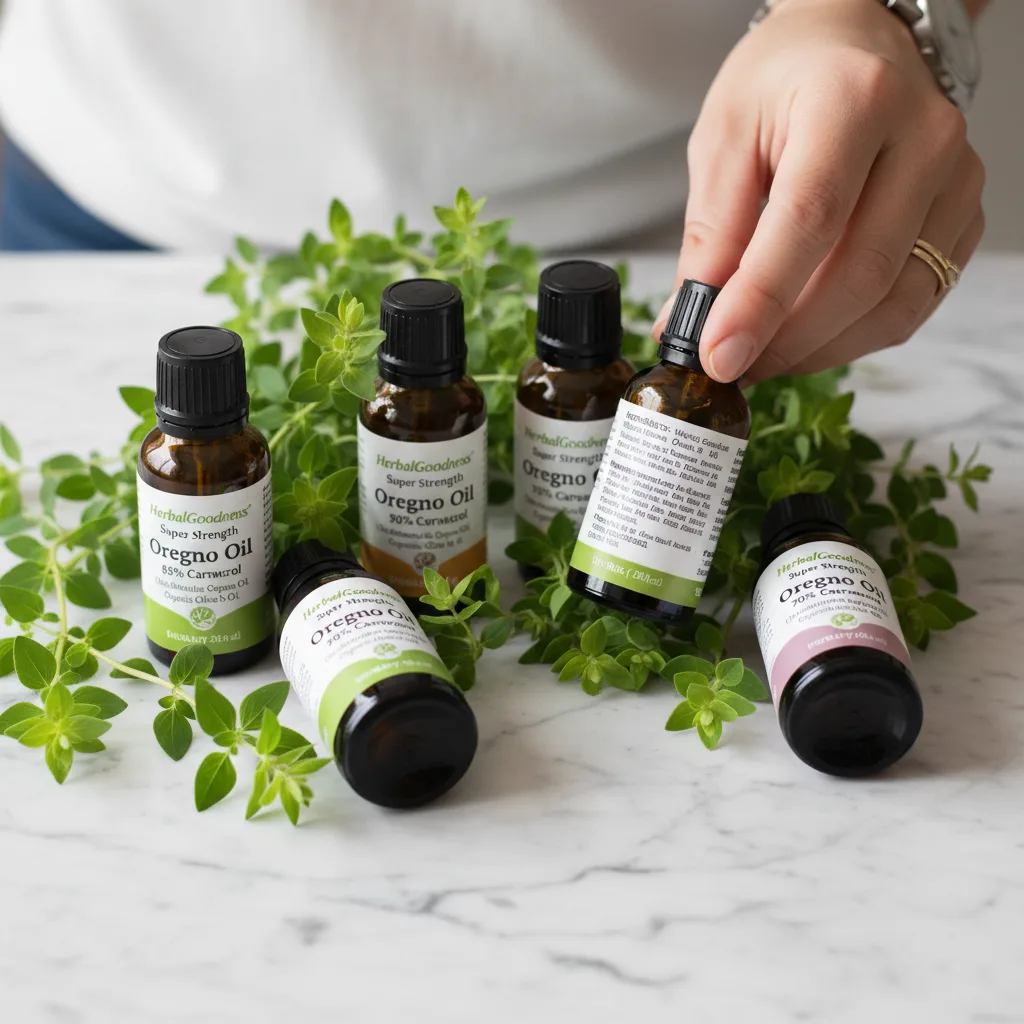
Blends that add carrier oils can be especially approachable for those sensitive to strong herbal undertones, and may be suitable for broader culinary and household use.
How to Decode Oregano Oil Labels: Key Clues for Shoppers
Facing a wall of oregano oils—each with technical numbers, botanical names, and catchy claims—can feel intimidating. Focus on these label cues to make sense of what’s inside, how strong it is, and how it might fit your intended use:
Key Words and Phrases:
- Botanical Name: Indicates species, e.g., Origanum vulgare, Origanum onites.
- Carvacrol %: How much carvacrol is present.
- Blend Details: Look for “blend,” “with carrier oil,” “essential oil blend,” or details about additional plant oils.
- Unguent or Dilute: Sometimes signals that carrier oils are present—a diluted formula means a milder aroma or taste.
- Wild Harvested or Organic: Often included for sourcing preference, although it doesn’t always affect carvacrol.
Regular users of Oil of Oregano 75% Carvacrol | 2oz – Potent Immune & Antifungal Support appreciate transparent percentages that help guide dosage and use alongside culinary or wellness practices.
Questions to Ask (and Look For on the Bottle):
- Is this pure essential oil or blended?
- What percentage of oregano oil (and carvacrol) is present in the final bottle?
- Are there additional oils, and if so, which ones?
- Is the scent/mouthfeel vigorous or mellowed?
If you’re interested in natural oil blends for daily wellness beyond oregano, you may also be intrigued by the immune-boosting profile of Soursop Leaf Graviola Extract 15X Liquid | Organic Cell & Immunity, which features potent antioxidant and wellness properties.
Aroma and Sensory Checks for Oregano Oil Selection
Even with all the science behind labels, your own senses are valuable tools in choosing the right oregano oil. Here’s how to use them:
Smell Test
- High-Carvacrol Oil: You’ll immediately notice potent, eye-catching oregano aroma—sharp, bright, and almost peppery.
- Blended Oils: Often softer or layered with background notes from carrier or complementary oils. A gentle sniff may reveal olive richness, grassy olive undertones, or even floral hints if blended with other botanicals.
Appearance and Taste
- Color: Pure oregano oil may be pale yellow or golden. Blends with olive oil may look darker, while other carriers can lighten or cloud the mixture.
- Flavor: Full-strength oregano is quite pungent; blends are more approachable for everyday cooking or flavoring.
Texture
- Pure Essential Oil: Thin and light, sometimes slightly warming on contact.
- Blended with Carrier Oil: May feel thicker or more moisturizing if applied topically or diluted for household use.

Matching Oregano Oil Type to Your Intended Use
How you plan to use oregano oil—culinary, aromatic, or household—can guide your best choice:
For Culinary Adventures
- If seeking bold oregano flavor for sauces, marinades, or artisan breads, a single-species, high-carvacrol oil may suit your palate.
- For subtle seasoning, choose a blend—especially those with a healthy proportion of a mild carrier oil such as Black Seed Oil 8oz | Cold-Pressed Nigella Sativa – Immune & Daily Wellness.
Aromatherapy and Home Fragrance
- A blend (especially with companion essential oils) offers a rounder, pleasant aroma that can be more enjoyable in diffusers or sprays.
- For the classic Mediterranean aroma, select an undiluted, single-species oil. You can easily compare different options and even pair other herbal extracts, like Organic Papaya Leaf Extract 16oz | 15X Liquid – Best Value Size for holistic aromatic routines.

General Household Uses
- Blends with carrier oils are often easier to measure and handle for non-culinary use, such as adding herbal notes to homemade cleaners or laundry.
- If you're interested in expanding your wellness pantry with diverse immune and digestive support options, Soursop Leaf Graviola Extract 15X Liquid | Organic Cell & Immunity offers a unique botanical alternative.
The Role of Reputable Brands and Source Transparency
Trusted producers like Herbal Goodness openly share sourcing, species, and blend information—check their packaging or websites for details. Reliable labels take the guesswork out of carvacrol content and blending, helping you pick the right oregano oil for your goals.
Shoppers who value trustworthy sources for their herbal wellness often opt for well-labeled blends such as Oil of Oregano 75% Carvacrol | 2oz – Potent Immune & Antifungal Support. For a broader herbal regimen, combine with gentle, plant-based products like Organic Papaya Leaf Extract 16oz | 15X Liquid – Best Value Size.
Making an Informed Oregano Oil Choice: Recap
- "High carvacrol" signals aromatic and flavor strength, but blending and dilution change the listed percentage.
- Blends can involve multiple oregano species, carrier oils, or other essential oils—each altering aroma and use.
- Carefully read labels for species, blend type, and what the carvacrol number refers to.
- Use sensory checks (smell, color, taste) to gauge strength and personal preference.
- Choose the oil or blend that fits your culinary, aromatherapy, or household needs best.
With these cues, you’ll be better equipped to interpret labels, enjoy aroma sampling, and select a high-quality oregano oil blend that brings out exactly the experience you’re looking for.
Frequently Asked Questions
Question 1: What does "high carvacrol" really mean on oregano oil labels?
Answer: It refers to the concentration of carvacrol—usually 60% or higher—which signals a stronger flavor and aroma. For verified potency, check the label of Oil of Oregano 75% Carvacrol | 2oz – Potent Immune & Antifungal Support.
Question 2: Are blended oregano oils less effective than single-species oils?
Answer: Not necessarily; blends can offer a tailored aroma or flavor. Some use carrier oils, such as Black Seed Oil 8oz | Cold-Pressed Nigella Sativa – Immune & Daily Wellness, for more versatile uses and ease of application.
Question 3: How can I check what the carvacrol percentage refers to?
Answer: Always read labels carefully or contact brands for clarification. The number might indicate the concentration in the original oregano oil or the diluted blend. Well-formulated products like Oil of Oregano 75% Carvacrol | 2oz – Potent Immune & Antifungal Support are transparent about these details.
Question 4: Which oregano oil is best for culinary use?
Answer: Single-species, high-carvacrol oils are preferred for bold seasoning, while blends with carrier oils are ideal for subtle flavoring. Explore aromatic options or pair with Organic Papaya Leaf Extract 16oz | 15X Liquid – Best Value Size for unique culinary creations.
Question 5: Are there herbal blends that support both immune and digestive health?
Answer: Yes. Consider Soursop Leaf Graviola Extract 15X Liquid | Organic Cell & Immunity, which is formulated for both immune defense and overall wellness.
Question 6: What is the role of carrier oils in an oregano oil blend?
Answer: Carrier oils dilute the concentrate, making it easier to apply and lessening Aroma intensity. Blending oregano with options like Black Seed Oil 8oz | Cold-Pressed Nigella Sativa – Immune & Daily Wellness can also add unique supportive benefits.
Curious about oregano oil blends? Use label know-how and your senses to discover the ideal oregano oil for your kitchen, home, or aromatic rituals.
About the Author
Herbal Goodness Editorial Team
The Herbal Goodness Editorial Team specializes in holistic health and superfoods, blending science and nature to educate and empower our community.
References
Share this

Popular posts


FAQs
1. What are the main benefits of drinking bamboo leaf tea?
Drinking bamboo leaf tea supports hydration, relaxation, skin wellness, and antioxidant balance.
2. What is bamboo leaf extract used for?
It’s used for general body wellness, skin elasticity, hair and nail support, and overall vitality.
3. Can bamboo leaf help with skin care and body wellness?
Yes, bamboo leaf is rich in silica and antioxidants, which promote healthy skin, strong nails, and a youthful glow.
4. What forms of bamboo leaf are available?
You can find dried bamboo leaf, powder, extract, drops, oil, and bamboo leaf green tea.
5. Are there any side effects of bamboo leaf?
Bamboo leaf is generally safe when consumed in moderation. Always consult your healthcare provider before starting any new herbal supplement.