





Buying Papaya Seed Powder? A Beginner's Guide to Fermenting with It
Fermentation is an age-old practice, beloved for transforming simple ingredients into complex, tangy, and satisfying foods. For those seeking a fresh spin on classics like krauts, pickles, and kimchi, papaya seed powder offers a fragrant, peppery twist along with texture and creative flair. This beginner’s guide explores how to integrate papaya seed powder into your small-batch fermentation projects, focusing on practical kitchen tips, sensory checkpoints, and ways to safely experiment—leaving hype and health claims aside. Whether you’re new to fermenting or looking to branch out, you’ll discover approachable methods to bring distinctive flavor and crunch to your jars.
Understanding Papaya Seed Powder as a Fermentation Ingredient
Papaya seed powder is made from dried, ground seeds of the papaya fruit. Its natural peppery flavor, subtle bitterness, and granulated texture make it a unique option for those interested in culinary experimentation. Unlike traditional black pepper, papaya seed powder is often more aromatic and earthy, which can add complexity to fermented foods.
Why Use Papaya Seed Powder in Fermentation?
- Adds peppery heat and earthiness
- Contributes a granular texture
- Partners well with both savory and tangy profiles
- Offers visual interest and crunch to krauts, kimchi, and pickles
Selecting and Preparing Papaya Seed Powder
Papaya seed powder varies in grind size, from coarse cracked to fine. The choice depends on your preferred texture:
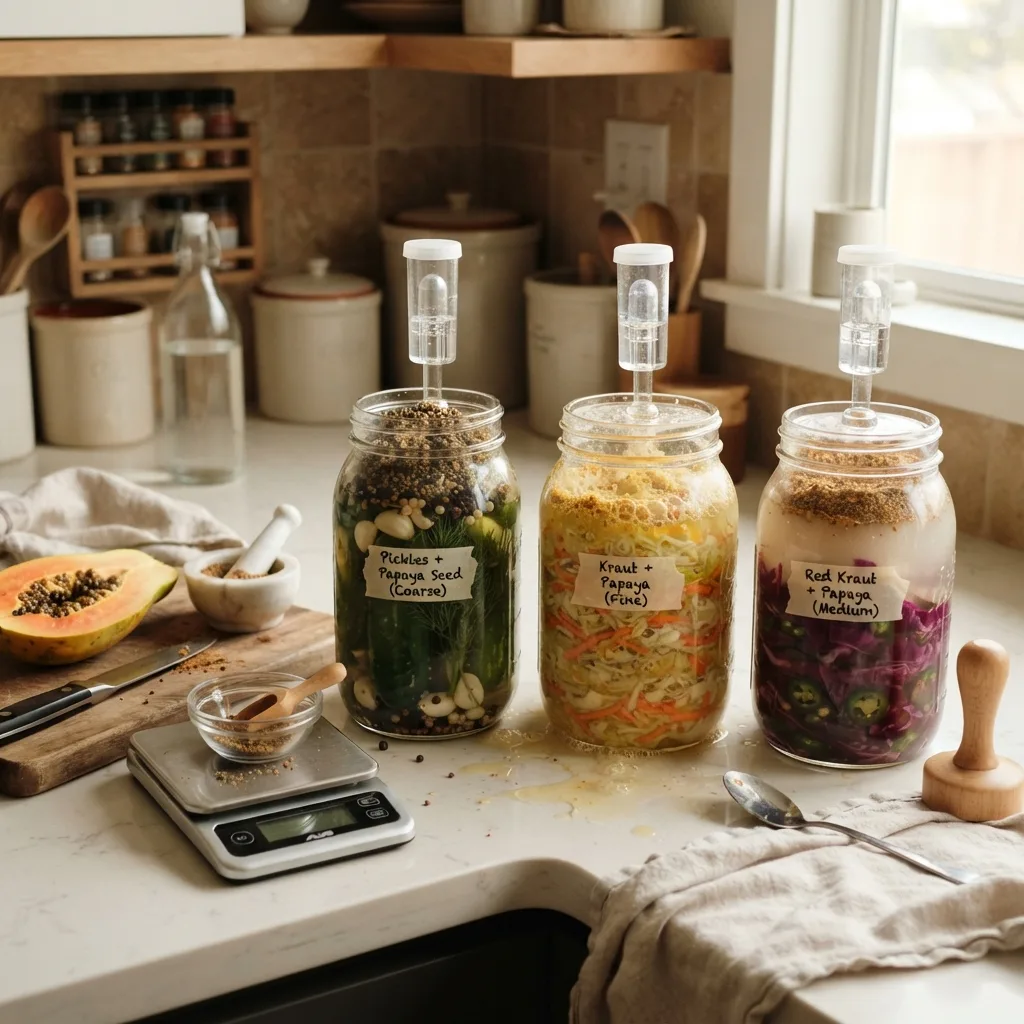
- Fine powder: Blends evenly, gives a subtle flavor boost, and a mild crunch.
- Coarse granules: Offer a more pronounced bite and visual texture, ideal for kraut and pickled vegetables.
- Commercially sourced: Brands like Herbal Goodness provide options that are food-grade and properly dried, ensuring safer fermentation outcomes. For maximum convenience and quality, consider Organic Papaya Seed Powder 4oz | Gut Cleanse & Digestive Support for your kitchen stock.
Starting Your Fermentation: Salt Ratios and Mixing Techniques
Salt is vital for fermentation because it controls the activity of beneficial microbes and wards off spoilage. Getting the ratio right ensures flavor, texture, and safety.
Salt Ratios for Small-Batch Fermentation
A general guideline for vegetable fermentation is a 2%–2.5% salt ratio by weight. For every 1000 g (about 2.2 lbs) of prepared vegetables, use 20–25 g of non-iodized salt.
Integrating Papaya Seed Powder
- Start with 1–2 teaspoons of papaya seed powder per quart of vegetables.
- Mix papaya seed powder evenly with the salt before massaging it into shredded or sliced vegetables. This promotes even distribution and consistent flavor.
- For first-time fermenters, it’s better to use a light hand—you can always add more to later batches once you know your preference.
Sample Salt and Spice Mixture
For 1 medium head of cabbage (about 1.5–2 lbs):
- 1–1.5 tablespoons kosher salt
- 1–2 teaspoons papaya seed powder (fine or coarse)
- Optional: 1 teaspoon mustard seeds, juniper berries, or fennel seeds for layered flavor
If you prefer a capsule form that can easily be measured and added to recipes, Papaya Seed Powder Capsules 60ct | 600mg – Gut & Colon Cleanse Support may be suitable for precise dosing and convenience.
Creative Ferment Recipes Featuring Papaya Seed Powder
Papaya Seed Kraut
Ingredients:
- 1 medium green cabbage, shredded
- 1–2 teaspoons papaya seed powder (coarse for more crunch)
- 1 tablespoon kosher salt
- Optional: ½ cup grated carrot for sweetness
Steps:
- Combine all ingredients in a large bowl.
- Massage until the cabbage releases juices and is well coated.
- Pack into a clean jar, pressing firmly until brine rises above the vegetables.
- Place a fermentation weight or clean whole cabbage leaf on top.
- Seal loosely with a lid or fermentation airlock.
- Ferment at room temperature (65–75°F) for 1–2 weeks, tasting every few days.
If you’re seeking extra digestive support with your ferments, consider supplementing your culinary projects with Body Detox Papaya Seed | Organic 15X Liquid Extract for Gut. This liquid extract is formulated for gut health and is a convenient addition to a holistic daily routine.
Papaya Seed Pickles (Quick Brine Method)
Ingredients:
- 1 lb fresh cucumbers, sliced
- 1 tablespoon non-iodized salt
- 2 teaspoons papaya seed powder (fine grind)
- 1 clove garlic, smashed
- 1 cup filtered water
Steps:
- Dissolve salt in the water, then add papaya seed powder.
- Place cucumbers and garlic in a sterilized jar.
- Pour brine over cucumbers, ensuring they’re submerged.
- Cap loosely and ferment at room temperature for 3–5 days.
- Taste; when the tang and texture are to your liking, move to cold storage.
Flavor Pairings and Combinations
Papaya seed powder pairs beautifully with ingredients that offer contrast and depth:
- Ginger and garlic: Bright and savory, great for kimchi and Asian-style ferments.
- Citrus zest: Adds lightness and balance to earthy, peppery notes.
- Fresh herbs (dill, cilantro): Uplift pickles and shredded root vegetables.
- Carrots and radish: Provide sweetness and a softer crunch.
For those looking to support wellness while experimenting in the kitchen, 15 Day Detox Capsules | Papaya Enzyme & Papaya Seed Powder | Natural Full-Body Cleanse can complement a wholesome, flavor-forward diet.
Sensory Checkpoints for Safe Fermentation
While fermenting is accessible, observing small details ensures a successful, safe outcome. Here’s what to watch for when experimenting with papaya seed powder:
Aroma
- Should be pleasantly tangy, slightly spicy, sometimes a bit funky (from lactic acid bacteria)
- If you smell mustiness, rotten or off odors, discard the batch
Texture
- Crisp vegetables indicate freshness
- Papaya seed powder should distribute as speckles throughout; course grind gives visible granules
Flavor
- Taste test after 3–5 days (pickles) or 7–14 days (kraut, kimchi)
- Spice level is adaptable: add more papaya seed next time if you prefer a bolder flavor
Surface Appearance
- White film (kahm yeast) is harmless but can taste bitter—skim it off
- Slime, fuzz, or intense discoloration mean something went wrong—compost the contents and start fresh
If you're curious about additional benefits linked with papaya, explore Papaya Leaf Extract 10X Capsules 600mg | Platelet & Digestive Aid as part of your daily wellness regimen beyond fermentation.

Storage Tips for Fermented Foods with Papaya Seed Powder
After Fermentation
- Once you’re happy with the taste and texture, transfer your fermented vegetables to clean jars, pack tightly, and top with brine.
- Store in the refrigerator to slow down fermentation and extend shelf life.
- Fermented foods can last for months when refrigerated, though flavor continues to evolve over time.
Monitoring for Freshness
- Check seals and smells each time you open a jar.
- Papaya seed powder may settle to the bottom or stick to vegetables, but as long as there’s no off aroma or texture, the ferment remains enjoyable.
- Consuming within 2–3 months is ideal for peak flavor and crunch.

If you’re planning on crafting ferments regularly, keeping Organic Papaya Leaf Extract 16oz | 15X Liquid – Best Value Size on hand is a wonderful way to add versatility to both beverages and food recipes.
Troubleshooting: Common Beginner Questions
Can I Use Papaya Seed Powder with Other Spices?
Absolutely! Combining papaya seed powder with spices like cumin, coriander, dill seed, or fennel enhances the complexity of your ferments. Adjust the amounts to your taste, always starting small to avoid overpowering the batch. For those interested in convenience, Papaya Seed Powder Capsules 60ct | 600mg – Gut & Colon Cleanse Support can be opened and the contents blended into your spice mixture for exact measurement.
How Much Papaya Seed Powder is Too Much?
Strong and aromatic, papaya seed powder can quickly take center stage. Start with 1–2 teaspoons per quart of veggies and adjust upward only after your first batch.
What’s the Best Way to Grind Papaya Seeds at Home?
For a coarse grind, use a spice grinder or mortar and pestle. For fine powder, a high-speed blender works well. If purchasing pre-ground powder, check that it’s labeled food-grade. You can always rely on Organic Papaya Seed Powder 4oz | Gut Cleanse & Digestive Support for consistent results.
Does Papaya Seed Powder Affect Fermentation Time?
It doesn’t accelerate or slow the lactic acid fermentation process, but its flavor will intensify with time, so taste often.
To complement your kitchen experiments, Organic Papaya Seed Extract 15X Liquid | Gut & Colon Cleanse Support offers an alternative way to enjoy the benefits of papaya seed, whether as a dietary supplement or an ingredient in creative recipes.
Building Your Fermentation Confidence
Fermentation thrives on curiosity and a willingness to experiment. Using papaya seed powder offers a fun way to expand your flavor palette without veering into complex, intimidating territory. With attention to salt ratios, grind size, and basic food safety practices, anyone can add this distinctive spice to familiar ferments.
Remember, it’s normal for every batch to have slight variations—make notes as you go, so you can refine your process over time. Enjoy the journey, be patient with yourself, and savor your creative kitchen experiments.
FAQs:
- Is papaya seed powder safe to use in homemade ferments?
Yes, when using food-grade papaya seed powder and following standard fermentation food safety tips, it is safe for culinary use in krauts, pickles, and kimchi.
- How does papaya seed powder change the flavor of fermented foods?
It brings a peppery, earthy profile with subtle bitterness and mild heat, giving an extra layer of complexity to traditional ferments.
- What is the recommended amount of papaya seed powder per batch?
Begin with 1–2 teaspoons per quart of prepared vegetables, adjusting upward or downward in future batches to taste.
- Does the grind size of papaya seed powder matter for fermentation?
Yes. Fine powder blends evenly and gives mild flavor, while coarse granules provide notable texture and a more pronounced bite.
- Can papaya seed powder be combined with other spices in fermentation?
Definitely. It works well with spices like cumin, dill, coriander, and citrus zest, offering endless creative pairing possibilities.
- How long should I ferment vegetables with papaya seed powder?
Ferment for 3–5 days for pickles or 7–14 days for krauts and kimchi, tasting periodically to monitor flavor and texture.
Author Name:
Herbal Goodness Editorial Team
Author Bio:
The Herbal Goodness Editorial Team specializes in holistic health and superfoods, blending science and nature to educate and empower our community.
References:
Introducing Graviola to Young Taste Buds: Fun, Family-Friendly Flavor Exploration
Graviola in the Classroom and at Home: Creative Activities to Teach Kids About Tropical Plants


FAQs
Drinking bamboo leaf tea supports hydration, relaxation, skin wellness, and antioxidant balance.
It’s used for general body wellness, skin elasticity, hair and nail support, and overall vitality.
Yes, bamboo leaf is rich in silica and antioxidants, which promote healthy skin, strong nails, and a youthful glow.
You can find dried bamboo leaf, powder, extract, drops, oil, and bamboo leaf green tea.
Bamboo leaf is generally safe when consumed in moderation. Always consult your healthcare provider before starting any new herbal supplement.