





Best Natural Remedies for Seasonal Allergies: Saline | 2026

Best overall: saline nasal rinsing as an add-on to your allergy routine. Best for reducing pollen exposure: keeping pollen out of your home. Best for itchy-eye comfort: a cool compress. This 2026 guide ranks the best natural remedies for seasonal allergies by evidence, safety and practical use, with clear limits for herbal supplements from Herbal Goodness.
- The best natural remedies for seasonal allergies start with saline rinsing and reducing pollen exposure, not supplement stacks.
- Use distilled, sterile or properly boiled and cooled water for nasal irrigation; never use untreated tap water.
- Herbal Goodness mullein tea belongs in a herbal beverage routine, not a proven pollen-allergy treatment plan.
- Cool compresses provide eye comfort; persistent symptoms need a pharmacist or clinician, not stronger herbal extracts.
Why this matters
Seasonal allergies involve an immune response to airborne allergens such as tree, grass and weed pollen. A product described as supporting immunity or respiratory wellness does not automatically address that response.
Match the approach to the problem: reduce exposure, remove pollen or support comfort. Those are different jobs. If your symptoms disrupt sleep, affect daily activities or include wheezing, get medical advice instead of adding more supplements.
What makes the best natural allergy remedy?
The ranking uses these criteria for 2026:
- Relevant evidence: Human allergy research matters more than laboratory findings or traditional use alone.
- Clear purpose: Each option should explain whether it removes pollen, reduces exposure or supports comfort.
- Safe preparation: Water quality, equipment cleaning and ingredient precautions belong in the decision.
- Practical fit: An approach you can repeat during pollen season is more useful than an elaborate routine.
- Honest limitations: No remedy earns a recommendation by promising to cure allergies or replace medical care.
The American Academy of Allergy, Asthma & Immunology identifies allergen avoidance as part of allergy management. The National Center for Complementary and Integrative Health distinguishes limited evidence for complementary approaches from established care. Those distinctions guide this list.
Natural allergy remedies at a glance
| Rank and option | Best for | Standout feature | Key limitation |
|---|---|---|---|
| 1. Saline nasal rinsing | Removing pollen and mucus from nasal passages | Directly washes the nose | Requires safe water and clean equipment |
| 2. Pollen exposure control | Preventing avoidable indoor exposure | Addresses pollen before it reaches you | Cannot eliminate outdoor exposure |
| 3. Showering and changing clothes | Removing pollen after outdoor time | Keeps outdoor residue away from bedding | Does not address pollen already inhaled |
| 4. HEPA air filtration | Supplementing bedroom exposure control | Captures airborne particles passing through the filter | Does not remove every source of exposure |
| 5. Cool eye compresses | Temporary itchy-eye comfort | Simple, non-drug comfort measure | Does not stop the allergic response |
| 6. Mullein leaf tea | An optional herbal beverage routine | A named plant in tea form | Not established as a seasonal allergy remedy |
1. Saline nasal rinsing: best for removing pollen from your nose
Saline irrigation washes the nasal passages with a saltwater solution. It helps remove mucus and material deposited in the nose, including pollen, rather than acting as an herbal antihistamine.
A Cochrane review titled Saline irrigation for allergic rhinitis, published in 2018, found possible symptom improvement compared with no saline irrigation, but rated the evidence low or very low quality. That supports a qualified recommendation, not a promise of reliable relief for everyone.
Best for: Adults seeking a non-drug addition to an existing allergy routine.
Saline nasal rinsing pros:
- Directly cleans the nasal passages.
- Does not require an herbal supplement.
- Can complement a clinician-recommended allergy plan.
Saline nasal rinsing cons:
- Incorrect technique or solution preparation can cause discomfort.
- Unsafe water creates a preventable infection risk.
- It does not replace care for persistent or severe symptoms.
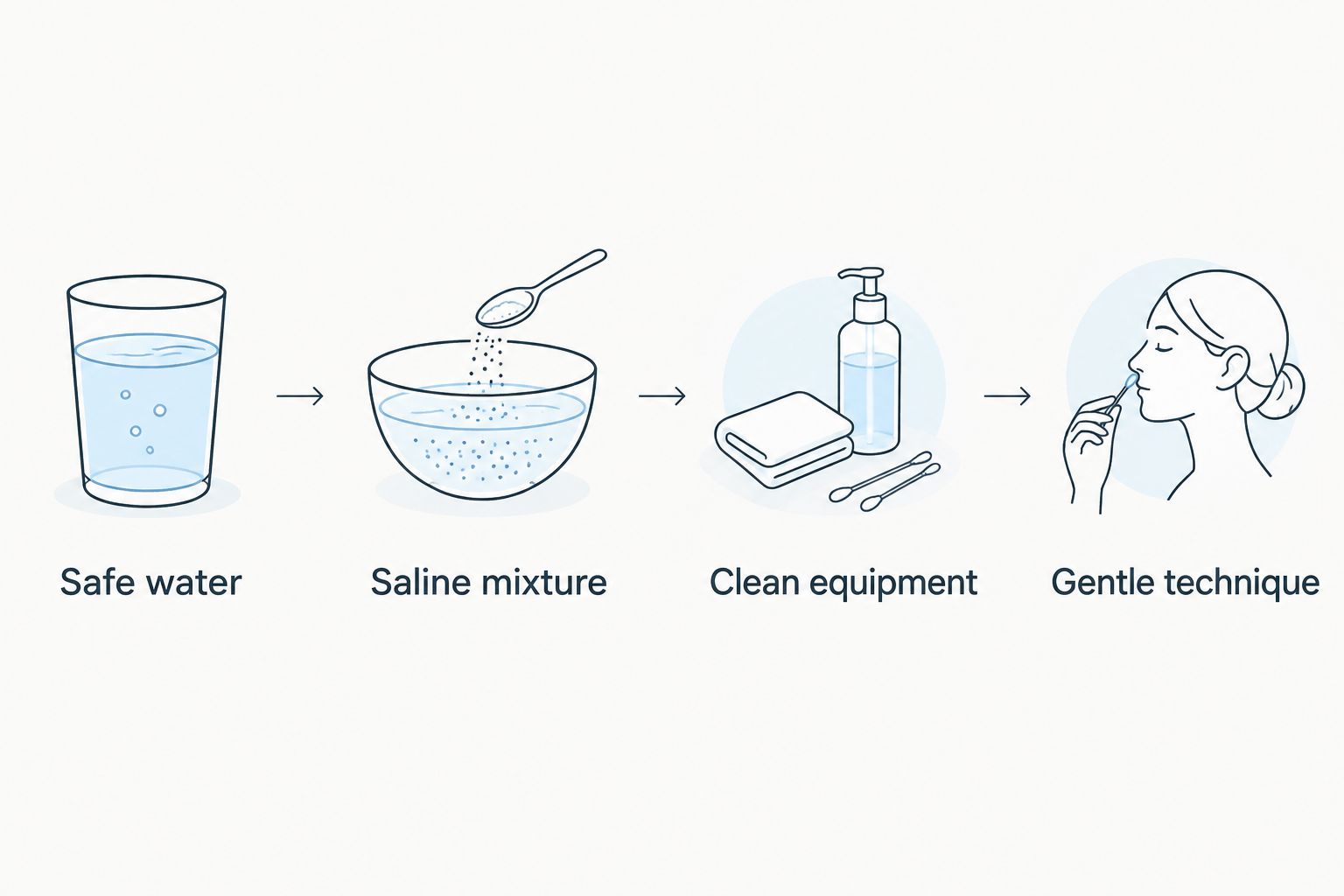
Prepare a nasal rinse safely
Use a nasal irrigation device and saline preparation intended for that purpose. Follow the instructions rather than estimating the salt concentration.
- Safe water: Choose distilled or sterile water, or boil tap water and let it cool.
- Saline mixture: Follow the device or packet instructions.
- Clean equipment: Clean and dry the device as directed after use.
- Gentle technique: Stop if rinsing causes pain or significant discomfort.
CDC nasal-rinsing guidance specifies a rolling boil for 1 minute, or 3 minutes above 6,500 feet, followed by cooling. These are water-safety instructions, not a recommended rinsing schedule.
Ask a clinician before using nasal irrigation after nasal surgery or when you have an ear problem, significant blockage or questions about use in children. Verdict: Buy a purpose-made rinse system if you can follow its water and cleaning instructions.
2. Pollen exposure control: best for preventing indoor exposure
Pollen exposure control starts with windows, outdoor timing and the route pollen takes into your home. The aim is simple: reduce avoidable contact with the allergen rather than asking a supplement to counter it afterward.
Use local pollen reports during the 2026 season to inform outdoor plans. Keep windows closed during high-pollen periods, including in your bedroom and car, and avoid drying bedding outdoors when pollen is high.
Best for: People whose symptoms track outdoor pollen exposure.
Pollen exposure control pros:
- Addresses the trigger rather than a general wellness goal.
- Fits alongside prescribed or over-the-counter care.
- Can include changes that need no additional product.
Pollen exposure control cons:
- Pollen forecasts do not measure your personal exposure.
- Work, exercise and caregiving can limit schedule changes.
- Closed windows do not eliminate every indoor allergen.
Protect the bedroom first. Keeping outdoor pollen away from pillows and sheets gives this routine a clear focus without turning your whole home into a cleaning project.
Verdict: Skip an extra supplement purchase until you have addressed avoidable pollen exposure.
3. Showering and changing clothes: best after outdoor activity
Showering and changing clothes help remove pollen carried indoors on skin, hair and clothing. This is an exposure-management step, not a treatment for the allergic response.
After gardening, outdoor exercise or time in heavy pollen, change before sitting on your bed. Wash exposed skin and hair as needed, and keep outdoor clothing away from bedding.
Best for: Gardeners, outdoor workers and people who exercise outside.
Showering and changing clothes pros:
- Targets pollen brought home after outdoor activity.
- Requires no herbal ingredients or extract selection.
- Gives you a repeatable transition from outdoors to indoors.
Showering and changing clothes cons:
- Cannot remove pollen already inhaled.
- Frequent hot showers can irritate or dry skin.
- Does not replace other steps when exposure continues indoors.
Choose comfortable water rather than very hot water. The point is removing residue, not generating steam or making yourself sweat.
For your 2026 routine, connect this step to an existing habit: change clothes when you arrive home, then decide whether washing your hair is needed. Verdict: Skip a special “allergy cleanse” purchase; use ordinary washing and clean clothes.
4. HEPA air filtration: best for bedroom particle control
A portable HEPA air cleaner captures airborne particles that pass through its filter. EPA guidance on residential air cleaners treats filtration as a supplement to controlling pollution sources, not a substitute for it.
Choose equipment suitable for the room and follow its operating and filter-maintenance instructions. A filter cannot help with air that never passes through it, and settled pollen still needs cleaning.
Best for: People adding particle filtration to a bedroom exposure-control routine.
HEPA air filtration pros:
- Filters airborne particles in the room where it operates.
- Can work while you use other exposure-reduction measures.
- Does not require ingesting a botanical ingredient.
HEPA air filtration cons:
- Does not remove pollen from clothing, carpets or bedding.
- Noise and maintenance affect whether you keep using it.
- Filtration alone does not guarantee symptom improvement.
Check room-size guidance, filter requirements and whether the device intentionally generates ozone. EPA warns that ozone can irritate the lungs; “air purification” wording is not enough to establish a safe choice.
Verdict: Buy a suitable HEPA unit as an add-on, not as your entire allergy plan.
5. Cool eye compresses: best for temporary itchy-eye comfort
A clean, cool compress provides comfort around irritated eyes without adding an herbal ingredient. The American Academy of Ophthalmology includes cool compresses among measures used for allergy-related eye discomfort.
Use a clean cloth dampened with cool water over closed eyelids. Avoid rubbing your eyes, and never put essential oils, tea extracts or homemade herbal drops into them.
Best for: Temporary comfort when seasonal allergies leave your eyes itchy.
Cool eye compresses pros:
- Simple to prepare with a clean cloth.
- Avoids swallowing another supplement.
- Offers a comfort measure while you assess other options.
Cool eye compresses cons:
- Does not prevent further pollen exposure.
- Provides comfort rather than stopping the allergic response.
- Is not an appropriate response to eye pain or vision changes.
Eye pain, light sensitivity, marked swelling or changes in vision need professional assessment. Do not assume every red or watering eye is a seasonal allergy.
Verdict: Skip herbal eye preparations; use a clean cool compress for comfort.
6. Mullein leaf tea: best for an optional herbal beverage routine
Mullein, Verbascum thapsus, has a history of traditional respiratory use. That history does not establish that mullein tea reduces pollen-triggered sneezing, nasal itching or watery eyes.
Herbal Goodness offers organic mullein leaf tea and a mullein leaf liquid extract. The preparations are different, and neither a respiratory-wellness description nor an extract-strength label establishes allergy effectiveness.
Best for: Adults interested in mullein as a herbal beverage, separate from allergy management.
Mullein leaf tea pros:
- Identifies the plant rather than using vague wellness wording.
- Provides a tea preparation for people who prefer that format.
- Can remain separate from your medication and exposure-control decisions.
Mullein leaf tea cons:
- Lacks established clinical evidence for seasonal allergy relief.
- A botanical ingredient can itself cause an unwanted reaction.
- Traditional use does not establish safety for every person.
Ask a pharmacist or clinician about herbal use if you take medicines, are pregnant or breastfeeding, or are choosing a product for a child. Follow the product's preparation instructions and stop using it if you develop an unexpected reaction.
For Herbal Goodness shoppers comparing natural remedies for seasonal allergies, saline rinsing and pollen reduction come before herbal supplements. Do not transfer findings about one plant, preparation or dose to another product.
Verdict: Hold as an allergy remedy; consider it only as a separate herbal beverage choice.
How the remedies were ranked
This 2026 ranking prioritizes a clear connection to pollen exposure or symptom comfort, supported by recognizable clinical or public-health guidance. Saline irrigation ranks first because it combines a direct nasal-cleaning purpose with human allergy research, despite the research limitations.
Pollen control, washing, filtration and compresses each serve a distinct practical role. Mullein ranks last because traditional respiratory use is not evidence of seasonal allergy effectiveness.
The source scope matters: Cochrane addresses saline research, CDC addresses rinse-water safety, EPA addresses filtration and ozone, and ophthalmology guidance addresses eye comfort. None establishes that an Herbal Goodness product treats seasonal allergies.
Which natural allergy remedy should you choose?
Start with pollen exposure control and add saline rinsing if it suits you. Use showering after outdoor activity, filtration for an appropriate room and cool compresses for eye comfort—not as competing cures, but as different parts of a routine.
Do not default to honey, essential oils or a multi-herb stack because the label sounds natural. NCCIH's seasonal-allergy guidance does not establish honey as effective, and supplement safety still depends on the ingredient, preparation and person using it.
For 2026, the deciding question is not which botanical sounds strongest. It is which step addresses your actual exposure or discomfort without delaying effective care.
FAQ
What's the best natural remedy for seasonal allergies?
Saline nasal rinsing is the first-ranked add-on in this guide, alongside reducing pollen exposure. Its research has limitations, and rinsing requires safe water and clean equipment.
Can I use tap water in a nasal rinse?
Do not use untreated tap water for nasal rinsing. CDC recommends distilled, sterile or properly boiled and cooled water; follow the irrigation device's instructions too.
Is mullein tea good for seasonal allergies?
Mullein tea is not an established seasonal allergy remedy. Traditional respiratory use does not prove that the tea reduces pollen-related sneezing or itchy eyes.
Does local honey help with pollen allergies?
Local honey is not established as effective for seasonal allergy relief. Do not use it instead of exposure control or a clinician-recommended allergy plan.
Is a HEPA filter better than a nasal rinse?
A HEPA filter and a nasal rinse serve different purposes. Filtration captures airborne particles passing through the device, while rinsing washes material from the nasal passages.
Can I stop allergy medicine and use natural remedies instead?
Do not stop prescribed allergy medicine without discussing it with your clinician. Non-drug measures can complement care, but they do not automatically provide equivalent symptom control.
When should I get medical help for seasonal allergies?
Get medical advice when symptoms disrupt sleep or daily activities, or when you have wheezing. Trouble breathing, throat swelling or a severe allergic reaction requires urgent medical care.
One last thing
Natural describes an ingredient's origin, not its suitability for your nose or eyes. Keep herbal teas and oils out of nasal irrigation devices and eye preparations. The strongest practical choice is often a simpler routine with clearer safety instructions.
Related guides
Share this


FAQs
1. What are the main benefits of drinking bamboo leaf tea?
Drinking bamboo leaf tea supports hydration, relaxation, skin wellness, and antioxidant balance.
2. What is bamboo leaf extract used for?
It’s used for general body wellness, skin elasticity, hair and nail support, and overall vitality.
3. Can bamboo leaf help with skin care and body wellness?
Yes, bamboo leaf is rich in silica and antioxidants, which promote healthy skin, strong nails, and a youthful glow.
4. What forms of bamboo leaf are available?
You can find dried bamboo leaf, powder, extract, drops, oil, and bamboo leaf green tea.
5. Are there any side effects of bamboo leaf?
Bamboo leaf is generally safe when consumed in moderation. Always consult your healthcare provider before starting any new herbal supplement.