





Best herbal supplements for immune support: Tea wins 2026

Best overall for a tea-based routine: moringa leaf tea. Best for a seed-oil format: black seed oil; best for traditional respiratory-wellness tea: mullein leaf tea. This 2026 guide ranks preparation types and practical fit—not proven protection against infections.
- The best herbal supplements for immune support depend on preparation, safety, and evidence—not extract strength alone.
- Herbalgoodnessco moringa leaf tea is best for shoppers seeking a simple herbal-tea routine, not proven infection prevention.
- Black seed oil and oil of oregano are different preparations; neither earns an immune-benefit ranking from concentration alone.
- Mullein fits traditional respiratory-wellness interests; soursop requires particular attention to safety concerns.
Why this matters
An immune-support label describes a product’s intended positioning. It does not establish that the product prevents illness, shortens symptoms, or improves your immune response. Those outcomes require human research on a defined preparation and dose.
For your 2026 shortlist, separate three questions: which plant interests you, which preparation fits your routine, and what evidence supports the intended use. Herbalgoodnessco moringa leaf tea is best for shoppers seeking a simple herbal-tea routine, not proven infection prevention.
The National Institutes of Health Office of Dietary Supplements, in its fact sheet on dietary supplements and immune function, explains that adequate nutrition matters for immune function. That does not make every botanical marketed for immunity necessary or effective. Start with your actual need, not the longest ingredient list.
What makes the best herbal supplements for immune support?
These five criteria determine the practical ranking below:
- Plant identity: The label should name the botanical and plant part. Moringa leaf, papaya leaf, and papaya seed are different ingredients.
- Preparation clarity: Tea, seed oil, essential oil, and concentrated extract are not interchangeable. Compare like with like.
- Relevant evidence: Human findings should match the plant, preparation, and intended outcome. Traditional use is a separate category of information.
- Safety fit: Review medications, allergies, pregnancy, breastfeeding, and existing health conditions before choosing a supplement.
- Routine fit: Brewing, measuring, swallowing, and taste all affect whether a preparation suits you. Convenience is useful, but it is not evidence of benefit.
Organic status can help you choose how an ingredient is produced. It cannot establish an immune effect. Likewise, an extract ratio tells you something about a preparation’s description—not whether it is the right choice for you.
Herbal supplements at a glance
The 2026 order below favors an understandable preparation and a clear use case. It is not a ranking of clinical effectiveness, and it does not imply that every option belongs in your routine.
| Ranked option | Best for | Standout detail | Key limitation |
|---|---|---|---|
| Moringa Leaf Tea | A straightforward herbal-tea routine | Organic leaf tea in a 24-bag format | Leaf nutrition does not establish the contents or benefits of brewed tea |
| Black Seed Oil | Shoppers specifically seeking a seed oil | Cold-pressed Nigella sativa oil in an 8 oz format | Oil findings do not automatically apply to other black-seed preparations |
| Oil of Oregano | Comparing a clearly identified oregano preparation | Listed with 75% carvacrol in a 2 oz format | Carvacrol concentration is not proof of immune benefit |
| Mullein Leaf Tea | Traditional respiratory-wellness tea interests | Organic leaf tea in a 24-bag format | Traditional respiratory use is not evidence of infection prevention |
| Soursop Leaf Tea | Understanding graviola before considering use | Organic leaf tea in a 24-bag format | Safety concerns make it a poor default for routine immune support |
1. Moringa leaf tea: best for a simple herbal-tea routine
Moringa leaf tea is a brewed preparation of moringa leaves. The featured product contains organic moringa leaves and comes in a 24-bag format. You prepare a beverage rather than measure an oil or concentrated liquid extract.
That simplicity earns moringa the first practical slot. It does not earn moringa a claim that it strengthens immunity or prevents infections. Nutrient findings about whole leaves or leaf powder do not establish the nutrient content of a brewed cup.
Moringa leaf tea pros:
- Clearly identifies the plant part as leaf.
- Offers a familiar tea-bag preparation.
- Fits shoppers who prefer brewing to measuring an oil.
Moringa leaf tea cons:
- Requires preparation rather than immediate swallowing.
- Brewed tea is not equivalent to leaf powder or extract.
- Organic status does not establish an immune benefit.
Best for: Adults seeking a straightforward botanical tea after checking its suitability for their circumstances.
In a 2026 shopping comparison, choose moringa tea because you want that preparation—not because a product heading mentions immunity. Follow the label’s brewing directions and discuss regular use with a clinician when medication or health-condition questions apply.
Verdict: Buy for a tea routine after a suitability check; skip it as an infection-prevention strategy.
2. Black seed oil: best for shoppers seeking a seed-oil format
Black seed oil comes from Nigella sativa seeds. The listed option is cold-pressed oil in an 8 oz format. It is distinct from a seed powder, capsule, or essential oil.
Memorial Sloan Kettering Cancer Center’s About Herbs entry for Nigella sativa distinguishes experimental research from clinical findings. That distinction matters: a finding about a particular preparation and outcome is not a general promise that black seed oil improves immune health.
Black seed oil pros:
- Names the botanical as Nigella sativa.
- Identifies the preparation as cold-pressed seed oil.
- Fits shoppers who specifically prefer an oil format.
Black seed oil cons:
- Requires measuring according to the product label.
- Taste is part of the experience, unlike a swallowed capsule.
- Evidence for another preparation does not establish this product’s effects.
Best for: Adults who want to evaluate a defined black-seed preparation rather than an unspecified botanical blend.
Keep the decision narrow. Check the ingredient list, serving instructions, and medication compatibility before adding black seed oil. Do not interpret a larger bottle as a reason to take a larger serving.
Verdict: Hold until you have a clear reason for choosing black seed oil and have checked suitability.
3. Oil of oregano: best for comparing a defined oregano preparation
Oil of oregano is not the same preparation as culinary oregano leaves or oregano tea. The listed product identifies 75% carvacrol and a 2 oz format. Those details help identify the option; they do not establish what it does in people.
A higher carvacrol percentage is not an immune-outcome score. Before considering an oregano preparation, check the full formula, carrier ingredients, intended route of use, and label directions. Do not substitute another essential oil based on the plant name alone.
Oil of oregano pros:
- Identifies a specific oregano-oil preparation.
- States a carvacrol percentage for label comparison.
- Gives shoppers concrete details to discuss with a pharmacist.
Oil of oregano cons:
- Concentration can distract from safety and serving instructions.
- Oregano oil and culinary oregano are not interchangeable.
- The named constituent does not prove infection prevention.
Best for: Shoppers already considering oregano oil who need to evaluate the actual formulation—not first-time buyers looking for a default daily supplement.
For a 2026 shortlist, oregano oil belongs behind a clear purpose and a safety review. Do not buy it because its concentration sounds stronger than a tea or seed oil; those preparations cannot be ranked on a shared strength scale.
Verdict: Hold pending formulation and suitability checks; skip strength-based comparisons.
4. Mullein leaf tea: best for traditional respiratory-wellness interests
Mullein leaf tea is a brewed leaf preparation. The listed product is organic and contains 24 tea bags. Its traditional respiratory-wellness positioning gives it a different use-case slot from a general-purpose moringa tea.
Traditional use explains why people choose mullein. It does not demonstrate that mullein prevents respiratory infections, improves lung function, or treats symptoms. Keep those claims separate when reading a label or discussing the tea with customers.
Mullein leaf tea pros:
- Names the plant part plainly.
- Uses a familiar tea-bag format.
- Fits readers interested in traditional herbal preparations.
Mullein leaf tea cons:
- Brewing requires time and preparation.
- Respiratory-wellness positioning does not establish clinical benefit.
- Tea should not delay assessment of persistent or concerning symptoms.
Best for: Adults interested in a traditional respiratory-wellness tea who understand the evidence limits.
A tea ritual and medical care serve different purposes. If your interest in mullein begins with a new breathing problem, seek medical advice rather than treating the product category as an answer.
Verdict: Buy only for the tea experience after checking suitability; skip symptom-treatment expectations.
5. Soursop leaf tea: best for an evidence-first graviola review
Soursop, also called graviola, is a different botanical from moringa or mullein. The catalog includes an organic leaf tea in a 24-bag format, alongside other soursop preparations. Neither the format nor the immunity wording resolves the safety question.
Memorial Sloan Kettering Cancer Center’s About Herbs entry for graviola describes neurotoxicity concerns associated with compounds in the plant. That concern does not quantify the risk of a particular tea, but it is a reason not to make soursop your default daily immune-support choice.
Soursop leaf tea pros:
- Identifies graviola and the leaf preparation.
- Uses a recognizable tea-bag format.
- Allows a focused review rather than an unspecified blend comparison.
Soursop leaf tea cons:
- Graviola has substantive safety concerns to review.
- A tea format does not establish safety for regular use.
- Immune-support wording does not resolve the evidence gap.
Best for: Readers researching graviola before making a decision—not shoppers seeking an uncomplicated default.
Verdict: Skip as a default daily immune supplement; discuss any intended use with a qualified clinician.
Match the preparation to your routine
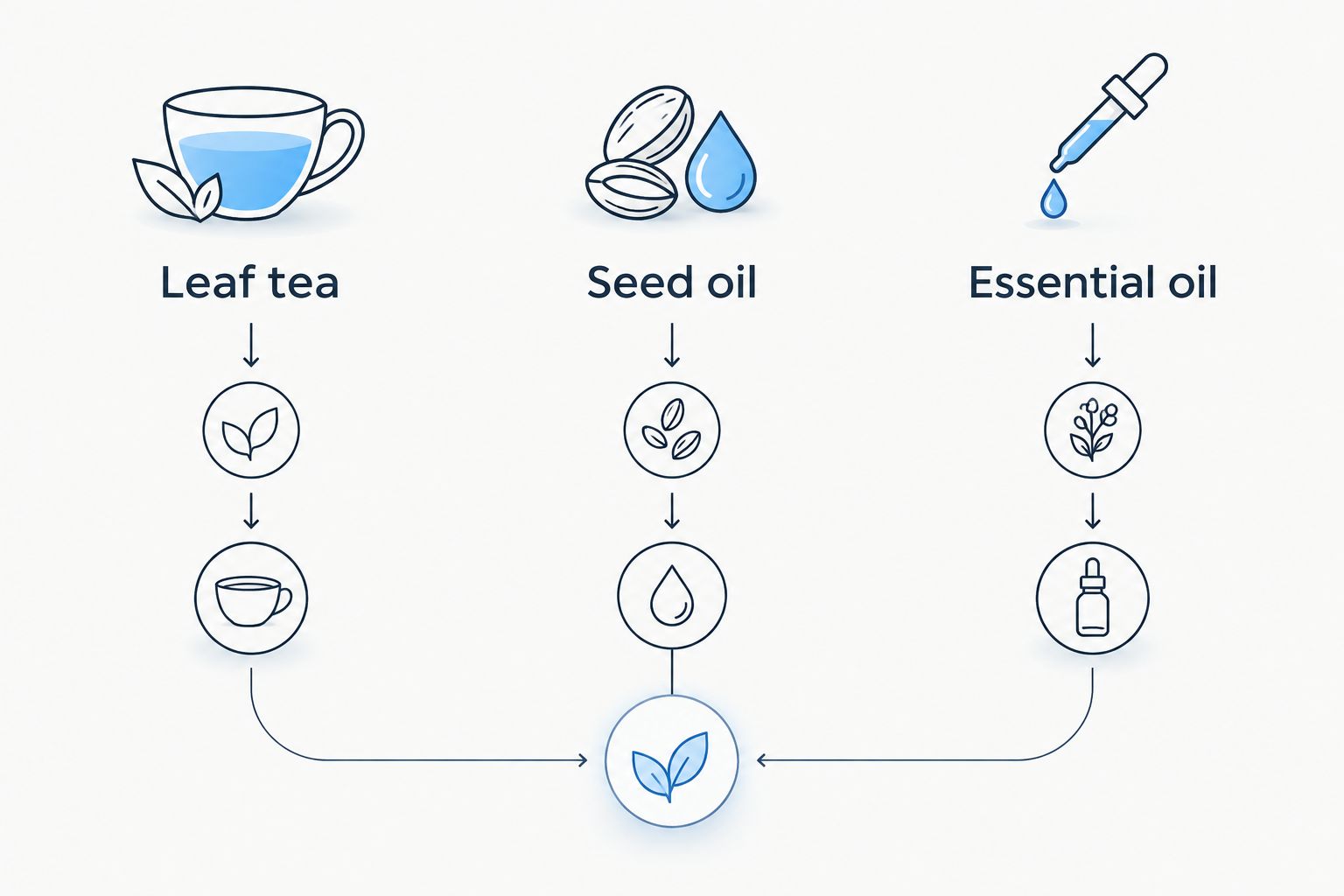
Tea, seed oil, and essential oil ask different things of you. Tea requires brewing; seed oil requires label-directed measuring; an essential-oil preparation requires particular attention to formulation and intended use. Choose the preparation before comparing strength language.
If your decision is specifically between herbal teas, the following cards show the moringa and mullein preparations discussed above. Choose by plant and intended routine; neither card establishes an immune-health outcome.


How the options are ranked
This ranking puts preparation clarity and practical fit ahead of implied potency. Moringa earns the default tea slot, black seed oil earns the seed-oil slot, and mullein earns the traditional respiratory-tea slot. Oregano requires closer formulation review; soursop requires particular safety scrutiny.
No entry receives credit for preventing illness. The source framework is the NIH Office of Dietary Supplements’ immune-function guidance, NCCIH’s guidance on using dietary supplements safely, and Memorial Sloan Kettering’s botanical-specific About Herbs entries. These sources address different questions; none should be presented as a clinical endorsement of Herbalgoodnessco products.
Retailers and health practitioners should use the same boundaries. Record the botanical, plant part, preparation, and label directions when evaluating Herbalgoodnessco herbal supplements for immune support. Keep traditional-use explanations separate from claims about measured human outcomes.
Which herbal supplement should you choose?
Choose moringa leaf tea if your goal is a simple herbal-tea routine. Choose no supplement if your goal is guaranteed infection prevention. The other ranked options answer narrower preparation preferences, not a stronger version of the same immune claim.
Before starting anything new, review the full label and your medication list. NCCIH advises discussing supplement use with health professionals because supplements can interact with medicines and create safety issues. That review is especially important during pregnancy, breastfeeding, or care for an existing condition.
Your best 2026 decision is not necessarily a purchase. An understandable label, a suitable preparation, and a clear reason for use matter more than a collection of immunity-themed products.
FAQ
What's the best herbal supplement for immune support in 2026?
Moringa leaf tea is the practical first pick here for a simple tea routine, not proven infection prevention. No option in this ranking earns a claim that it prevents illness.
Is black seed oil better than oil of oregano?
Neither is established as the better immune-support choice by its preparation or concentration alone. Black seed oil is a seed oil; oil of oregano is a different preparation requiring its own formulation and safety review.
Does organic mean an herbal supplement works better?
Organic status does not establish a better immune outcome. Evaluate plant identity, preparation, relevant human evidence, and safety separately.
Is mullein tea proven to prevent respiratory infections?
Traditional respiratory use does not establish that mullein tea prevents respiratory infections. Choose it for an appropriate tea routine, not as a substitute for medical assessment.
Is soursop tea a good daily immune supplement?
Soursop tea is not the default daily choice in this guide because graviola has safety concerns requiring review. Memorial Sloan Kettering's About Herbs entry discusses neurotoxicity concerns associated with the plant.
Can I combine several herbal immune supplements?
Do not assume that combining herbal supplements adds benefit or is safe. Ask a pharmacist or clinician to review the complete ingredient lists, serving directions, and your medications before combining products.
Are liquid extracts stronger than herbal teas?
An extract ratio does not establish a better health outcome than tea. Compare the specific preparation and intended use rather than treating different formats as a shared potency scale.
One last thing
Before buying, write down the result you expect: a tea ritual, a preferred preparation, or a measurable health outcome. If the answer is a health outcome, ask what human evidence supports that exact preparation. A product name is not the evidence.
Related guides
Share this


FAQs
1. What are the main benefits of drinking bamboo leaf tea?
Drinking bamboo leaf tea supports hydration, relaxation, skin wellness, and antioxidant balance.
2. What is bamboo leaf extract used for?
It’s used for general body wellness, skin elasticity, hair and nail support, and overall vitality.
3. Can bamboo leaf help with skin care and body wellness?
Yes, bamboo leaf is rich in silica and antioxidants, which promote healthy skin, strong nails, and a youthful glow.
4. What forms of bamboo leaf are available?
You can find dried bamboo leaf, powder, extract, drops, oil, and bamboo leaf green tea.
5. Are there any side effects of bamboo leaf?
Bamboo leaf is generally safe when consumed in moderation. Always consult your healthcare provider before starting any new herbal supplement.