Will Your Herbal Beauty Supplements Stain? Practical Guide to Color & Care

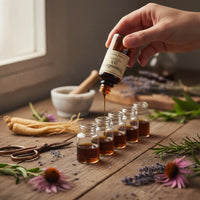
Herbal beauty supplements have become a staple for anyone seeking an inner-to-outer glow, thanks to vibrantly colored botanicals like hibiscus, turmeric, beet, and chlorophyll-rich greens. But with their rich hues comes a practical question: will your herbal beauty supplements stain? If you’ve ever noticed a persistent streak of color on your hands after mixing a mask or a faint tinge on your toothbrush, you’re not alone. This guide explores why certain herbal supplements can cause temporary stains, how different formats (powders vs. liquids) might affect messiness, and what you can do to minimize mishaps—so your path to botanical beauty stays colorful, not complicated.
Why Are Herbal Supplements So Colorful?
Plant-based beauty supplements are naturally rich in pigments that are cherished not just for their vibrant shades but for their potential wellness properties. The visual vibrancy of these botanicals can be traced to various plant compounds:
- Anthocyanins in Hibiscus: These compounds make hibiscus deep red or magenta, contributing a jewel-like tone to powders and teas.
- Curcumin in Turmeric: The vivid golden-yellow of turmeric comes from curcumin, a potent pigment that’s well-known for leaving marks.
- Betalains in Beet: Beet’s gorgeous fuchsia is due to betalains, which can tint everything they touch.
- Chlorophyll in Green Botanicals: Chlorophyll, which gives plants their green color, is notable for staining hands or containers with a deep green hue.
In nature, these pigments help plants thrive. In your supplement routine, they add a sensory delight—but can also lead to colorful surprises on skin, fabrics, and surfaces.
How and Where Herbal Supplements Can Cause Staining
1. Skin and Nails
Handling brightly colored herbal powders or mixes often results in temporary tinges on fingertips and under nails. Some plant pigments can linger, especially if powders are mixed with oils or water. While the color usually fades with washing, frequent exposure can make stains more noticeable.
2. Teeth and Mouth
Plant extracts in liquid or powder form (such as turmeric pastes or chlorophyll drops) may leave a transient tint on teeth or tongue right after use. This effect is more common with highly pigmented ingredients and may be more noticeable if supplements are consumed regularly.
3. Clothing and Fabrics
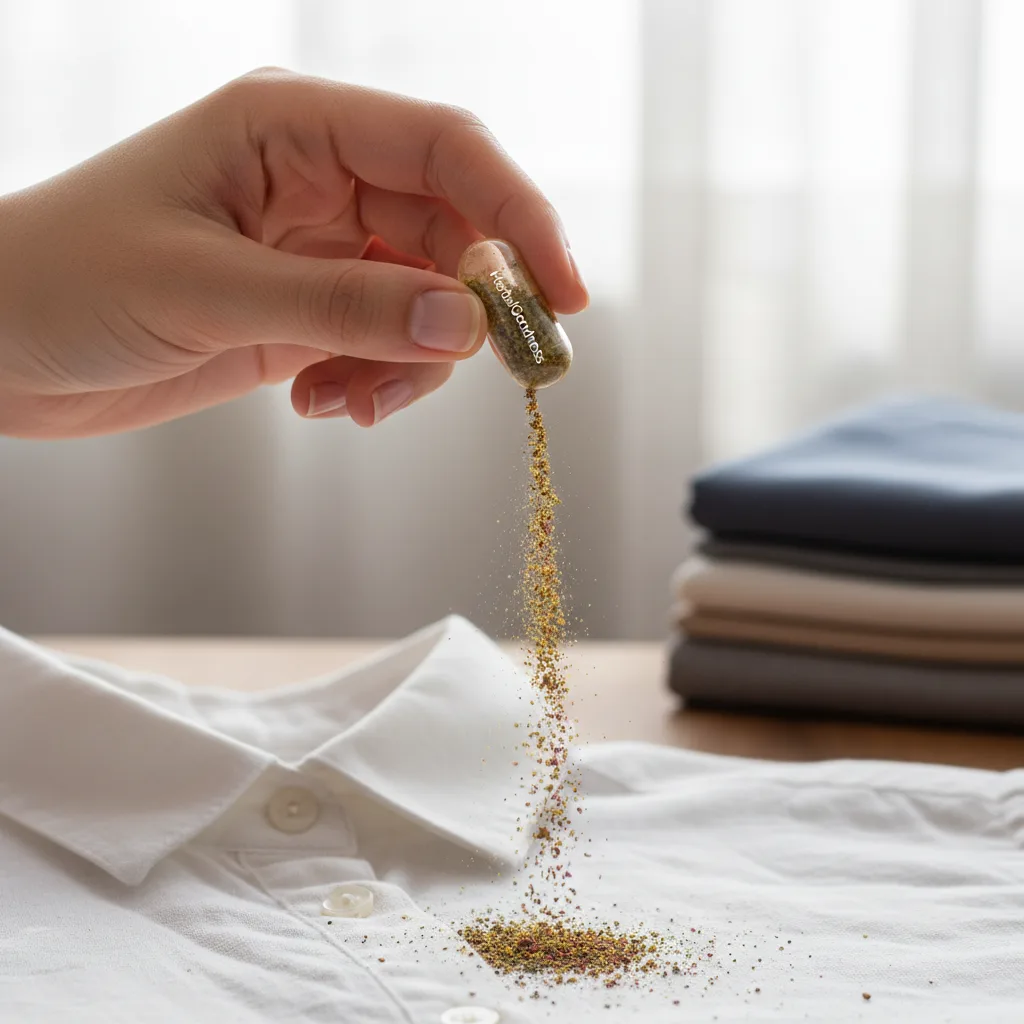
Preparing herbal masks or drinks in the kitchen or bathroom carries a risk of drops or dust. Powders like beet and turmeric are especially prone to causing bright stains on towels, shirts, and mats if not handled with care.
4. Kitchen and Bathroom Surfaces
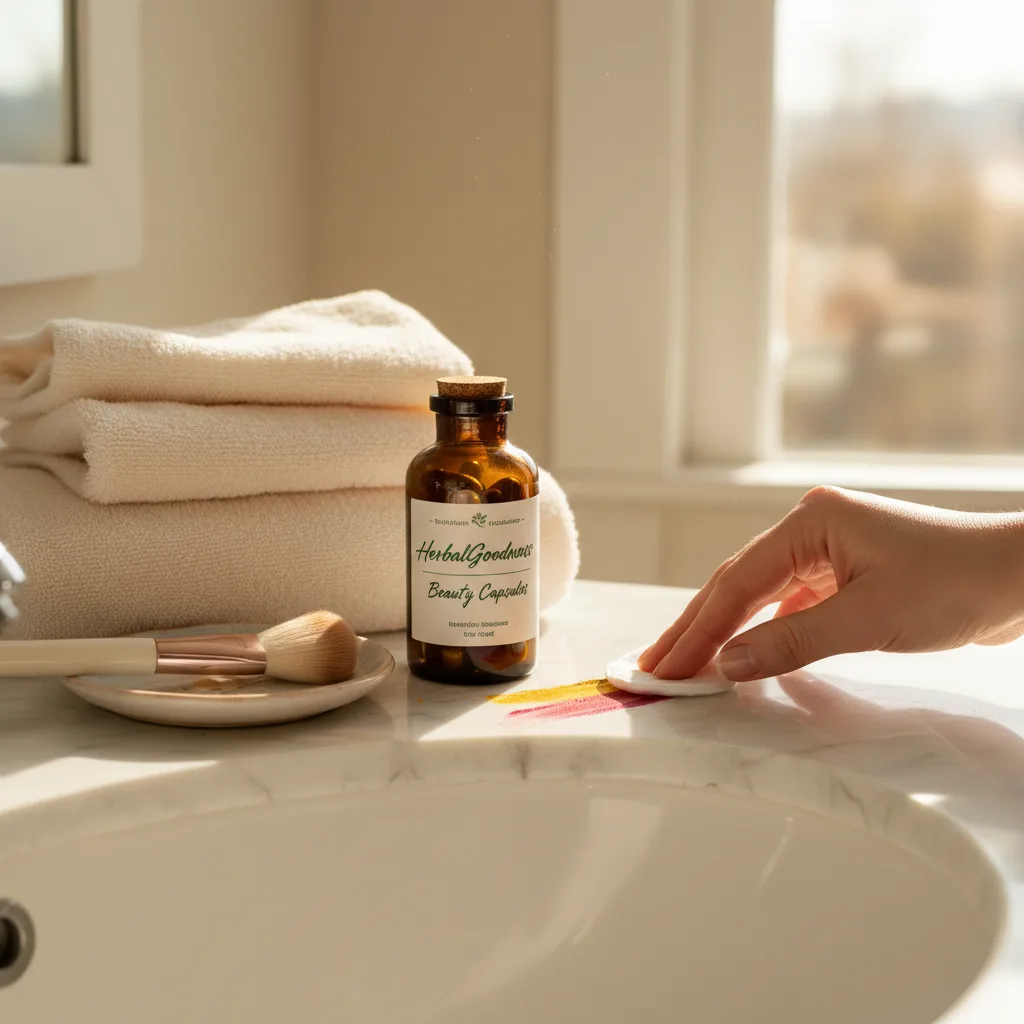
Lively botanicals can splash or leave a colorful residue on counters, sinks, or even plastic containers. While these stains are seldom permanent, certain surfaces (especially porous or light-colored ones) may need extra attention.
Powders vs. Liquids: Does Format Affect Staining Risk?
One practical decision when choosing herbal beauty supplements is the product format, as this can affect both potency and staining potential.
- Powders usually pack concentrated color. They are versatile for mixing into food, drinks, or beauty masks but can cling to surfaces and disperse easily in dust form.
- Liquids (such as tinctures or liquid extracts) are typically less messy in terms of airborne powder but can run, drip, or spatter. They may be more easily diluted, which helps with cleanup, but concentrated drops can leave noticeable traces.
Quick Comparison Chart: Powder vs. Liquid Staining Potential
- Powder: High risk when dry and when mixed, especially with water or oil. Tends to cling to grooves and fabrics.
- Liquid: Moderate to high risk depending on concentration; easier to wipe up but prone to dripping into cracks or around caps.
If you prefer the convenience of beauty-boosting capsules, products such as the Blood Platelet Plus - 60/600mg 20X Strength Capsule - Platelet Boost offer the benefits of botanicals without messy application, keeping stains to a minimum.
Choosing and Using Herbal Beauty Supplements: Practical Tips to Reduce Staining
You don’t have to sacrifice vibrant botanicals to keep your space spotless. Here are practical, non-technical tips to help minimize staining:
1. Format Selection: What Works for Your Routine?
If mess is a top concern, consider starting with premixed products or single-serve sachets. For self-mixed routines, powders can provide control over strength but require careful spooning and mixing to prevent powder clouds or spills. Diluting liquids in ample water before using can make any residue much less intense and easier to rinse away. For those who favor easy dosing and minimal clean-up, Beauty Builder Liquid Extract 15X – Skin Support & Collagen Wellness Formula offers vibrant botanicals in a liquid format that's less likely to stain your workspace when handled with care.
2. Prep and Workspace Setup
Cover surfaces with a dedicated towel or washable mat before preparing beauty drinks or masks. Mix in glass or high-quality stainless steel rather than porous plastic; glass resists staining and is easy to clean. Use dedicated utensils—spoons or cups reserved only for your botanical beauty routines.
3. Application and Use
Wear old clothing or an apron when handling deep-colored mixes (especially masks). Apply masks or scrubs over a sink or in the shower for easy splash cleanup. For oral liquids, rinse the mouth with plain water after use, and clean the dropper or cap thoroughly to prevent lingering color.
4. Cleanup Strategies
Clean up any drips, splashes, or dust immediately with cold water and gentle soap—catching stains quickly is the best prevention. For tough spots on sinks or counters, a bit of baking soda paste (gentle, non-abrasive) can help lift pigment. Launder stained fabrics promptly in cool water; avoid heat, which can set pigment.
5. Storage Tips: Keeping Things Clean and Contained
Store colored powders and liquids in airtight containers; this reduces spills and keeps surfaces tidy. Keep a designated tray or catch-all beneath supplement jars to contain stray dust or drips before they hit bathroom shelves.
If you're looking for versatility and rich nutrients, Sea Moss - Raw Dried from St Lucia - 8oz Bag - Nature's MultiVitamins can enliven both beauty routines and dietary rituals, though its natural pigments require the same mindful cleanup as other colorful botanicals.
Potency vs. Practicality: Weighing the Trade-Offs
While deeply pigmented botanicals can be more vibrant—and sometimes more concentrated—they also require a bit more attention for practical use. Some shoppers prioritize maximum strength, accepting a higher chance of staining in exchange for robust color and rich plant content. Others prefer a less intense, pre-diluted product for tidier daily use. Consider your priorities:
- Maximum Potency: Go for powders or concentrated liquids, but set up your workspace thoughtfully to manage potential stains.
- Convenience: Pre-mixed supplements, capsules, or single-serve options offer less hands-on pigment but greatly simplify the cleanup equation. Blood Platelet with Papaya Leaf - Organic 15X Liquid Extract - Platelet & Bone Marrow demonstrates how liquid extracts capture the vibrancy of botanicals in a controlled dose, reducing unwanted color outside your routine.

Natural Fading and Cosmetic Impact: What to Expect
Most color left behind by herbal supplements is temporary, especially when it comes to skin, nails, and even teeth. Plant pigments generally fade with gentle cleansing and routine care. Fabrics and porous surfaces may require a bit of extra effort, but few stains are truly permanent with prompt attention. Embracing the vibrant beauty of herbal supplements is a matter of balancing the joy of color with practical self-care routines.
Caring for Tools and Storage Containers
- Utensils: Rinse spoons, bowls, and droppers immediately in cool water to prevent pigment from clinging.
- Containers: Glass and stainless steel resist stains; if plastic does discolor, soak overnight in diluted white vinegar before washing.
- Caps and Lids: Wipe after every use to keep sticky drops from accumulating colored rings.
If you want to reinforce your herbal beauty ritual while supporting broad well-being, consider Papaya Leaf Extract 16oz – Organic 15X Liquid Papaya Leaf Herbal Supplement, which offers nutrient-rich support in a user-friendly liquid format that helps minimize staining risk.
Summary: Simple Rituals for Enjoyable Use
Color is part of the magic of herbal beauty supplements. With a few mindful habits, you can avoid stubborn stains and enjoy your botanical rituals fully. Setting up a thoughtful area for preparation, choosing formats that suit your lifestyle, and cleaning tools promptly will keep your colorful journey low-mess and high-joy. Embrace the vivid hues of nature—just with a bit of foresight, so stains don’t come between you and your glow.
FAQs:
- Which herbal beauty supplements are most likely to cause stains?
Supplements featuring deeply pigmented botanicals, such as turmeric (golden yellow), hibiscus (magenta-red), beet root (fuchsia-red), and chlorophyll-rich herbs (deep green) are most likely to cause temporary stains on skin, surfaces, and fabrics.
- Are powder or liquid herbal supplements more prone to staining?
Both formats can stain, but powders tend to create more dust and residue, increasing the risk, especially when dry or mixed. Liquids are less likely to spread pigment but may drip or spatter if not handled carefully.
- How can I prevent staining when using these supplements?
Prep your workspace with towels or mats, use glass or stainless steel containers, wear old clothing, clean spills promptly, and dilute liquids before use. Dedicated utensils and prompt washing help keep things tidy.
- Do stains from herbal supplements on skin or teeth last long?
Most color on skin, nails, or teeth is temporary and fades with normal washing or oral rinsing. Persistent stains may occur with frequent use, but regular cleaning usually resolves them over time.
- Is there a way to clean containers stained by herbal pigments?
Glass and stainless steel resist staining best. For plastic, soak overnight in diluted white vinegar before washing with soap. Baking soda paste can also help remove surface pigment from utensils and containers.
- Do capsules or pre-mixed options stain less?
Capsules and pre-mixed products usually have less direct contact with skin and surfaces, making staining less likely compared to loose powders or concentrated liquid formats.
- Why do some supplement stains linger on towels or fabrics?
Plant pigments can absorb readily into porous fabrics. Prompt laundering in cold water and avoiding heat can usually lift these stains, but deeper colors may need gentle stain removers or multiple washes.
Author Name:
Herbal Goodness Editorial Team
Author Bio:
The Herbal Goodness Editorial Team specializes in holistic health and superfoods, blending science and nature to educate and empower our community.
References:
Debunking Olive Leaf Extract: Fact-Checking Claims with Scientific Research
Which Organ Is Guava Good For? Traditional Uses, Research Insights, and Safety Tips
Papaya Leaf Tea Benefits for Men: Traditions, Practical Use, and Safety Tips
What is the Downside of Soursop? An Evidence-Aware Safety Primer
Herbal Tea vs Green Tea: A Friendly Guide to Origins, Caffeine, Flavor & Sipping
What Cannot Be Mixed With Ashwagandha? A Practical Guide for Safe Pairings
Hibiscus Tea and Kidney Health: What Scientific Research Truly Examines
Is Mullein FDA Approved? Understanding What That Means for Consumers
Demystifying 'Highest Thymoquinone' Claims in Black Seed Oil Capsules