





Wholesale Papaya Leaf Extract: Traceability Guide for Buyers

Securing a wholesale source for papaya leaf extract means more than finding a good price—it means building a trustworthy foundation for your brand, your store, or even your personal use. Today’s buyers are increasingly savvy, asking where ingredients come from, how they’re processed, and whether sustainability and ethics played a part. If you’re new to papaya leaf extract sourcing, the journey from raw material to reliable finished product can feel daunting. This guide is designed to help you understand which traceability details to ask for, how to verify supplier claims, and ways you can communicate an authentic story of provenance and transparency to your customers—without promising outcomes or making unsupported claims.
Understanding Traceability in Wholesale Papaya Leaf Extract
Traceability means being able to follow the entire journey of your papaya leaf extract, from the fields where papaya leaves are harvested to the final extract that arrives at your doorstep. In the world of bulk purchasing, especially for ingredients like Organic Papaya Leaf Extract 16oz | 15X Liquid – Best Value Size, knowing the supply chain isn’t just nice—it’s essential for responsible business and brand credibility.
Transparent traceability helps you:
- Build customer trust
- Highlight sustainability and ethical sourcing
- Ensure product quality and origin
- Support clear, non-medical communication
For small businesses, retailers, and discerning buyers, understanding traceability is the first step in turning a wholesale ingredient into a story customers appreciate.
Key Traceability Information to Request from Papaya Leaf Extract Suppliers
Asking the right questions is crucial when sourcing wholesale papaya leaf extract. Here are core elements to include in your traceability checklist:
1. Geographic Origin
- What region or country do the papaya leaves come from?
- Was the sourcing location a particular farm, cooperative, or wild-harvested area?
- How is the harvesting location documented?
Understanding the geographic origin lends credibility and helps ensure ethical, sustainable farming practices. Knowing your supplier’s location can also inform customers about cultural and environmental factors influencing harvest quality.
2. Harvest Date and Seasonal Considerations
- When were the papaya leaves harvested?
- Are harvests done seasonally, or is there a year-round supply?
- Is the harvest timeline traceable back to specific batches?
These questions connect your product to a specific time and place, making your story richer—and giving you confidence in ingredient freshness. For buyers focused on quality, it’s worth noting how reputable suppliers like those offering Papaya Leaf Extract Capsules 600mg | 10X Strength – Platelet Support demonstrate traceability with detailed documentation.
3. Processing Details
- What techniques are used to turn raw papaya leaves into extract (e.g., water extraction, solvent-free methods)?
- Where does processing occur (on-site near the farm, or in a regulated facility)?
- What quality or cleanliness standards are upheld during processing?
Clear answers help you communicate responsible practices and support quality claims, without making unsupported medical statements. If you are considering finished products, look for those that transparently share how their papaya leaf is handled, such as the Blood Platelet Support with Papaya Leaf | Organic 15X Liquid Extract, which highlights advanced techniques for quality assurance.
4. Certificates of Analysis (COA) and Lab Testing
- Can your supplier provide a Certificate of Analysis for each batch?
- Are lab tests conducted by independent, third-party labs?
- Which compounds are quantified (e.g., phytonutrients, antioxidants), and are any unwanted substances checked for?
A COA is your verification document—think of it as the evidence behind every quality and safety claim. Reliable suppliers should provide recent, batch-specific COAs.
5. Sourcing Certifications and Standards
- Does the supplier hold certifications such as organic, fair trade, kosher, non-GMO, or others?
- Are any sustainability or regenerative agriculture principles followed?
- Is the brand transparent about their certification process and documentation?
Certifications signal a commitment to third-party oversight and add another layer of trust. Products like Organic Papaya Leaf Tea | 24 Premium Bags – Caffeine-Free especially benefit from such credentials when attracting health-conscious consumers.
Simple Verification Steps for Buyers and Small Brands
Knowing what information to ask for is step one. Verifying your supplier’s answers is next. Even if you’re new to wholesale, these verification steps can help you feel confident:
Review COAs and Batch Numbers
A valid COA should match your specific batch or lot number. Check that the COA is recent (aligned with your order), lists quantifiable markers, and displays the name/contact of the lab. Suppliers of Blood Platelet Plus Capsules 20X | 60ct – Advanced Platelet Formula often provide this documentation to enhance buyer confidence and product transparency.
Confirm Certification Validity
Independently verify certification numbers and validity dates with the certifying body, whether it’s USDA Organic, Non-GMO Project, or another standard. Most certifiers offer online search tools to cross-check vendor status.
Ask for Farm or Production Photos
Request recent, high-quality photos of the fields, indigenous workers, and processing facilities. Many transparent suppliers are eager to share visuals as part of their authenticity and pride.
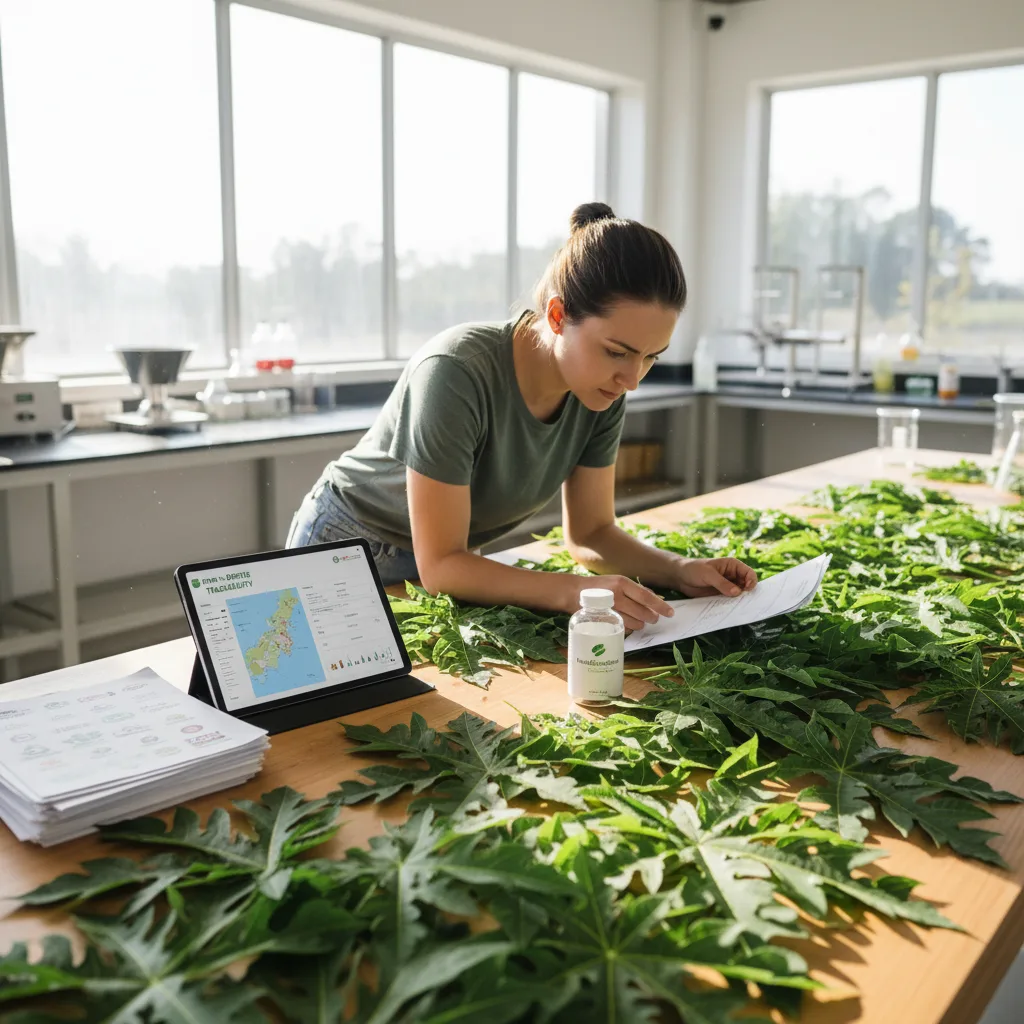
Check Documentation and Chain of Custody
Traceability should involve paperwork that connects each stage: harvesting logs, transport documents, batch processing records, and documentation supporting claims like “sustainably grown.” Such records not only protect your business but strengthen the narrative for end customers.
Conduct Simple Background Research
Look up supplier business registration, local reputation in producing regions, and any available trade or government references. This is especially helpful for lesser-known origins and smaller suppliers. When evaluating wholesale options, notice if the supplier offers documentation as transparently as Organic Papaya Leaf Extract 1oz | 15X Liquid – Trial & Travel Size, which provides clear batch details and sustainability notes.
Communicating Traceability and Provenance to Your Customers
Transparency is a story that builds trust over time. When you share what you learn about your papaya leaf extract’s journey, you give your customers a sense of connection. Here’s how to communicate provenance and traceability clearly and effectively—without overstepping into medical or treatment claims:
Tell the Ingredient’s Journey—Not Just Its Destination
Share the papaya leaf’s path from farm to finished extract, focusing on:
- Location and community stories ("Sourced from family-run farms in [region]")
- The harvesting process ("Leaves are hand-selected at peak season for quality")
- Processing techniques ("Extracted close to the source for maximum freshness")
- Documentation support ("Every batch is supported by a Certificate of Analysis")

Highlight Values: Sustainability, Ethics, and Quality
Speak about any organic, regenerative, or fair trade practices your supplier follows.
Examples:
- “From farms committed to earth-friendly growing methods.”
- “Harvested by partners who value fair labor and local empowerment.”
- “Rigorous batch testing and third-party quality checks.”
Those using Papaya Leaf Extract Capsules 600mg | 10X Strength – Platelet Support or similar can leverage these values to enrich brand messaging and customer loyalty while remaining compliant.
Avoid Unsupported Health Claims
Focus on the story, the people, and the journey—let customers know why you prioritized these elements, instead of making claims about what papaya leaf extract can do for health.
Use Simple, Understandable Language
Down-to-earth phrasing resonates most:
- Instead of: “This extract boosts your immune system.”
- Try: “Sourced with care, with a traceable journey you can feel confident sharing.”
Offer Documentation on Request
Let customers know that you have documentation to support your provenance and sustainability statements.
- “We’re happy to share batch-specific lab reports or sourcing certifications—just ask!”
For those seeking more variety, products like Organic Papaya Leaf Tea | 24 Premium Bags – Caffeine-Free give transparency-focused consumers additional options.

Building Trust as a Small Brand or Retailer
For small businesses and retailers, investing time in traceability adds significant value—it’s a story customers remember. Even without fancy marketing, simply offering genuine answers builds a lasting relationship.
- Engage customers with real stories—share a short video from your supplier or post photos of the harvesting team.
- Emphasize progress, not perfection. Transparency is a journey. It’s okay to be on the path, even if every certification isn’t yet in hand.
- Celebrate small wins—such as switching to a new, more transparent supplier, or sharing updated sustainability commitments with your buyers.
When you stock Blood Platelet Support with Papaya Leaf | Organic 15X Liquid Extract, you demonstrate commitment to these high standards. This consistent transparency sets you apart as an ethical retailer.
Setting an Example for Ethical Sourcing
Your commitment to verifying traceability and telling the real story behind your papaya leaf extract can inspire your customers to think more deeply about their choices. It also helps create higher standards throughout the herbal ingredient industry. Each step—from requesting basic harvesting information to displaying third-party certifications—sends a powerful message: trust is built on openness and shared values.
As you embark on your wholesale sourcing journey, remember that authenticity and clarity outweigh complicated claims. Asking for more information, doing your homework, and sharing what you learn allows your customers to feel respected and assured. In a world full of shortcuts, your clarity stands out.
Frequently Asked Questions
Question 1: What is the most important traceability document to request from a papaya leaf extract supplier?
Answer: A Certificate of Analysis (COA) is the most important document. Reliable suppliers of products like Organic Papaya Leaf Extract 16oz | 15X Liquid – Best Value Size provide batch-specific COAs covering authenticity and quality.
Question 2: How do I check if my supplier's organic certification is valid?
Answer: You can independently verify organic certification numbers by checking directly with the certifying body's website. Most sellers of Organic Papaya Leaf Tea | 24 Premium Bags – Caffeine-Free offer certification details for easy confirmation.
Question 3: What processing methods should I look for in quality papaya leaf extract?
Answer: Seek out water extraction and solvent-free methods, with processing performed in regulated facilities. Products such as Blood Platelet Support with Papaya Leaf | Organic 15X Liquid Extract clearly communicate these quality measures.
Question 4: How can I use documentation to build customer trust?
Answer: Sharing traceability stories, photos of sourcing, and offering lab reports for products such as Papaya Leaf Extract Capsules 600mg | 10X Strength – Platelet Support can significantly enhance transparency and customer trust.
Question 5: Can traceability help smaller retailers gain an edge in the market?
Answer: Absolutely. Offering products with detailed sourcing information, like Organic Papaya Leaf Extract 1oz | 15X Liquid – Trial & Travel Size, highlights your commitment to transparency—a key factor for today's buyers.
Question 6: Do all papaya leaf extract products provide the same level of batch transparency?
Answer: Not always. Look for brands that go beyond the basics, offering detailed documents and batch info similar to Blood Platelet Plus Capsules 20X | 60ct – Advanced Platelet Formula.
Ready to prioritize transparency and traceability in your papaya leaf extract sourcing? Start applying these steps today and share your sourcing story to build lasting trust with your customers.
About the Author
Herbal Goodness Editorial Team
The Herbal Goodness Editorial Team specializes in holistic health and superfoods, blending science and nature to educate and empower our community.
References
How to Spot Quality Hormone Balance Herbal Supplements
How to Talk to Your Child’s Clinician About Herbal Supplements
How to Use 15X Cat’s Claw Extract: Flavor, Dilution & Everyday Uses
Lion's Mane Mushroom: The Natural Nootropic for Cognitive Function, Focus & Brain Health
Lion’s Mane & Cognitive Function: What Research Really Says About Benefits
Share this
Popular posts


FAQs
1. What are the main benefits of drinking bamboo leaf tea?
Drinking bamboo leaf tea supports hydration, relaxation, skin wellness, and antioxidant balance.
2. What is bamboo leaf extract used for?
It’s used for general body wellness, skin elasticity, hair and nail support, and overall vitality.
3. Can bamboo leaf help with skin care and body wellness?
Yes, bamboo leaf is rich in silica and antioxidants, which promote healthy skin, strong nails, and a youthful glow.
4. What forms of bamboo leaf are available?
You can find dried bamboo leaf, powder, extract, drops, oil, and bamboo leaf green tea.
5. Are there any side effects of bamboo leaf?
Bamboo leaf is generally safe when consumed in moderation. Always consult your healthcare provider before starting any new herbal supplement.