Fermented Lion’s Mane Extracts: How Fermentation Impacts Flavor, Stability & Labels

Lion’s Mane mushroom liquid extracts are gaining traction among wellness seekers who love exploring natural ingredients. As you browse products online or in stores, you might notice that some Lion’s Mane liquid extracts are labeled as "fermented." But what does fermentation actually do to these extracts, how does it affect flavor, preservation, and labels, and what sensory details set them apart?
Whether you’re hoping to buy a premium Lion’s Mane tincture or simply want to better understand the ingredients list before you order, this guide is designed to help you make discoveries with confidence—no hype, no heavy science, and no medical claims.
Why Are Some Lion’s Mane Liquid Extracts Fermented?
Fermentation is a time-honored process that uses beneficial microorganisms—such as yeasts, molds, or bacteria—to break down natural compounds. When it comes to Lion’s Mane liquid extracts, fermentation is typically used to:
- Modify flavor and aroma by changing how compounds express themselves.
- Influence preservation, potentially giving extracts a longer shelf life.
- Transform or release certain mushroom components through enzymatic processes.
Producers might choose to ferment for any combination of tradition, taste, or to highlight special qualities of their extracts.
How Fermentation Alters the Flavor Profile of Lion’s Mane Extracts
What to Expect From the Taste and Aroma
If you’re new to the world of Lion’s Mane, it’s helpful to know that this mushroom’s natural flavor is often described as mild, earthy, or even reminiscent of seafood. Fermentation can add new dimensions, such as:
- Tanginess or sour notes reminiscent of cultured foods like kombucha or sauerkraut.
- Earthier undertones that feel richer or more complex than non-fermented extracts.
- Gentle effervescence or a subtle zing—especially in alcohol or water-based fermented formats.
No two brands’ extracts are exactly alike! Much depends on the technique, starter culture, and the liquid base (alcohol, glycerin, or water) used. Some consumers who shop for Lion’s Mane extracts specifically seek out this tangy, developed flavor, while others may prefer the milder, unfermented versions.
Sensory Exploration: Tasting and Journaling Tips
Tasting different Lion’s Mane liquid extracts is a fun way to develop your palate and discern subtleties. Here’s how you might go about it:
- Gather different formats: Try a fermented Lion’s Mane extract (alcohol, glycerin, or water-based) alongside a non-fermented product.
- Prepare a journal: Use a blank notebook to track your impressions. Note aroma, color, texture, and the sensation on your palate.
- Taste mindfully: Place a drop on your tongue or dilute in a neutral liquid. Pause to sense the aftertaste and mouthfeel.
- Describe the differences: Is one brighter in flavor? More mellow or lively? Does the aroma bring to mind fresh bread, citrus, or earth?
This discovery approach can help you determine which format resonates with your preferences before you buy a larger bottle or shop for other mushroom extracts.
Preservation: How Fermentation Influences Shelf Life and Storage
Fermented foods and extracts are traditionally valued for their ability to last longer without refrigeration. With Lion’s Mane extracts, the role of fermentation in preservation can depend on several factors:
-
Alcohol-based fermented extracts: Alcohol is itself a powerful preservative, and fermentation can further stabilize the product. These often have longer shelf lives and are easy to store at room temperature, making them a popular choice for those who want to order once and keep their Lion’s Mane on-hand.
-
Glycerin-based fermented extracts: Glycerin draws moisture and can help retain freshness. Fermentation may add a mild preservative effect, but glycerin-based extracts sometimes do best when stored in a cool, dark cupboard after opening.
-
Water-based fermented extracts: Water-based extracts require careful fermentation and bottling to maintain quality. Some producers use additional natural preservatives; check the label for details. If you shop for these, always follow storage instructions for best results.
That said, fermentation doesn’t make a product invincible to spoilage. Always look for best-by dates, batch numbers, and storage guidelines on the label when you buy premium Lion’s Mane products.
Product Label Language and Processing Clues
When comparing Lion’s Mane liquid extracts, reading labels carefully can help you spot fermented options and understand how each is processed.
Common Label Terms Indicating Fermentation
- “Fermented”: This should appear on the front or back panel, sometimes with details about the culture or method.
- “Cultured” or “with active cultures”: These words often describe a living or live-culture product.
- “Raw” or “traditionally prepared”: Sometimes used for fermented products, but always check the ingredient list for clarity.
- “Contains live cultures”: Indicates unpasteurized fermentation where microbiome might still be active.
Ingredient List and Base Liquid Clues
Check for these when comparing Lion’s Mane extracts for sale:
- The presence of starter cultures such as Saccharomyces, Lactobacillus, or other named microbiomes.
- Clearly stated liquid base: alcohol, glycerin, or water.
- Additional natural flavors, preservatives, or stabilizers, which may suggest either a focus on preservation or flavor enhancement.
Batch Details and Transparency
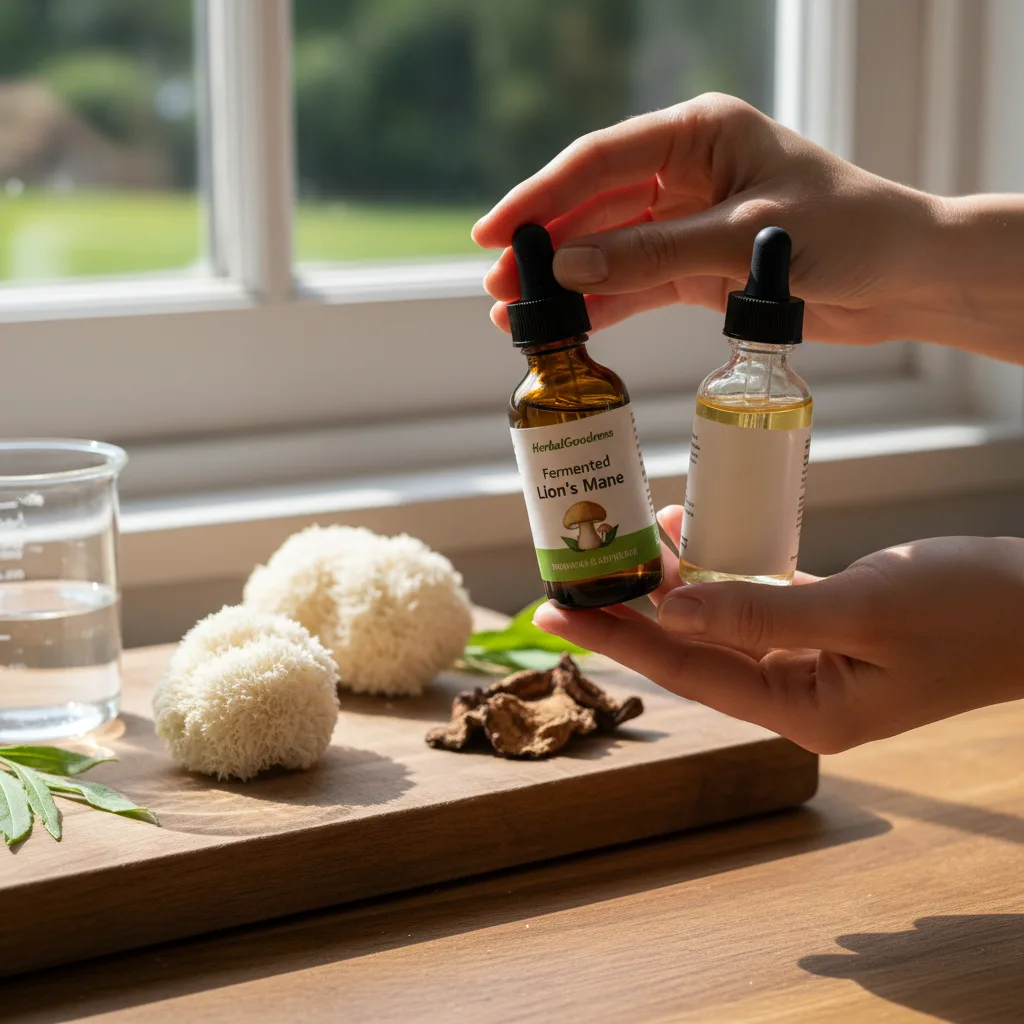
High-quality, organic-focused makers—like Herbal Goodness—often provide:
- Specific batch numbers
- Bottling dates
- Notes on traditional fermentation techniques
These details can inspire added confidence when you shop for the best Lion’s Mane extracts, especially if you value traceability and natural production methods.
Comparing Alcohol, Glycerin, and Water-Based Fermented Lion’s Mane Extracts
Alcohol-Based Fermented Extracts
These are usually the most concentrated and shelf-stable. Alcohol not only helps extract mushroom compounds, but when paired with fermentation, it can further round out and intensify flavors. Lion’s Mane alcohol extracts are favored by shoppers who want a product they can buy and use over months with minimal flavor change or spoilage.
Glycerin-Based Fermented Extracts
Glycerin extracts are often sweeter and more suitable for those seeking an alcohol-free option. Fermentation can moderate the sweetness, adding complexity and a mellow tang. If you order Lion’s Mane tincture for its gentler taste, try both fermented and non-fermented versions to compare subtle shifts in palate.
Water-Based Fermented Extracts
These can be the lightest in both flavor and mouthfeel. However, because water doesn’t preserve as well as alcohol or glycerin, fermentation must be carefully monitored. Look for products labeled as premium or organic, as these are more likely to offer careful batch processing and transparent information.

How to Sensibly Shop for and Buy Fermented Lion’s Mane Extracts
Shopping for Lion’s Mane extracts—especially if you want a fermented option—can be simplified by following a few steps:
- Read every label closely: Look for clues about fermentation, base liquid, and processing methods.
- Consider your taste preferences: Do you want a bright, tangy flavor, or a milder extract? Is shelf stability crucial for how you plan to use and store it?
- Look for transparency: Choose brands that provide detailed ingredient lists, batch details, and clear storage guidance. This often signals care in production.
- Start small: Buy sample sizes or shop for smaller bottles from reputable sources until you find your preferred format.

Simple Sensory Journaling Exercises for Curious Beginners
If you enjoy exploring food and beverage nuances, try this approach:
- Create a taste grid for aroma (earthy, sweet, tangy, bread-like), flavor (mild, bold, sour, rich), and texture (silky, watery, viscous).
- Note reactions over time: Some flavors change subtly after opening or storing. Jot down differences each week.
- Compare with friends: Small group tastings can make the sensory journey fun and educational.
Through gentle observation and mindful journaling, you can discover which Lion’s Mane extract format best fits your routine—before you make your next purchase or explore multi-mushroom blends.
Final Thoughts: Exploring Without Hype or Pressure
Fermented Lion’s Mane liquid extracts offer a unique sensory experience and may provide practical shelf advantages, but they’re not a one-size-fits-all solution. By understanding how fermentation impacts flavor, preservation, and label language, you’re better equipped to shop mindfully. Whether you prefer alcohol, glycerin, or water-based extracts, your sensory journey can be as rewarding as your wellness goals.
FAQs:
- What does fermentation do to Lion’s Mane liquid extract flavor?
Fermentation often adds tang, complexity, and earthiness to Lion’s Mane extracts. Expect bolder aromas and a subtle zing in fermented formats compared to mild, non-fermented options.
- How does fermentation affect the shelf life of Lion’s Mane extracts?
Fermentation can boost shelf stability, especially in alcohol-based Lion’s Mane extracts. Always check product labels for best-by dates and storage recommendations before you buy or order.
- Which label terms indicate a Lion’s Mane extract is fermented?
Look for terms like “fermented,” “cultured,” “with live cultures,” or specific microbe names in the ingredient list when you shop for fermented Lion’s Mane extracts.
- Should I buy alcohol, glycerin, or water-based fermented Lion’s Mane?
Each has unique qualities: alcohol extracts are strongest and last longest; glycerin is sweeter with a gentle tang; water-based extracts are lighter but may require more careful storage. Try sample sizes before buying large bottles.
- Are there tips for tasting different Lion’s Mane extracts at home?
Yes! Use a journal to note aroma, flavor, texture, and aftertaste. Compare formats, record personal preferences, and revisit samples over time to see how flavors evolve.
- What processing details should I look for when shopping premium Lion’s Mane extracts?
Check for clear fermentation info, base liquid type, batch numbers, and comprehensive ingredient lists. Transparent labeling is a sign of quality and care.
- Do all fermented Lion’s Mane extracts taste the same?
No. Each batch and brand can vary in tang, richness, and subtle notes depending on the fermentation method and base. Sensory journaling helps you discover your favorite.
Author Name:
Herbal Goodness Editorial Team
Author Bio:
The Herbal Goodness Editorial Team specializes in holistic health and superfoods, blending science and nature to educate and empower our community.
References:
Introducing Graviola to Young Taste Buds: Fun, Family-Friendly Flavor Exploration
Graviola in the Classroom and at Home: Creative Activities to Teach Kids About Tropical Plants