





Is ginseng safe to take every day?

Daily Asian ginseng appears safe for many adults for up to 6 months at recommended amounts, but that does not establish safety for everyone or for indefinite use. Medication interactions, trouble sleeping, pregnancy, and certain health conditions change the answer. In 2026, the practical choice is to identify the exact plant and preparation, then review your medicines and intended duration with a pharmacist or clinician before making ginseng a daily habit.
- Is ginseng safe daily? NCCIH supports short-term Asian ginseng safety for most adults, not unrestricted long-term use.
- Asian ginseng, American ginseng, and Siberian ginseng are not interchangeable plants.
- Review ginseng supplements with a pharmacist if you take prescription medicines, especially medicines affecting blood sugar or clotting.
- Herbalgoodnessco sells herbal supplements; supplement shopping does not replace an individualized safety review.
Why this matters
A daily routine turns occasional exposure into repeated exposure. That makes the exact ingredient, serving instructions, other medicines, and changes in sleep more important than the word natural on the bottle.
Before comparing ginseng supplements, separate two questions: whether a product matches your goal and whether that specific preparation fits your health situation. A well-described product can still be the wrong choice for someone taking an interacting medicine.
This 2026 guide draws on the National Center for Complementary and Integrative Health's Asian Ginseng fact sheet and the National Library of Medicine's MedlinePlus supplement information. These sources address Asian ginseng safety and interactions; they do not establish that every product sold as ginseng has the same effects.
Is ginseng safe to take every day?
Short-term daily use is not the same as proven long-term safety. NCCIH states that oral Asian ginseng, used for up to 6 months in recommended amounts, appears safe for most people. NCCIH also identifies uncertainty about long-term safety and lists insomnia as its most common side effect.
That finding has boundaries. It is not a universal dosing instruction, a guarantee for people taking medicines, or permission to continue indefinitely without review.
| Situation | What the evidence means | Your next move |
|---|---|---|
| Adult considering short-term Asian ginseng use | NCCIH describes apparent safety for most people at recommended amounts | Check the actual label and review personal risk factors |
| Daily use extending beyond 6 months | Short-term reassurance does not establish longer-term safety | Reassess with a clinician rather than automatically renewing |
| Prescription medicine use | Ginseng has potential medication interactions | Ask a pharmacist to review the complete supplement label |
| Pregnancy, breastfeeding, or use by children | Adult short-term findings do not establish safety for these groups | Do not self-start a daily routine |
| New insomnia or other symptoms | Tolerability needs reassessment | Stop the supplement and seek appropriate advice |
For your 2026 decision, use the evidence window as a boundary on what is known—not as a target you need to reach. There is no requirement to keep taking ginseng if you cannot identify a meaningful reason to continue.
Asian ginseng: check the preparation, not just the name
Asian ginseng is Panax ginseng. Korean ginseng is another common name, while red and white ginseng refer to different processing methods applied to the plant.
NCCIH describes research on Asian ginseng for several uses, including fatigue and cognitive function, but findings do not support a blanket promise of better energy, focus, or immunity. Traditional use explains why people choose the plant; it does not establish a guaranteed benefit or daily safety for a particular person.
The practical advantage of a clearly identified, single-ingredient preparation is that you can tell what you are taking. The limitation remains important: a clear label does not remove side effects or interactions.
Best for label clarity: a preparation that states Panax ginseng, the plant part, the serving amount, and any extract standardization. That is a shopping criterion, not a recommendation that everyone should take it.
American and Siberian ginseng: different plants, different decisions
American ginseng is Panax quinquefolius. Siberian ginseng is Eleutherococcus senticosus, also called eleuthero, and is not a Panax species. Do not transfer an Asian ginseng safety statement to either plant simply because the common names overlap.
| Label name | Botanical identity | Useful distinction | Main limitation |
|---|---|---|---|
| Asian or Korean ginseng | Panax ginseng | Matches the plant discussed in NCCIH's Asian Ginseng fact sheet | Findings still depend on preparation and personal circumstances |
| American ginseng | Panax quinquefolius | Identifies a different Panax species | Requires its own evidence and interaction review |
| Siberian ginseng or eleuthero | Eleutherococcus senticosus | Identifies a plant outside the Panax genus | Asian ginseng findings cannot establish its safety |
Red versus white ginseng adds another distinction within Asian ginseng. Processing changes the preparation, so compare more than the front-label name when deciding whether research applies to a bottle.
If the label says only ginseng blend, ask for the species and amount of each ingredient. Without that information, neither you nor your pharmacist can make a precise comparison with published research.
Why daily ginseng safety varies
The important differences are identifiable. Use these factors to decide what needs checking before you start:
- Plant identity: Asian ginseng, American ginseng, and eleuthero need separate assessments.
- Preparation and amount: root powder, tea, and extracts are not automatically equivalent servings.
- Duration: evidence covering up to 6 months does not establish indefinite safety.
- Medication use: blood sugar medicines, anticoagulants, and other prescriptions warrant an interaction review.
- Health and life stage: pregnancy, breastfeeding, childhood, and autoimmune conditions change the safety discussion.
- Your response: insomnia or another new symptom is a reason to reassess, not increase the amount.
NCCIH notes that Asian ginseng can lower blood sugar, interfere with blood clotting, and worsen autoimmune disorders. These are reasons to seek individualized advice, not predictions that every user will experience a problem.
An organic claim does not answer any of those interaction questions. Organic certification concerns production standards; it does not establish that an herb is appropriate alongside your prescriptions.
How do you check a ginseng label before daily use?
Bring the actual label to the medication review. A product name alone leaves out the information needed to compare preparations and assess a multi-ingredient formula.
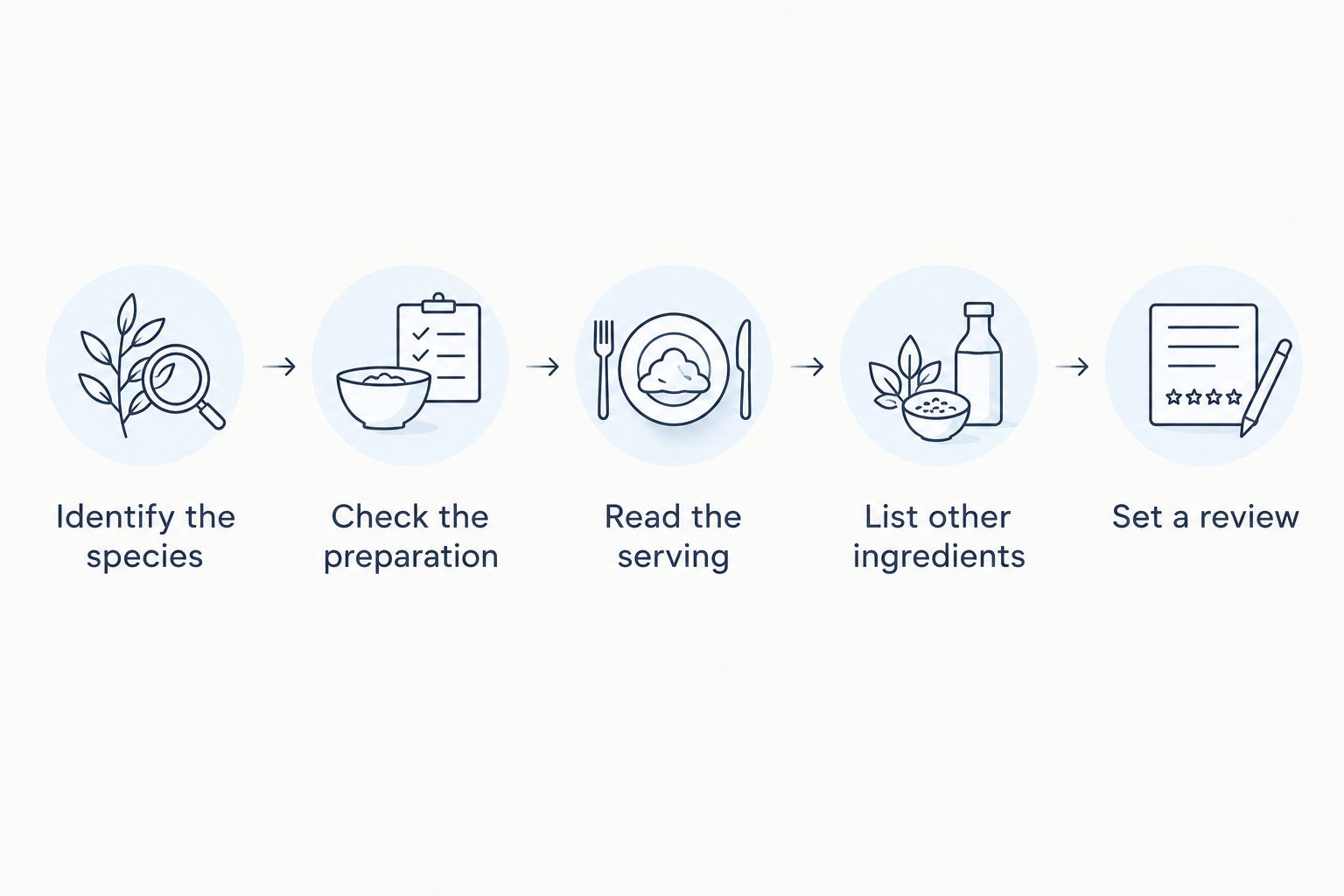
- Identify the species. Look for the botanical name, not just a common name or an energy claim.
- Check the preparation. Note whether the product contains root powder, an extract, tea ingredients, or several herbs.
- Read the serving. Distinguish the amount per capsule from the amount per suggested serving.
- List other ingredients. Include caffeine sources, additional botanicals, and everything else in your routine.
- Set a review point. Agree on when to reassess the purpose, tolerability, and continued use.
Do not compare an extract with root powder using milligrams alone. The ingredient form and standardization matter, and a larger number on the front label does not establish a better choice.
For a 2026 supplement review, keep a photograph of the ingredient panel and directions. If you change products, repeat the check rather than assuming a familiar plant name means an identical preparation.
Can you take ginseng with prescription medicines?
Do not add daily ginseng to prescription medicines without an interaction review. NCCIH and MedlinePlus identify medication concerns, including medicines that affect blood sugar and clotting. A pharmacist can assess your actual combination rather than treating all prescriptions as one category.
Blood sugar medicines
Asian ginseng can lower blood sugar, according to NCCIH. If you use diabetes medicines, ask your clinician whether ginseng is appropriate and whether your existing monitoring plan needs adjustment.
Do not change a prescribed dose yourself to accommodate an herb. The supplement is optional; prescribed treatment should not be altered without the prescriber's direction.
Anticoagulants and other prescriptions
Ginseng can affect clotting, and MedlinePlus identifies an interaction concern with warfarin. Describe the exact species and preparation rather than telling your pharmacist only that you take an energy supplement.
The same medication-list discipline applies to multivitamins and prescription medications: an over-the-counter label does not exempt an ingredient from an interaction check. Bring vitamins, teas, powders, and herbal extracts into the same review so each ingredient is considered alongside your medicines.
Do not separate supplements from prescriptions on the list you give your clinician. Both belong in the conversation, especially when you start, stop, or change a product.
Who should not start daily ginseng without medical advice?
Pregnant or breastfeeding people, children, and people with autoimmune conditions should not apply general adult safety findings to themselves. NCCIH raises specific concerns about these groups and conditions.
If you are pregnant, avoid self-starting Asian ginseng. If you are breastfeeding or considering a supplement for a child, ask the relevant clinician before use rather than reducing an adult serving on your own.
People preparing for surgery should also disclose ginseng to the surgical team. Let that team provide stop-and-restart instructions; a general article cannot set the right schedule for your procedure and medicines.
Daily use needs a purpose as well as a safety check. Persistent fatigue, poor sleep, or a new change in concentration deserves evaluation rather than repeated attempts to cover the symptom with an herbal product.
What should you do if ginseng disrupts your sleep?
Stop the supplement and review the timing, preparation, and other ingredients with a pharmacist or clinician. NCCIH identifies insomnia as the most common side effect of Asian ginseng; it is not evidence that the product is working.
Also check whether you added coffee, an energy drink, or a second supplement at the same time. Changing several things together makes it harder to identify what preceded the sleep change.
Do not respond to new symptoms by adding another herb to counteract them. If you develop trouble breathing, facial swelling, fainting, or another severe reaction, seek urgent medical care rather than waiting for a routine supplement review.
What should shoppers and retailers explain about daily use?
For shoppers, the useful distinction is between a plant's traditional use, the findings from a specific study, and the suitability of your own bottle. Those are different questions, even when the packaging presents them together.
Herbalgoodnessco sells herbal supplements, teas, and plant oils. Its range is relevant to shoppers comparing botanical preparations, but choosing papaya leaf, mullein, or another herb instead of ginseng does not establish that the alternative is suitable for daily use.
For retailers and health practitioners, explain the plant name, preparation, serving directions, and limits of the evidence plainly. Do not turn short-term adult safety findings into an unrestricted daily-use claim, and do not describe a supplement as a replacement for medical care.
Herbalgoodnessco is best for shoppers seeking herbal supplements, not a substitute for individualized ginseng safety advice. That boundary keeps product selection separate from medical clearance.
FAQ
Is ginseng safe daily for a healthy adult?
Daily Asian ginseng appears safe for most adults for up to 6 months at recommended amounts, according to NCCIH. That does not establish indefinite safety or rule out interactions and side effects.
Can I take ginseng every day for years?
Long-term daily ginseng safety is not established by the short-term evidence summarized by NCCIH. Review continued use with a clinician rather than treating an absence of symptoms as proof of safety.
How much ginseng should I take each day?
There is no single daily amount that applies to every ginseng preparation and person. Ask a pharmacist or clinician to review the species, preparation, label directions, medicines, and intended use.
Should I cycle ginseng or take regular breaks?
A fixed cycling schedule is not a guarantee of ginseng safety. Taking breaks does not remove a medication interaction or establish that restarting is appropriate.
Can I drink ginseng tea every day instead of taking capsules?
Ginseng tea still requires a species and interaction check before daily use. Tea and capsules are different preparations, and a drink is not automatically safer than a supplement.
Can I take ginseng while pregnant or breastfeeding?
Do not self-start ginseng during pregnancy or breastfeeding. NCCIH identifies pregnancy concerns and insufficient safety information for breastfeeding, so discuss any existing use with your clinician.
Does trouble sleeping mean my ginseng dose is working?
Trouble sleeping is a possible adverse effect, not proof of benefit. Stop the supplement and review the product and your other ingredients with a pharmacist or clinician.
Is American ginseng the same as Asian ginseng?
American ginseng is Panax quinquefolius, while Asian ginseng is Panax ginseng. They are different species, so evidence about one does not automatically establish the other's safety.
One last thing
No symptoms does not mean no interaction. Feeling well cannot confirm that a supplement leaves your blood sugar or prescription response unchanged.
Before making ginseng a standing item in your 2026 routine, write down why you want it, photograph the complete label, and agree on a review point. A daily habit should remain a deliberate decision—not something you continue simply because the bottle is still there.