





Is black seed oil safe during pregnancy?

Black seed oil during pregnancy is not established as safe, so do not start or continue an oral supplement without your prenatal clinician’s guidance. Black seed used as a food seasoning is a different exposure from swallowed oil, capsules, or extracts, and neither traditional use nor an organic label establishes pregnancy safety.
- Black seed oil during pregnancy lacks established safety; avoid self-prescribing Nigella sativa supplements.
- Memorial Sloan Kettering advises against black seed use during pregnancy.
- Food seasoning, oral supplements, and skin products require different safety assessments.
- If you already took black seed oil, stop further doses and contact your prenatal clinician with the label.
Why this matters
Pregnancy changes the question from whether a plant has traditional uses to whether a particular preparation is appropriate for you and your developing baby. Research in nonpregnant adults cannot answer that question by itself.
For example, the cold-pressed black seed oil from Herbal Goodness is an oral oil product, not the same exposure as seeds sprinkled on bread. Its preparation matters when you discuss it with your prenatal clinician; its wellness positioning does not establish pregnancy safety.
For pregnant shoppers, clinician review—not a supplement recommendation—is the right next step. This 2026 guide separates food use, concentrated supplements, and skin application so you can ask a specific question rather than rely on a blanket claim about natural ingredients.
Is black seed oil safe during pregnancy?
Black seed oil is not established as safe during pregnancy, and you should avoid taking it as a self-directed supplement. Memorial Sloan Kettering Cancer Center’s About Herbs entry for Black Seed advises against its use during pregnancy.
That recommendation is not a prediction that an accidental exposure will harm your pregnancy. It means you should not treat the absence of a warning on a bottle, or a history of traditional use, as proof that continued use is appropriate.
| Preparation | What distinguishes it | Pregnancy decision |
|---|---|---|
| Seeds in food | Culinary use as a seasoning, rather than a supplement routine | Discuss unusual or frequent consumption with your prenatal clinician; do not equate it with taking oil |
| Swallowed black seed oil | An oral botanical preparation taken separately or added to food | Avoid self-directed use during pregnancy |
| Black seed capsules | A swallowed supplement whose ingredients and preparation depend on the label | Do not assume the capsule format makes it pregnancy-safe |
| Concentrated extracts | A preparation that can differ substantially from whole seeds | Do not substitute extract research for pregnancy safety evidence |
| Skin products | External exposure, sometimes with additional ingredients | Ask about the complete formula and intended use; oral-use guidance does not establish topical safety |
The table compares exposures, not approved pregnancy options. No supplement form earns a pregnancy recommendation simply because it is easier to swallow, tastes milder, or contains fewer ingredients.
What evidence supports the pregnancy warning?
The most useful sources distinguish general herbal-product guidance from information specific to black seed. They also distinguish evidence of benefit from evidence of safety: a study addressing a wellness outcome does not automatically assess fetal development or pregnancy complications.
The sources below support the practical decisions in this 2026 guide. Their names and document titles identify the evidence being discussed; the guide’s year is not a claim that each source was published or updated this year.
- Memorial Sloan Kettering Cancer Center, About Herbs: Black Seed. This botanical-specific reference advises against black seed use during pregnancy. Its pregnancy warning is more relevant here than a general description of the plant’s traditional uses.
- MotherToBaby, Herbal Products fact sheet. This pregnancy-focused resource explains that many herbal products have not been adequately studied during pregnancy and that ingredients and preparations can vary.
- National Center for Complementary and Integrative Health, Using Dietary Supplements Wisely. This consumer guidance addresses supplement safety, interactions, and discussing supplements with healthcare professionals.
- U.S. Food and Drug Administration, FDA 101: Dietary Supplements. This regulatory guidance explains that dietary supplements are not approved for safety and effectiveness before marketing in the same way as drugs.
These sources do not supply a pregnancy-safe black seed oil dose. Do not convert a serving size intended for general adult use into a prenatal dosing recommendation.
Traditional use is not pregnancy evidence
Black seed, also called Nigella sativa, has a long history of culinary and traditional use. That history explains why people recognize the ingredient; it does not establish the safety of daily oil, capsules, or concentrated extracts during pregnancy.
Animal experiments and laboratory studies can identify questions for further research. They cannot tell you that a particular commercial product, dose, or schedule is safe for your pregnancy.
Are seeds in food different from black seed oil supplements?
Yes—culinary exposure and supplemental exposure are different, but that distinction is not a license to use unlimited amounts. A seasoning is part of a meal; a supplement is taken deliberately as a separate botanical preparation.
A familiar food name can hide that difference. Stirring a measured supplement serving into yogurt does not turn the supplement into ordinary seasoning. Likewise, swallowing oil alongside breakfast does not make its pregnancy safety equivalent to eating bread containing seeds.
When you ask about food use, describe the actual dish and ingredient. If you are asking about a supplement, bring the Supplement Facts panel and the full ingredient list instead of describing it only as a natural food oil.
Avoid replacing black seed oil with strong homemade black seed tea or a concentrated seed mixture. A homemade preparation still needs assessment; the absence of commercial packaging does not establish safety.
Are capsules or skin products safer during pregnancy?
Capsules are not a pregnancy-safe workaround for liquid black seed oil. A capsule can contain oil, seed powder, an extract, or a combination, so the preparation inside matters more than the format outside.
Topical products require a separate assessment. A skin product can contain fragrance, essential oils, preservatives, or other botanicals in addition to black seed oil. Your clinician or pharmacist needs the complete formula and the intended application site to assess that product.
Skin application also carries a different practical concern: irritation or allergic reactions. A patch test can help identify local irritation, but a successful patch test does not prove pregnancy safety or rule out every possible reaction.
Do not use an oral supplement as a substitute for a formulated skin product, or swallow a product labeled for external use. Follow the product’s intended route while you seek professional advice about whether to use it at all.
Why pregnancy advice varies between products
Different advice often reflects different exposures—not proof that one black seed product has been shown safe. These are the details that make a safety discussion useful:
- Plant identity: Confirm that the ingredient is Nigella sativa. Common names alone can be confusing.
- Preparation: Whole seeds, expressed oil, seed powder, and extracts are not interchangeable research materials.
- Route: Swallowing a preparation and applying it to skin require different assessments.
- Amount and frequency: A one-time exposure and an ongoing routine are different histories for your clinician to review.
- Other ingredients: Combination products require review of every active ingredient, not just black seed.
- Personal context: Your pregnancy history, symptoms, medicines, and other supplements belong in the discussion.
For a 2026 pregnancy supplement review, use the current label from the product you actually have. An older screenshot or a review of another formulation can leave out information your clinician needs.
What should you do if you already took black seed oil?
Stop further self-directed doses and contact your prenatal clinician or pharmacist with the product details. Taking a supplement before realizing you are pregnant does not, by itself, establish that harm occurred.
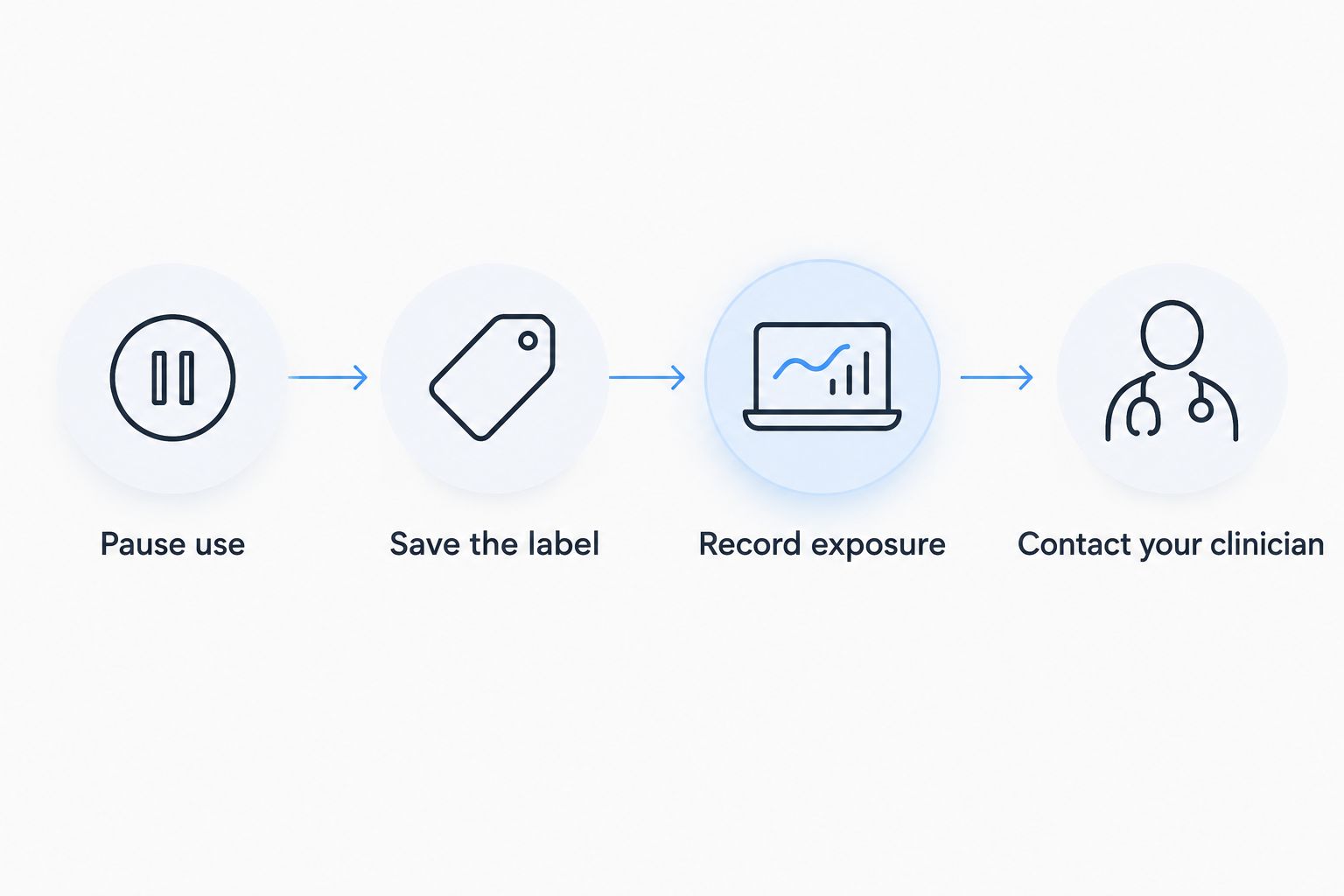
You do not need to reconstruct the exposure perfectly before calling. Start with what you know, then follow this sequence:
- Pause use. Do not take another dose while waiting for advice. Do not stop prescribed medicines or a clinician-recommended prenatal vitamin unless your care team tells you to.
- Save the label. Photograph the front, ingredient list, Supplement Facts panel, and directions. Keep the container in case additional details are needed.
- Record exposure. Write down when you took it, approximately how much, how often, and whether it was swallowed or applied to skin.
- Contact your clinician. Share your pregnancy stage, other supplements, medicines, and any symptoms. Ask whether you need any follow-up.
The purpose is to give your care team a usable exposure history, not to diagnose a problem from a bottle label. Keep the product information together so you can answer follow-up questions without repeating the search.
Do not try to counteract an exposure with a detox product, another herb, or an extra supplement. That adds another exposure instead of answering the original safety question.
Seek urgent medical help for severe symptoms such as trouble breathing or fainting. Vaginal bleeding or severe abdominal pain also needs prompt medical assessment, regardless of whether you have taken a supplement.
What should you ask your prenatal clinician?
Bring a focused question: “Is this exact preparation appropriate for me, given why I want to use it?” The reason matters because digestion discomfort, skin concerns, and a desire for general wellness support call for different discussions.
Use your 2026 medication and supplement list to include everything you take—not just prescriptions. Add teas, powders, gummies, tinctures, oils, and combination wellness products so your clinician can review the whole routine.
Useful questions include:
- What is the safest way to address the concern that led me to consider black seed oil?
- Does this ingredient belong in my pregnancy routine at all?
- Does this combination contain other ingredients I should avoid?
- If I already used it, do you recommend any follow-up?
- Should I reassess the product after birth if I plan to breastfeed?
Do not substitute black seed oil for prenatal care or a treatment your clinician recommends. If your original concern is persistent or worsening, ask for an assessment rather than trying a different herbal product.
What should retailers and health practitioners communicate?
A general wellness claim is not a pregnancy recommendation. Retail staff should not translate terms such as organic, cold-pressed, or clean-label into assurances about prenatal use.
Herbal Goodness black seed oil should not be presented to pregnant shoppers as a substitute for individualized prenatal advice. Retailers can help by supplying the complete label and directing pregnancy-specific questions to the shopper’s prenatal clinician or pharmacist.
For trade-interest readers, the Herbal Goodness wholesale application is the appropriate route for wholesale inquiries. Wholesale access does not change the evidence required to make pregnancy-related recommendations, and customer education should keep those subjects separate.
FAQ
Can I take black seed oil during pregnancy for immune support?
Do not self-prescribe black seed oil during pregnancy for immune support. Pregnancy safety is not established, and a general wellness claim does not establish suitability for prenatal use.
Is a small amount of black seed oil safe while pregnant?
There is no established pregnancy-safe supplement dose of black seed oil. Do not treat a smaller serving or less frequent use as a proven safe approach.
What if I took black seed oil before I knew I was pregnant?
Stop further self-directed use and contact your prenatal clinician with the label and exposure details. An accidental exposure does not, by itself, establish that harm occurred.
Can I eat food containing black seeds during pregnancy?
Seeds used as a food seasoning are a different exposure from black seed oil supplements. Ask your prenatal clinician about your actual eating pattern, especially if you use large or frequent amounts.
Are black seed oil capsules safer than liquid oil during pregnancy?
Black seed oil capsules are not established as safer than liquid oil during pregnancy. The capsule format does not remove the need to assess the preparation, ingredients, and exposure.
Can I put black seed oil on my skin while pregnant?
Ask your prenatal clinician or pharmacist about the exact skin product before using it during pregnancy. External application needs its own assessment, and a patch test does not establish pregnancy safety.
Does organic black seed oil make a difference to pregnancy safety?
An organic label does not establish pregnancy safety. Herbal Goodness product information can identify the preparation, but your prenatal clinician must assess whether that preparation belongs in your pregnancy routine.
One last thing
The most useful detail is often the back label, not the plant name on the front. Two products described as black seed can contain different preparations or additional ingredients, so save a clear photograph before your appointment.
For your 2026 pregnancy routine, make one practical change: review the supplements you already use before adding another. A familiar bottle deserves the same pregnancy-specific check as a new purchase.
Related guides
These guides address separate ingredient questions; neither is a recommendation to add a supplement during pregnancy.