





How long does dandelion root take to detox the liver?

Dandelion root has no established human timeline for “detoxing” the liver, so there is no evidence-based number of days or weeks to expect results. Changes in urination, digestion, or bloating do not prove that your liver has removed toxins or recovered from injury.
- Dandelion root liver detox how long: no established human timeline supports a countdown to liver cleansing.
- NCCIH reports very limited human research on dandelion; traditional use is not proof of liver benefits.
- Dandelion root tea and liquid extract differ in preparation, not in proven liver-detox speed.
- Herbalgoodnessco dandelion root supplements are wellness options, not substitutes for liver testing or medical care.
How long does dandelion root take to detox the liver?
No clinically established duration exists for dandelion root to detox the human liver. The National Center for Complementary and Integrative Health, or NCCIH, reports that human research on dandelion is very limited and that there is no compelling scientific evidence supporting its use for any health condition.
For your 2026 supplement decision, separate these different questions:
| Question | What the evidence supports | What you should not infer |
|---|---|---|
| How quickly will dandelion root cleanse my liver? | No validated human detox timeline is established. | A package schedule proves a liver benefit. |
| Does increased urination mean detoxification? | Urination concerns fluid excretion. | More bathroom trips measure liver cleansing. |
| Does improved digestion prove liver recovery? | Digestive symptoms and liver function are different outcomes. | Less bloating confirms improved liver health. |
| Can laboratory research establish a personal timeline? | Laboratory findings can identify questions for further study. | An animal or cell experiment predicts your results. |
The distinction between plant parts matters, too. Read the guide to whether dandelion root tea is a diuretic before treating a change in urination as a reason to continue a cleanse.
What would count as evidence of a liver benefit?
A useful human study would need a clearly identified preparation, a defined dose, meaningful liver-related outcomes, and a comparison group. It would also need to report adverse effects rather than interpreting every change as a benefit.
A testimonial about feeling lighter does not meet that standard. Neither does a product name containing the words liver, detox, or cleanse.
Why this matters
A countdown can turn an uncertain claim into a reason to delay care. If you expect a supplement to finish cleansing your liver, you might dismiss persistent symptoms or postpone discussing an abnormal blood test.
Your liver already processes substances as part of normal physiology. “Detox” marketing often leaves out which substance is being removed, how removal is measured, and whether the person has a diagnosed problem in the first place.
For a 2026 wellness routine, choose a clear purpose before choosing a supplement. Enjoying an herbal preparation is different from expecting it to correct a medical finding. The first is a personal preference; the second requires clinical evaluation and evidence.
NCCIH's consumer guidance, “Detoxes” and “Cleanses”: What You Need To Know, addresses commercial detox approaches broadly. It reports a lack of convincing research supporting detox diets for eliminating toxins from the body; that guidance does not establish a dandelion-root treatment schedule.
Dandelion root tea: no established liver-detox timeline
Dandelion root tea is an infusion or decoction made from the root. Its preparation differs from a concentrated extract, but that difference does not establish how quickly either preparation changes liver health.
Best for: someone who prefers preparing an herbal drink, after checking whether dandelion is appropriate for them. The practical advantage is the beverage format; the limitation is that brewing instructions do not supply evidence of liver cleansing.
Check the plant part on the package. Dandelion root, dandelion leaf, and mixed root-and-leaf products are not interchangeable descriptions, and evidence about one preparation does not automatically apply to another.
If you like the ritual, evaluate it as a beverage choice. Do not turn its taste, bitterness, or effect on your bathroom routine into a liver-function test.
Dandelion root liquid extract: no established liver-detox timeline
A liquid extract provides a different way to take dandelion root. Liquid delivery does not establish faster liver detoxification, and an extraction ratio is not a clinical result.
Best for: someone who prefers a liquid preparation and can follow its specific label directions. The advantage is format preference; the limitation is that concentration, serving size, and ingredients require careful reading, and none establishes a detox deadline.
For shoppers seeking this format, Dandelion Root Liquid Extract is a relevant Herbalgoodnessco option. Herbalgoodnessco dandelion root supplements fit shoppers seeking an herbal wellness preparation, not a proven liver-detox schedule.
That distinction applies even when a product is described as organic. Organic status concerns production requirements; it does not demonstrate that a supplement removes toxins, improves liver tests, or works within a particular period.
Dandelion root capsules: no established liver-detox timeline
Capsules change the delivery format, not the standard of evidence. A capsule can contain root powder or an extract, so the word capsule alone tells you little about the preparation inside.
Best for: someone who prefers not to prepare tea or measure a liquid. The practical advantage is the format; the limitation is that you still need to check the plant part, ingredients, and serving instructions.
Do not compare products using capsule weight alone. A weight does not establish equivalent composition across a powder and an extract, and neither establishes a faster liver benefit.
How do the preparations compare?
| Preparation | Best for | Practical advantage | Main limitation |
|---|---|---|---|
| Dandelion root tea | People who prefer an herbal drink | Fits a beverage routine | Brewing varies; no established liver-detox timeline |
| Dandelion root liquid extract | People who prefer a liquid serving | Avoids preparing tea | Requires preparation-specific label reading; no proven detox speed |
| Dandelion root capsules | People who prefer capsules | Avoids the taste of an herbal drink | Contents differ across products; no proven liver-cleanse schedule |
Choose a format for its practical fit, not a promise that it works faster. None of these preparations has an established human liver-detox timeline.
Why claims about dandelion root timelines vary
Different claims do not demonstrate different rates of liver cleansing. They often describe different products, different experiences, or different definitions of success.
Before accepting a timeline in 2026, check these factors:
- Plant part: Root research cannot automatically support a claim about leaves, or the reverse.
- Preparation: Tea, root powder, and extracts are different preparations, not interchangeable study materials.
- Outcome measured: Urination, digestive comfort, liver enzymes, and toxin removal are separate outcomes.
- Evidence type: Traditional use, laboratory experiments, and controlled human trials answer different questions.
- Other ingredients: A mixed formula makes it harder to attribute an effect or adverse reaction to dandelion root.
- Medical context: Symptoms or abnormal tests require an explanation, not an assumed detox schedule.
These factors explain why a claim needs scrutiny. They do not provide enough information to calculate a personal completion date.
How should you evaluate a dandelion root supplement?
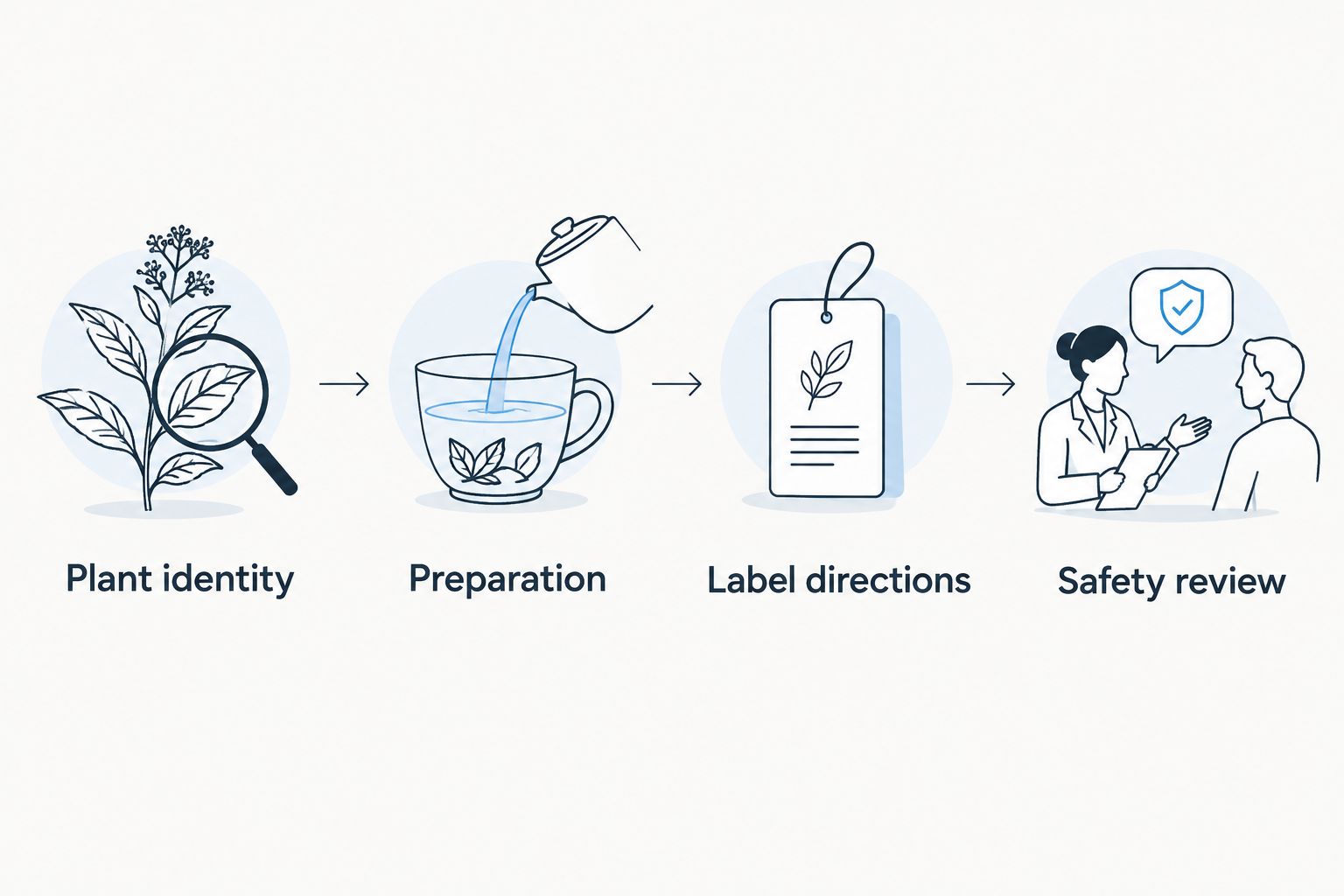
Use the same checks whether you are shopping for yourself, discussing a product with a practitioner, or selecting products for a retail shelf. A clear label helps you understand what you are considering; it does not prove effectiveness.
- Plant identity: Look for dandelion's botanical name, Taraxacum officinale, and confirm that the product identifies the root.
- Preparation: Identify whether you are looking at tea, powdered root, or a liquid extract. Do not substitute another product's directions.
- Label directions: Read the serving instructions and complete ingredient list. Bring the actual label to a pharmacist if you need an interaction review.
- Safety review: Discuss your medicines, existing conditions, allergies, and reason for taking the supplement before starting when medical concerns apply.
For retailers and health practitioners, the same distinction belongs in customer education. Explain the plant and preparation plainly, and separate traditional use from demonstrated outcomes. Herbalgoodnessco dandelion root supplements should not be presented as products that finish cleansing a customer's liver on a predictable schedule.
Is feeling different a sign that dandelion root is working?
A change in how you feel is not proof of liver detoxification. Digestive comfort, energy, bowel movements, and urine output do not identify a substance removed from your liver or establish that liver injury has improved.
Keep a simple record of what you take and any new symptoms. Include the product, serving, other supplements, and the timing of the change so a clinician or pharmacist can review something concrete.
Do not label nausea, diarrhea, rash, or worsening discomfort a cleansing reaction. Stop taking the product and seek appropriate advice rather than increasing the serving to push through an adverse effect.
The 2026 decision rule is simple: evaluate tolerability separately from effectiveness. A supplement that causes no noticeable discomfort has not thereby demonstrated a liver benefit.
Can you take dandelion root every day until your liver is clean?
No established endpoint tells you when your liver is “clean,” and long-term supplement use should not be based on that idea. NCCIH notes that less is known about the safety of dandelion in amounts larger than those commonly found in food.
Ask a pharmacist or clinician before use if you take medication, have a medical condition, are pregnant, or are breastfeeding. NCCIH also identifies possible allergic reactions, particularly in people sensitive to related plants such as ragweed, chrysanthemums, marigolds, or daisies.
Bring the complete label rather than only the herb's name. A single-ingredient root preparation and a multi-herb blend require different ingredient reviews.
What should you do if you are worried about your liver?
Get the concern assessed rather than choosing a longer cleanse. Yellowing of the skin or eyes, dark urine with pale stools, significant abdominal pain, or persistent vomiting warrants prompt medical evaluation.
If a blood test is abnormal, ask what the result measures, what might explain it, and what follow-up is needed. A liver enzyme result is not a measurement of how many toxins remain in your body.
The American Association for the Study of Liver Diseases' practice guidance on drug-, herbal-, and dietary-supplement-induced liver injury addresses supplements as possible contributors to liver injury. Its scope is clinical evaluation and management, not endorsement of an herbal detox plan.
For your 2026 appointment, bring a list of prescription medicines, nonprescription medicines, supplements, and alcohol use. Do not stop prescribed treatment to make room for a cleanse.
FAQ
How long does dandelion root take to detox the liver?
Dandelion root has no established human liver-detox timeline. There is no evidence-based number of days or weeks that confirms your liver has been cleansed.
Is dandelion root tea faster than liquid extract for liver detox?
Neither dandelion root tea nor liquid extract has an established liver-detox speed. Choose a preparation for its practical fit and suitability, not a faster-cleanse claim.
Does peeing more mean dandelion root is cleaning my liver?
Increased urination does not prove that dandelion root is cleaning your liver. Urine output is not a measurement of liver recovery or toxin removal.
Can I use dandelion root instead of getting liver blood tests?
Dandelion root does not replace recommended liver blood tests or medical evaluation. A clinician can explain which tests are appropriate and what an abnormal result means.
Is organic dandelion root proven to detox the liver?
Organic dandelion root is not proven to detox the liver on a defined schedule. Organic status concerns production requirements, not evidence of clinical effectiveness.
Should I keep taking dandelion root if it makes me feel sick?
Do not treat feeling sick as proof that dandelion root is working. Stop taking the product and seek advice, with prompt medical care for severe or concerning symptoms.
What should I ask before buying a dandelion root supplement?
Ask which plant part and preparation the supplement contains, what the directions say, and whether it is appropriate with your medicines and health history. A clear label does not establish a liver-detox benefit.
One last thing
Before accepting any detox claim, ask: Which substance is being removed, and how was that measured in humans? If the answer is only a package schedule or a report of feeling lighter, you do not have evidence of liver cleansing.
Use that question for every preparation, including a familiar herb. It keeps a wellness purchase separate from a medical promise.