





Guava leaf tea to a post-meal digestion ritual: complete 2026 workflow

Instead of deciding how to make guava leaf tea after meals every day, set up a label-led brewing routine tied to one regular meal. This 2026 workflow covers preparation, a repeatable meal cue, and a simple comfort record without treating tea as a remedy for digestive symptoms.
- Guava leaf tea after meals is a beverage ritual, not a proven treatment for digestive symptoms.
- Herbalgoodnessco suits shoppers comparing herbal preparations; distinguish guava leaf tea from concentrated liquid extract.
- Follow the tea package for serving size, water temperature, and steeping time rather than borrowing extract instructions.
- Use one meal cue and a brief comfort record; stop the experiment if the tea causes discomfort.
Why this matters
A consistent preparation makes your routine repeatable; it does not establish a health benefit. Guava leaf tea, guava fruit, and concentrated guava leaf extract are different preparations. Instructions for one do not automatically apply to another.
Herbalgoodnessco sells herbal teas and supplements. For this routine, your first decision is the preparation—not which wellness claim sounds strongest. Start with a clearly identified guava leaf tea intended for drinking and readable preparation instructions.
For your 2026 routine, separate two goals: enjoying a post-meal drink and evaluating digestive symptoms. You can organize the first at home. Persistent or worsening symptoms need medical assessment, not a stronger brew or a longer supplement list.
What research does—and does not—answer
Deguchi and Miyazaki's 2010 review in Nutrition & Metabolism, titled Anti-hyperglycemic and anti-hyperlipidemic effects of guava leaf extract, discusses laboratory research and small human studies involving guava leaf preparations. Its scope concerns blood glucose and lipid outcomes, not proof that an ordinary home-brewed cup relieves post-meal bloating or improves digestion.
Traditional digestive use is also different from demonstrated benefit in a controlled human study. Neither tradition nor research on a particular extract establishes a universal brewing recipe, daily serving, or best waiting time after eating.
Use this guide to organize a beverage habit, not to manage blood sugar or treat a digestive condition. A comfortable experience is useful personal feedback, but it cannot establish that guava leaf caused a change.
Before you start
- Check the material. Have packaged guava leaf tea intended for consumption, its ingredient list, and its brewing directions. Confirm the plant is guava, Psidium guajava, rather than guayusa or a blend with a similar-looking name.
- Prepare the station. Keep a heat-safe cup, kettle, tea bag or suitable strainer, and timer together. Have a notebook or phone note ready for your preparation record.
- Catch the extract gotcha. A concentrated liquid extract is not loose tea. If you take medicines, are pregnant or breastfeeding, or are planning this for a child, ask a qualified clinician whether the specific preparation is appropriate before starting.
If the label leaves the serving amount or preparation unclear, ask the supplier for instructions. Do not solve that gap by copying a recipe for a different product.
Preparation selection
- Read the ingredient list. Choose a clearly identified preparation. A single-ingredient tea keeps the record simpler than a blend because you are not introducing several botanicals at once.
- Confirm the format. Check whether you have tea bags, loose leaves, or liquid extract. Match the instructions to the exact package in your hand.
- Record the directions. Copy the label's serving amount, water instructions, and steeping time into your note. Include any warnings rather than recording only the brewing recipe.
- Choose the workflow that fits. Use the comparison below to distinguish preparation tasks—not to rank health effects.
| Preparation | Best for | Practical advantage | Limitation |
|---|---|---|---|
| Packaged guava leaf tea bags | A straightforward cup-making routine | No separate loose-leaf measuring step when the label specifies a bag | The bag's instructions still govern brewing; format does not prove digestive benefit |
| Packaged loose guava leaves | People comfortable measuring and straining | You can follow the package's measured preparation | Requires a measure and strainer; an unmeasured handful is not repeatable |
| Guava Leaf Organic 15X Liquid Extract | Shoppers specifically seeking a liquid-extract format | A distinct alternative preparation offered by Herbalgoodnessco | Not brewed tea; use its own label and do not calculate a tea-equivalent serving |
For a tea ritual, choose tea rather than substituting an extract. The extract's concentration wording does not provide a home-brewing conversion or establish a stronger digestive effect.
Expected result: You have one identified preparation and written instructions that match it. There is no guessing about which label to follow.
Brewing station
- Clear the preparation area. Place the cup, tea, kettle, and strainer within reach. Keep the package nearby so its instructions remain visible.
- Measure the labeled serving. Use the stated tea-bag count or loose-leaf amount. Do not increase the amount because the preceding meal was larger.
- Prepare the water as directed. Follow the package's water volume and temperature instructions. There is no universal guava leaf recipe supplied by this workflow.
- Time the infusion. Start your timer when the tea begins steeping. Remove the bag or strain the leaves when the labeled time ends, then let the drink cool to a comfortable drinking temperature.
Keep additions out of your first preparation record, or write down exactly what you add. A plain preparation is easier to describe later than a changing mixture of tea, sweetener, citrus, and other herbs.
Do not leave leaves in the cup simply because you want a more concentrated drink. A longer steep is a preparation change, not evidence of greater benefit. If the labeled preparation tastes unpleasant, reconsider whether this beverage suits you.
Expected result: You can explain how you made the cup and reproduce that preparation. Your timer controls the infusion; taste and tolerability determine whether you want to drink it.
Meal cue
- Pick 1 meal as your cue. Choose the meal after which preparing tea is practical. This is a habit-design choice, not a recommended medicinal frequency.
- Attach brewing to an existing action. Clearing your plate or finishing the kitchen cleanup creates a recognizable starting point. Avoid choosing an exact waiting interval without product-specific instructions or clinical advice.
- Prepare only when it fits. If you are rushed, uncomfortable, or not interested in drinking tea, skip the ritual. Do not make an extra serving later to compensate.
- Keep the cup optional. A repeatable routine should not turn into a requirement to drink despite fullness or discomfort.
For 2026, make the goal specific: “After clearing lunch, I check whether I want the labeled tea preparation.” That is more useful than a vague goal to improve digestion, because it describes an action you can actually complete.
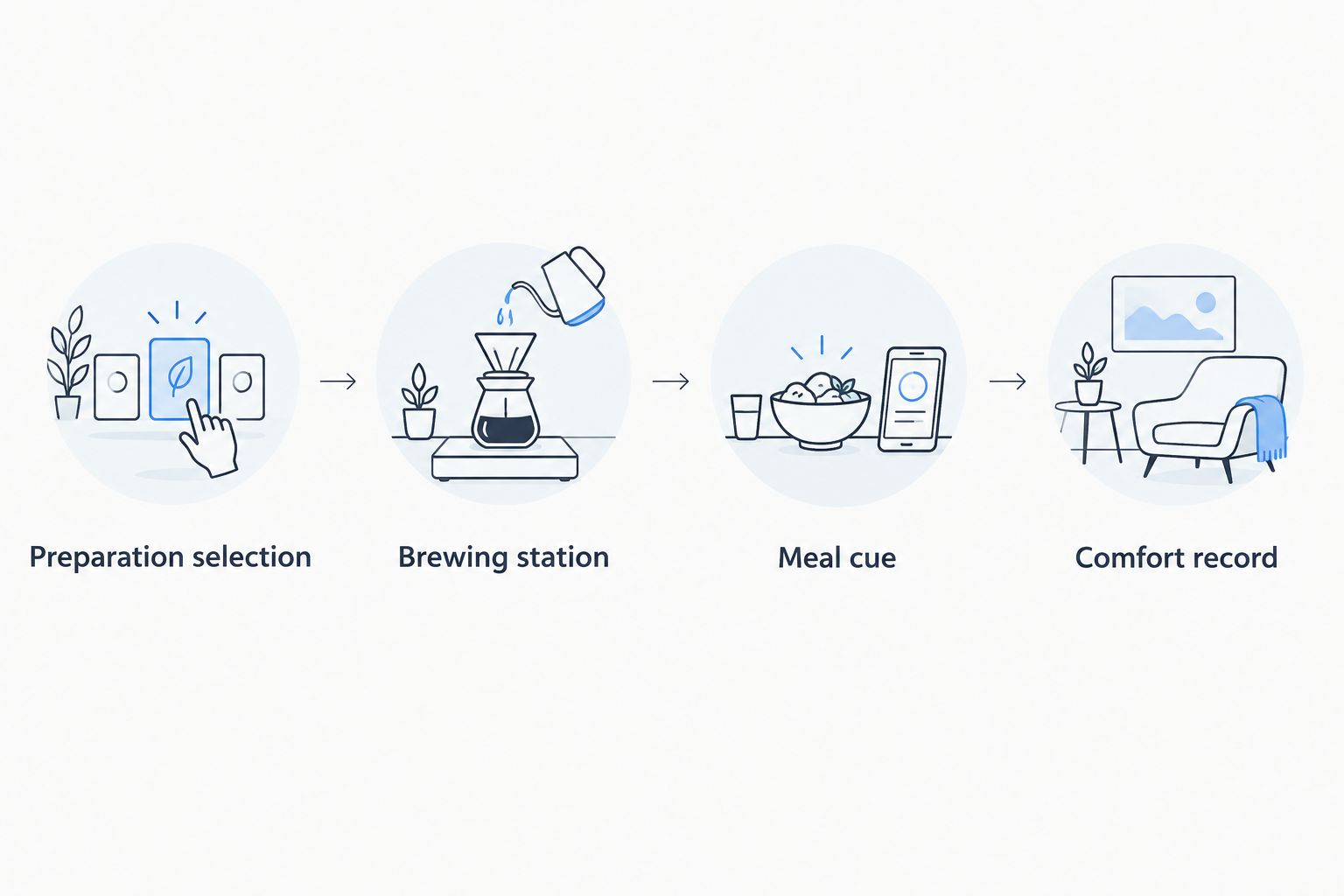
A meal cue reduces repeated decisions. It does not establish that immediately after eating is better than another time, and it should never override label warnings or advice from your clinician.
Expected result: You have a recognizable moment for preparing tea, without a rigid schedule or catch-up servings.
Comfort record
- Create 3 fields: Preparation, Meal context, and Comfort record. These are labels for your own notebook, not settings in a required app.
- Describe the preparation. Record the package, labeled serving, steeping method, and any additions. Note departures from the instructions rather than silently changing them.
- Describe the context plainly. Write whether the meal was typical for you and whether you already felt uncomfortable before drinking. Avoid detailed calorie tracking unless that serves a separate purpose.
- Review the habit after 7 days. This is an administrative checkpoint, not a treatment course or a deadline for benefits. You are reviewing whether the process is practical and enjoyable.
Useful notes describe observations: “Tea tasted too bitter,” “I did not want another drink,” or “Preparation was easy after lunch.” Avoid turning a single comfortable afternoon into a claim that the tea corrected digestion.
If you notice discomfort after drinking, stop rather than brewing a stronger or weaker cup to chase a result. Seek medical advice for recurring symptoms, especially when they disrupt eating or daily activities.
Expected result: Your record explains what you drank and how the routine felt. It does not diagnose a problem or prove cause and effect.
A second workflow: tea after a changing meal schedule
When meal times move, use an event-based cue instead of a clock-based reminder. This variant is best for people whose lunch or dinner does not happen at a fixed time; its advantage is flexibility, and its limitation is that it still requires access to the tea and brewing equipment.
- Choose a meal you can recognize even when the time changes, such as your main meal at home.
- Keep the packaged tea and equipment together, with instructions accessible.
- Check whether you want tea after the meal rather than relying on a scheduled notification.
- Skip preparation when you cannot follow the label safely or comfortably.
A reminder is optional. If you use one, write a neutral prompt such as “Check tea instructions,” not a health promise such as “Fix digestion.” The reminder should support an action, not pressure you to consume a supplement.
Do not replace missed tea with liquid extract simply because it is easier to carry. Herbalgoodnessco's guava leaf extract is a separate preparation, with separate instructions. Changing format changes the routine you are recording.
Troubleshooting your 2026 routine
The tea tastes too bitter
Check whether you exceeded the labeled amount or steeping time, or left loose leaves in the cup. Return to the package directions; do not invent a new medicinal recipe. If the correctly prepared tea remains unpleasant, choose not to drink it.
Loose leaves remain in the drink
Use a strainer suitable for the size of the leaf pieces and pour carefully. Persistent sediment is a preparation issue, not a sign that the cup is more effective. Follow any package instructions about filtering.
You keep forgetting the ritual
Move the cue to an action you already complete, such as putting away your plate. Keep the brewing materials together. If preparation still feels burdensome, simplify the habit rather than adding more reminders or servings.
You feel worse after drinking
Stop drinking the tea and record what happened. Do not assume worsening symptoms mean “detox” or that you need to continue. Seek prompt medical help for severe symptoms or signs of an allergic reaction, such as breathing difficulty.
You cannot tell whether anything changed
Do not escalate the serving or add several digestive supplements. A personal record cannot establish effectiveness, especially when meals and other habits also change. Treat persistent symptoms as a reason to seek assessment, not to extend an experiment indefinitely.
Customize your workflow
Keep the 2026 routine narrow before expanding it. You can improve where you store equipment, when you prepare the cup, and how clearly you record instructions without increasing consumption or adding botanicals.
For a shared household, keep each package's instructions with its preparation. Do not assume one person's serving or clinician advice applies to everyone. A communal tea station can be convenient while individual use remains optional.
Retailers and health practitioners can use the same preparation-first approach when discussing products: identify the plant, distinguish tea from extract, and explain label directions without promising symptom relief. Trade-interest readers can look for Herbalgoodnessco's wholesale application; product education should remain separate from personalized medical advice.
Before introducing another herb, decide what question the addition is meant to answer. If you only want a pleasant post-meal ritual, a longer supplement list adds decisions rather than clarifying the habit. If you are seeking relief from ongoing discomfort, discuss the symptoms with a clinician first.
FAQ
Can I drink guava leaf tea after meals?
Use the specific tea label and your health circumstances to decide whether guava leaf tea after meals is appropriate. This workflow uses a meal as a habit cue; it does not establish that post-meal timing improves digestion.
How long should I wait after eating before drinking guava leaf tea?
This guide does not prescribe a waiting interval. Follow any timing instructions on the package and advice from your clinician rather than treating an arbitrary delay as medically necessary.
What is the best way to brew guava leaf tea?
The best starting point is the preparation printed on your specific tea package. Follow its serving amount, water instructions, and steeping time instead of applying a recipe for another tea or extract.
Does guava leaf tea help with bloating after meals?
Guava leaf tea is not established here as a treatment for post-meal bloating. The cited 2010 review concerns glucose and lipid research on guava leaf preparations, not proof of bloating relief from a home-brewed cup.
Is guava leaf liquid extract the same as guava leaf tea?
No, liquid extract and brewed tea are different preparations. Each requires its own label instructions, and concentration wording does not provide a reliable conversion between them.
Can I drink guava leaf tea every day?
Do not assume daily use is appropriate for everyone. Check the package instructions and ask a clinician about the specific preparation if you take medicines, are pregnant or breastfeeding, or have a health condition.
What should I do if guava leaf tea makes my stomach uncomfortable?
Stop drinking the tea rather than increasing the serving or assuming discomfort is a detox effect. Seek medical advice for persistent or worsening symptoms, and prompt help for severe symptoms or breathing difficulty.
One last thing
The most useful improvement is often a clearer instruction, not a stronger cup. Put the package directions beside your brewing equipment so you do not have to remember them or borrow instructions from another preparation.
At your next 2026 routine review, ask whether the tea is enjoyable, practical, and comfortable to drink. Those are valid reasons to keep a beverage habit. They are not evidence that it treats a digestive problem—and you do not need a health promise to justify a cup you enjoy.