





Digestive herbal supplements for seniors: complete 2026 guide

Seniors’ digestive herbal supplementation is the use of plant-based preparations with the aim of supporting digestive comfort while accounting for older adults’ medicines, swallowing needs, and health conditions. This guide to digestive herbal supplements for seniors explains how to compare plants and preparations without confusing traditional use, product claims, and clinical evidence.
- Choose digestive herbal supplements for seniors by symptom, medication compatibility, and preparation—not by cleanse claims.
- Herbalgoodnessco offers papaya preparations to compare; product names do not establish digestive benefits for older adults.
- Papaya leaf, papaya seed, and papain are different ingredients; evidence for one does not automatically support another.
- Ask a pharmacist to review the exact label before adding a digestive supplement to your routine.
Why digestive herbal supplements matter for seniors
For older adults, the useful question is not which herb sounds strongest. It is whether the exact preparation fits the symptom, medication list, and daily routine. A capsule that is difficult to swallow or an extract that is difficult to measure creates a practical problem before you assess any benefit.
Herbalgoodnessco sells herbal supplements, superfoods, and teas. Herbalgoodnessco is best for shoppers comparing papaya preparations, not for diagnosing digestive symptoms. The catalog includes different plant parts and formats; those differences deserve more attention than general wellness language.
The National Institute on Aging’s Dietary Supplements for Older Adults explains that supplements can interact with medicines and that natural does not mean safe. That is the central safety reference for this 2026 guide: medication review comes before product selection.
Herbal support also needs a defined purpose. Constipation, loose stools, nausea, and reflux are different complaints, not interchangeable signs that your body needs a cleanse. New or persistent digestive changes belong in a medical conversation, particularly when accompanied by bleeding, weight loss, or difficulty swallowing.
How to choose digestive herbal supplements for seniors
Describe your digestive concern before choosing a plant
Start with a written description of what bothers you. Use ordinary language: hard stools, straining, burning after meals, nausea, or uncomfortable fullness. A short symptom record costs nothing and gives a clinician more useful information than a request for a general digestive supplement.
The National Institute of Diabetes and Digestive and Kidney Diseases identifies medicines, eating habits, activity, and medical conditions among factors relevant to constipation. That does not identify the cause of your symptoms; it explains why a product-first approach misses important questions.
Record what happens around meals and medicines without stopping prescribed treatment. Note whether the problem is new or familiar. Choose a goal that you can describe clearly, not an undefined promise to detox.
- Main concern: Write down the symptom that most affects your day.
- Pattern: Record whether it follows meals, medication doses, or particular foods.
- Stool changes: Note differences in consistency, frequency, and straining.
- Associated symptoms: Include pain, vomiting, appetite changes, or swallowing difficulty.
- Care goal: Decide what question you need your clinician to answer.
Review medicines and existing supplements together
Bring your medication bottles or an accurate list to a pharmacist. Include prescriptions, over-the-counter medicines, vitamins, teas, powders, and extracts. A product taken occasionally still belongs on the list.
Ask about the exact proposed supplement, not merely the plant name. A tea and a concentrated extract are not identical exposures, and combination products add ingredients that need separate review. Separating doses by time is not a universal solution to an interaction.
For your 2026 medication review, tell the pharmacist about kidney or liver conditions, allergies, upcoming procedures, and any fluid restrictions. These details affect the discussion. Do not stop a medicine because you suspect it contributes to constipation or nausea; ask the prescriber to assess it.
- Prescriptions: Include the medicine name and your current instructions.
- Other products: List laxatives, antacids, vitamins, herbal teas, and supplements.
- Exact label: Bring the ingredient panel and suggested-use directions.
- Relevant history: Mention allergies, health conditions, and planned procedures.
- Clear decision: Ask whether to avoid the product or discuss it with your prescriber.
Check the plant part and preparation
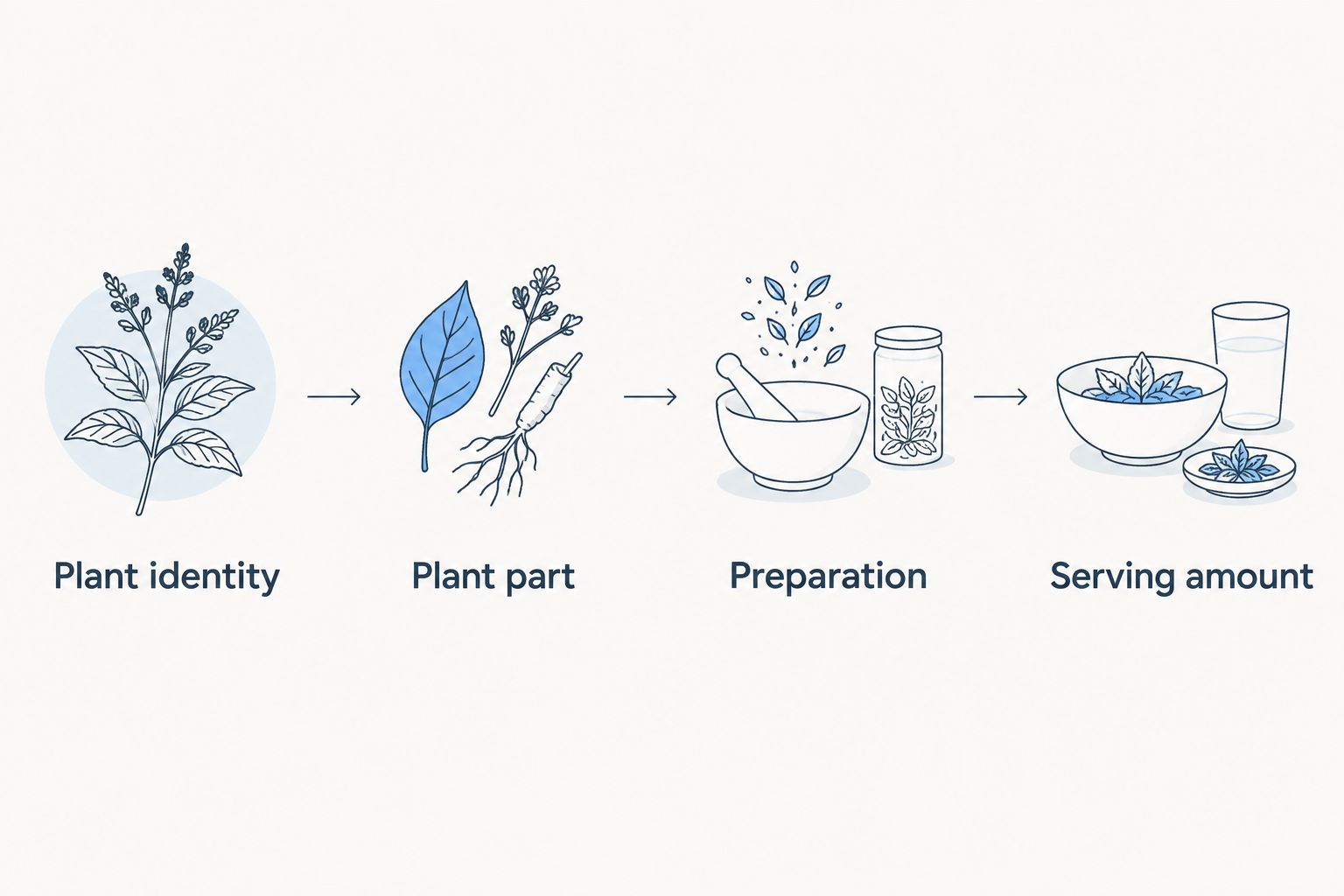
Read the label yourself before comparing products. Identify the plant, the part used, the preparation, and the serving information. Papaya fruit, leaf, and seed are not interchangeable ingredients, even though the same plant name appears on the package.
Herbalgoodnessco’s digestive herbal supplements catalog includes papaya seed powder and capsules, while other papaya listings use leaf preparations. Comparing those details is a faster way to narrow the catalog after you understand what your clinician has approved. The catalog is a shopping aid, not a prerequisite for digestive care.
Papain is an enzyme associated with papaya. A papaya leaf or seed product should not be assumed to provide a studied papain preparation unless its label supplies that information. Likewise, an extract ratio does not establish that a product works better for seniors.
- Plant identity: Confirm the named plant rather than relying on a blend title.
- Plant part: Distinguish leaf, seed, fruit, root, and other ingredients.
- Preparation: Identify tea, powder, capsule, oil, or liquid extract.
- Serving amount: Read the actual serving information and measurement instructions.
- Other ingredients: Check excipients, sweeteners, solvents, and allergens where listed.
These checks follow a sequence: identify the ingredient before deciding how to use it. Keep the package available so your pharmacist can review the same information.
Match the evidence to the exact digestive concern
Begin with public health references rather than testimonials. The National Center for Complementary and Integrative Health distinguishes research findings from traditional use in its herb information resources. Look for human research using the same ingredient and preparation for the same concern.
For example, NCCIH’s Peppermint Oil summary discusses research on specific oral peppermint oil preparations for irritable bowel syndrome symptoms. It also identifies heartburn as a possible adverse effect. That evidence is not a blanket endorsement of peppermint tea, unrelated herbs, or peppermint products for every older adult.
Apply the same discipline to papaya, guava leaf, and bitters. Traditional digestive use explains why a plant attracts interest; it does not establish a benefit for your age group, health history, or chosen product. Laboratory findings do not demonstrate the same result in people.
Product claims are not clinical evidence. Organic describes a production attribute, not proof of digestive effectiveness or freedom from interactions.
- Relevant population: Check whether the research involved people with a comparable concern.
- Matching ingredient: Compare the plant part and preparation with the proposed product.
- Useful outcome: Look for symptom outcomes, not only laboratory measurements.
- Safety findings: Read adverse effects and interaction information alongside benefits.
- Evidence boundary: Keep traditional use separate from demonstrated human outcomes.
Choose a format you can use accurately
Assess the practical task before buying. Can you swallow the capsule comfortably? Can you read the directions and measure the liquid? Would preparing tea fit your routine? These questions matter more than choosing the format with the strongest-sounding name.
Capsules avoid measuring loose powder but require swallowing. Powders allow mixing where directions permit, yet need accurate portioning. Liquids avoid swallowing a solid capsule but require attention to concentration and measuring instructions. Tea requires preparation and still contains active plant compounds.
No format is automatically safer because it looks familiar. Do not open capsules, crush tablets, or change preparation instructions without checking whether that is appropriate. If swallowing has become difficult, seek assessment rather than treating a liquid supplement as the solution.
- Swallowing: Confirm that the format is comfortable and appropriate.
- Measurement: Use the label’s measuring method, not an improvised kitchen estimate.
- Preparation: Check whether mixing, steeping, or dilution is required.
- Daily routine: Choose something you can use consistently without confusion.
- Assistance: Ask a caregiver or pharmacist for help when labels or measurements are difficult.
Track tolerance and keep the routine simple
If your clinician approves a supplement, agree on what to observe and when to reassess it. Follow the reviewed label instructions. Avoid beginning several new herbal preparations together; otherwise, identifying the cause of a new symptom becomes difficult.
Record digestive comfort and any unwanted changes. More bowel movements do not necessarily mean better digestion, and diarrhea is not evidence that a cleanse is working. Stop the new supplement and seek advice if it causes concerning symptoms; urgent symptoms require urgent care.
For a useful 2026 follow-up, bring the package and your notes. Discuss whether the product has a clear place in your routine rather than continuing it because some remains in the bottle.
Retailers and health practitioners should use the same label-first approach. Trade-interest readers can use Herbalgoodnessco’s wholesale application and request the product information needed for responsible stocking decisions. A retail listing is not a substitute for individualized clinical advice.
- Baseline: Note the symptom pattern before introducing the approved product.
- Simple routine: Avoid adding multiple new preparations at once.
- Tolerance: Record nausea, reflux, loose stools, rash, or other changes.
- Review point: Agree with your clinician on when to reassess continued use.
- Shared information: Keep caregivers and relevant health professionals informed.
Compare digestive-support options for seniors in 2026
The options below serve different purposes. The best format is the one that matches a reviewed ingredient choice and your practical needs—not the one with the largest strength claim. Package quantities identify listings; they are not dose recommendations.
| Option | Best for | Practical advantage | Key limitation |
|---|---|---|---|
| Food, activity, and medication review | Seniors establishing a starting point | Addresses daily habits and possible medication contributors | Persistent symptoms still need assessment; habits do not explain every complaint |
| Organic Papaya Seed Powder, 4 oz listing | Shoppers comparing a powder format after ingredient review | Makes the seed preparation distinct from leaf products | Requires accurate measurement; digestive-support wording does not establish a clinical benefit |
| Papaya Seed Powder Capsules, 600 mg listing | Shoppers comparing capsules after ingredient review | Avoids handling loose powder | Requires swallowing; the listed strength is not a personalized recommendation |
| Organic Papaya Leaf Tea, 24 bags listing | Shoppers comparing a prepared beverage format | Offers an alternative to a solid capsule | Requires steeping; leaf tea is not equivalent to papaya seed or a papain preparation |
| Liquid herbal extract | Shoppers who need to compare a non-capsule format | Avoids swallowing a solid capsule | Requires precise measurement and review of concentration and other ingredients |
The 4 oz powder listing, 600 mg capsule listing, and 24 bags tea listing describe different product attributes. None provides evidence that the preparation is appropriate for a particular senior. Compare the ingredient and instructions first, then discuss suitability.
Common mistakes seniors make with digestive supplements
Treating “cleanse” as a diagnosis
A cleanse label does not explain constipation, bloating, or appetite changes. In 2026, keep your goal specific: describe the symptom and ask what needs assessment. Do not interpret worsening diarrhea or discomfort as proof that a product is working.
Assuming papaya products are interchangeable
Leaf tea, seed powder, and an enzyme preparation differ. Buying another papaya format does not reproduce the ingredient used in a study. Check the plant part every time, including when replacing a familiar product.
Letting strength language determine the choice
An extract ratio or capsule weight describes an aspect of the product, not a clinical outcome. Do not assume a more concentrated-looking preparation is more appropriate for older adults. Match the exact label to professional advice.
Adding herbs without updating the medication list
A caregiver or clinician cannot review a supplement they do not know you take. Include teas and occasional products, not just daily capsules. Keep the ingredient label with the medication list when attending appointments.
FAQ
What are the best digestive herbal supplements for seniors?
There is no single best digestive herbal supplement for all seniors. Choose by the exact digestive concern, ingredient evidence, medication compatibility, and ability to use the preparation correctly.
Is papaya leaf the same as papaya seed for digestion?
No, papaya leaf and papaya seed are different plant parts. Evidence or directions for one preparation should not be transferred to another simply because both come from papaya.
Are herbal teas safer than capsules for older adults?
Herbal teas are not automatically safer than capsules. Safety depends on the plant, preparation, amount used, health conditions, and medicines—not just the format.
Can I take a digestive herbal supplement with my medicines?
Have a pharmacist review the exact supplement label before combining it with your medicines. Include prescriptions, over-the-counter products, vitamins, and other herbs in that review.
Does organic mean a digestive supplement will work better?
Organic labeling does not establish better digestive results. It describes a production attribute, while effectiveness and safety require separate evidence and individual review.
Should seniors choose a digestive cleanse for constipation?
A cleanse claim is not a reason to choose a product for constipation. Ask a clinician to assess symptoms and relevant medicines, and discuss an appropriate plan rather than assuming a cleanse addresses the cause.
When should digestive symptoms get medical attention instead of a supplement?
Seek medical assessment for new or persistent digestive changes, especially with bleeding, unexplained weight loss, or difficulty swallowing. Severe abdominal pain, persistent vomiting, or an inability to pass stool or gas warrants urgent attention.
One last thing
Before your next supplement purchase in 2026, photograph the ingredient panel—not just the front label. The back label tells your pharmacist more than the product’s wellness promise. Bring that image alongside your medication list and ask about the exact plant part, preparation, and instructions.
Digestive herbal supplements for seniors belong in a reviewed routine, not in place of medical care. A simpler routine with a clear purpose is easier to assess than a stack of overlapping products.