





Chanca piedra for kidney stone prevention: complete 2026 guide

For kidney stone formers, chanca piedra is an herbal preparation used traditionally for urinary wellness, not a proven way to prevent kidney stones. This 2026 guide explains what the research supports, how capsules and liquid extracts differ, and why your stone type and medical history must come before a supplement choice.
- Chanca piedra for kidney stones has limited human evidence; it does not replace a clinician-led prevention plan.
- Herbal Goodness chanca piedra preparations suit shoppers comparing capsule and liquid formats, not those seeking proven stone prevention.
- Prioritize stone analysis, appropriate fluid intake, and dietary changes matched to your urine results.
- An extract ratio does not prove effectiveness, establish a dose, or make different preparations equivalent.
Why chanca piedra matters for kidney stone formers
If you have passed a kidney stone, your question is practical: what should you change to reduce the chance of another? Chanca piedra’s common name, often translated as stone breaker, draws attention, but a plant nickname is not clinical evidence.
Chanca piedra commonly refers to Phyllanthus niruri, although the common name can also appear on products containing related species. Research on one species or preparation does not establish the same effects for every capsule, tincture, or tea sold under that name.
Herbal Goodness chanca piedra preparations are best for shoppers comparing capsule and liquid formats, not for anyone seeking a proven stone-prevention treatment. Herbal Goodness sells herbal supplements; that product category is separate from clinician-directed kidney stone care.
Your needs differ from those of a general wellness shopper. Stone composition, urine chemistry, kidney function, medications, and any fluid restriction affect the decisions you make. A supplement comparison belongs after those questions, not before them.
What the research actually shows
Traditional use explains why researchers study chanca piedra. It does not establish that taking the herb prevents recurrence, dissolves an existing stone, or helps every stone type.
Human studies provide limited evidence. Nishiura and colleagues examined Phyllanthus niruri and urinary stone-risk factors in adults with calcium stones in Urological Research in 2004. Pucci and colleagues assessed metabolic measures and stone-related outcomes in adults with kidney stones in the International Brazilian Journal of Urology in 2018. These studies do not establish a reliable prevention benefit for every commercial preparation.
Changes in urine measurements are not the same as proof that fewer people develop another stone. Study design, the preparation used, follow-up, and the outcome measured all matter. A result involving a particular herbal preparation cannot automatically support a different extract.
For your 2026 decision, distinguish three questions: does the herb affect a laboratory measure, does it change an existing stone, and does it reduce future recurrence? Evidence addressing one question does not answer the others.
Build your 2026 kidney stone prevention plan
Identify your stone type
Start with your medical records, not a supplement label. Ask whether a passed or removed stone was analyzed and what the result means for your diet and follow-up. Calcium oxalate, calcium phosphate, uric acid, and other stones require different considerations.
The American Urological Association’s Medical Management of Kidney Stones guideline, published in 2014, recommends stone analysis when a stone is available. Its scope is medical evaluation and prevention in people with kidney stones, not endorsement of an herbal product.
If you do not know your stone type, write down that question for your appointment. Do not assume a previous recommendation applies to a new stone without reviewing your results.
- Ask for your stone-analysis report.
- Record previous stone episodes and procedures.
- Bring your imaging reports to follow-up.
- Ask whether metabolic testing is appropriate.
- Confirm whether kidney function changes your plan.
Set an appropriate fluid target
Use a water bottle, a paper log, or reminders before adding anything to your routine. Track what you drink across work, exercise, and evenings. Your clinician can connect that record with urine measurements and any limits on fluid intake.
The AUA guideline recommends fluid intake sufficient to produce at least 2.5 liters of urine daily for stone formers. That is a urine-output target, not a universal instruction to drink exactly 2.5 liters. Fluid needs vary, and people with prescribed fluid restrictions need individualized advice.
Herbal tea is not a substitute for checking the total fluid plan. Neither a capsule nor a small serving of liquid extract establishes adequate hydration.
- Ask for a fluid target suited to your health.
- Spread drinks across your waking hours.
- Account for exercise and hot conditions.
- Use a log to identify missed drinking periods.
- Follow prescribed fluid restrictions rather than generic advice.
Match food changes to your results
Review an ordinary day of meals before removing entire food groups. A food diary and nutrition labels give you a practical starting point. Ask your clinician or dietitian which changes address your stone type and urine results.
For people with calcium stones and relatively high urinary calcium, the AUA guideline advises limiting sodium and maintaining 1,000–1,200 milligrams of dietary calcium daily. Its discussion supports limiting sodium to 2,300 milligrams daily. These recommendations have a specific clinical context; they are not a personalized prescription for every reader.
Do not automatically eliminate calcium-containing foods. Dietary calcium and calcium supplements are different decisions, and restriction without guidance can work against the intended prevention strategy.
- Record meals before changing them.
- Check sodium on packaged-food labels.
- Discuss dietary calcium rather than assuming restriction helps.
- Ask whether oxalate changes fit your results.
- Review protein intake with your clinician or dietitian.
Check the plant and preparation
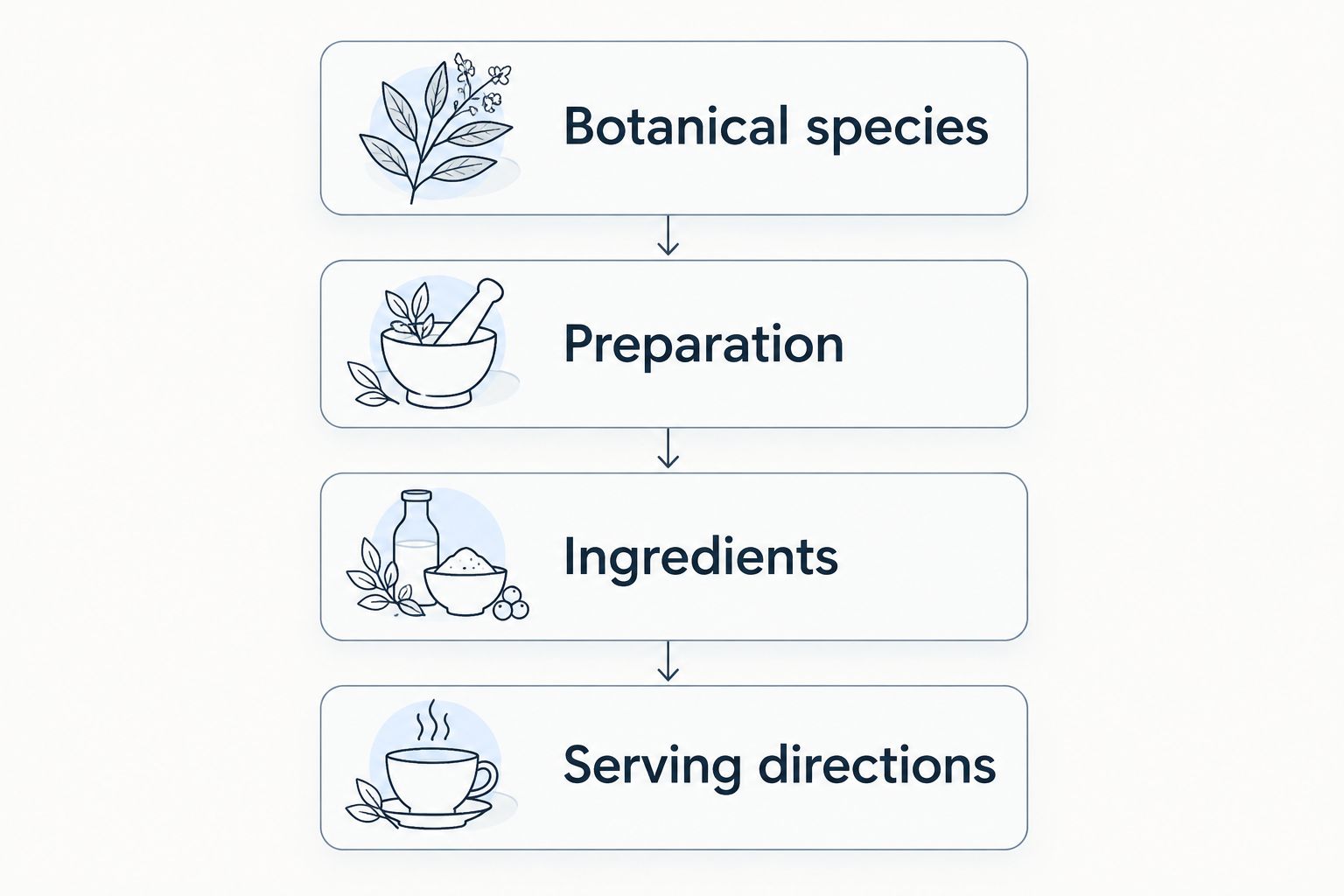
Before buying, read the botanical identity, Supplement Facts panel, ingredients, and directions. This manual check is more useful than comparing front-label promises. Save a label photo for your clinician or pharmacist, especially if you already take several supplements.
Herbal Goodness lists chanca piedra in capsule and liquid preparations. Those formats offer different ways to take an herbal supplement, but neither format has an established advantage for preventing kidney stone recurrence.
A label stating 10X or 15X does not tell you that one product prevents stones better. An extract ratio alone does not establish active-compound content, equivalent exposure, or a clinically validated dose. In a 2026 product comparison, treat concentration language as a preparation detail, not an outcome claim.
- Confirm the botanical species on the label.
- Identify whether the product is an extract or whole herb.
- Read the complete ingredient list.
- Compare the stated serving directions.
- Save the label for a medication review.
Review safety before taking chanca piedra
Write down every prescription medicine, over-the-counter medicine, and supplement you use. Ask a pharmacist or clinician to review the actual chanca piedra label, not just the plant name. This is especially important when kidney function is impaired or your treatment plan already includes medicines for stone prevention.
Do not assume safety during pregnancy or breastfeeding, or for children, from traditional use or an organic label. A preparation’s natural origin does not establish suitability for your circumstances.
Do not use chanca piedra to delay assessment of a possible obstructed or infected urinary tract. Fever or chills with stone symptoms, inability to urinate, or severe uncontrolled pain requires urgent medical assessment. Persistent vomiting also needs prompt attention rather than a supplement experiment.
- Bring a complete medicine and supplement list.
- Discuss kidney disease and any fluid restriction.
- Ask about pregnancy, breastfeeding, or pediatric use.
- Review ingredients as well as the named herb.
- Seek medical care promptly for urgent symptoms.
Choose a format without confusing it with evidence
If your clinician agrees that an herbal supplement fits your situation, choose the preparation you can use according to its label. Capsules avoid measuring a liquid serving. Liquid extracts suit people who prefer that format, but require attention to measurement and ingredients.
The capsule listing supplied for this guide describes 600 milligrams of chanca piedra at 10X concentration. That detail describes the product; it does not establish a research-supported prevention dose or prove equivalence to preparations used in clinical studies.
Herbal Goodness offers both formats. Its practical advantage here is format choice; the limitation is that the supplied product information does not establish prevention efficacy for either preparation. Do not combine formats simply because a bundle exists.
- Choose based on swallowing and measuring preferences.
- Follow the individual product’s label directions.
- Avoid transferring a study dose to another extract.
- Review overlapping ingredients before combining products.
- Keep prescribed prevention measures in place.
Measure outcomes with your clinician
Keep a simple record of symptoms, supplement use, and questions between visits. Record the preparation and when you started it so your clinician can interpret changes alongside diet, fluid intake, and prescribed medicines.
Feeling different does not establish that a stone has disappeared. Urine appearance also cannot confirm prevention. Your clinician determines whether repeat urine testing, imaging, or other follow-up is appropriate.
The goal of a 2026 prevention plan is to address measurable stone risk, not to accumulate supplements. Review the plan when results change, after another stone episode, or when a new medicine affects the decisions you make.
- Record the exact preparation you use.
- Note symptoms without treating them as proof of benefit.
- Keep scheduled testing and follow-up appointments.
- Ask what outcome each intervention is intended to change.
- Reassess the plan after new clinical results.
Compare options for kidney stone formers
Best for prevention decisions: a clinician-led plan based on stone type and urine results. Chanca piedra formats answer a different question: how you prefer to take an optional herbal preparation. The comparison below separates those roles without treating convenience as evidence of effectiveness.
| Option | Best for | Practical advantage | Key limitation |
|---|---|---|---|
| Clinician-led prevention plan | People seeking recurrence-risk assessment | Connects testing, diet, fluids, and medicines to individual findings | Requires clinical evaluation and follow-up |
| Stone Breaker Chanca Piedra Capsules | Shoppers who prefer capsules after a safety review | Avoids measuring a liquid serving | Swallowing preference matters; product-specific prevention benefit is not established |
| Stone Breaker Chanca Piedra Liquid | Shoppers who prefer a liquid preparation after a safety review | Provides a liquid-format alternative | Requires serving measurement; 15X does not prove greater effectiveness |
Read the current labels before choosing. Neither product listing establishes that the preparation dissolves stones, replaces prescribed care, or prevents recurrence.


Common mistakes kidney stone formers make
- Treating “stone breaker” as a promise. A traditional name does not establish that an herb breaks, dissolves, or safely passes a stone. Use clinical assessment to understand an existing stone.
- Choosing the largest extract ratio. Concentration language is not a comparative clinical trial. Compare identity, ingredients, and directions instead of assuming 15X produces a better outcome than 10X.
- Removing dietary calcium without guidance. Calcium restriction is not a universal prevention strategy. Discuss food sources and urine findings before making that change.
- Replacing follow-up with symptom tracking. Less discomfort does not confirm a stone-free urinary tract. Keep the testing and appointments your clinician recommends.
- Adding a cleanse stack without checking overlap. More preparations create more ingredients to review, not proof of better prevention. Evaluate each product separately with your pharmacist or clinician.
For retailers and health practitioners
Present chanca piedra as an herbal supplement with a clearly identified preparation, not as a proven treatment or recurrence-prevention product. Staff education should distinguish traditional use, limited human research, and the evidence required to support a clinical claim.
Keep botanical identity, ingredients, serving directions, and referral advice available to shoppers. Do not turn a study of one preparation into a claim about every product on the shelf. Retailers and health practitioners interested in trade purchasing can request information through the Herbal Goodness wholesale application.
FAQ
Does chanca piedra prevent kidney stones?
Chanca piedra is not established as a reliable way to prevent kidney stone recurrence. Limited human studies do not replace a prevention plan based on stone analysis, urine findings, and medical history.
Can chanca piedra dissolve a kidney stone?
Chanca piedra is not an established stone-dissolving treatment. Assessment of an existing stone depends on its composition, size, location, symptoms, and clinical findings.
Are chanca piedra capsules better than liquid extracts?
Neither capsules nor liquid extracts have an established advantage for preventing kidney stone recurrence. Choose a format only after reviewing its botanical identity, ingredients, directions, and suitability with your clinician.
What dose of chanca piedra should I take for kidney stones?
There is no established chanca piedra dose for reliably preventing kidney stone recurrence. Do not transfer a dose from a study to a commercial extract with a different preparation or concentration.
How much water should a kidney stone former drink?
The AUA guideline recommends enough fluid to produce at least 2.5 liters of urine daily for stone formers. That is not a fixed drinking amount, and anyone with a fluid restriction needs individualized advice.
Should I stop eating calcium if I have calcium stones?
Do not remove dietary calcium simply because your stone contains calcium. The AUA guideline supports normal dietary calcium in relevant calcium-stone prevention plans; your clinician can match advice to your urine results.
Is chanca piedra safe during pregnancy or with kidney disease?
Do not assume chanca piedra is safe during pregnancy or with kidney disease. Review the exact preparation with your clinician before use, and do not substitute it for prescribed care.
What should I do before buying chanca piedra in 2026?
Confirm your stone type and prevention plan before buying chanca piedra in 2026. Then review the botanical species, complete ingredients, preparation, and directions with a clinician or pharmacist.
One last thing
The most useful preparation detail is not always the largest number on the label. A clearly identified species and complete ingredient list tell you what you are considering; an extract ratio alone cannot tell you whether it prevents another stone.
For your 2026 plan, bring your stone report and the proposed supplement label to the same appointment. Ask what each part of the plan is intended to achieve, how the result will be assessed, and what should trigger reassessment. That connects an herbal choice to your actual health needs without turning it into a medical promise.