





Can you take oil of oregano on an empty stomach?

Taking oil of oregano on an empty stomach is not the best default: follow the oral product’s directions, and take it with food when those directions allow. Concentrated oregano preparations can cause stomach discomfort, heartburn, nausea, or vomiting, so fasting is not a useful goal. This guide explains how to check the preparation, meal instructions, and warning signs before you take it.
- Oil of oregano on an empty stomach is not the best default; follow the oral product’s meal instructions.
- NIH LiverTox describes stomach discomfort and heartburn among reported side effects of concentrated oregano preparations.
- Aromatherapy essential oil is not interchangeable with an oregano supplement labeled for oral use.
- Food does not make an excessive dose safe or replace a medication-interaction review.
Why this matters
The main question is not whether an empty stomach makes oregano oil more powerful. It is whether your preparation is intended for swallowing and whether you can take it without irritation. Do not turn stomach burning into a sign that a supplement is working.
Herbalgoodnessco offers oregano supplements for health-conscious shoppers. Its Oil of Oregano 75% Carvacrol is identified as a 2oz product, but concentration and bottle size do not tell you the serving instructions. Read the current label before deciding when or how to take it.
Can you take oil of oregano on an empty stomach?
Do not assume you should take oil of oregano on an empty stomach. Use only a preparation labeled for oral use, follow its directions, and use a meal when the label permits. If the directions do not address food, ask a pharmacist rather than choosing fasting for a supposed absorption advantage.
The NIH’s National Institute of Diabetes and Digestive and Kidney Diseases, in its LiverTox entry on oregano, describes gastrointestinal adverse effects associated with higher-dose preparations. These include abdominal discomfort, heartburn, nausea, vomiting, constipation, and diarrhea. That safety information supports attention to tolerability; it does not establish a universal meal schedule or dose.
For your 2026 supplement routine, distinguish the preparation before deciding on timing:
| Preparation | Best for | Practical advantage | Limitation or caution |
|---|---|---|---|
| Oral oregano oil liquid | Adults whose clinician approves it and who can follow liquid directions | Lets you follow a measured liquid serving on the label | Requires careful measurement and any specified dilution; can irritate the mouth or stomach |
| Oral oregano capsule or softgel | Adults whose clinician approves it and who prefer a premeasured format | Avoids measuring a liquid serving | Still requires meal and serving instructions; a capsule does not guarantee stomach comfort |
| Aromatherapy oregano essential oil | The non-oral use specified by its manufacturer | Clearly separated from an oral supplement when properly labeled | Not a substitute for an ingestible product; do not swallow it |
These are preparation categories, not equivalent doses. Switching from liquid to capsules does not give you permission to transfer the same serving amount or schedule.
Oral oregano oil liquid: read the dilution instructions
A liquid oregano preparation needs more attention than the word oil suggests. Check whether it is already formulated for oral use, whether the directions require dilution, and how the serving is measured. Do not place concentrated drops directly in your mouth unless the oral product’s directions explicitly instruct that use.
A carvacrol percentage describes a product characteristic, not a personalized dose. The supplied product name includes 75% carvacrol; that figure alone cannot tell you how many drops to take, how often to take them, or whether the finished preparation needs dilution.
Follow the measuring device and units named on the label. Do not substitute a kitchen spoon for a specified dropper, or assume that another bottle’s drop count applies. Preparation instructions matter more than a potency number when you decide how to take the liquid.
Oregano capsules: a different format, not a safety shortcut
Capsules and softgels offer a premeasured format, but they still need label-specific instructions. Read whether the manufacturer directs use with food and whether the capsule must be swallowed whole. Do not open it or mix its contents into a drink unless the directions permit that.
A capsule also does not prove that the preparation is suitable for your medication list, pregnancy status, or digestive symptoms. Those questions remain separate from convenience. If an oral oregano capsule causes recurring discomfort, do not keep taking it simply because you cannot taste the oil.
For 2026, choose a format you can use correctly rather than the format that sounds strongest. A clear label and an appropriate serving are more useful than an unsupported promise about faster absorption.
Why stomach tolerance varies
There is no single meal rule that covers every product sold as oregano oil. The following factors explain why the same timing advice cannot be copied across bottles:
- Preparation: An oral supplement and an aromatherapy essential oil have different intended uses. Confirm the intended route before considering food.
- Serving amount: LiverTox associates higher-dose oregano preparations with gastrointestinal adverse effects. Stay within the product’s directions.
- Concentration: A concentration statement does not describe the complete formulation or replace serving instructions.
- Dilution instructions: A liquid preparation can require additional steps before swallowing. Follow the actual label, not a recipe from another product.
- Digestive symptoms: Existing heartburn, nausea, or abdominal discomfort deserve attention before you add a concentrated herbal preparation.
- Other ingredients: Read the entire ingredient list, including carrier ingredients and other herbs. Oregano is not necessarily the only ingredient you need to review.
Food is only part of this decision. Taking a product during a meal does not correct the wrong preparation, an excessive serving, or an ingredient you should avoid.
How should you take an oral oregano supplement?
Use this sequence before your first serving. It is a label-reading process, not a universal dosing prescription.
- Confirm oral use. Look for explicit directions for ingestion. A familiar plant name or the word pure does not establish that a bottle is safe to swallow.
- Read the label. Check the serving, frequency, meal directions, warnings, and full ingredient list. Keep the bottle available rather than relying on memory.
- Check suitability. Ask a pharmacist or qualified clinician to review your medicines, other supplements, allergies, and relevant health circumstances.
- Follow meal directions. If the label allows food, use it with a meal rather than making fasting the goal. Follow any required dilution separately.
- Watch for symptoms. Stop if you develop burning, nausea, or other concerning symptoms. Ask for advice before trying the preparation again.
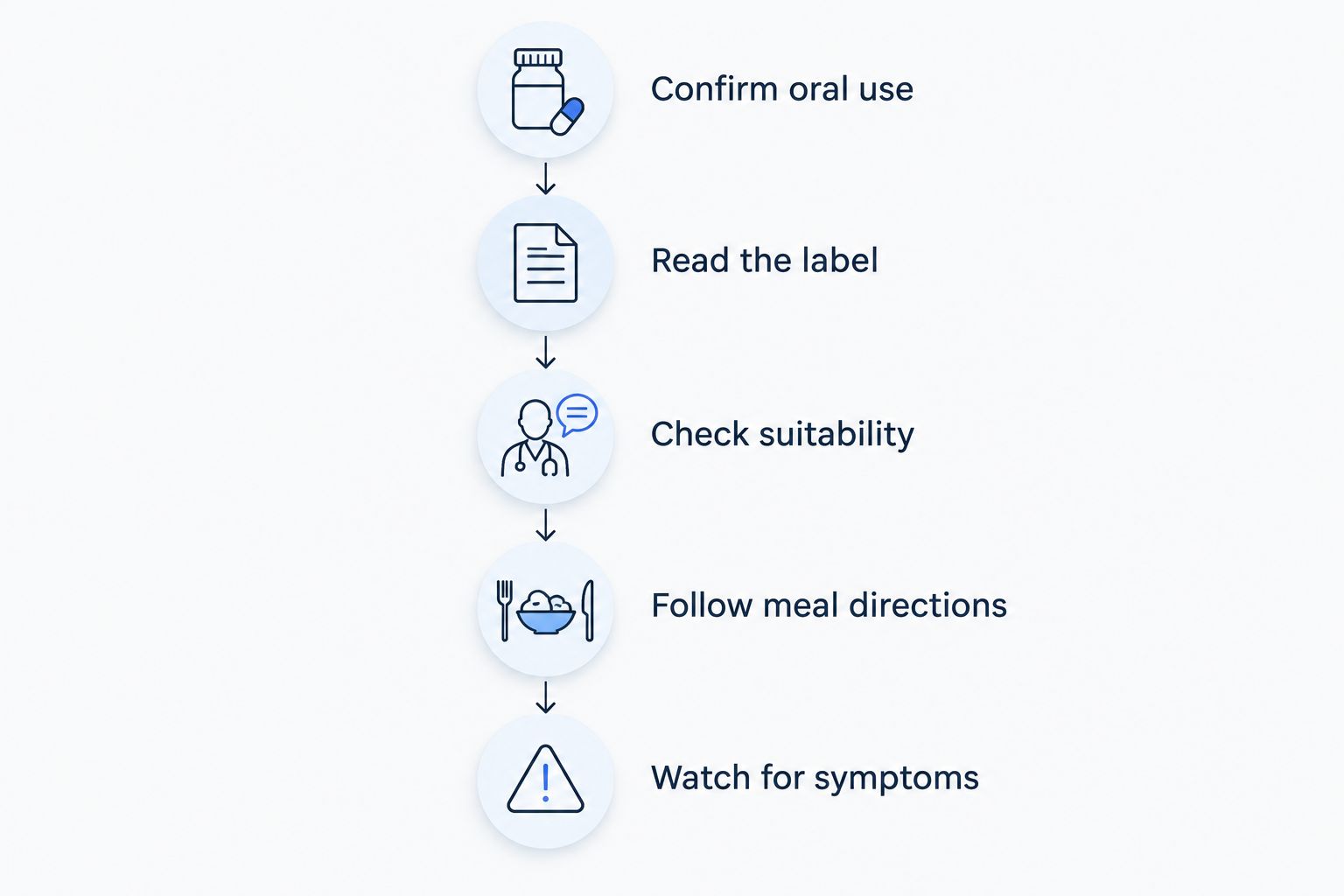
Keep the process simple: do not add several new herbal products at the same time. If symptoms occur after a change, a clear record of what you took helps your pharmacist or clinician assess the situation.
Is oil of oregano better absorbed on an empty stomach?
An empty stomach is not an established reason to choose oregano oil timing. Laboratory findings about oregano constituents do not show that fasting produces a better outcome for people taking a retail supplement. Follow the product’s directions rather than treating an absorption claim as a dosing instruction.
For your 2026 decision, separate laboratory activity, traditional use, and demonstrated human benefit. They answer different questions. None gives you permission to ignore stomach irritation or use an oral supplement instead of medical care.
The NIH Office of Dietary Supplements’ Dietary Supplements: What You Need to Know explains that supplements are not approved for safety and effectiveness before marketing in the same way as medicines. A product’s presence on a store shelf is not proof of a particular benefit or meal schedule.
Can you take oil of oregano with food instead?
Take oil of oregano with food when the oral product’s directions permit it. A meal is a practical timing choice, but it does not guarantee that you will tolerate the preparation. If the label specifies another method, ask a pharmacist before changing it.
You do not need to invent a special meal or combine the oil with another supplement. Use the ordinary meal routine permitted by the directions. If the bottle gives dilution instructions, follow those as well; eating food and diluting a liquid are different actions.
Do not increase the serving because you are taking it with food. The labeled amount still applies, and recurring discomfort still calls for stopping and seeking advice.
What should you do if oregano oil burns your stomach?
Stop taking the preparation if it causes stomach burning, and get advice before restarting. Do not interpret burning as detoxification or evidence that oregano is having the desired effect. Note the product, serving amount, timing, and other substances you took.
Severe or persistent abdominal pain, repeated vomiting, trouble breathing, or swelling needs prompt medical attention. If you swallowed an essential oil that was not intended for oral use, contact Poison Control promptly. Do not induce vomiting unless a poison specialist instructs you to do so.
Poison Control’s guidance on essential oils explains that swallowing these products can cause poisoning and that aspiration into the lungs is a concern. Taking an unintended product with food does not turn that exposure into safe supplement use.
Who should ask a clinician before taking oregano oil?
Get individual advice before taking an oregano supplement during pregnancy or breastfeeding, before giving it to a child, or when you use prescription medicines. The same applies if you have a history of reactions to herbs or unexplained digestive symptoms. Do not convert an adult serving into a child’s serving yourself.
The National Center for Complementary and Integrative Health’s Using Dietary Supplements Wisely advises discussing supplements with healthcare professionals, particularly when medicines or surgery are involved. Bring the actual label so the conversation covers the formulation you intend to use.
For a 2026 medication review, include nonprescription medicines and every supplement, not just oregano. Food does not remove the need to check suitability. A clinician’s advice about your circumstances takes priority over a general meal-timing article.
A note for shoppers and health practitioners
Herbalgoodnessco’s oregano supplement is best for shoppers seeking an oregano preparation they can assess against its oral-use label. That is a product-selection statement, not a promise of digestive, immune, or other health results. Your reason for taking a supplement still needs an evidence-based review.
For retailers and health practitioners discussing Herbalgoodnessco oregano supplements, keep preparation instructions separate from benefit claims. Explain the intended route, serving directions, meal guidance, and warnings. Do not translate a traditional-use statement or laboratory finding into a claim that the supplement prevents or treats illness.
FAQ
Can I take oil of oregano on an empty stomach?
Taking oil of oregano on an empty stomach is not the best default. Follow the oral product’s directions and take it with food when those directions allow; concentrated preparations can cause gastrointestinal discomfort.
Is oil of oregano better absorbed without food?
An empty stomach is not an established reason to choose oregano oil timing. Do not replace the product’s directions with an unsupported absorption claim.
Can I take oregano oil with breakfast?
You can use breakfast as the meal when your oral oregano product’s directions permit taking it with food. Follow its serving and dilution instructions separately.
Does a capsule prevent stomach irritation?
A capsule does not guarantee freedom from stomach irritation. Read its meal instructions and stop if it causes recurring discomfort.
Does 75% carvacrol tell me how many drops to take?
75% carvacrol does not tell you how many drops to take. Use the serving directions for the finished oral product, including any dilution requirements.
Can I swallow oregano essential oil sold for aromatherapy?
Do not swallow oregano essential oil sold for aromatherapy. If you have already swallowed a product not intended for oral use, contact Poison Control promptly.
What should I check before using oregano oil in 2026?
Before using oregano oil in 2026, check oral-use labeling, serving directions, ingredients, meal instructions, and warnings. Ask a pharmacist or clinician to review suitability if you use medicines, are pregnant or breastfeeding, or plan to give it to a child.
One last thing
Before buying another bottle, photograph the directions and ingredient panel on your current one. Compare those details when the replacement arrives; the plant name alone does not establish that the instructions are identical.
For your 2026 routine, that label comparison is more useful than trying to time oregano oil around an empty stomach. Choose instructions you can follow, not discomfort you think you should tolerate.