





How Dried Hibiscus Flowers Are Made Into Powder: A Step-by-Step Guide

Hibiscus powder, prized for its vibrant color and tangy flavor, has made its way into kitchens and pantries around the globe. But how do delicate dried hibiscus flowers transform into the richly hued powder so many enjoy in teas, culinary treats, and creative beverages? Understanding this process helps consumers value the craft behind their favorite products and empowers them in making informed choices.
The journey from flower to powder involves a series of careful steps, each influencing the final product’s flavor, color, and usability. Below, we explore each stage in detail and share practical advice on assessing quality and maintaining vibrance for everyday use.
Harvesting Hibiscus Flowers: The Critical First Step
The journey to hibiscus powder begins in fields where hibiscus plants mature under the sun. Timing and gentle handling are vital:
- Optimal Harvest Time: Flowers are typically picked either early in the morning or late afternoon. This preserves their delicate color and aroma.
- Selective Picking: Only vibrant, fully bloomed calyces—the petal-like part surrounding the seed pod—are chosen. Faded or wilted calyces are set aside, as they may lack the desired intensity of flavor and color.
- Gentle Handling: To avoid bruising, the blossoms are gathered by hand, ensuring the delicate tissues remain intact for further processing.
Drying Methods: Preserving Color and Flavor
Proper drying is essential to transform freshly harvested hibiscus into a storable, vibrant ingredient. There are several approaches, each affecting the final outcome:
Sun Drying
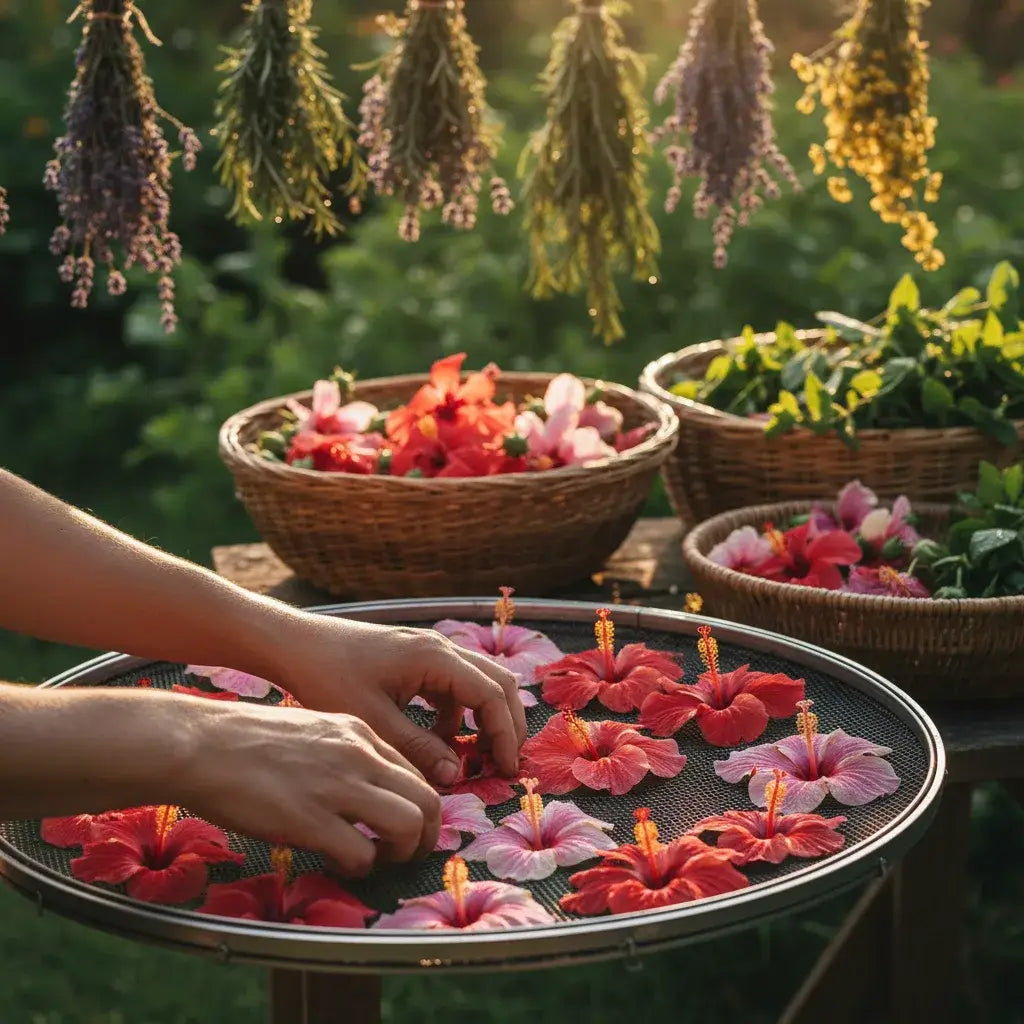
One of the oldest methods, sun drying involves spreading the calyces on clean, raised surfaces in a well-ventilated area. Protective covers keep out debris, while gentle sunlight evaporates moisture.
- Benefits: Energy-efficient, can enhance aroma
- Considerations: Requires dry climates, may take several days
Shade Drying
Flowers are placed in shaded, breezy spaces away from direct sunlight, which can sometimes fade the deep red color.
- Benefits: Better pigment retention, slower drying
- Considerations: Can take longer than sun drying, requires careful monitoring for moisture
Dehydrator or Oven Drying
Modern methods use food dehydrators or low-temperature ovens to speed up the process, ensuring uniform results.
- Benefits: Controls temperature and air flow, produces consistent dryness
- Considerations: Requires equipment, uses electricity
Key Drying Factors
- Even Layering: Spread calyces in a single layer for uniform drying.
- Humidity: Monitor moisture levels to prevent clumping or loss of aroma.
- Storage Post-Drying: Once crisp, dried hibiscus should be kept in sealed containers until milling.
Milling Techniques: Transforming Flowers Into Fine Powder
After drying, hibiscus calyces must be milled to achieve even, fine powder ideal for culinary and household applications.
Traditional Stone or Mortar Grinding
In many cultures, dried hibiscus is ground using stone mills or mortars and pestles:
- Pros: Limit heat buildup, preserve aroma
- Cons: Labor-intensive, may result in coarser texture, time-consuming
Modern Mechanical Milling
Larger-scale operations rely on:
- Hammer Mills: Impact devices break hibiscus into consistent, fluffy powder.
- Rotor Mills: Very fine textures possible, suitable for culinary use.
Each method is chosen with the goal of maintaining the intensity of color and the distinctive tartness that hibiscus powder is renowned for. If you prefer ready-to-use forms for tea and beverages, Hibiscus Tea - Organic 24/2g Tea bags - Heart Health offers a convenient alternative.
Common Processing Choices and Their Impact
Producers sometimes adopt extra steps to further refine their hibiscus powder or cater to different applications:
- Sifting: Fine mesh screens remove fibrous bits, ensuring a uniform texture suitable for beverages or baking.
- Blending: Occasionally, hibiscus powder might be blended with other botanical powders for unique flavor profiles. Always check the label for any additions.
- Minimal Additives: Premium hibiscus powder typically contains just one ingredient: dried hibiscus. Guard against artificial colors, flavors, or fillers by reviewing the ingredient list carefully.
How to Read Labels and Assess Hibiscus Powder Quality
Choosing quality hibiscus powder begins with understanding what’s on the package. Here are key aspects to review:
- Ingredient List: The only ingredient should be hibiscus. Multiple ingredients could signal blends.
- Origin Disclosure: Transparent brands often share the region of harvest, reflecting commitment to traceability and quality.
- Processing Claims: Terms like “sun-dried,” “shade-dried,” or “organic” may indicate practices designed to preserve natural characteristics.
- Color: A deep crimson or magenta shade suggests proper drying and fresh raw material.
- Texture: Fine, even grains mean careful milling. Grittiness or clumps could reflect excess moisture or poor processing.
- Aroma and Taste: Fresh hibiscus powder exudes a subtle, tangy fragrance and a gentle tartness if tasted as-is (a tiny pinch is sufficient for testing at home).
For those who enjoy botanical blends, the Graviola, Hibiscus, Bamboo Herbal Tea Trio – Bundle (3 Packs) provides variety while still focusing on quality.
Best Practices for Storing Hibiscus Powder
Maintaining hibiscus powder’s rich color and flavor depends on safe storage:

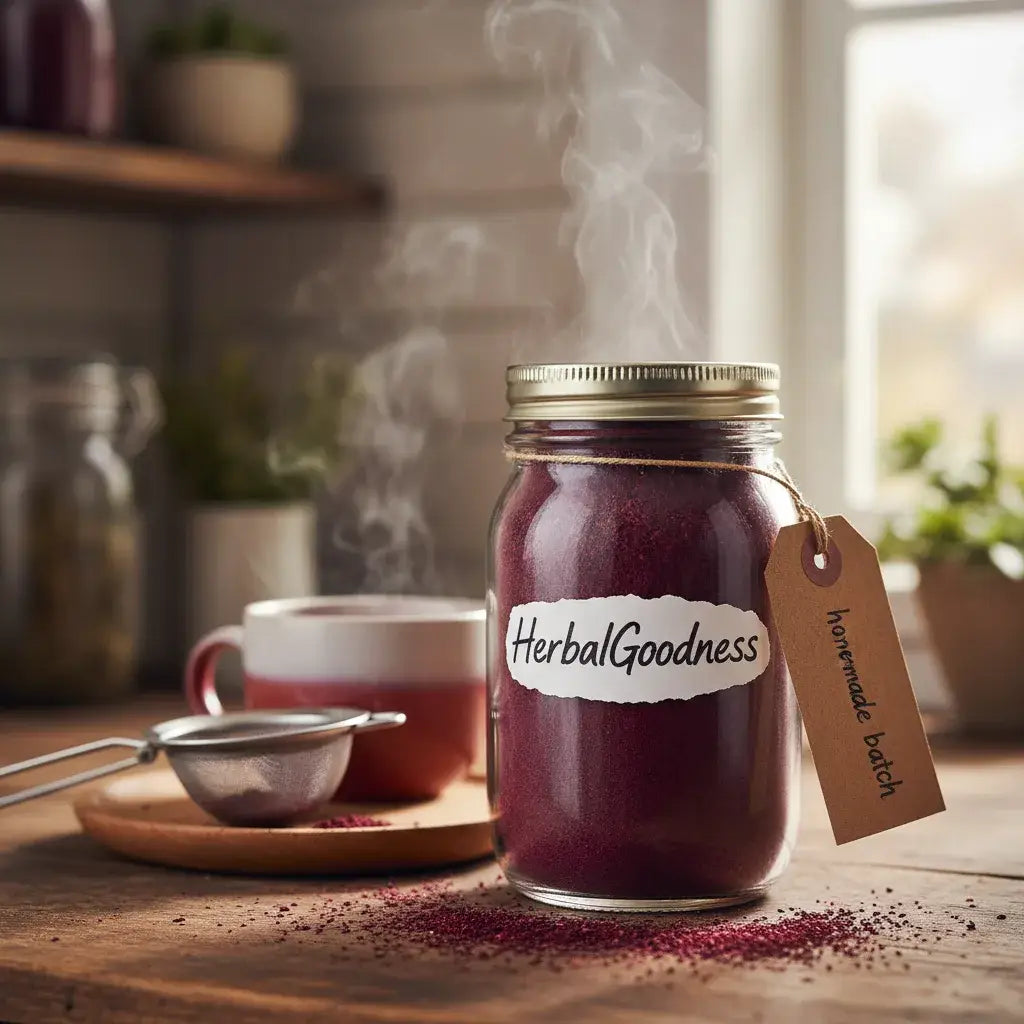
- Airtight Containers: Use glass jars or vacuum-sealed bags to protect against air exposure.
- Cool, Dry Location: Keep powder away from direct sunlight, heat, and humidity. Pantries or dark cupboards are ideal.
- Batch Labeling: Note the date of purchase or opening for optimal usage. Freshness typically lasts up to 12 months if stored properly.
- Avoid Cross-Contamination: Store away from strong-smelling spices or moisture-prone areas to prevent flavor absorption or clotting.
When exploring storage for other botanical powders, products such as Papaya Seed Powder - Organic 4oz Bag - Colon & Gut Cleanse benefit equally from these preservation steps.
Everyday Culinary Uses for Hibiscus Powder
Hibiscus powder lends a zesty, botanical edge to an array of everyday recipes beyond traditional infusions:
- Baking: Add a spoonful to bread, cookies, or muffins for a vibrant pink hue and pleasant tartness.
- Beverages: Stir into lemonades, smoothies, or sparkling water for refreshing color and tang.
- Seasonings: Mix with salts or dry spice blends for unique rubs or dressings.
- Desserts: Sprinkle over fruit salads, yogurts, or frozen treats.
Experimenting in small batches allows flavor customization without overwhelming other ingredients. Always start with a modest amount and adjust to taste. Consider adding variations with blends like the Herbal Tea Trio - Guava, Hibiscus & Avocado Bundle – Refreshing Tea Collection for more options in your pantry.
Recognizing Freshness: Signs to Look For
Fresh hibiscus powder is more than a visual treat—it also appeals to the senses of smell and taste:
- Fragrance: A gentle, floral aroma with a slight tart note denotes freshness.
- Visuals: Rich, vibrant color throughout; avoid powders with brown spots or paleness.
- Taste: A slightly sour and bright flavor is typical. Stale powder may lack complexity.
If you notice odors, stickiness, or a musty appearance, it may be time to replace your supply. Those keeping Rooibos Tea - Organic 8oz - Immunity & Metabolism or similar powders should look for similar signs of freshness.
Sustainable and Ethical Sourcing Practices
Ethically sourced hibiscus powder supports both community and environmental priorities:
- Fair Labor: Choose brands that value fair harvesting wages and transparent supply chains.
- Eco-Friendly Practices: Seek out products from growers who use sustainable farming methods and minimal packaging.
- Community Connections: Supporting small farmers can help preserve traditional hibiscus cultivation knowledge and contribute to local economies.
Many premium teas, including the Bulk Loose Leaf Teas & Tisanes - Organic 4oz - Herbal Wellness Teas, highlight these ethical sourcing commitments.
Making informed choices ensures that every sprinkle of hibiscus powder brings enjoyment to your home while respecting its origins.
Ready to experience the vibrant color and flavor of hibiscus powder? Try sourcing from brands that value quality and transparency or experiment with your own homemade batch. Whether for culinary creations or everyday refreshment, enjoying hibiscus powder starts with making informed, mindful choices. Explore, craft, and savor every sprinkle!
FAQs:
- What should I look for when buying hibiscus powder?
Check for a deep crimson or magenta color, a single-item ingredient list (only hibiscus), and information on the drying and sourcing practices. Packaging should be airtight, and the powder should have a fine, even texture.
- How should I store hibiscus powder for maximum freshness?
Store hibiscus powder in a cool, dry place away from direct sunlight, using an airtight container such as a glass jar or sealed bag. Proper storage helps preserve both color and flavor.
- Can I make hibiscus powder at home?
Yes, you can dry hibiscus calyces using sunlight, a dehydrator, or an oven, then grind them into a powder with a spice grinder or mortar and pestle. Always ensure the flowers are completely dry before milling.
- How do I know if hibiscus powder is fresh?
Fresh hibiscus powder has a vibrant color, a floral-tart aroma, and a delicate tangy flavor. Avoid powders with off smells, faded color, or a clumpy texture.
- Are there differences between sun-dried and dehydrator-dried hibiscus powder?
Sun-dried hibiscus may have more intense aroma and flavor but can vary in color retention. Dehydrator methods provide uniform drying and excellent color, though some subtle flavors may differ.
Author Name:
Herbal Goodness Editorial Team
Author Bio:
The Herbal Goodness Editorial Team specializes in holistic health and superfoods, blending science and nature to educate and empower our community.
References:
Introducing Graviola to Young Taste Buds: Fun, Family-Friendly Flavor Exploration
Graviola in the Classroom and at Home: Creative Activities to Teach Kids About Tropical Plants