





Black Seed Oil: A Beginner’s Guide to Reading the Research and Labels

Curiosity about black seed oil is on the rise—and with it, a flood of new products and headlines. But for beginners, diving into the world of black seed oil can feel overwhelming. Which claims are based on solid studies? What do terms like “cold‑pressed”, “standardized extract”, and “thymoquinone” actually mean? How do you sort clear information from clever marketing? If you’ve ever felt lost staring at a supplement bottle or a scientific abstract, this beginner’s guide will help you navigate the essentials. Through practical explanations and easy-to-use tips, you’ll learn how to read the research, dissect product labels, and recognize credible indicators of quality—without needing a science degree (or falling for too-good-to-be-true promises).
Understanding Black Seed Oil: Origins and Use
Black seed oil is derived from the seeds of Nigella sativa, a flowering plant native to parts of Asia and the Middle East. The oil has a distinct aroma and flavor, sometimes described as spicy or slightly bitter. Traditionally, it’s been valued in various cultures for use in culinary and everyday wellness routines.
Today, black seed oil appears in capsules, tinctures, oils, and even skincare products. Its growing popularity has also generated an impressive variety of product labels, ingredient lists, and claims about its composition. To make informed choices as a beginner, it's useful to start with the vocabulary commonly found in research and product information. Wellness seekers gravitate toward options emphasizing purity, and Black Seed Oil 8oz - Cold-Pressed Liquid - Immunity & Wellness is a strong example of a product clearly designed around these priorities.
Decoding Black Seed Oil Study Types
Observational Versus Experimental Studies
When looking at research around black seed oil, studies generally fall into two main categories:
-
Observational Studies: Scientists observe participants' natural consumption or use of black seed oil without intervening or assigning groups. These studies can reveal patterns or associations, but do not establish cause and effect.
-
Experimental (Controlled) Studies: These trials involve assigning participants to either use black seed oil or not, under specific conditions. If well designed (randomized and blinded), experimental studies can provide stronger evidence for whether an observed effect is linked to the oil itself.
Understanding Systematic Reviews and Meta-Analyses
-
Systematic Review: A paper that collects, evaluates, and summarizes results from multiple studies on black seed oil. These are conducted using strict methods to minimize bias.
-
Meta-Analysis: An advanced type of review that combines statistical data from several studies to detect patterns, especially useful when individual studies might have inconclusive or small results.
Key Points for Beginners
- Pay attention to how many people were included in a study.
- Randomized, double-blind, placebo-controlled studies are often considered a strong design.
- Look for whether the study was published in a peer-reviewed journal.
- Check if researchers disclose limitations and potential sources of bias.
Choosing products that align with high scientific standards—such as third-party tested oils—can build confidence in your selection.
Common Botanical Terms on Black Seed Oil Labels
Cold-Pressed
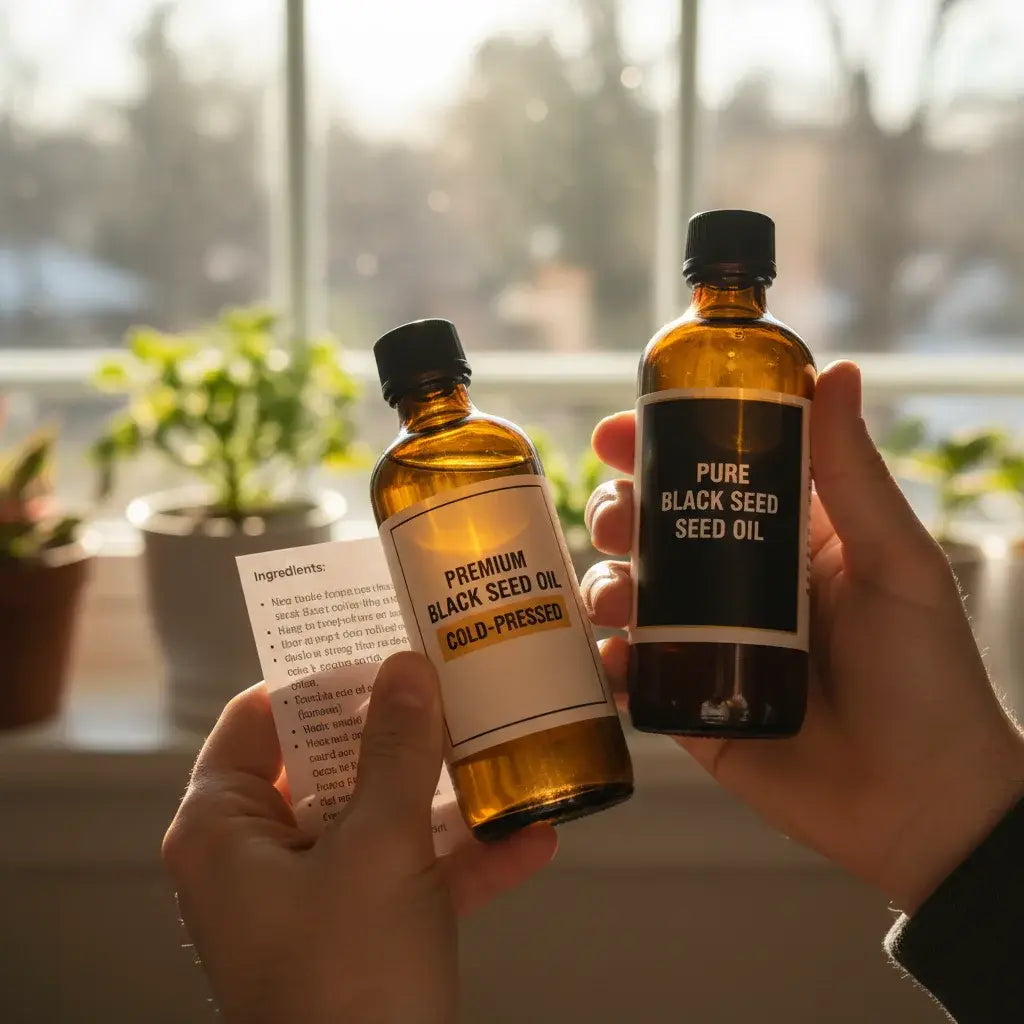
Cold-pressed black seed oil means the oil was extracted from the seeds using minimal heat. This generally preserves more of the natural aromatic compounds and active components found within the seeds than methods involving high temperatures or harsh chemicals.
Why Does This Matter?
Products labeled as “cold-pressed” may offer a richer profile of the natural seed constituents. However, cold-pressed doesn’t automatically mean high quality—it should be considered alongside other factors like freshness and storage.
Standardized Extract
A standardized extract label indicates that the product contains a certain percentage of one or more specific components. For black seed oil, the most commonly mentioned compound is thymoquinone.
Standardization can support consistency between batches, but it doesn’t guarantee overall product quality. Some products might highlight a standardized thymoquinone content but contain other ingredients or fillers alongside or instead of pure oil.
Thymoquinone Content
Thymoquinone is a naturally occurring compound found in the volatile fraction of black seed oil. Many studies pay special attention to it due to its prominence in the seed's chemical makeup.
How to Interpret Thymoquinone Numbers
Look for labels that provide actual thymoquinone content with units (e.g., “contains no less than 1% thymoquinone by weight”). Higher numbers do not always indicate better quality; purity, extraction method, and batch consistency are also important. Some reputable manufacturers provide lab results for thymoquinone levels per batch, which is especially useful for those seeking standardized extract black seed oil.
For a complementary wellness routine, some individuals also explore antioxidant-rich botanicals like Soursop Leaf Graviola Extract - - Organic 15X Liquid Extract - Cell Renew & Immunity for additional support.
Unrefined, Organic, and Non-GMO
- Unrefined typically refers to an oil that has undergone minimal processing, retaining color, scent, and flavor.
- Organic products are grown and processed without synthetic pesticides or fertilizers—look for a third-party organic certification mark.
- Non-GMO means the Nigella sativa seeds used were not genetically modified.
While these terms can be positive markers for those seeking products aligned with personal values, third-party certifications or analysis add another layer of credibility. Those wishing to avoid synthetic inputs can consider products with organic seals such as Papaya Leaf Extract - - Organic 16oz 15X Liquid Extract, which also highlights transparency in sourcing.
Interpreting Marketing Language Versus Useful Information
Spotting Hype: Buzzwords and Emotional Promises
It’s common for black seed oil packaging and advertisements to feature claims that sound impressive but are often overstated. Phrases such as “miracle oil” or “ancient remedy” may catch the eye but don’t provide verifiable information about the product itself.
Instead, look for clear, measurable statements, such as:
- The contents or percentage of thymoquinone
- The extraction method used (e.g., cold-pressed)
- Accreditation or third-party testing
- Country of origin
Key Quality Clues to Look For
- Ingredient List: Simple, clear, with Nigella sativa as the main ingredient.
- Batch Number/Lot Code: Indicates tracked manufacturing and can aid in quality assurance or recalls.
- Expiration or Best By Date: Freshness matters—black seed oil is sensitive to oxidation, which can affect aroma and composition.
- Packaging: Dark glass bottles can help prevent light-induced degradation. Air-tight seals also matter for freshness.
For general wellness support, products offering additional antioxidative botanicals are popular, including those like Soursop Leaf Tea Graviola Leaves - Organic 24/2g Tea Bags - Immunity & Cell Renew.
Certifications & Transparency
- Third-Party Testing: Look for language such as “third-party tested for purity” or lab reports upon request.
- Organic or Non-GMO Seals: These are only meaningful if granted by reputable organizations.
- Contact Information: A manufacturer willing to provide clear ways to connect is often a positive sign.
Tips for Beginners: How to Compare Products
Making sense of dozens of black seed oils on the shelf or online? Here’s a checklist to narrow down your choices:
- Read Past the Hype: Focus on factual, measurable details rather than vague benefits.
- Check Extraction Method: Preferably cold-pressed and unrefined unless you have a specific need for other types.
- Examine Ingredient List: Should say “Nigella sativa seed oil” (plus any added carrier or flavoring oils, if present).
- Look for Thymoquinone Levels: Are levels disclosed? Is there a lab certificate verifying those claims?
- Certifications and Transparency: Organic, non-GMO, third-party testing seals—they add trust.
- Assess Packaging: Dark, airtight bottles are preferable. Avoid clear plastic when possible.
- Seek Trustworthy Brands: Long-standing brands or those with a clear sourcing story often deliver consistency.

When reviewing options, confirm that the cold-pressed method and purity are front and center. For instance, the Black Seed Oil 8oz - Cold-Pressed Liquid - Immunity & Wellness product page clearly details extraction type, ingredient source, and bottle type, helping buyers make an informed decision aligned with the above checklist.
You might also pair your botanical journey with trusted, verified extracts including Papaya Leaf Extract - Organic 1oz 15X Liquid - Blood Platelet for complementary wellness routines.
What Research Actually Shows About Black Seed Oil
When filtering through black seed oil studies, two facts are clear:
- Variation exists in how the oil is extracted, handled, and standardized—making some research hard to compare from one study to the next.
- High-quality investigations tend to disclose these details and identify the exact type of oil used, the extraction method, and the thymoquinone percent.
Rely on reviews and studies published in peer-reviewed journals. Focus not just on what results are reported, but whether details about the oil’s source, concentration, and composition are included. Familiarity with botanical terms and study types will help you make sense of a product’s real-world relevance. This careful approach can be just as helpful when evaluating other supplements, such as Papaya Leaf Extract Blood Support - Organic 1oz 15X Liquid Extract - Platelet Health, which is also standardized and third-party tested.

Final Thoughts: Educating Yourself for Smarter Choices
Navigating the fast-growing world of black seed oil means staying grounded in facts and developing a habit of reading beyond marketing. By learning how to interpret research, understand complex-sounding botanical terms, and read labels like a pro, you equip yourself to make choices based on substance—not just slogans. Whether you’re comparing oils for culinary, cosmetic, or wellness use, a discerning eye turns simple curiosity into empowered, informed selection.
FAQs:
- What does cold-pressed mean on black seed oil labels?
Cold-pressed means the oil is extracted from Nigella sativa seeds without significant heat or chemical solvents. This method helps preserve natural aromatic compounds and the oil’s authentic flavor.
- How can I tell if a black seed oil product is high quality?
Look for clear ingredient lists, third-party testing, thymoquinone content disclosure, and reputable certifications. Packaging in dark glass bottles and the presence of a lot number and expiration date are also good quality indicators.
- What is thymoquinone in black seed oil?
Thymoquinone is a naturally occurring compound found in black seed oil and is often measured to indicate the content and consistency of certain beneficial constituents in the oil.
- How do I interpret black seed oil research studies?
Focus on the study type (observational or experimental), sample size, publication in reputable journals, and disclosure of methods and limitations. Stronger studies are usually randomized, controlled, and provide detailed product information.
- Does organic certification matter for black seed oil?
Organic certification indicates the seeds were grown and processed according to organic farming principles, often free from synthetic inputs. Look for valid third-party seals for assurance.
- Why is dark glass packaging important for black seed oil?
Dark glass protects the oil from light and helps slow down oxidation, which can otherwise alter the oil’s aroma and composition over time.
Author Name:
Herbal Goodness Editorial Team
Author Bio:
The Herbal Goodness Editorial Team specializes in holistic health and superfoods, blending science and nature to educate and empower our community.
References:
Introducing Graviola to Young Taste Buds: Fun, Family-Friendly Flavor Exploration
Graviola in the Classroom and at Home: Creative Activities to Teach Kids About Tropical Plants
Share this

Popular posts


FAQs
1. What are the main benefits of drinking bamboo leaf tea?
Drinking bamboo leaf tea supports hydration, relaxation, skin wellness, and antioxidant balance.
2. What is bamboo leaf extract used for?
It’s used for general body wellness, skin elasticity, hair and nail support, and overall vitality.
3. Can bamboo leaf help with skin care and body wellness?
Yes, bamboo leaf is rich in silica and antioxidants, which promote healthy skin, strong nails, and a youthful glow.
4. What forms of bamboo leaf are available?
You can find dried bamboo leaf, powder, extract, drops, oil, and bamboo leaf green tea.
5. Are there any side effects of bamboo leaf?
Bamboo leaf is generally safe when consumed in moderation. Always consult your healthcare provider before starting any new herbal supplement.