





Oil of oregano capsules to cold and flu defense: 2026 workflow

Instead of deciding each morning whether oregano capsules belong in your cold-season routine, use a label check, a safety review, and an evidence-based prevention plan: oil of oregano is not proven to prevent colds or flu. This 2026 workflow separates optional herbal supplement use from the measures that reduce respiratory infection risk.
- Oil of oregano cold and flu prevention is unproven; laboratory findings do not establish protection in people.
- Herbalgoodnessco herbal supplements belong in an optional wellness routine, not a replacement for vaccination or medical care.
- Check oregano preparation, serving instructions, and medication compatibility before considering capsules or liquid oil.
- Use vaccination, cleaner air, and hand hygiene as the foundation of your respiratory prevention plan.
Why this matters
Oregano is a culinary herb, but an oregano supplement is not interchangeable with the leaves you add to dinner. Capsules, concentrated oils, and other preparations differ in ingredients and directions. A claim about one preparation does not automatically apply to another.
Herbalgoodnessco is best for shoppers exploring herbal supplements as optional wellness products, not proven cold or flu prevention. The Herbalgoodnessco catalog includes herbal oils, teas, capsules, and extracts; the product format still needs a separate safety and evidence check.
The NIH LiverTox oregano monograph describes laboratory antimicrobial activity but does not establish oregano as an effective preventive intervention in people. For this 2026 guide, that distinction is the starting point: an effect in a laboratory dish is not evidence that swallowing oregano oil prevents a respiratory infection.
Your next move is practical. Build the prevention routine first, then decide whether an optional supplement belongs alongside it.
Before you start
- Collect the actual label. Have the ingredient list, serving instructions, warnings, and preparation type in front of you. A product name or carvacrol percentage alone cannot establish an appropriate serving.
- Prepare a medication and supplement list. Include prescriptions, nonprescription medicines, other herbal products, allergies, and relevant health circumstances. Ask a pharmacist or clinician to review compatibility before adding oregano.
- Check the route of use. A concentrated essential oil intended for aromatic or external use is not interchangeable with an oral supplement. Do not swallow a product unless its own label explicitly identifies oral use and provides directions.
This workflow is for adults evaluating an optional supplement. Pregnancy, breastfeeding, use in children, and ongoing medical conditions require individualized advice rather than a copied adult routine.
Product record
Create a product record before you decide to use oregano. The purpose is to identify exactly what you have, not to choose the strongest-looking bottle.
- Identify the preparation. Write down whether the product is a capsule, an oral liquid, dried oregano, or an essential oil intended for another route. Keep these categories separate.
- Read the ingredient panel. Record the oregano ingredient, carrier ingredients, capsule materials where applicable, and any additional botanicals. A combination product adds ingredients that need their own review.
- Copy the label directions. On an oral supplement, locate Supplement Facts, Serving Size, and Amount Per Serving where present. Record the manufacturer's directions without converting them into a different format's dose.
- Record warnings and identification details. Keep the product name and any lot or expiration information with your notes. Retain the packaging so you can show a pharmacist the exact formulation.
Expected result: you can explain what the product contains, how its label instructs use, and which preparation you are considering. If any of those details remain unclear, pause the supplement decision.
Capsules, liquid oil, and culinary oregano
Choose a preparation by its intended use and understandable directions—not by an assumption that concentration equals clinical benefit.
| Preparation | Best for | Practical advantage | Limitation |
|---|---|---|---|
| Oregano capsules | Adults who prefer a labeled capsule format after a safety review | Avoids measuring a liquid serving | Ingredients and serving amounts differ between products; prevention remains unproven |
| Oral oregano liquid | Adults comfortable following that liquid's own directions | The label can specify the intended liquid serving | Measuring errors and confusion with non-oral essential oils are concerns |
| Culinary oregano | People adding oregano flavor to food | Fits ordinary cooking | Food use does not establish a preventive effect or supplement dose |
None of these formats wins on demonstrated cold or flu prevention. Choose a supplement only after its label and safety review make sense; do not choose it as an infection shield.
Safety review
A safety review should happen before a supplement becomes a habit. The NIH Office of Dietary Supplements advises discussing supplement use with healthcare professionals because supplements can interact with medicines and are not automatically safe because they are natural.
- Show the exact formulation. Give your pharmacist or clinician the label rather than asking only whether oregano is safe. Include every ingredient in a blend or bundle.
- State your purpose. Explain that you are considering optional wellness use, not treating or preventing an infection. This keeps the conversation focused on suitability rather than an unsupported promise.
- Ask about your circumstances. Discuss allergies, pregnancy or breastfeeding, existing conditions, planned procedures, and medicines. Do not assume a capsule removes concerns associated with its ingredients.
- Write down the decision. Record whether the professional advises against use, needs more information, or considers label-directed use appropriate for you. Keep any individualized instructions separate from general online advice.
Expected result: you have a clear decision about whether to proceed, postpone, or avoid the supplement. No universal oregano dose or preventive course is established by this workflow.
Relevant Herbalgoodnessco options
The supplied catalog identifies an oregano liquid and an oregano-plus-black-seed-oil bundle. Neither listing establishes a capsule offering or clinical protection against respiratory infections.
| Product | Best for | What the listing establishes | Limitation |
|---|---|---|---|
| Oil of oregano | Shoppers evaluating an oregano-focused product | The product title identifies oregano oil and carvacrol content | Concentration does not establish a preventive benefit or replace serving directions |
| Oregano oil + black seed oil bundle | Shoppers specifically considering both botanicals | The listing pairs oregano oil with black seed oil | Each botanical requires a separate review; a bundle is not proof of added protection |
For Herbalgoodnessco herbal supplements, review the individual labels even when products are sold together. The oregano-focused option keeps the ingredient discussion narrower. The bundle adds another botanical, which makes safety review and tracking more involved.


Prevention routine
Make the prevention plan independent of any supplement. CDC respiratory-virus guidance supports vaccination where applicable, cleaner air, hygiene, and additional precautions such as masks when circumstances warrant them.
- Review vaccination. CDC recommends annual influenza vaccination for everyone aged 6 months and older, with rare exceptions. Ask about the recommendations that apply to you; influenza vaccination does not prevent the common cold.
- Improve indoor air. Bring in outdoor air when safe and practical, and consider appropriate air filtration. Plan this before shared indoor gatherings rather than treating a supplement as compensation for exposure.
- Make handwashing routine. CDC recommends scrubbing with soap for at least 20 seconds. Build it around recognizable moments, such as before eating and after blowing your nose.
- Match precautions to circumstances. Consider a well-fitting mask and other precautions during higher-risk exposures, especially around people more vulnerable to severe illness. Use current public-health guidance for your situation.
- Keep supplements optional. If your safety review supports use, follow the exact product label. Do not increase a serving because someone nearby becomes sick.
Expected result: your 2026 prevention routine still works as a plan when you remove the oregano product entirely. That is the test that keeps an unproven supplement from displacing established measures.
Evidence boundaries
CDC influenza vaccination guidance supports vaccination against influenza; it does not support oregano supplementation. CDC handwashing and respiratory-virus guidance supports hygiene and exposure-reduction measures, not a guarantee that you will avoid every infection.
The NIH LiverTox oregano monograph addresses oregano's background, reported uses, and safety evidence. The NIH Office of Dietary Supplements consumer guidance addresses supplement decisions and safety. These are the source boundaries used in this 2026 workflow; none establishes an oregano capsule regimen for cold or flu prevention.
Symptom response
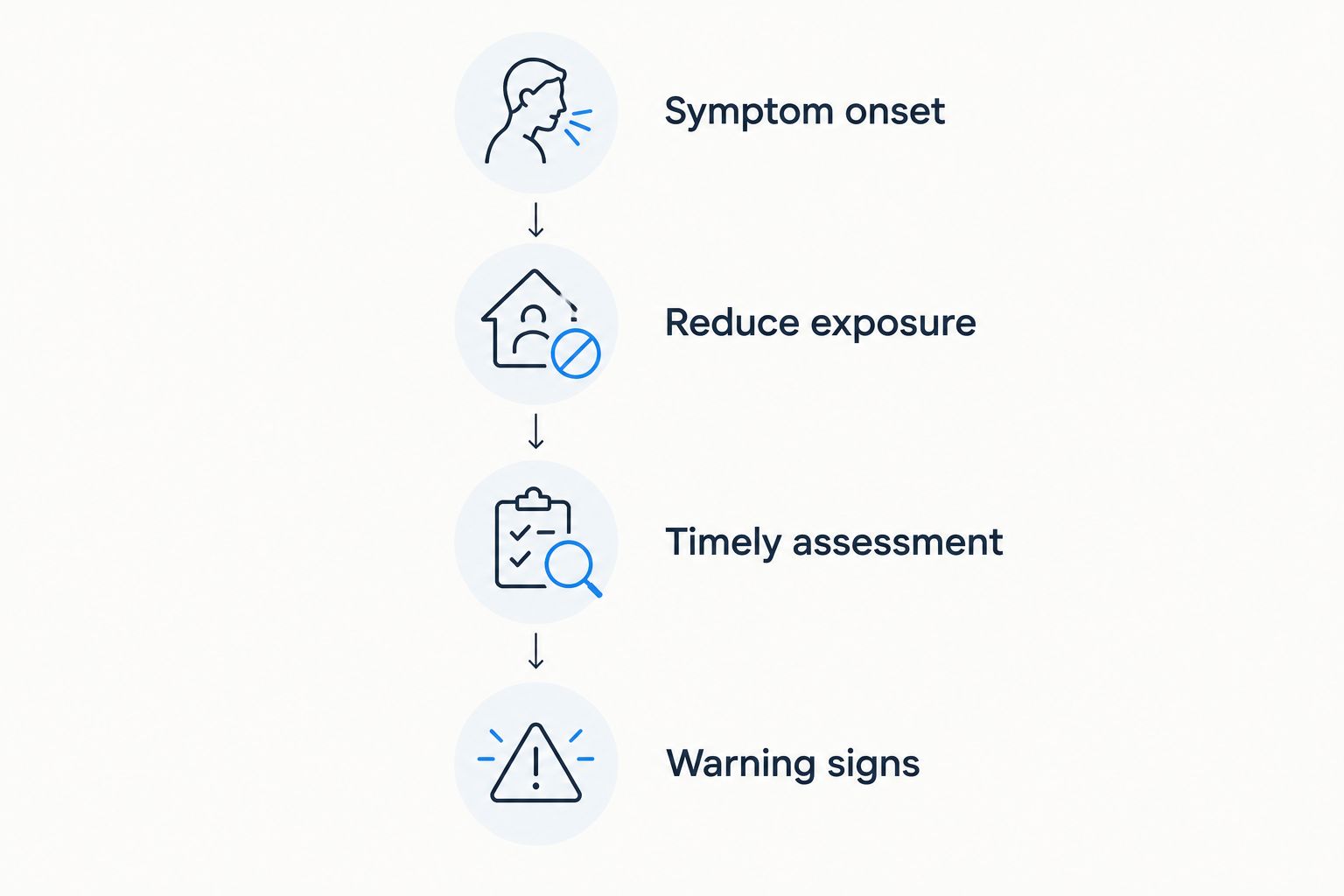
Once symptoms begin, switch from prevention planning to an illness response. Taking more oregano is not a substitute for evaluating a respiratory infection.
- Note symptom onset. Record when symptoms started, what they are, and whether they are worsening. Keep this information ready for a clinical conversation.
- Reduce exposure to others. Follow current CDC advice for staying home and returning to normal activities during respiratory illness. Add precautions appropriate to the people around you.
- Ask about timely assessment. Contact a healthcare professional promptly if you are at higher risk, feel very unwell, or suspect influenza. CDC states that influenza antivirals work best when started within 48 hours of symptom onset; treatment can still be appropriate later in some circumstances.
- Recognize urgent warning signs. Trouble breathing, persistent chest pain, or new confusion requires urgent medical attention. Do not wait to see whether a supplement helps.
Expected result: your symptom plan prioritizes timely care and protecting others. It does not rely on oregano to diagnose, treat, or shorten an illness.
Update the workflow before travel or shared indoor events
Travel is an adjacent workflow, not a reason to increase oregano intake. Reuse the same product record and safety decision while adapting your exposure plan.
Before a trip, check the vaccination guidance relevant to your destination and circumstances. Pack any supplement in its labeled container, and verify transport requirements instead of assuming a liquid and a capsule follow identical rules.
Plan the precautions you can control: hand hygiene, cleaner air where possible, and a well-fitting mask when appropriate. Keep a way to contact your usual healthcare provider and identify how you will obtain care while away.
If symptoms appear during travel, use the symptom-response steps. A travel schedule does not change the evidence for oregano or justify delaying assessment.
Troubleshooting
- The percentage looks like a dose. Carvacrol concentration and serving size describe different things. Read the complete label; do not calculate a capsule or liquid serving from the percentage alone.
- Your capsule and liquid directions conflict. They are different formulations. Follow only the directions for the exact product being evaluated, and ask a pharmacist before switching formats.
- The product causes discomfort. Stop using it and seek professional advice about the reaction. Urgent allergic symptoms, including breathing difficulty, need immediate medical attention—not dilution or another trial serving.
- A bundle makes the review confusing. Separate the ingredient lists and discuss each product. Buying products together does not establish that taking them together is appropriate for you.
- You become sick despite taking oregano. This does not justify a larger serving. Prevention is unproven; move to the symptom-response plan and seek assessment when indicated.
Customize your workflow
Keep a short written record containing the product label, the safety decision, and your prevention plan. Update it when a medication, formulation, or health circumstance changes—not just when the season changes.
Retailers and health practitioners can use the same distinction in customer education: describe the plant and preparation accurately, separate traditional use from clinical evidence, and avoid cold or flu prevention claims. Direct trade-interest readers to the Herbalgoodnessco wholesale application, while keeping individual supplement decisions with an appropriate healthcare professional.
For your 2026 routine, the most useful customization is often simpler: fewer assumptions, clearer labels, and an illness plan you can follow when you feel unwell.
FAQ
Does oil of oregano prevent colds and flu?
Oil of oregano is not proven to prevent colds or flu in people. Laboratory antimicrobial findings do not establish protection from taking an oral supplement.
Are oregano capsules better than liquid oil for prevention?
Neither oregano capsules nor liquid oil has an established advantage for cold or flu prevention. Choose an optional preparation by its label, ingredients, and individualized safety review—not an assumed protective effect.
How much oregano oil should I take to avoid getting sick?
There is no established oregano oil dose for preventing colds or flu. Do not convert a carvacrol percentage into a serving or copy directions from a different product.
Can I take oregano oil with prescription medicines?
Ask a pharmacist or clinician to review the exact oregano formulation alongside your medicines before use. Include other supplements and the complete ingredient list, especially for combination products.
Can children use an adult oregano capsule routine?
Children should not use a copied adult oregano supplement routine. Ask a pediatric healthcare professional about the specific product and the child's circumstances.
Should I take more oregano when flu symptoms start?
Do not increase oregano intake as a response to suspected flu. Contact a healthcare professional promptly when appropriate, especially if you are at higher risk or feel very unwell.
Does a flu vaccine also prevent the common cold?
An influenza vaccine targets influenza, not the common cold. Keep hand hygiene, cleaner air, and situation-specific precautions in your respiratory prevention plan.
Can an oregano and black seed oil bundle replace other precautions?
An oregano and black seed oil bundle cannot replace vaccination, hygiene, exposure precautions, or medical care. Each botanical also needs its own label and safety review.
One last thing
Test your plan by removing oregano from it. If removing the supplement also removes your vaccination review, exposure precautions, or symptom-response steps, the plan has assigned oregano a role the evidence does not support.
Keep the optional botanical decision separate. Your most important cold-season workflow is knowing what reduces risk and what to do when symptoms begin.